Associations between canine temperament and salivary concentrations of cortisol and serotonin
Youngwook Jung, Yujin Song, Kayoung Yang, Kyongwon Yoo, Youngtae Heo, Minjung Yoon

TL;DR
This study links dog temperament scores with hormone levels, showing that higher scores correlate with higher serotonin and lower cortisol changes.
Contribution
The study validates the Wesen temperament test by linking it to physiological biomarkers like cortisol and serotonin.
Findings
Pre- and post-assessment cortisol levels were negatively correlated with higher temperament scores.
Higher temperament scores were associated with significantly higher serotonin concentrations.
Changes in cortisol concentrations were negatively associated with temperament scores.
Abstract
Temperament influences canine behavior and helps determine a dog’s suitability as a companion or working animal. Although several temperament assessments exist, many rely on subjective evaluations, highlighting the need for scientifically validated methods. This study evaluated the validity of the Wesen temperament test by examining its association with physiological biomarkers—salivary cortisol and serotonin. Twenty-four dogs (11 females and 13 males) completed a modified Wesen test comprising seven subtests: Unconscious Confidence, Sociality, Noise Stability, Movement Stability, Desire for Play and Predation, Behavior in Stressful Situations, and Separation. Saliva samples were collected pre- and post-assessment, and cortisol and serotonin concentrations were measured using ELISA. Hormonal concentrations and temperament scores were analyzed using correlation, regression, and…
Genes, proteins, chemicals, diseases, species, mutations and cell lines named across the full text — each resolved to its canonical identifier and authoritative record.
Click any figure to enlarge with its caption.
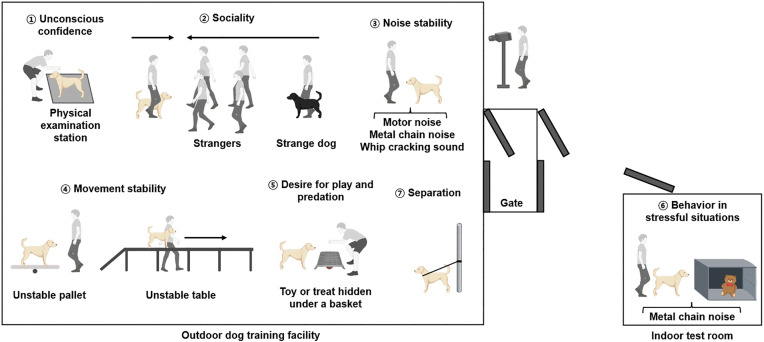 Figure 1
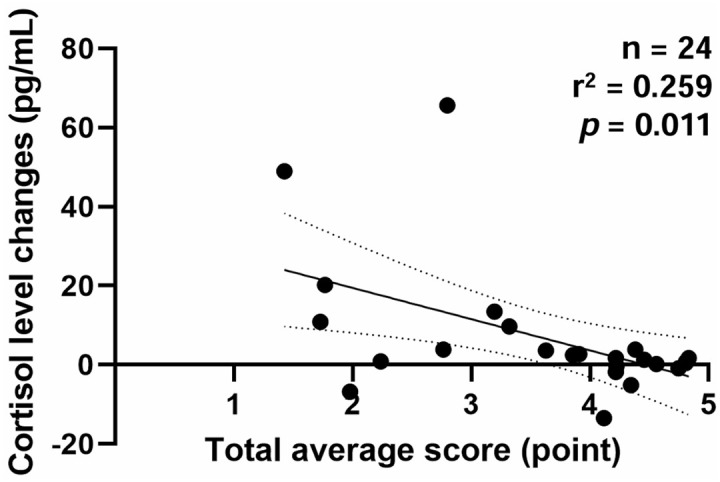 Figure 2
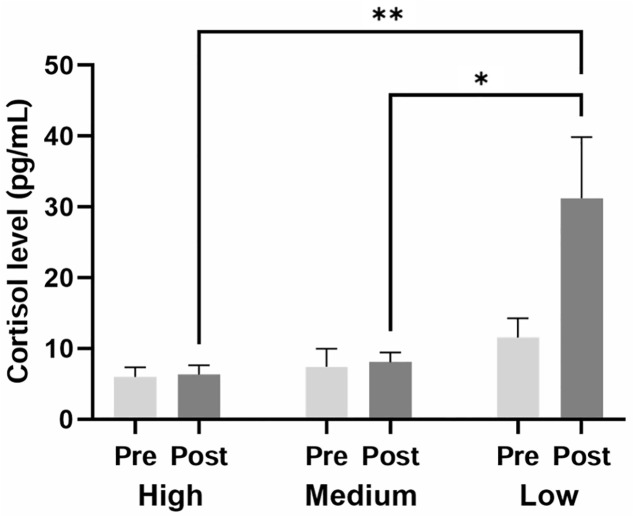 Figure 3
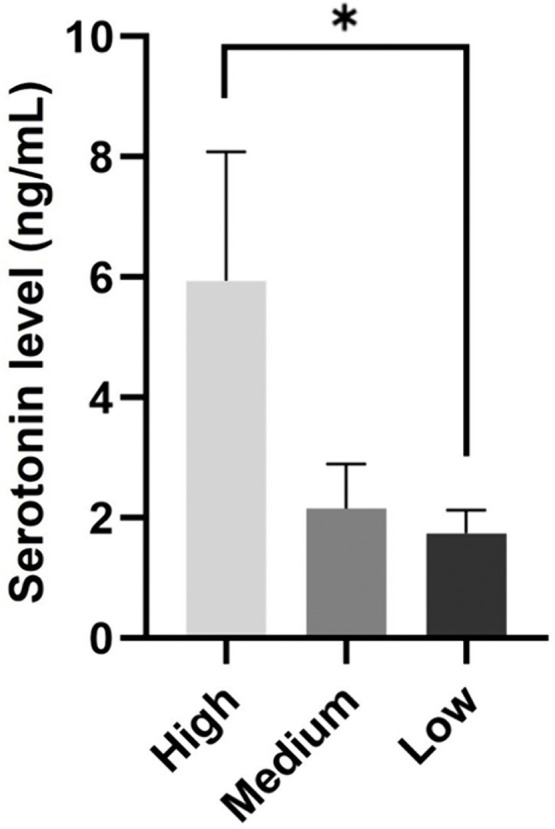 Figure 4
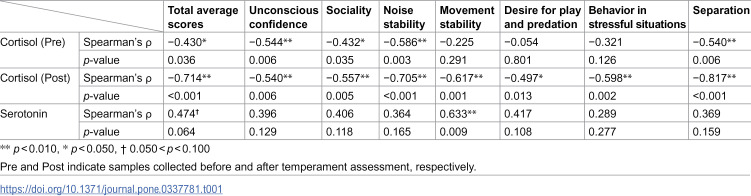 Figure 5
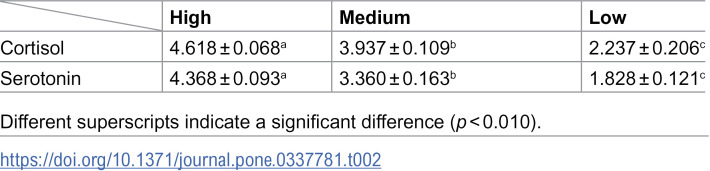 Figure 6
Peer Reviews
No public reviews on file for this paper yet. If you reviewed it on a platform where reviews are public (OpenReview, ICLR, NeurIPS, ICML), you can paste yours below so the community can read it here.
Videos
No videos yet. Explain this paper in a talk, walkthrough, or lecture? Add one.
Taxonomy
TopicsHuman-Animal Interaction Studies · Animal Behavior and Welfare Studies · Veterinary Orthopedics and Neurology