Shared TCR Vβ21.3+ T cell immunological signature between MIS-A and MIS-C
Liliane Khoryati, Signe Bech Sørensen, Christophe Parizot, Raphaëlle Lautraite, Marc Pineton de Chambrun, Andreas Ronit, Andreas Ronit, Sofie Eg Jørgensen, Casper Roed, Merete Storgaard, Ann-Britt Eg Hansen, Sarah Benezech, Samira Khaldi-Plassart, Etienne Javouhey

TL;DR
This study finds a shared T cell signature in adult and child SARS-CoV-2-related inflammatory syndromes, suggesting a common immune mechanism.
Contribution
The study identifies a shared TCR Vβ21.3+ T cell signature in MIS-A and MIS-C, revealing a potential common immune mechanism.
Findings
Vβ21.3+ T cells were expanded in 9 out of 16 MIS-A patients across two cohorts.
Vβ21.3+ T cells showed increased activation and exhaustion markers and higher effector memory T cell abundance.
The Vβ21.3+ T cell signature in MIS-A is similar to that previously reported in MIS-C.
Abstract
The immune dysregulation in SARS-CoV-2–related multisystem inflammatory syndrome in adults (MIS-A) is not fully characterized. In this work, Khoryati et al. identify a T cell receptor Vβ21.3 signature in MIS-A similar to that previously reported in children (MIS-C), suggesting a shared immune-related mechanism between the two conditions. Multisystem inflammatory syndrome (MIS) is a severe and potentially life-threatening complication of SARS-CoV-2 infection that affects both children (MIS-C) and adults (MIS-A). While the inflammatory response in MIS-C has been studied in detail, the immune dysregulation underlying MIS-A remains poorly understood, mainly due to the rarity of its condition. Using flow cytometry, we analyzed the T cell response in two, Danish and French, MIS-A cohorts, encompassing a total of 16 cases. We observed an expansion of Vβ21.3+ T cells in at least one of the…
Genes, proteins, chemicals, diseases, species, mutations and cell lines named across the full text — each resolved to its canonical identifier and authoritative record.
Click any figure to enlarge with its caption.
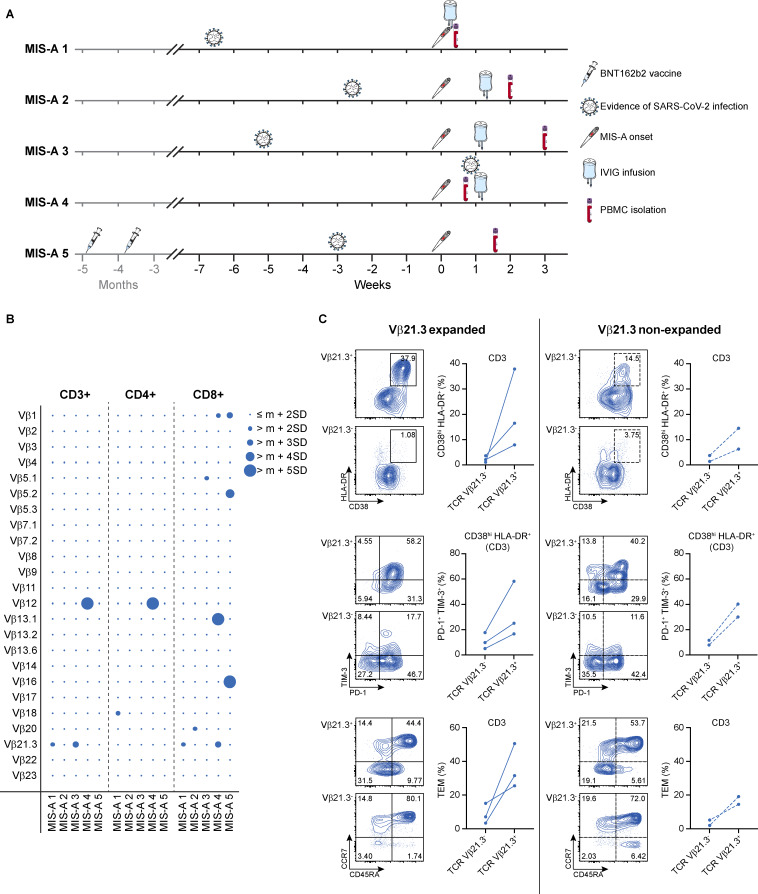 Figure 1
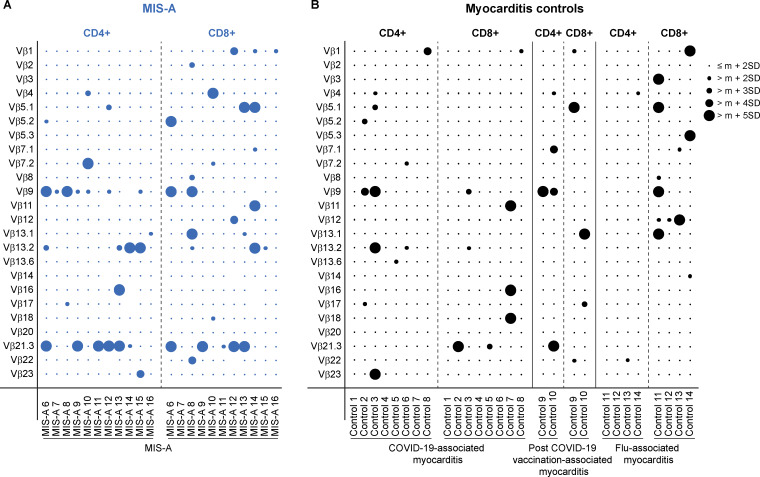 Figure 2
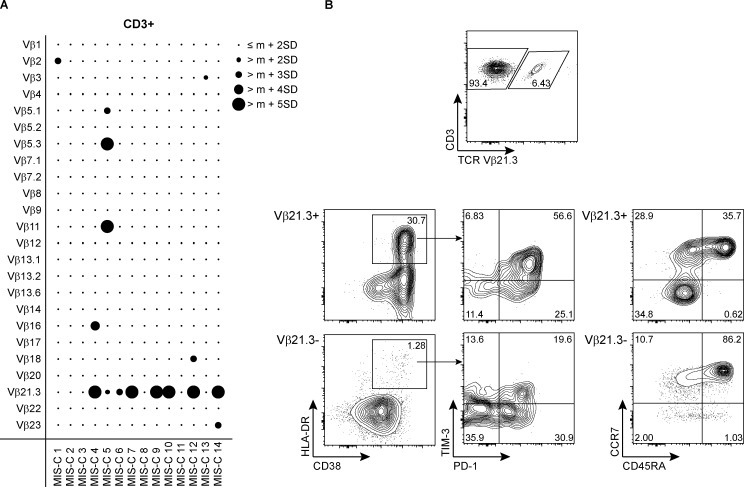 Figure 3
Peer Reviews
No public reviews on file for this paper yet. If you reviewed it on a platform where reviews are public (OpenReview, ICLR, NeurIPS, ICML), you can paste yours below so the community can read it here.
Videos
No videos yet. Explain this paper in a talk, walkthrough, or lecture? Add one.
Taxonomy
TopicsKawasaki Disease and Coronary Complications · Autoimmune and Inflammatory Disorders Research · Phagocytosis and Immune Regulation