Recurrent Anastomotic Leak After Hartmann Reversal: Successful Management With Vacuum-Assisted Endoscopic Drainage and Diversion
Ali Ghanem Al Masad, Omar Reda Abdelmaksoud

TL;DR
A 27-year-old woman with a recurring anastomotic leak after surgery was successfully treated using a minimally invasive endoscopic vacuum therapy and colostomy.
Contribution
This case demonstrates the successful use of vacuum-assisted endoscopic drainage as a novel, minimally invasive treatment for recurrent anastomotic leaks.
Findings
Vacuum-assisted therapy promoted cavity collapse and infection resolution.
The treatment achieved healing without the need for permanent bowel diversion.
The approach preserved bowel continuity and reduced surgical morbidity.
Abstract
Anastomotic leakage after Hartmann reversal is a challenging complication with limited management options. We report a 27-year-old woman who developed a recurrent leak after reversal surgery. Instead of repeat laparotomy, she underwent combined endoscopic vacuum-assisted therapy and diverting colostomy. Serial sponge exchanges promoted cavity collapse, infection resolution, and granulation, achieving healing without permanent diversion. This case illustrates the role of endoscopic vacuum-assisted therapy as a minimally invasive salvage option for recurrent colorectal leaks, highlighting its value in preserving bowel continuity and reducing morbidity in complex surgical scenarios.
Genes, proteins, chemicals, diseases, species, mutations and cell lines named across the full text — each resolved to its canonical identifier and authoritative record.
Click any figure to enlarge with its caption.
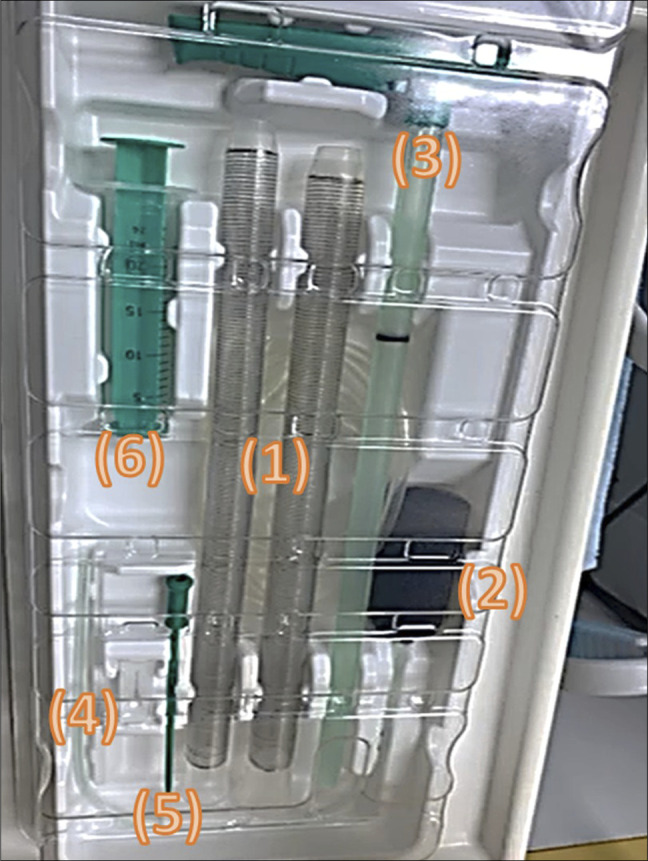 Figure 1
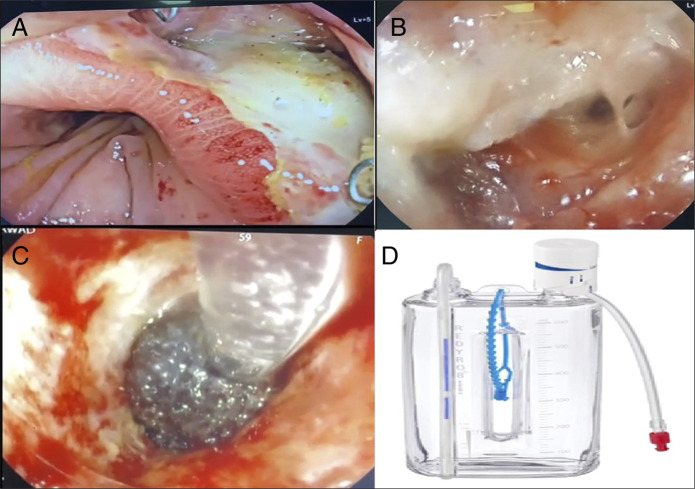 Figure 2
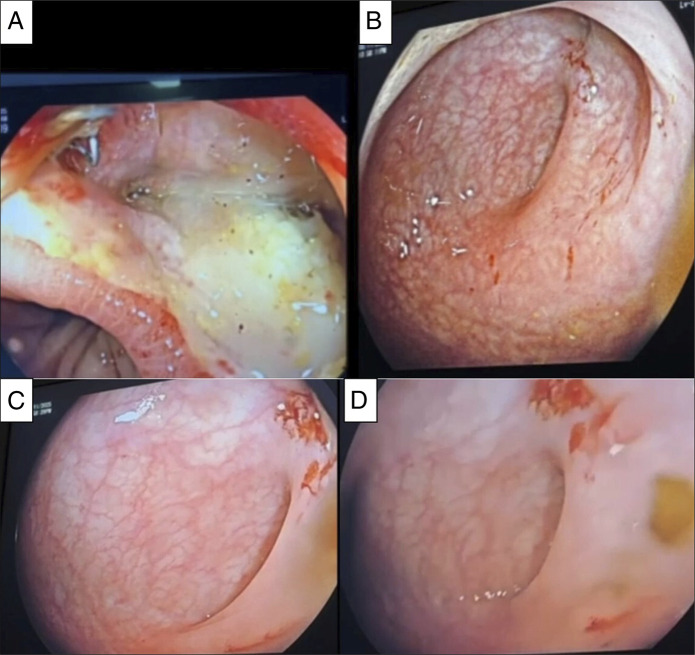 Figure 3
Peer Reviews
No public reviews on file for this paper yet. If you reviewed it on a platform where reviews are public (OpenReview, ICLR, NeurIPS, ICML), you can paste yours below so the community can read it here.
Videos
No videos yet. Explain this paper in a talk, walkthrough, or lecture? Add one.
Taxonomy
TopicsDiverticular Disease and Complications · Colorectal Cancer Screening and Detection · Esophageal and GI Pathology