Protein tandem repeats that produce frameshifts can generate new structural states and functions
Zarifa Osmanli, Gudrun Aldrian, Jeremy Leclercq, Theo Falgarone, Santiago M. Gómez Bergna, Denis N. Prada Gori, Andrew V. Oleinikov, Ilham Shahmuradov, Andrey V. Kajava

TL;DR
This paper shows that frameshifts in protein tandem repeats can create new protein structures and functions, potentially aiding evolution and causing disease.
Contribution
The study reveals that frameshifts in tandem repeats lead to significant structural and functional changes, challenging previous assumptions about their effects.
Findings
Frameshifts in short tandem repeats increase hydrophobicity and arginine content.
Frameshifts can convert soluble proteins into membrane proteins and vice versa.
Frameshift events generate novel protein structures and functions, contributing to adaptability and disease.
Abstract
The genetic code uses three‐nucleotide units to encode each amino acid in proteins. Insertions or deletions of nucleotides not divisible by three shift the reading frames, resulting in significantly different protein sequences. These events are disruptive but can also create variability important for evolution. Previous studies suggested that the genetic code and gene sequences evolve to minimize frameshift effects, maintaining similar physicochemical properties to their reference proteins. Here, we focused on tandem repeat sequences, known as frameshift hotspots. Using cutting‐edge bioinformatics tools, we compared reference and frameshifted protein sequences within tandem repeats across 50 prokaryotic and eukaryotic proteomes. We showed that, in contrast to the general tendency, frameshifts within these regions, especially with short repeats, lead to a significant increase in…
Genes, proteins, chemicals, diseases, species, mutations and cell lines named across the full text — each resolved to its canonical identifier and authoritative record.
Click any figure to enlarge with its caption.
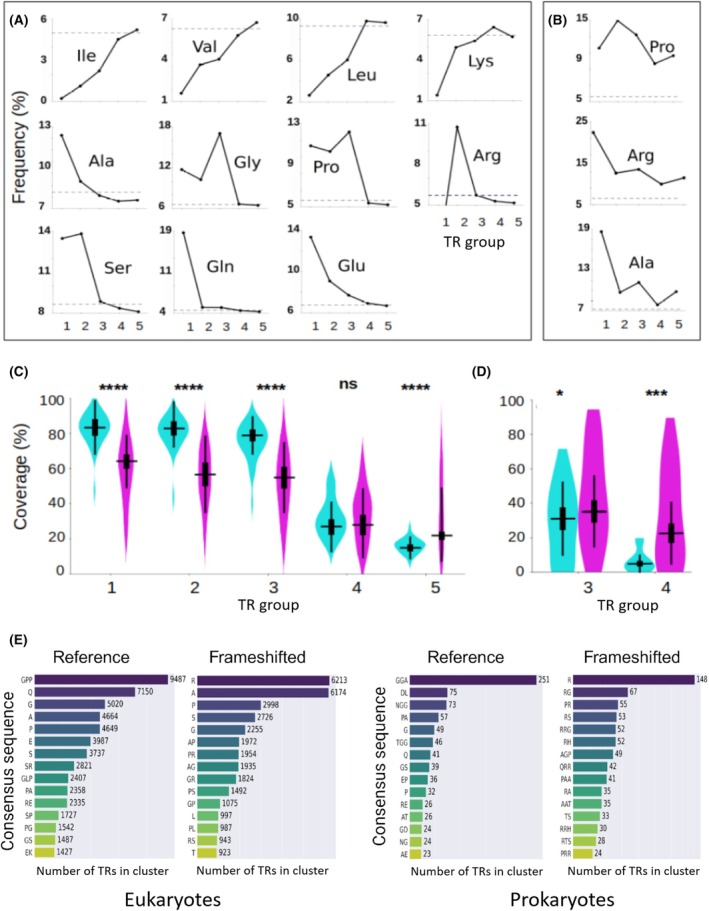 Figure 1
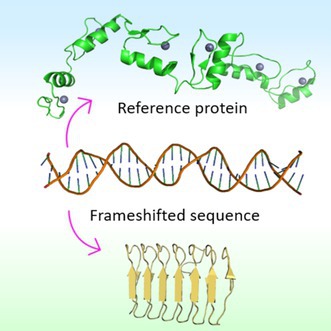 Figure 2
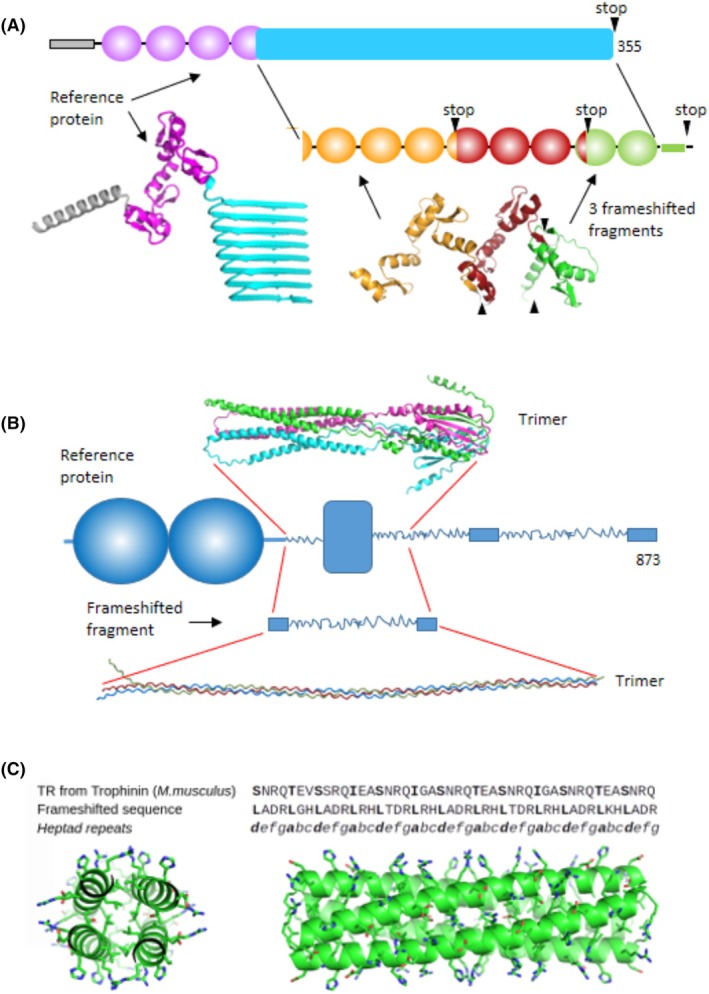 Figure 3
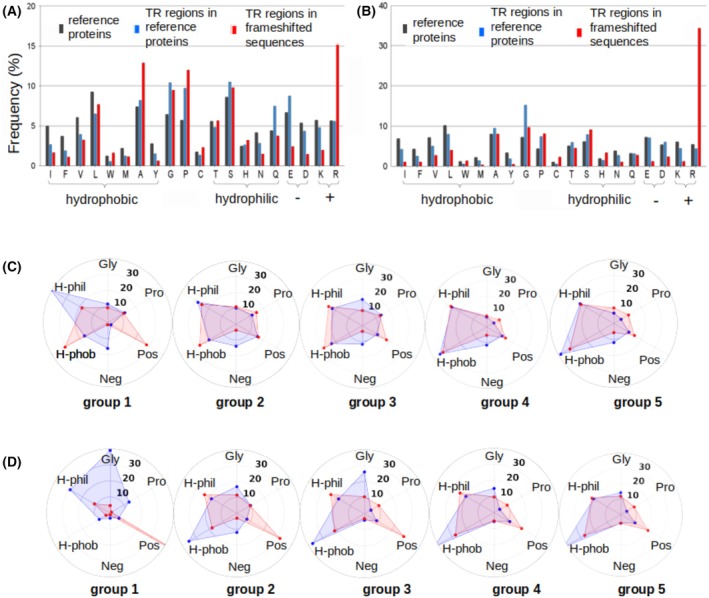 Figure 4
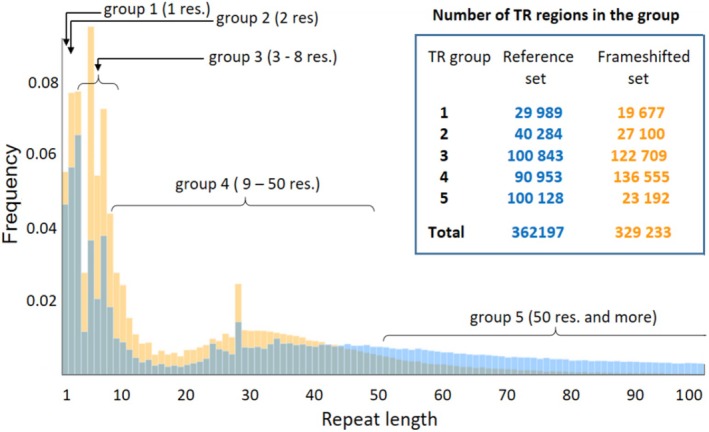 Figure 5
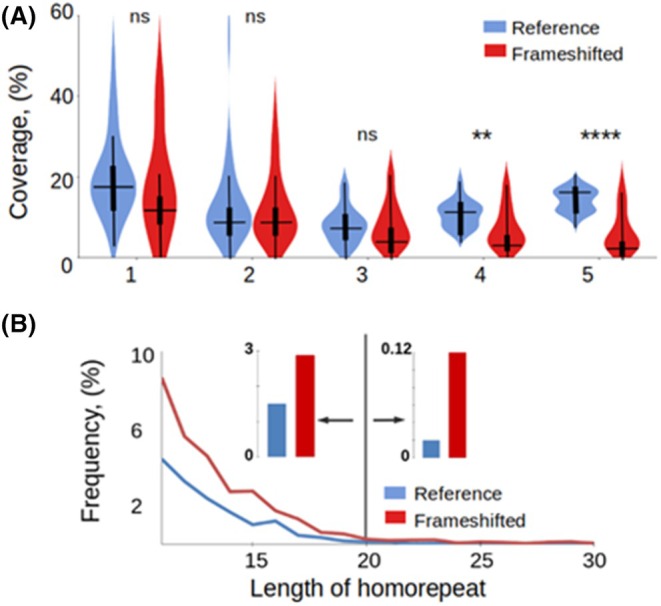 Figure 6
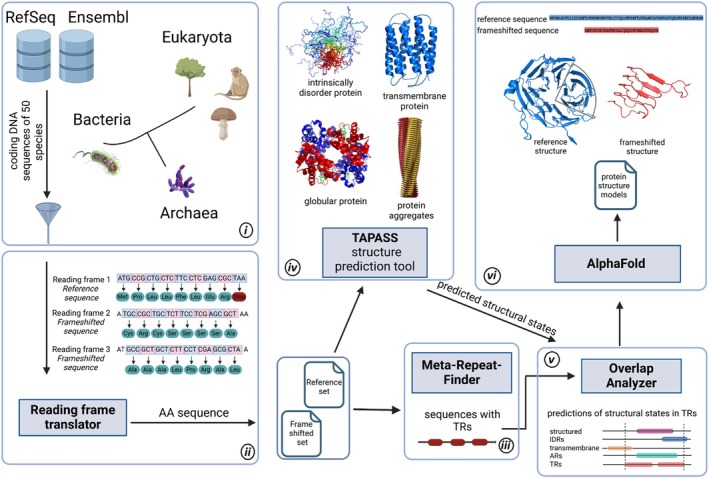 Figure 7
Peer Reviews
No public reviews on file for this paper yet. If you reviewed it on a platform where reviews are public (OpenReview, ICLR, NeurIPS, ICML), you can paste yours below so the community can read it here.
Videos
No videos yet. Explain this paper in a talk, walkthrough, or lecture? Add one.
Taxonomy
TopicsRNA and protein synthesis mechanisms · Genomics and Phylogenetic Studies · Machine Learning in Bioinformatics