CLEC18A interacts with sulfated glycosaminoglycans and controls clear cell renal cell carcinoma progression
Gustav Jonsson, Maura Hofmann, Stefan Mereiter, Lauren Hartley‐Tassell, Masahiro Onji, Irma Sakic, Tiago Oliveira, David Hoffmann, Maria Novatchkova, Alexander Schleiffer, Josef M. Penninger

TL;DR
This study identifies CLEC18A as a C-type lectin that interacts with sulfated glycosaminoglycans and helps control the progression of clear cell renal cell carcinoma.
Contribution
The study reveals CLEC18A as a novel regulator of ccRCC tumor growth through its interaction with sulfated glycosaminoglycans.
Findings
CLEC18A is expressed in the kidney's proximal tubule and brain's medial habenula.
High CLEC18 family gene expression in ccRCC tumors is linked to better patient survival.
Deleting Clec18a in mice led to increased tumor growth in a ccRCC model.
Abstract
C‐type lectins are a large protein family with essential functions in both health and disease. In cancer, some C‐type lectins have been found to both promote and inhibit tumor growth, but many of the C‐type lectins still remain uncharacterized. Here, we report a key role of the C‐type lectin domain family 18 members (CLEC18 family) in the progression of clear cell renal cell carcinoma (ccRCC). The CLEC18 family is conserved across the entire Chordata phylum, with a high frequency of duplication events in humans compared to other species. We found that CLEC18A is exclusively expressed in the proximal tubule of the kidney and the medial habenula of the brain. We further identified sulfated glycosaminoglycans as the main CLEC18A ligand, making them unique among C‐type lectins. In ccRCC patients, high expression of genes in the CLEC18 family in the tumor is associated with improved…
Genes, proteins, chemicals, diseases, species, mutations and cell lines named across the full text — each resolved to its canonical identifier and authoritative record.
Click any figure to enlarge with its caption.
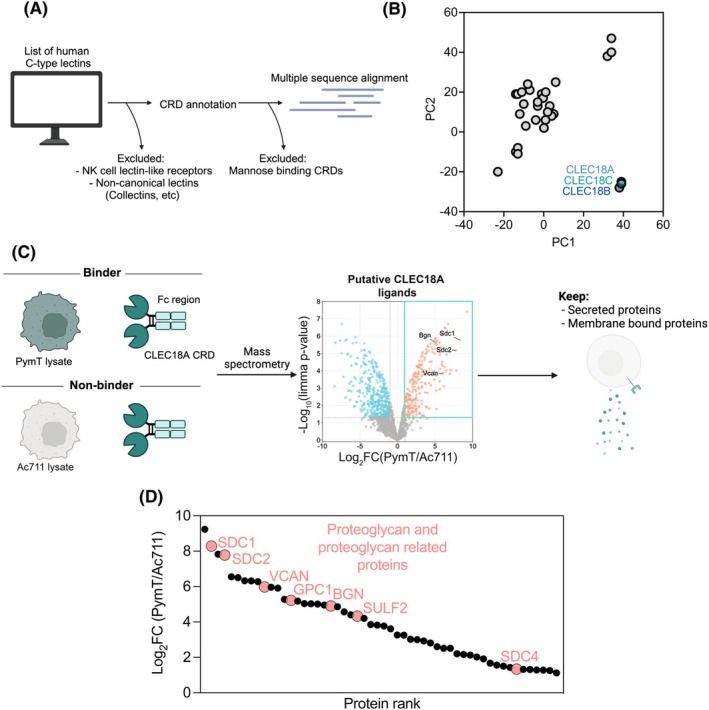 Figure 1
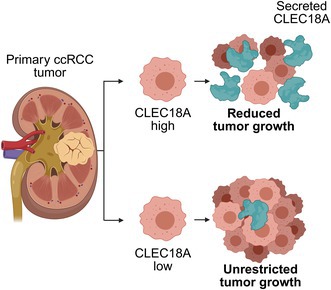 Figure 2
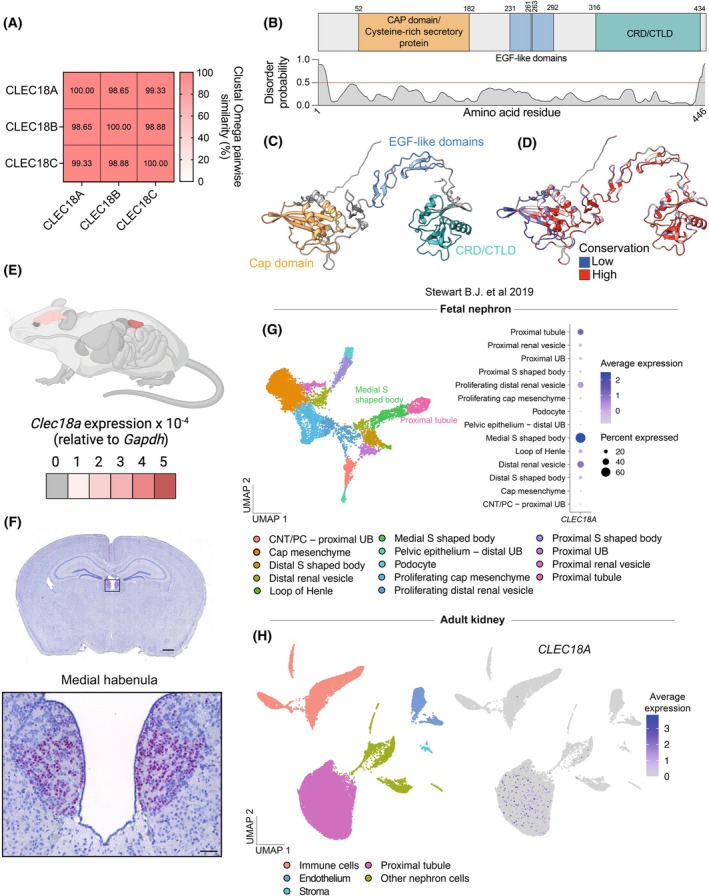 Figure 3
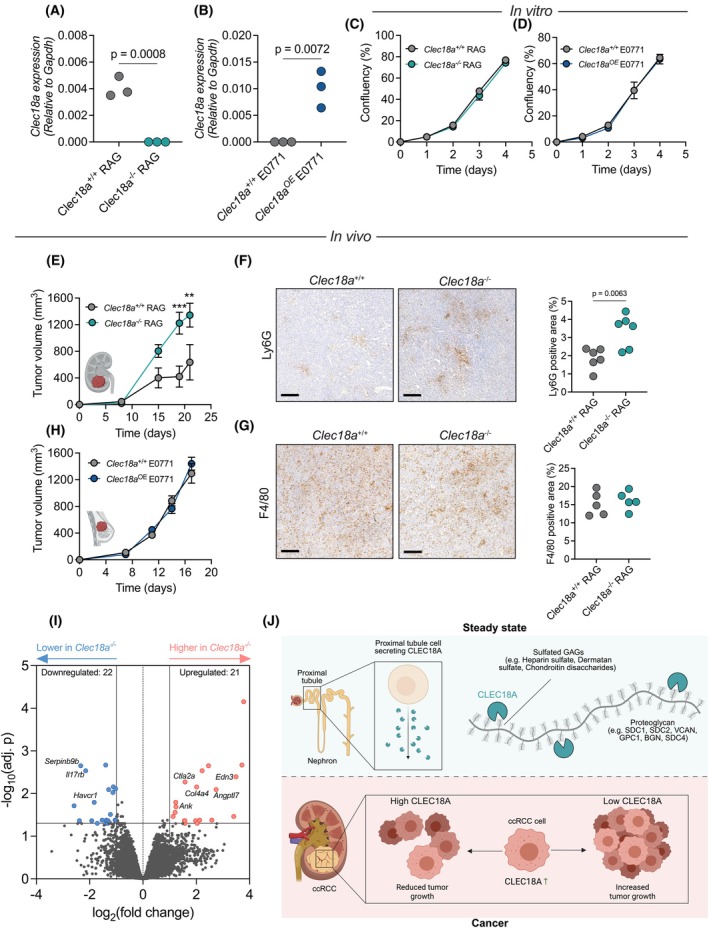 Figure 4
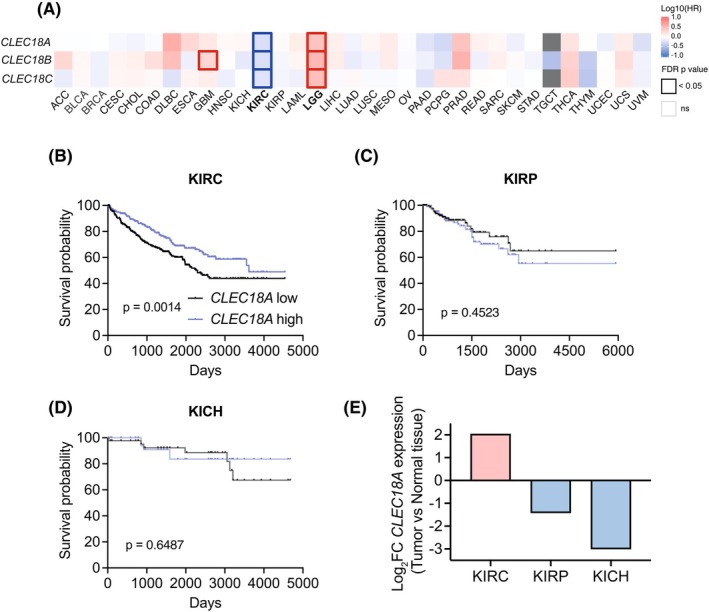 Figure 5
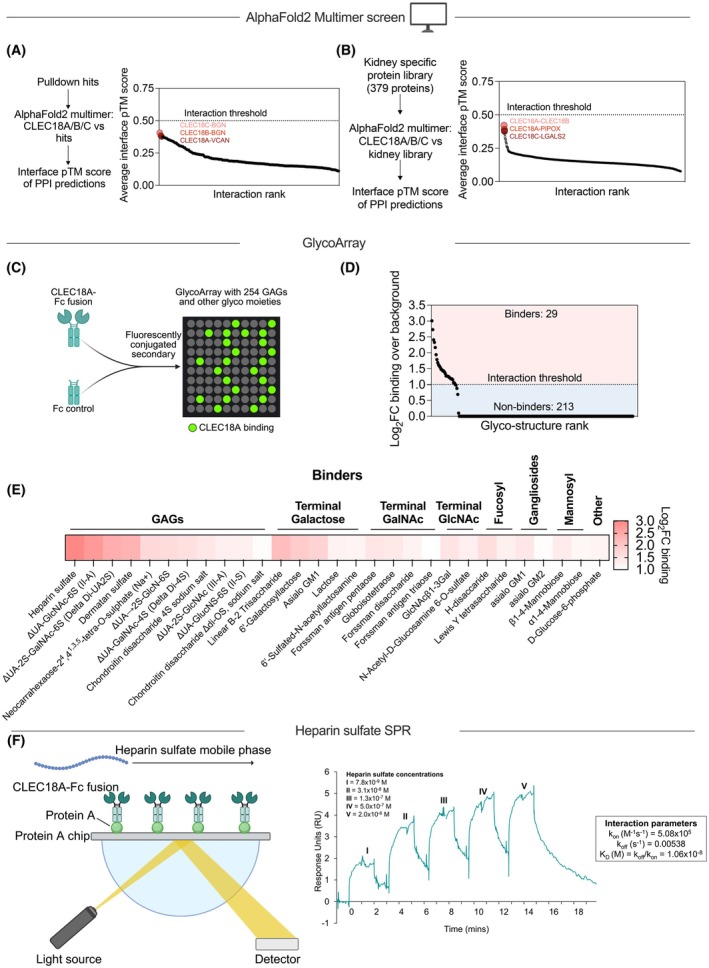 Figure 6
Peer Reviews
No public reviews on file for this paper yet. If you reviewed it on a platform where reviews are public (OpenReview, ICLR, NeurIPS, ICML), you can paste yours below so the community can read it here.
Videos
No videos yet. Explain this paper in a talk, walkthrough, or lecture? Add one.
Taxonomy
TopicsEndoplasmic Reticulum Stress and Disease · Galectins and Cancer Biology · Glycosylation and Glycoproteins Research