Exploring the influence of lid region residues on fatty acid selectivity in a lipase originating from Rhizopus oryzae
Zehui Dong, Majid Haddad Momeni, Kim Olofsson, Eva Nordberg Karlsson

TL;DR
This study explores how changes in specific parts of a Rhizopus oryzae lipase affect its ability to select fatty acids, which could improve its use in industries like food and cosmetics.
Contribution
The study introduces engineered variants of ROL with altered fatty acid selectivity while maintaining thermostability, including a novel lid-swap chimera.
Findings
Mutating Phe95 to smaller residues increased selectivity toward medium-chain fatty acid esters.
The lid-swap chimera shifted preference from medium-chain to long-chain fatty acids while retaining high activity.
Engineered variants maintained thermostability, suggesting potential for industrial applications.
Abstract
Lipases are vital in modifying lipid substrates across industries such as food, cosmetics, and pharmaceuticals. Among their features, fatty acid selectivity is particularly important for industrial applications. Rhizopus oryzae lipase (ROL) stands out for its high selectivity and broad applicability. In this study, we engineered single‐residue variants of ROL by targeting Ala89 and Phe95 in its lid region. Additionally, a lid‐swap chimera was created by replacing ROL's 15‐residue lid with that of the homologous lipase from Rhizomucor miehei (RML). These variants were expressed and characterized to assess changes in substrate selectivity. Our results highlight the lid's key role in determining fatty acid preference. Notably, mutating Phe95 to smaller residues (Ile or Ala) significantly increased selectivity toward medium‐chain fatty acid (MCFA) esters. In contrast, substituting Ala89…
Genes, proteins, chemicals, diseases, species, mutations and cell lines named across the full text — each resolved to its canonical identifier and authoritative record.
Click any figure to enlarge with its caption.
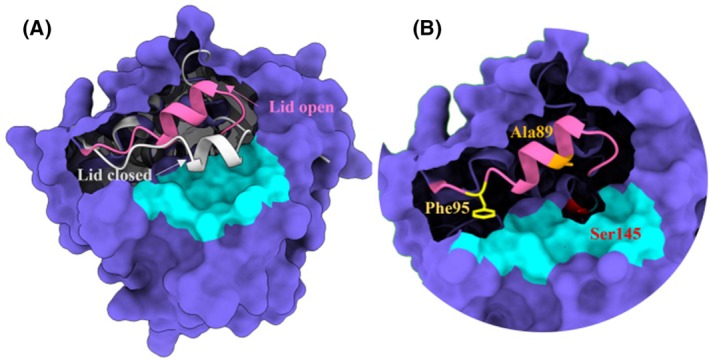 Figure 1
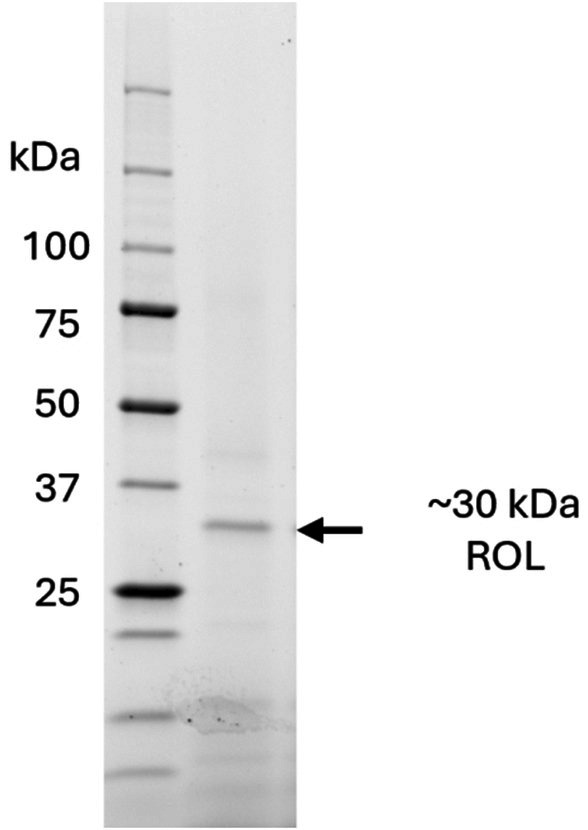 Figure 2
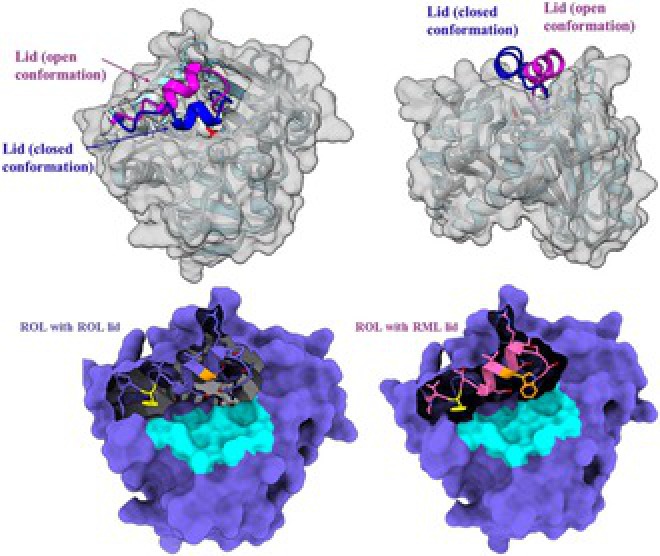 Figure 3
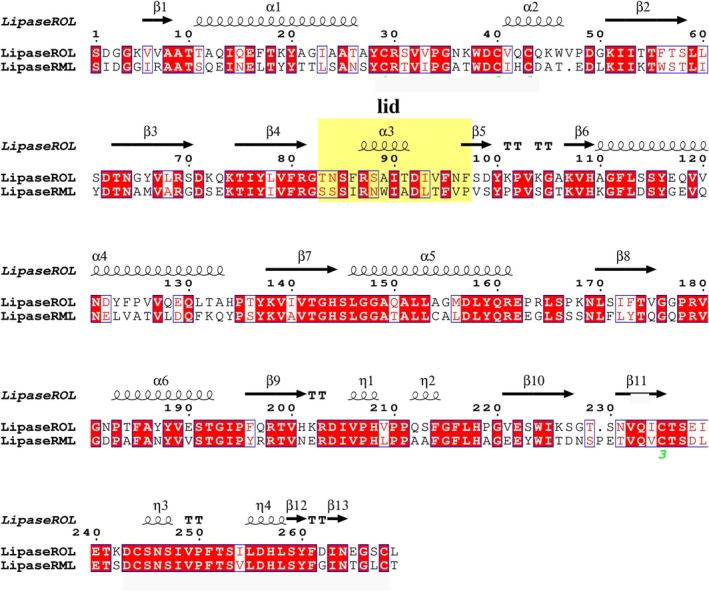 Figure 4
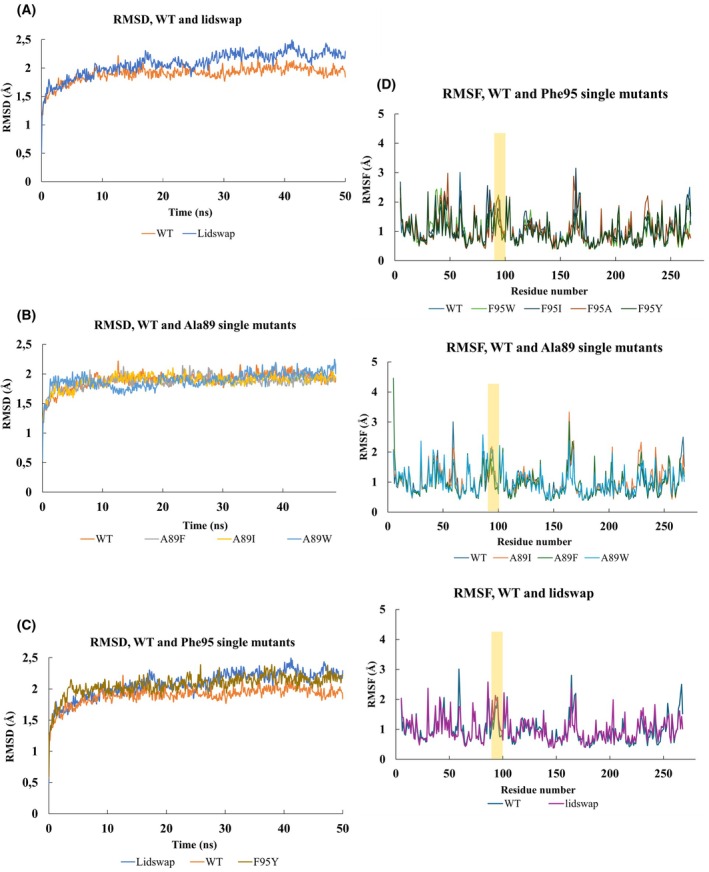 Figure 5
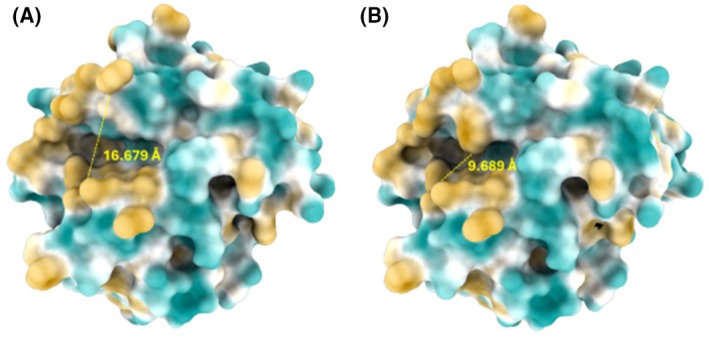 Figure 6
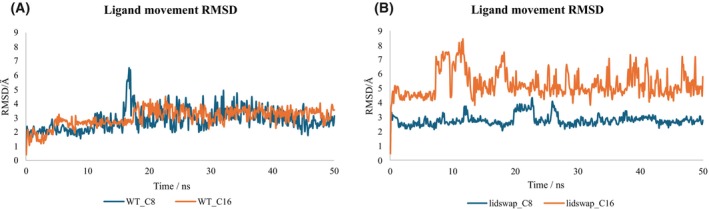 Figure 7
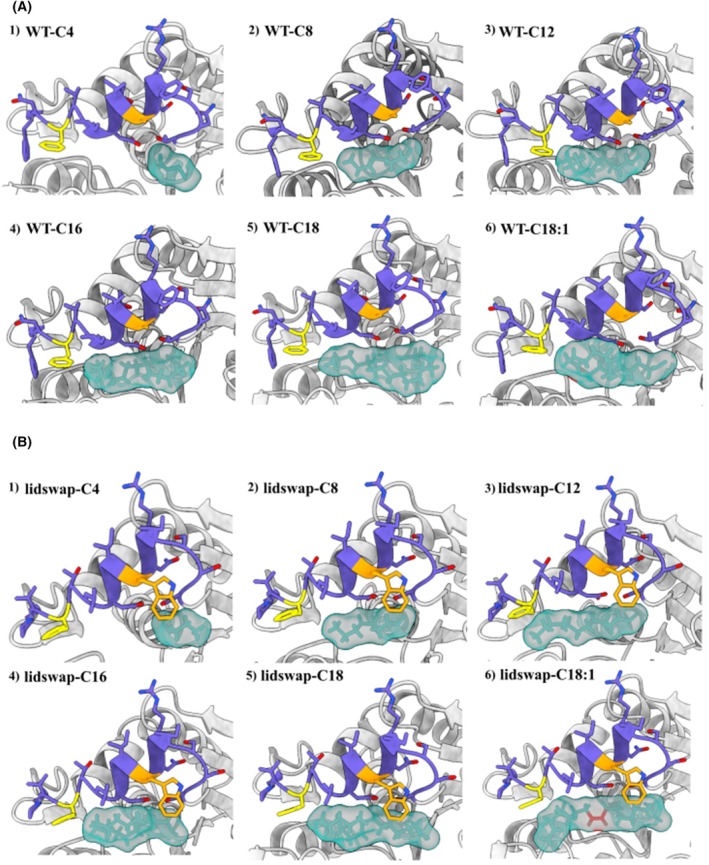 Figure 8
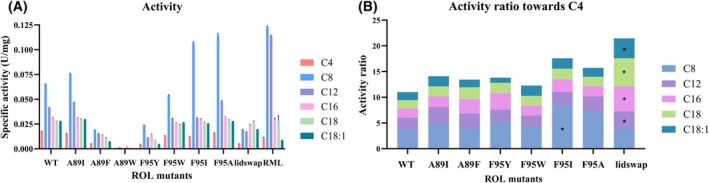 Figure 9
Peer Reviews
No public reviews on file for this paper yet. If you reviewed it on a platform where reviews are public (OpenReview, ICLR, NeurIPS, ICML), you can paste yours below so the community can read it here.
Videos
No videos yet. Explain this paper in a talk, walkthrough, or lecture? Add one.
Taxonomy
TopicsEnzyme Catalysis and Immobilization · Microbial Metabolic Engineering and Bioproduction · Innovative Microfluidic and Catalytic Techniques Innovation