Shaking Up Photochemistry: The Future Frontiers of Mechanophotocatalysis
Francis Millward, Eli Zysman-Colman

TL;DR
This paper explores a new approach called mechanophotocatalysis that reduces the need for harmful solvents in light-driven chemical reactions.
Contribution
The paper introduces mechanophotocatalysis as a novel method combining photocatalysis with mechanical mixing to minimize solvent use.
Findings
Mechanophotocatalysis reduces reliance on organic solvents in photochemical reactions.
The approach uses mechanical mixing to mediate light-driven transformations.
The paper outlines future research directions to develop mechanophotocatalysis as a practical methodology.
Abstract
Solution-state photocatalysis is fundamentally reliant on the use of organic solvents, which are associated with significant safety, sustainability, and implementation challenges for conducting light-driven reactions. Mechanophotocatalysis tantalizingly addresses these issues by significantly reducing the use of reaction solvents, using mechanical mixing to mediate light-driven transformations. In this Outlook, we examine the motivations for combining photocatalysis with mechanochemistry, assess how this nascent methodology has evolved, and speculate on future research directions that should be explored in order for mechanophotocatalysis to emerge as a useful and complementary methodology for conducting photochemical reactions under solvent-minimized conditions.
Click any figure to enlarge with its caption.
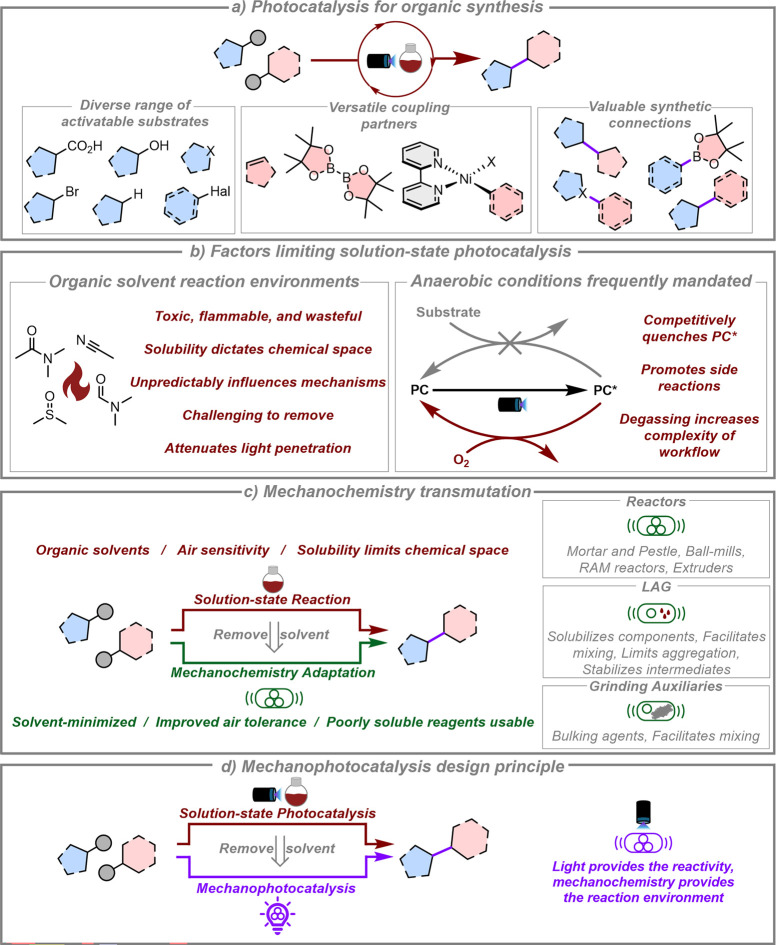 Figure 1
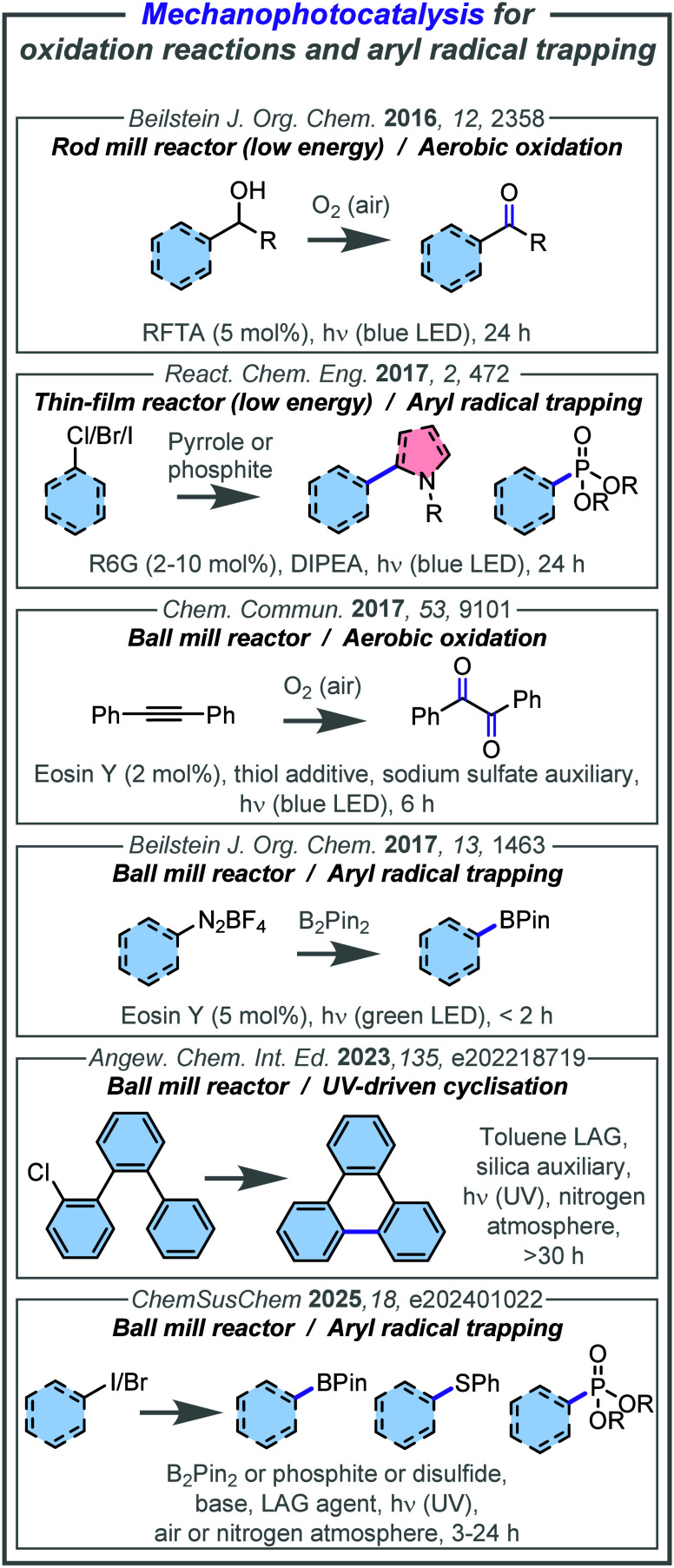 Figure 2
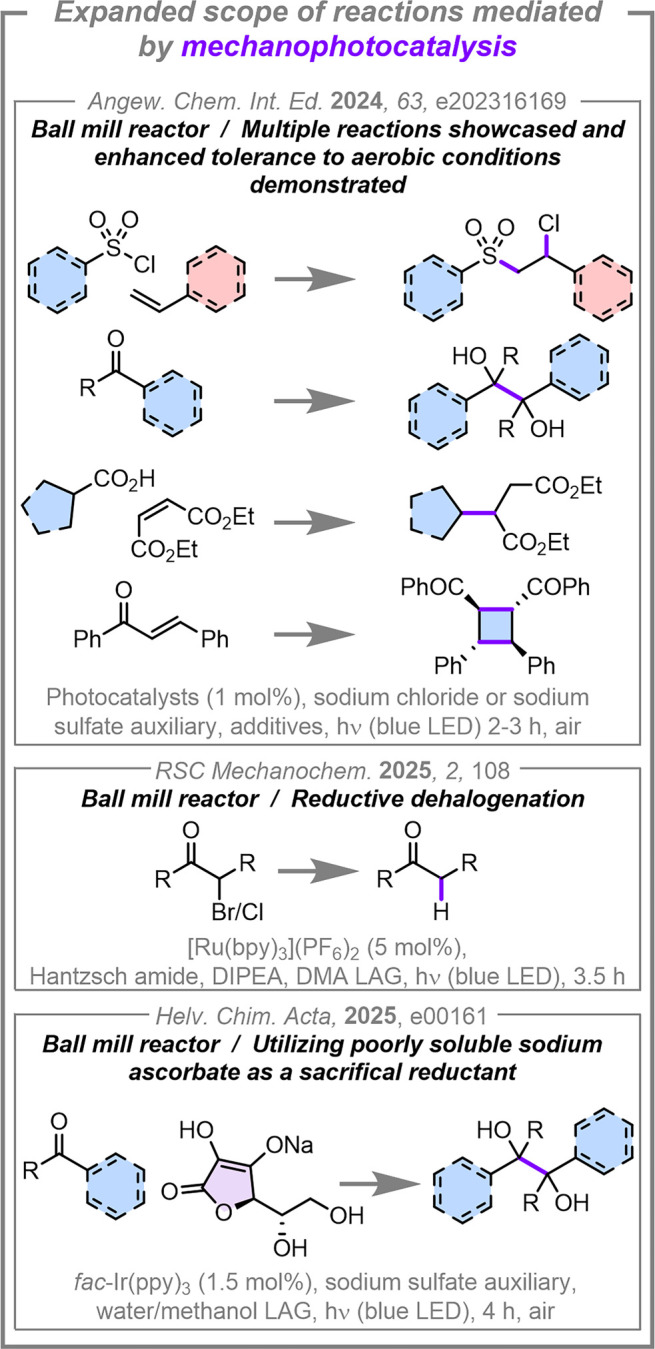 Figure 3
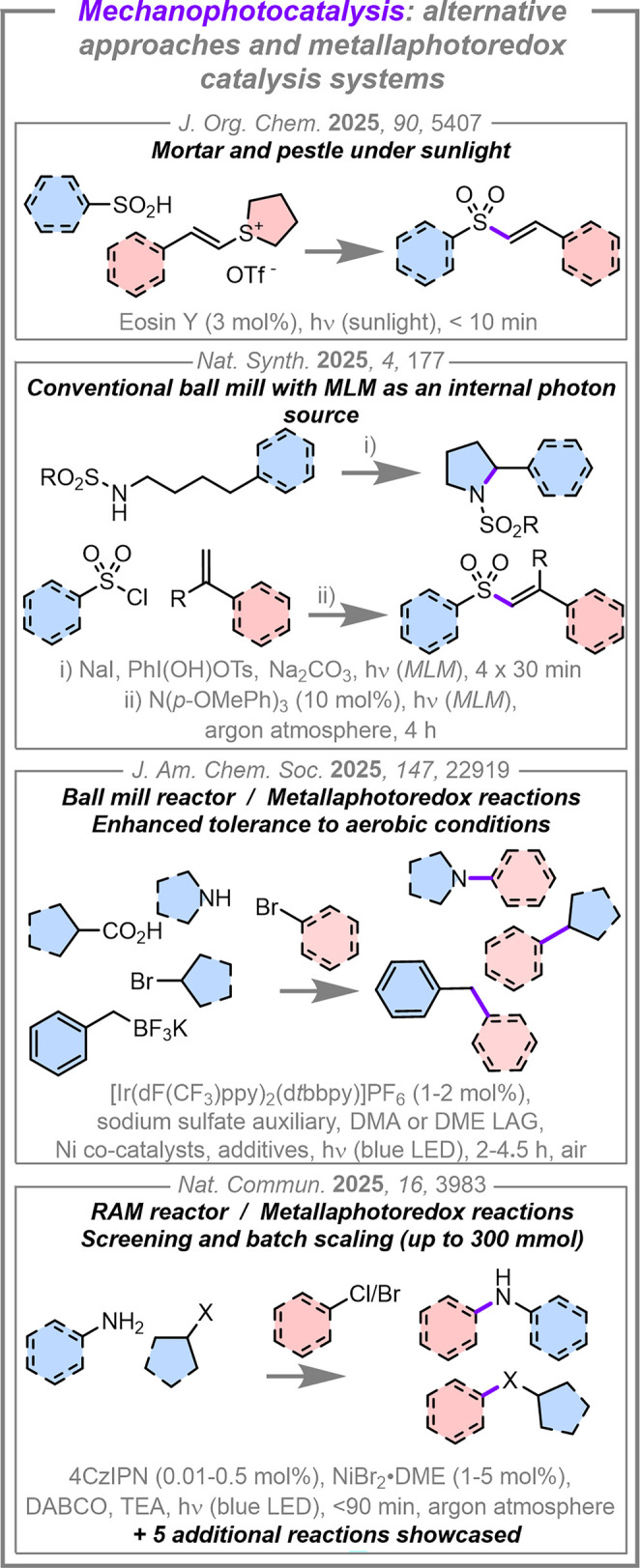 Figure 4
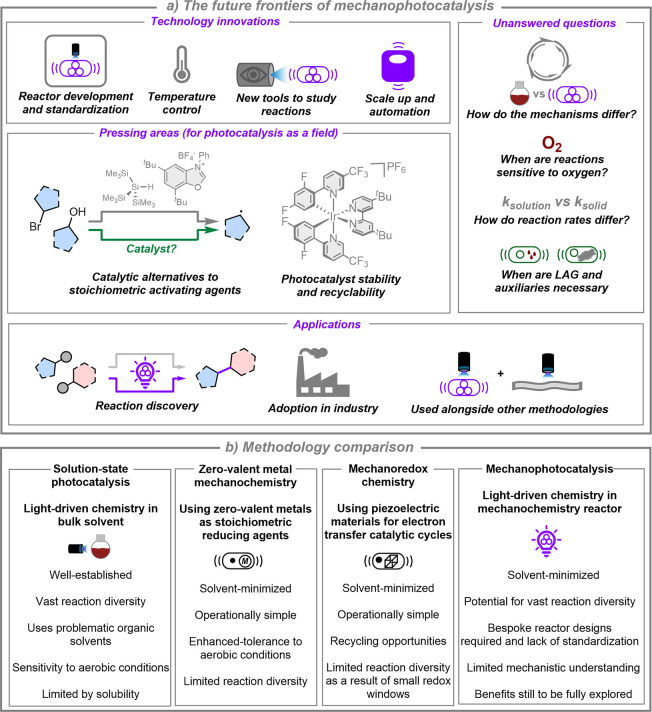 Figure 5
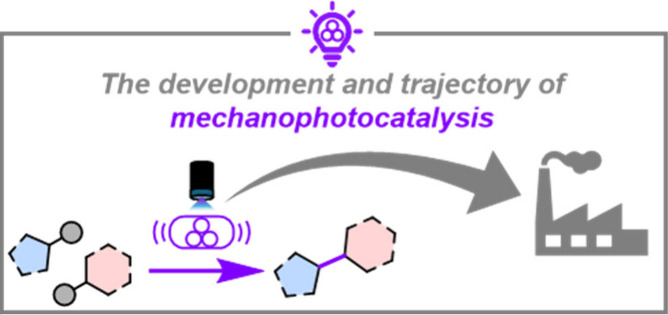 Figure 6
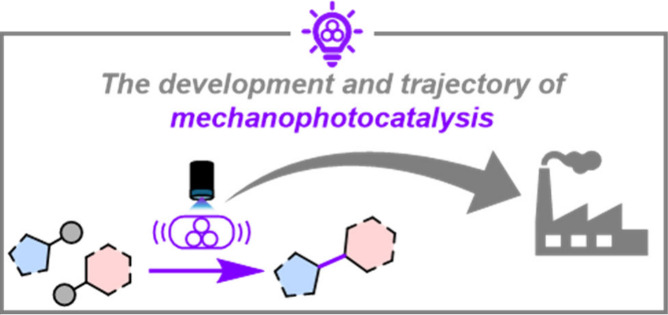 Figure 7
Peer Reviews
No public reviews on file for this paper yet. If you reviewed it on a platform where reviews are public (OpenReview, ICLR, NeurIPS, ICML), you can paste yours below so the community can read it here.
Videos
No videos yet. Explain this paper in a talk, walkthrough, or lecture? Add one.
Taxonomy
TopicsCrystallography and molecular interactions · Luminescence and Fluorescent Materials · Photochromic and Fluorescence Chemistry