Detecting Pediatric Emergency Service Use for Suicide and Self-Harm: Multimodal Analysis of 3828 Encounters
Juliet Beni Edgcomb, Angshuman Saha, Alexandra Klomhaus, Elyse Tascione, Chrislie G Ponce, Joshua J Lee, Theona Tacorda, Bonnie T Zima

TL;DR
This study compares different methods to detect pediatric emergency visits related to suicide and self-harm, finding that combining structured data with text analysis improves accuracy and reduces variability.
Contribution
The study introduces a hybrid method combining structured data and natural language processing to more accurately detect pediatric emergency visits related to self-harm.
Findings
Hybrid methods combining structured data and text analysis achieved the highest detection accuracy (AUROC=0.977).
Low-dimensional structured data showed significant variability in detection accuracy across demographics and diagnoses.
Hybrid approaches reduced unwanted variability in detection across 20 demographic and 12 diagnostic subgroups.
Abstract
Suicide is the second-leading cause of US childhood mortality after 9 years of age. The accurate measurement of pediatric emergency service use for self-injurious thoughts and behaviors (SITB) remains challenging, as diagnostic codes undercount children. This measurement gap impedes public health and prevention efforts. Current research has not established which combination of electronic health record data elements achieves both high detection accuracy and consistent performance across youth populations. This study aims to (1) compare the detection accuracy of electronic health record−based methods for identifying SITB-related pediatric emergency department (ED) visits: basic structured data (International Classification of Diseases Version 10, Clinical Modification codes, chief concern), comprehensive structured data, clinical note text with natural language processing, and hybrid…
Genes, proteins, chemicals, diseases, species, mutations and cell lines named across the full text — each resolved to its canonical identifier and authoritative record.
Click any figure to enlarge with its caption.
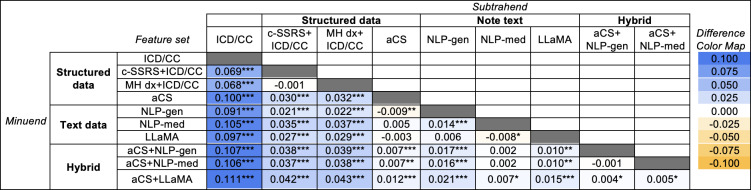 Figure 1
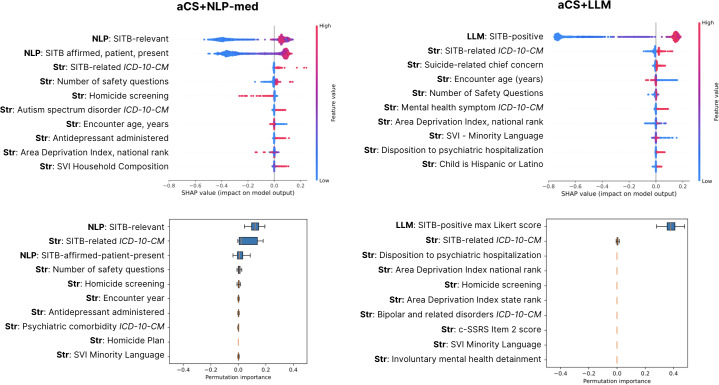 Figure 2
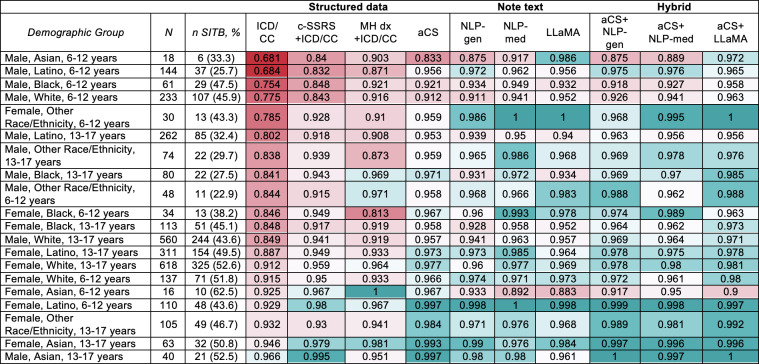 Figure 3
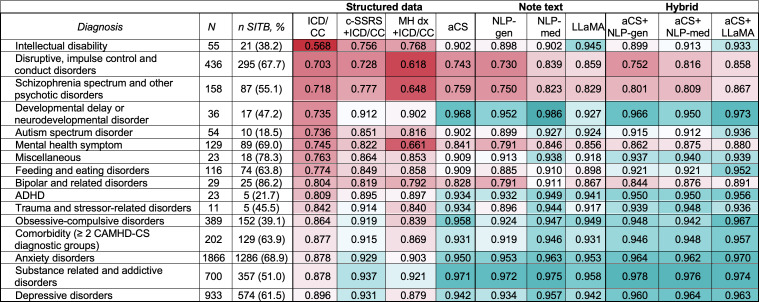 Figure 4
Peer Reviews
No public reviews on file for this paper yet. If you reviewed it on a platform where reviews are public (OpenReview, ICLR, NeurIPS, ICML), you can paste yours below so the community can read it here.
Videos
No videos yet. Explain this paper in a talk, walkthrough, or lecture? Add one.
Taxonomy
TopicsSuicide and Self-Harm Studies · Mental Health via Writing · Child and Adolescent Psychosocial and Emotional Development