Discovery and preclinical evaluation of monoclonal antibodies and bispecific engagers targeting the NKG2A inhibitory receptor
Seungmin Shin, Yae-Jin Kim, Bernard J. C. Macatangay, Joshua C. Cyktor, Margaret G. Hines, Ze-Yu Sun, Kong Chen, John W. Mellors, Dimiter S. Dimitrov, Wei Li, Du-San Baek

TL;DR
This study discovers new antibodies and bispecific engagers that enhance immune cell activity against cancer by blocking the NKG2A receptor.
Contribution
The paper introduces fully human monoclonal antibodies and bispecific engagers targeting NKG2A for cancer immunotherapy.
Findings
Monoclonal antibodies blocking NKG2A enhanced NK cell activation and tumor cell killing.
Bispecific engagers directed immune cells to attack cancer cells and inhibited tumor growth in mice.
Combining BiNKs with existing therapies improved antitumor effects of both NK and T cells.
Abstract
NK and T cells are key effectors that eliminate cancer cells, but upregulation of the inhibitory receptor NKG2A on these cells attenuates antitumor immune responses. To counteract NKG2A inhibitory signaling, we identified two specific fully human monoclonal anti-NKG2A antibodies that block HLA-E ligand binding. These antibodies activated NK cells and enhanced antibody-dependent cellular cytotoxicity of tumor-targeting IgG1s both in vitro and in vivo. Bispecific engagers (BiNKs), generated by fusing NKG2A antibodies with tumor targeting binders, promoted immune synapse formation and directed cytotoxicity of NK and CD8+ T cells toward cancer cells. In a human PBMC-engrafted NSG mouse xenograft lung cancer model, an anti-HER2 × anti-NKG2A BiNK markedly inhibited tumor growth as a monotherapy or in combination with pertuzumab. Cell depletion studies revealed that the BiNK enhanced antitumor…
Genes, proteins, chemicals, diseases, species, mutations and cell lines named across the full text — each resolved to its canonical identifier and authoritative record.
Click any figure to enlarge with its caption.
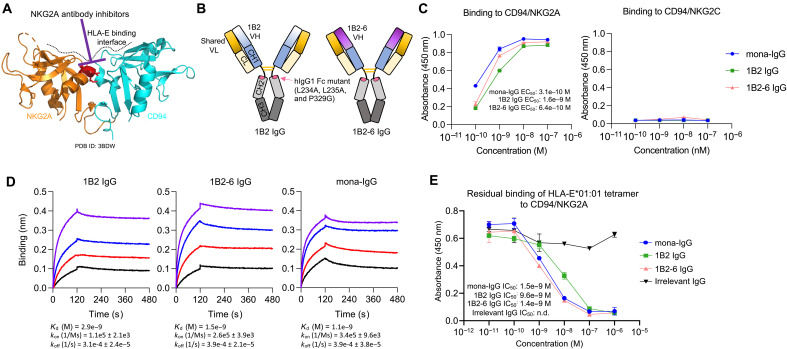 Figure 1
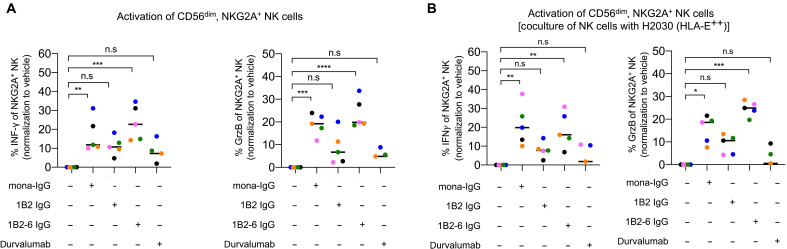 Figure 2
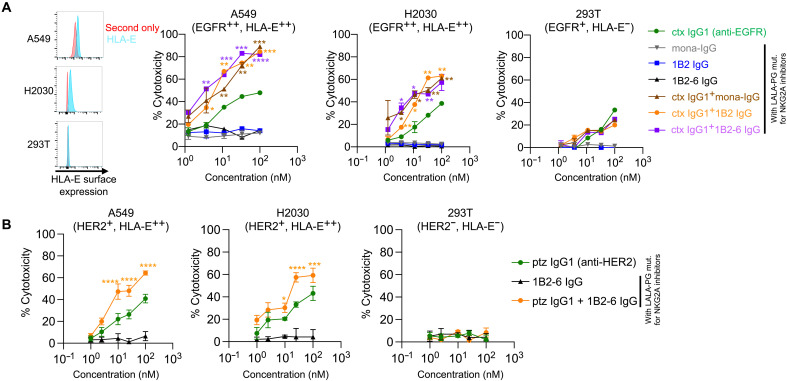 Figure 3
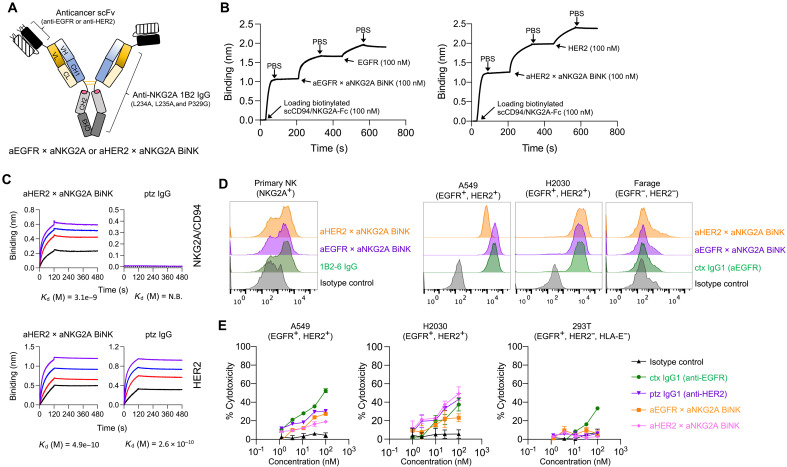 Figure 4
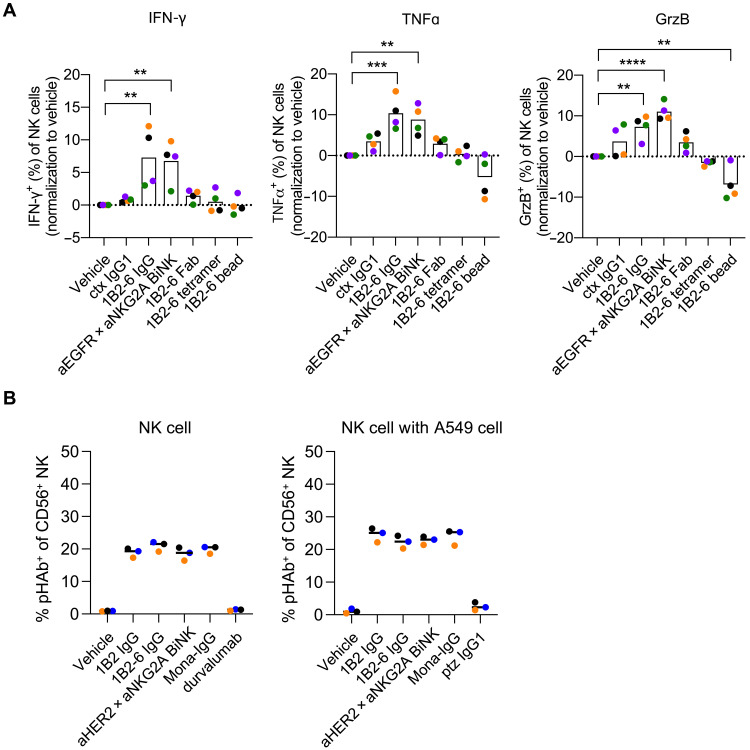 Figure 5
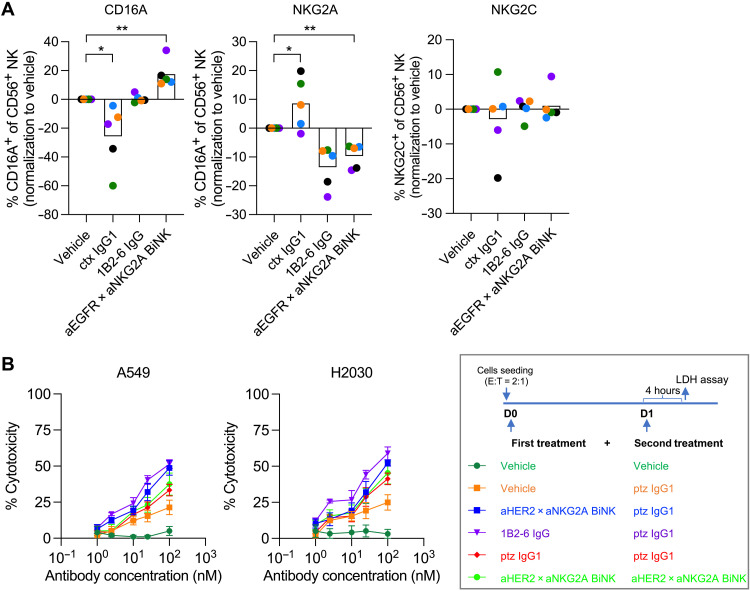 Figure 6
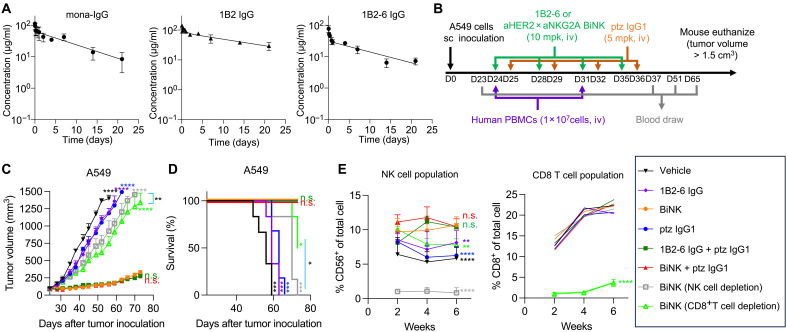 Figure 7
Peer Reviews
No public reviews on file for this paper yet. If you reviewed it on a platform where reviews are public (OpenReview, ICLR, NeurIPS, ICML), you can paste yours below so the community can read it here.
Videos
No videos yet. Explain this paper in a talk, walkthrough, or lecture? Add one.
Taxonomy
TopicsImmune Cell Function and Interaction · Monoclonal and Polyclonal Antibodies Research · CAR-T cell therapy research