High-efficiency methane consumption by atmospheric methanotrophs in subsurface karst caves: The irrefutable methane sink
Xiaoyan Liu, Xiaoyu Cheng, Yiming Zhang, Rui Zhao, Weiqi Wang, Yang Li, Zhong-Qiang Chen, Xincheng Qiu, Olli H. Tuovinen, Ian D. Bull, Richard P. Evershed, Hongmei Wang

TL;DR
Microbes in underground caves efficiently consume methane from the atmosphere, acting as a significant but previously overlooked methane sink.
Contribution
Discovery of high-efficiency atmospheric methanotrophs in subsurface karst caves and their role as a major methane sink.
Findings
Methane oxidation rates in cave sediments increased from 2.9 to 90.7 ng·g−1·hour−1 with increasing methane concentration.
NanoSIMS and 13C-labeling confirmed methane as both carbon and energy source for methanotrophs.
Subsurface karst in southwest China is estimated to sequester ~0.56 Tg CH4 annually.
Abstract
Subsurface karst systems represent substantial but underexplored methane sinks, yet the identities and activities of cave-dwelling methanotrophs remain poorly characterized. We detected increased methane oxidation rates from 2.9 ± 0.1 to 90.7 ± 4.5 ng·g−1·hour−1 while supplied with 2 to 500 parts per million (ppm) CH4 to cave sediments. Atmospheric methanotroph Upland Soil Clusters γ (USCγ), responsible for this oxidation, was further assigned to three genera within the family Candidatus (Ca.) Methyloligotrophaceae, including two previously unrecognized genera. Nano-scale secondary ion mass spectrometry (NanoSIMS) imaging and the produced 13C-PLFAs (phospholipid fatty acids) and 13CO2 in 13CH4-fed microcosm confirmed methane as both carbon and energy sources. These methanotrophs exhibited low half-saturation constant (Km; 138.8 ± 15.8 ppm), high carbon assimilation efficiency (>50%),…
Genes, proteins, chemicals, diseases, species, mutations and cell lines named across the full text — each resolved to its canonical identifier and authoritative record.
Click any figure to enlarge with its caption.
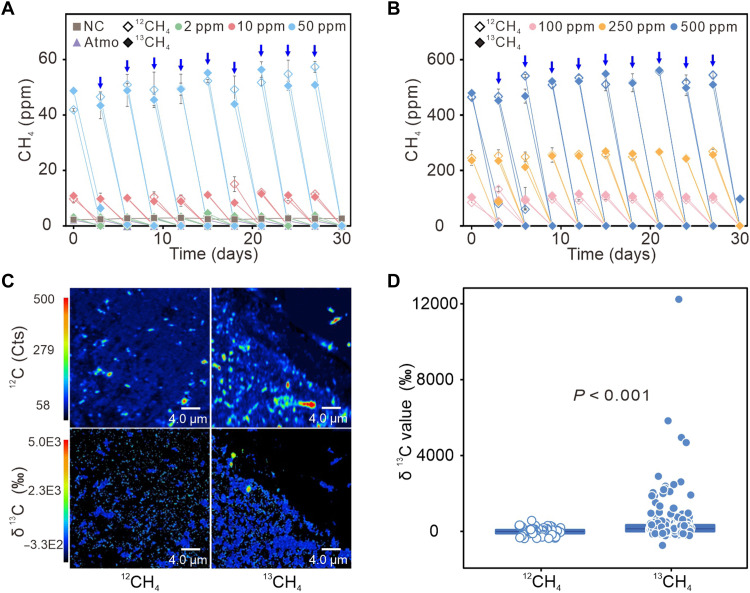 Figure 1
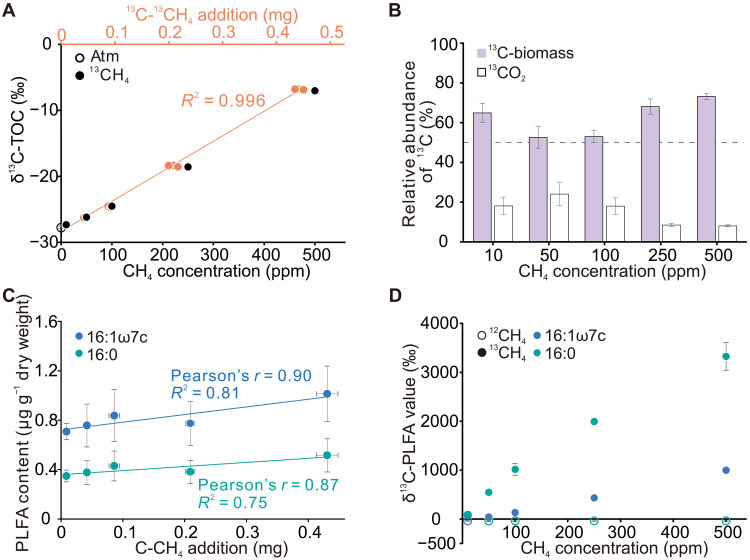 Figure 2
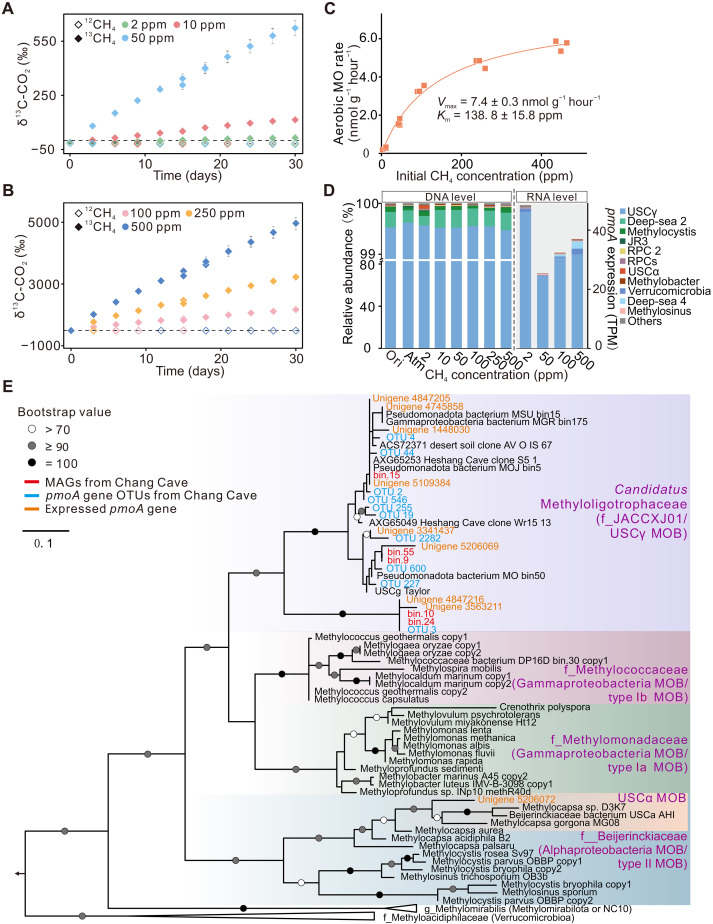 Figure 3
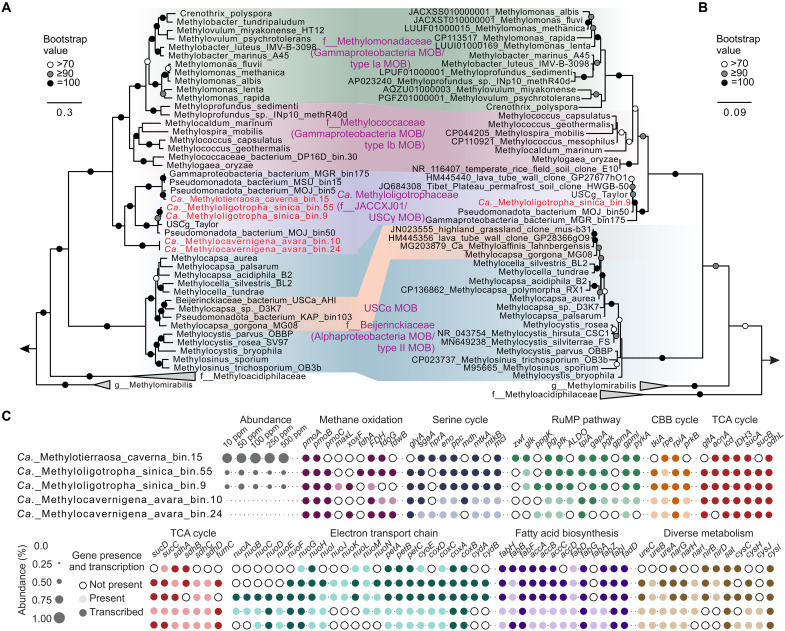 Figure 4
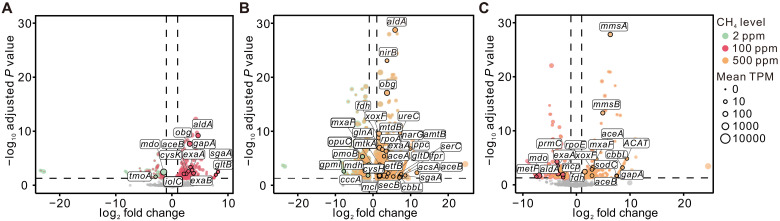 Figure 5
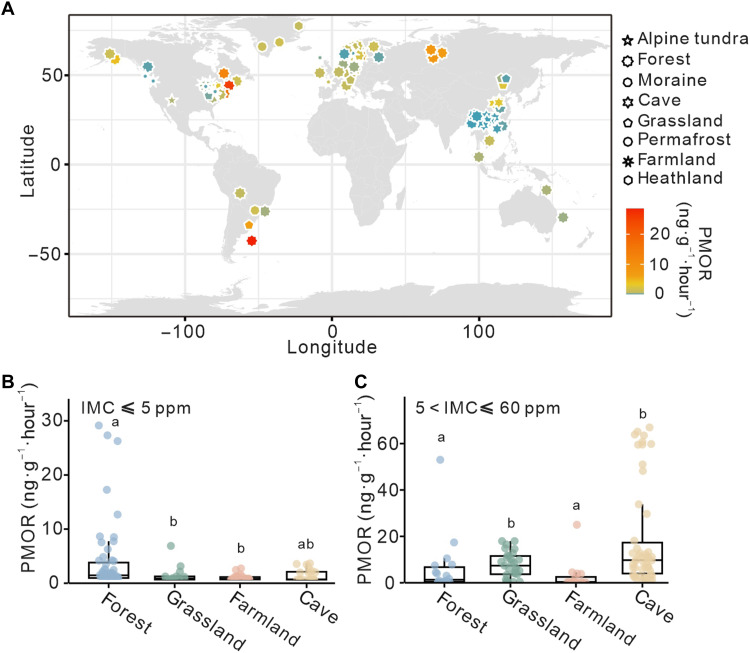 Figure 6
Peer Reviews
No public reviews on file for this paper yet. If you reviewed it on a platform where reviews are public (OpenReview, ICLR, NeurIPS, ICML), you can paste yours below so the community can read it here.
Videos
No videos yet. Explain this paper in a talk, walkthrough, or lecture? Add one.
Taxonomy
TopicsKarst Systems and Hydrogeology · CO2 Sequestration and Geologic Interactions · Methane Hydrates and Related Phenomena