Single-molecule localization microscopy reveals the molecular organization of endogenous membrane receptors
Patrick Eiring, Maximilian J. Steinhardt, Nele Bauer, Cornelia Vogt, Umair Munawar, Seungbin Han, Thomas Nerreter, Hermann Einsele, K. Martin Kortüm, Sören Doose, Markus Sauer

TL;DR
This paper introduces a new method using super-resolution microscopy to study the organization of membrane receptors in cells, which could improve personalized immunotherapy.
Contribution
The study introduces an optimized protocol for immunolabeling and analysis to accurately quantify and identify membrane receptor stoichiometry.
Findings
The method successfully resolved the molecular organization of CD45, CD69, and CD38 on Jurkat T cells.
The approach was applied to study interactions between multiple myeloma cells and therapeutic antibodies.
The protocol could enhance diagnostics and treatment using therapeutic antibodies.
Abstract
Super-resolution microscopy in combination with genetic labeling methods allows imaging of single proteins in cells. However, visualizing endogenous proteins on primary cells remains challenging due to the use of sterically demanding antibodies for labeling. Here, we demonstrate how immunolabeling conditions and antibody cross-linking influence the quantification and identification of membrane receptor stoichiometry on cells using single-molecule localization microscopy. We developed an optimized immunolabeling and analysis protocol and demonstrate the performance of the approach by resolving the molecular organization of endogenous CD45, CD69, and CD38 on Jurkat T cells. To demonstrate the usefulness of the method for immunotherapy applications, we investigated the interaction of primary multiple myeloma cells with the therapeutic monoclonal antibodies daratumumab and isatuximab and a…
Genes, proteins, chemicals, diseases, species, mutations and cell lines named across the full text — each resolved to its canonical identifier and authoritative record.
Click any figure to enlarge with its caption.
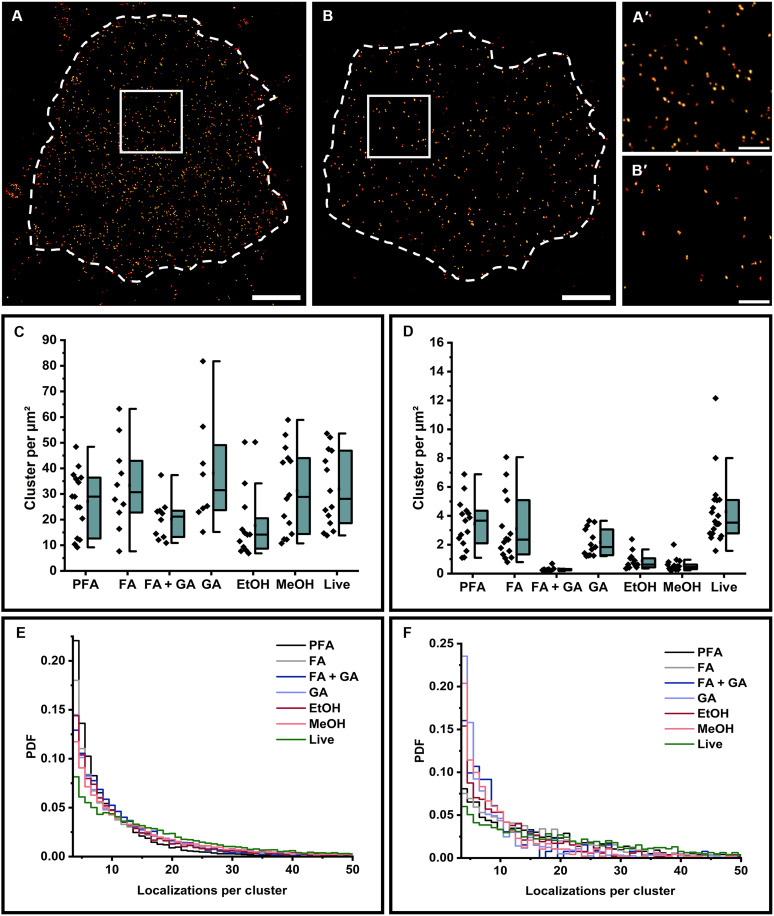 Figure 1
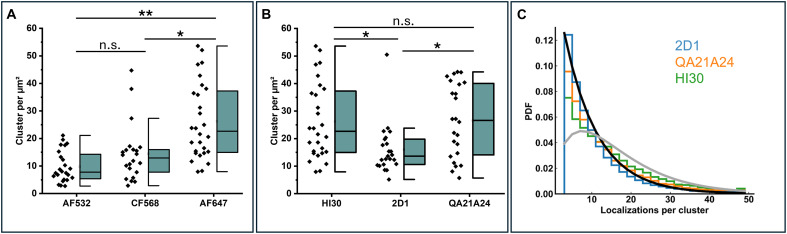 Figure 2
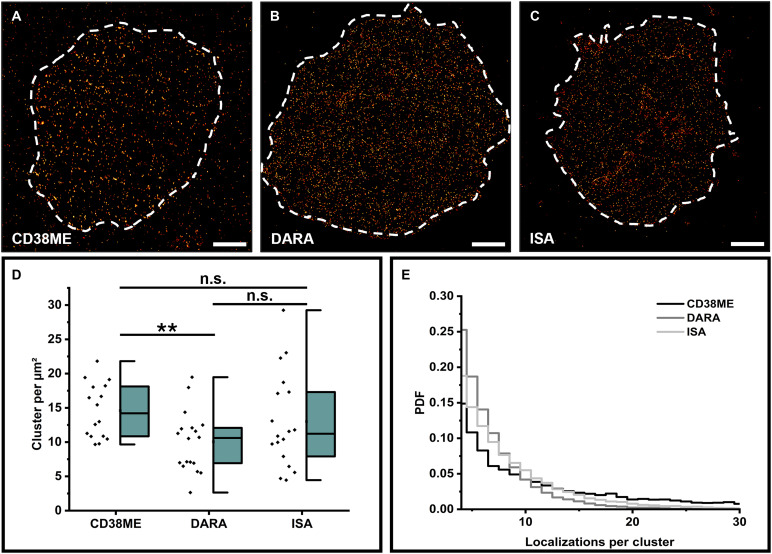 Figure 3
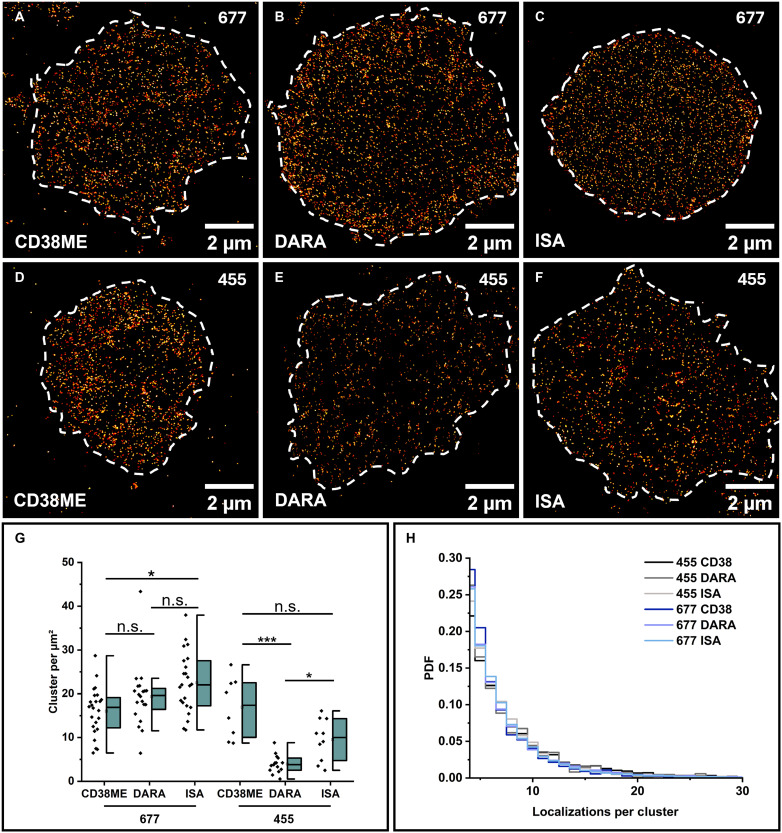 Figure 4
Peer Reviews
No public reviews on file for this paper yet. If you reviewed it on a platform where reviews are public (OpenReview, ICLR, NeurIPS, ICML), you can paste yours below so the community can read it here.
Videos
No videos yet. Explain this paper in a talk, walkthrough, or lecture? Add one.
Taxonomy
TopicsAdvanced Fluorescence Microscopy Techniques · Monoclonal and Polyclonal Antibodies Research · Click Chemistry and Applications