Integrative multi-omics analysis reveals the genetic architecture of floral traits in Anthurium
Shengnan Lin, Chao Song, Dan Peng, Yaru Wang, Xiaoni Zhang, Yingxue Yang, Minlong Jia, Qingyun Leng, Shisong Xu, Xing’e Lin, Haiyan Li, Jinping Lu, Chengcheng Zhou, Xiao Wan, Jianrong Sun, Luke R Tembrock, Junmei Yin, Danqing Tian, Zhiqiang Wu, Junhai Niu

TL;DR
This study provides high-quality genome assemblies for two Anthurium species and reveals genetic factors influencing floral traits and evolution.
Contribution
The paper presents chromosome-level genome assemblies and identifies key genes and transposon-driven mechanisms in Anthurium evolution.
Findings
Genome assemblies revealed chromosomal rearrangements and transposon expansions contributing to genome divergence.
Lineage-specific gene family expansions linked to stress adaptation were identified.
Flavonoid–anthocyanin pathways and wax biosynthesis regulators were found to govern spathe coloration.
Abstract
Anthurium, a highly diverse genus in the family Araceae, is well known for its ornamental spathes and spadices. However, limited genomic resources hinder the study of floral traits and their evolutionary histories. Here, we present high-quality chromosome-level genome assemblies of Anthurium andraeanum and Anthurium scherzerianum. Comparative genomics revealed extensive chromosomal rearrangements and species-specific transposon expansions, which likely contributed to genome divergence. Two lineage-specific whole-genome duplications were identified, associated with gene family expansions linked to stress adaptation. Population structure analysis uncovered strong genetic admixture, reflecting widespread historical hybridization. Integrated transcriptomic and metabolomic analyses revealed dynamic regulatory networks governing spathe coloration through flavonoid–anthocyanin pathways. In…
Genes, proteins, chemicals, diseases, species, mutations and cell lines named across the full text — each resolved to its canonical identifier and authoritative record.
Click any figure to enlarge with its caption.
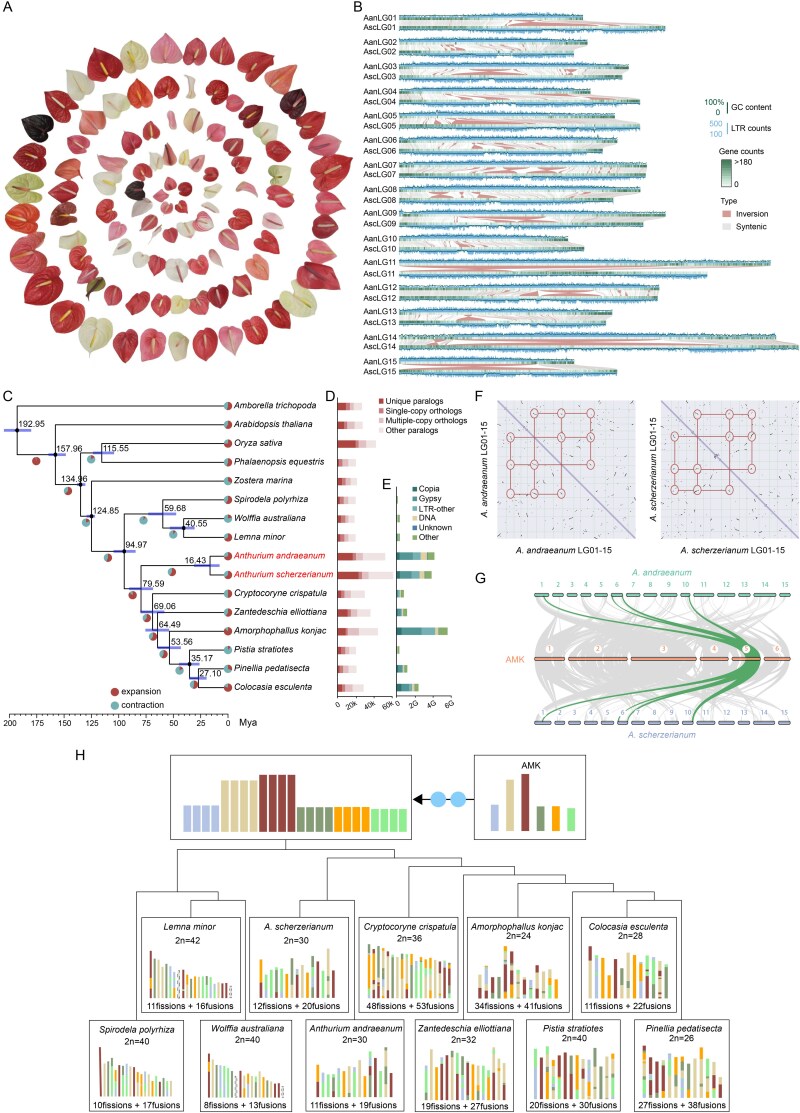 Figure 1
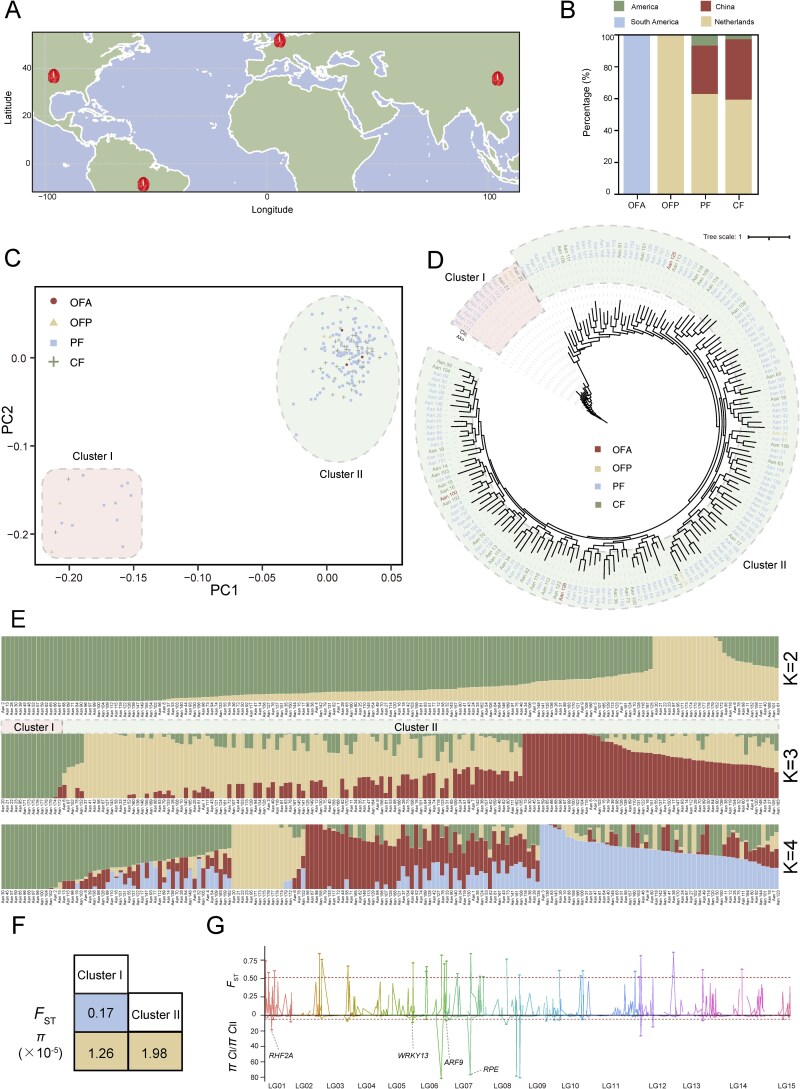 Figure 2
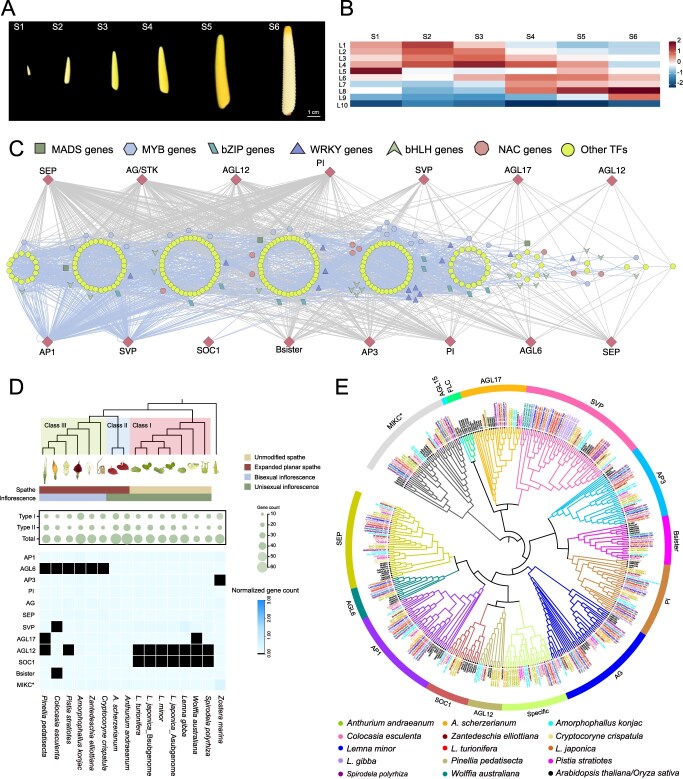 Figure 3
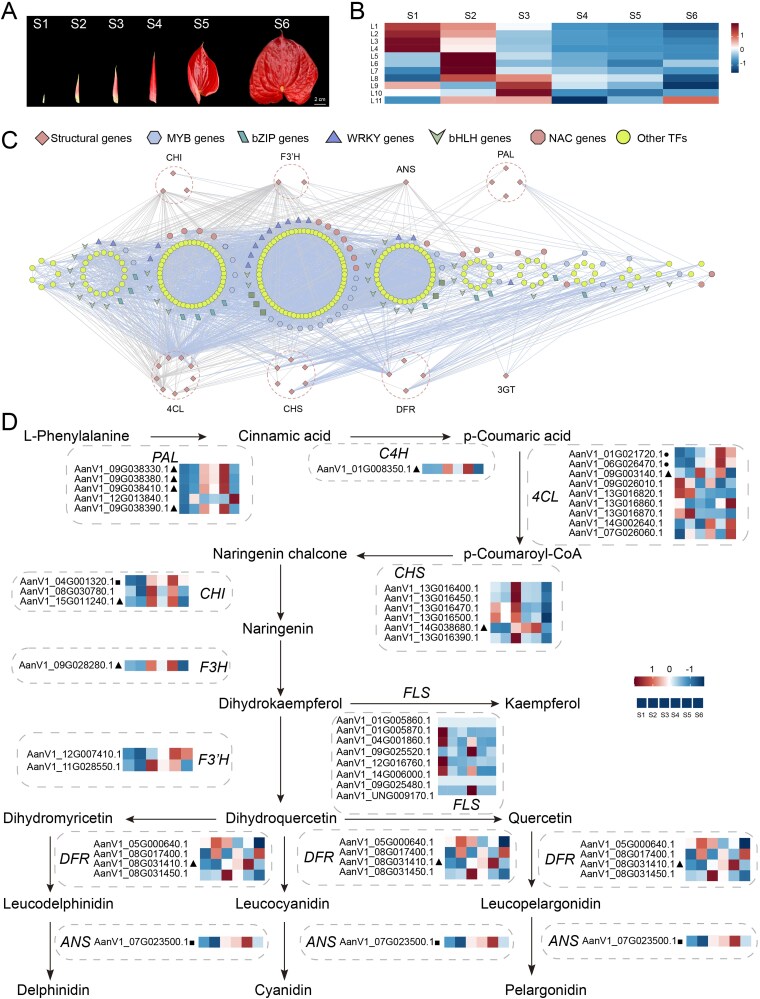 Figure 4
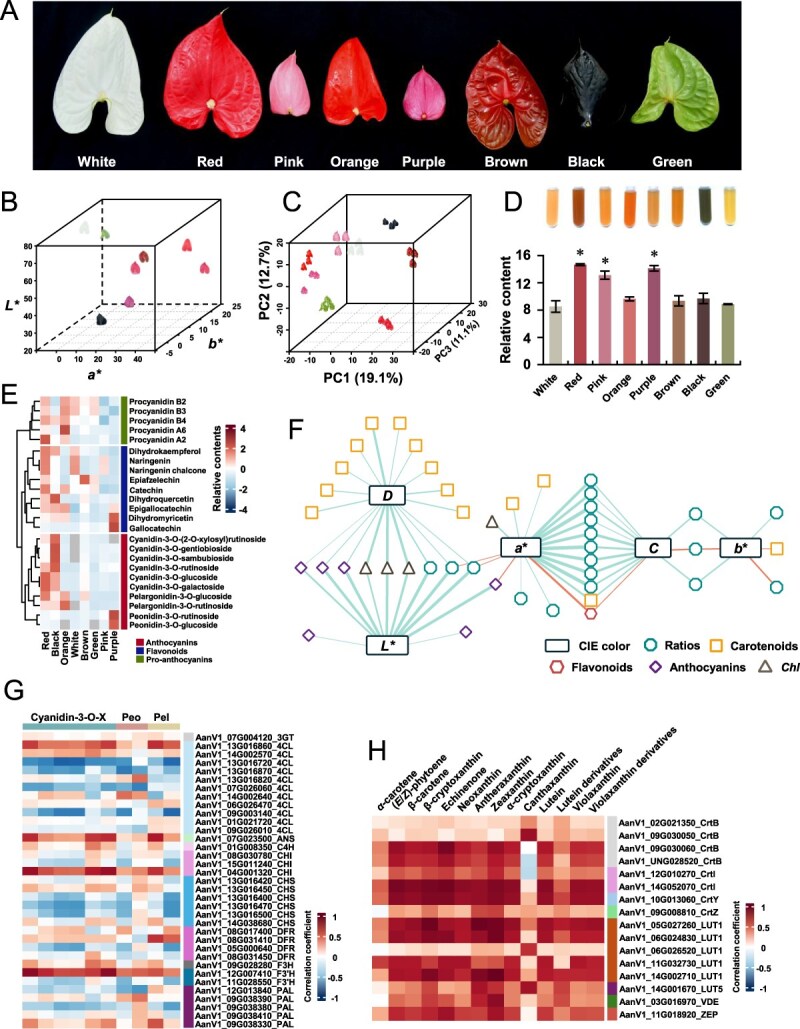 Figure 5
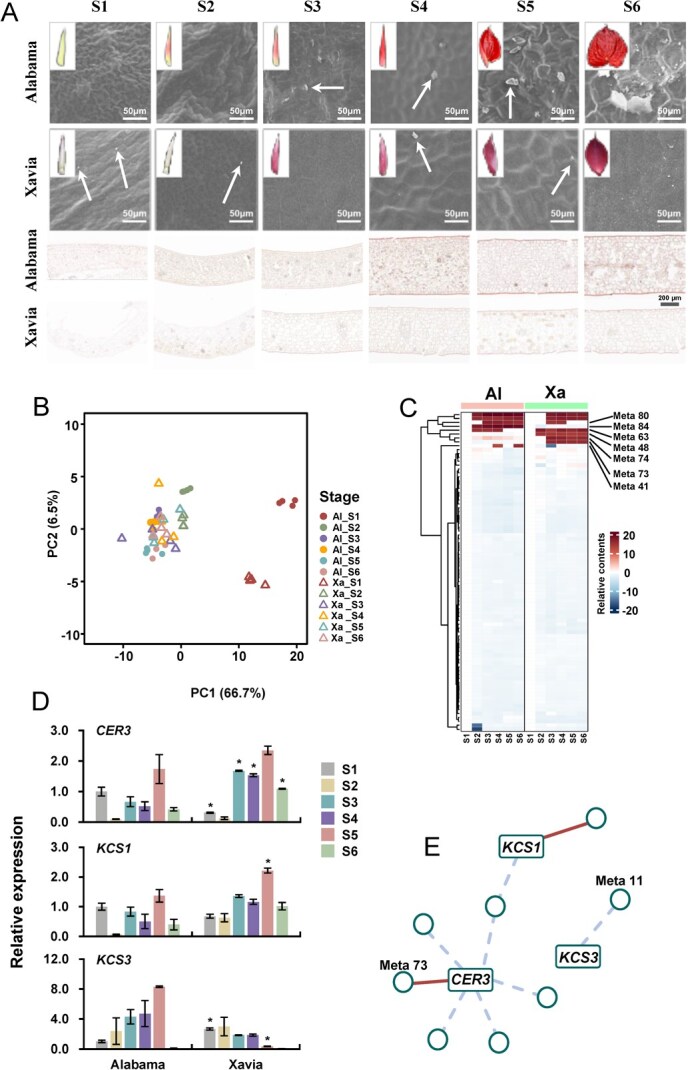 Figure 6
Peer Reviews
No public reviews on file for this paper yet. If you reviewed it on a platform where reviews are public (OpenReview, ICLR, NeurIPS, ICML), you can paste yours below so the community can read it here.
Videos
No videos yet. Explain this paper in a talk, walkthrough, or lecture? Add one.
Taxonomy
TopicsPlant Gene Expression Analysis · Plant Molecular Biology Research · Plant Diversity and Evolution