A Novel PTEN Frameshift Variant in a Child With Autism Spectrum Disorder and Macrocephaly: A Case Report
Margarida Moreno Fernandes, Mariana Rodrigues Neto, Mariana Sá Pinto, Teresa Pena Fernandes, Ana Catarina Maia, Isabel Ayres Pereira, Armanda Passas, Ana Grangeia, Cristina Madureira

TL;DR
A four-year-old girl with autism and macrocephaly was found to have a new PTEN gene variant, highlighting the need for early genetic testing in similar cases.
Contribution
The paper reports a novel PTEN frameshift variant in a child with autism and macrocephaly, expanding the clinical spectrum of PHTS.
Findings
The child exhibited macrocephaly, developmental delay, and autism, with a novel PTEN frameshift variant identified.
MRI showed megalencephaly and corpus callosum thickening, supporting a PHTS diagnosis.
The case emphasizes the importance of genetic testing for PTEN-related disorders in children with autism and macrocephaly.
Abstract
PTEN hamartoma tumor syndrome (PHTS) is a rare genetic condition associated with neurodevelopmental disorders, macrocephaly, and increased cancer risk. We report the case of a four-year-old girl with congenital hypothyroidism, progressive macrocephaly, and global developmental delay, later diagnosed with autism spectrum disorder (ASD). Brain MRI revealed megalencephaly with prominent extra-axial spaces and a diffusely thickened corpus callosum. Genetic testing identified a novel frameshift variant in the PTEN gene. This case highlights clinical findings that should raise suspicion for PHTS and was documented to emphasize the importance of recognizing PTEN-related disorders in children presenting with autism and macrocephaly, particularly when oncologic manifestations are not yet evident, thereby supporting early genetic diagnosis and appropriate surveillance.
Genes, proteins, chemicals, diseases, species, mutations and cell lines named across the full text — each resolved to its canonical identifier and authoritative record.
Click any figure to enlarge with its caption.
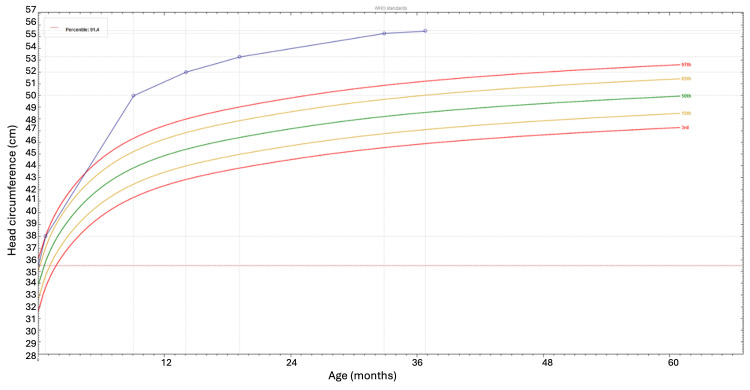 Figure 1
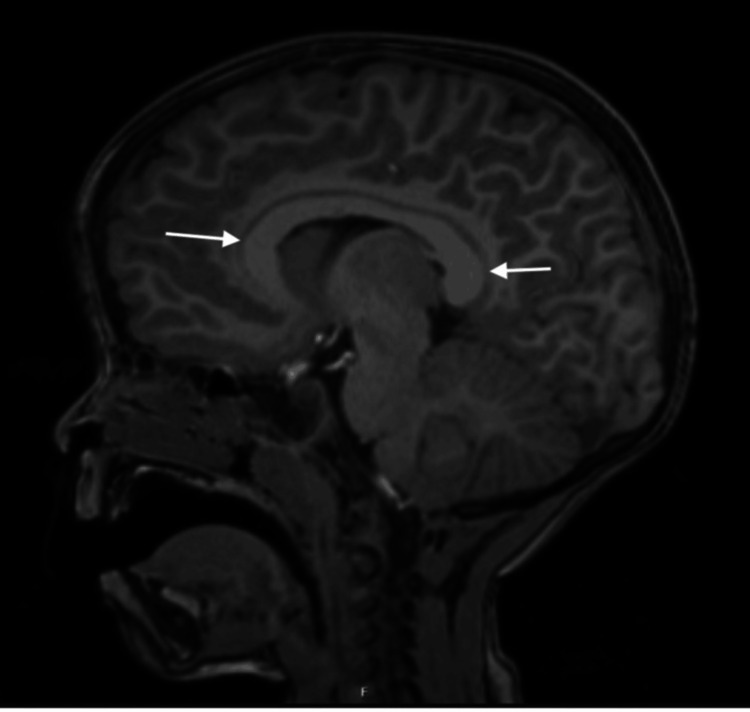 Figure 2
Peer Reviews
No public reviews on file for this paper yet. If you reviewed it on a platform where reviews are public (OpenReview, ICLR, NeurIPS, ICML), you can paste yours below so the community can read it here.
Videos
No videos yet. Explain this paper in a talk, walkthrough, or lecture? Add one.
Taxonomy
TopicsPI3K/AKT/mTOR signaling in cancer · Tuberous Sclerosis Complex Research · Genetic Syndromes and Imprinting