Dynamic assessment of global longitudinal strain after isometric exercise to predict functionally significant coronary lesion
Niya Mileva, Dobrin Vassilev, Panayot Panayotov, Svetlin Tsonev, Slawomir Golebiewski, Gianluca Rigatelli, Robert J Gil

TL;DR
This study shows that measuring heart muscle strain during isometric exercise can help identify significant coronary artery blockages in patients with chronic heart disease.
Contribution
The study introduces dynamic global longitudinal strain during isometric hand-grip exercise as a novel non-invasive method for coronary lesion assessment.
Findings
ΔGLS showed strong correlation with FFR (r = 0.660, P < 0.001).
A ΔGLS threshold of 0.35 had high sensitivity (92%) and specificity (85%) for significant lesions.
44% of patients had functionally significant coronary lesions based on FFR.
Abstract
There is still a wide debate regarding the management of patients with chronic coronary syndrome, the choice of optimal non-invasive stress test, and the decision for coronary revascularization. Evidence has accumulated demonstrating the utility of global longitudinal strain (GLS) as a predictor of significant coronary disease. To evaluate the application of speckle tracking during resting echocardiography and after isometric loading with the hand-grip test, and to compare GLS parameters with fractional flow reserve (FFR). Patients with known CCS who underwent angiography with evidence of coronary stenosis >40%<90% and were referred for functional assessment were enrolled in this study. Patients with previous MI, depressed LV systolic function, and poor acoustic window were excluded. Patients underwent a standard echocardiography with recordings suitable for LV speckle tracking.…
Genes, proteins, chemicals, diseases, species, mutations and cell lines named across the full text — each resolved to its canonical identifier and authoritative record.
Click any figure to enlarge with its caption.
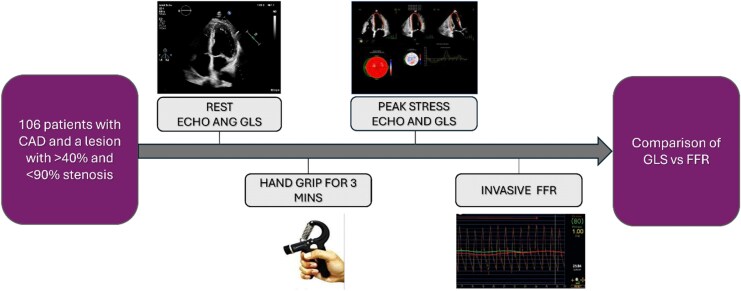 Figure 1
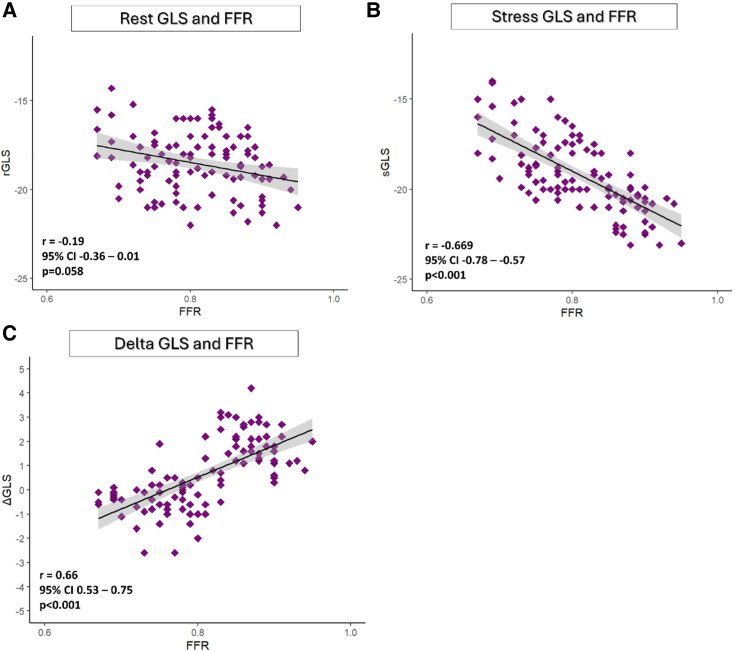 Figure 2
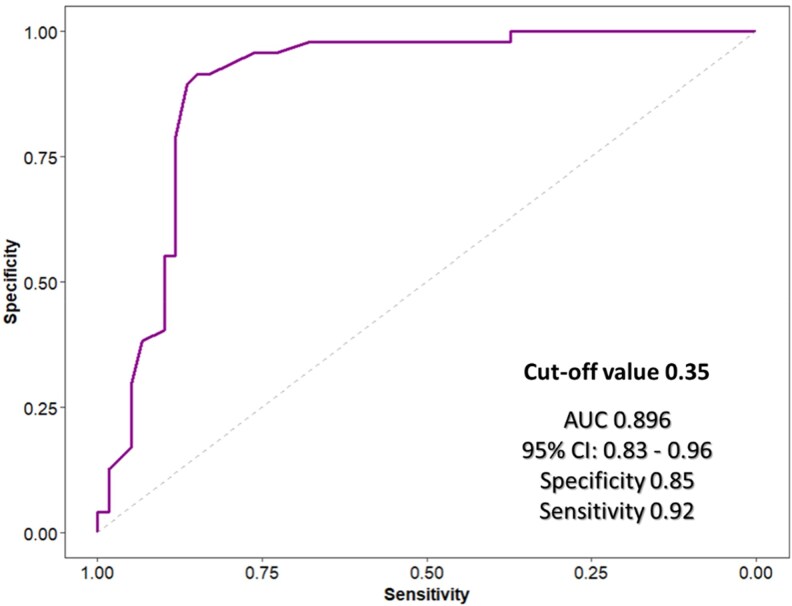 Figure 3
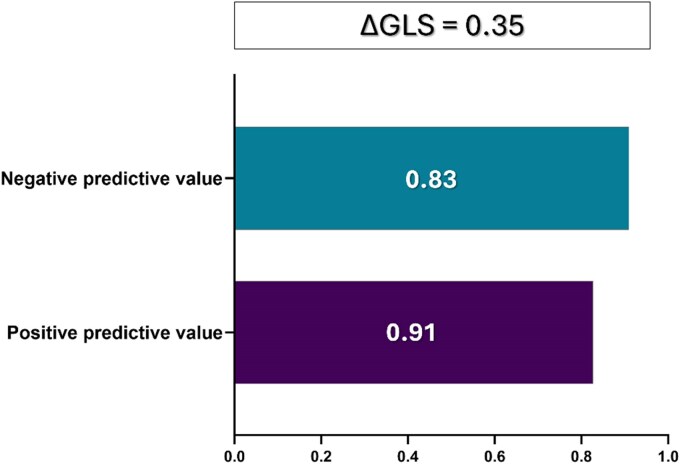 Figure 4
 Figure 5
Peer Reviews
No public reviews on file for this paper yet. If you reviewed it on a platform where reviews are public (OpenReview, ICLR, NeurIPS, ICML), you can paste yours below so the community can read it here.
Videos
No videos yet. Explain this paper in a talk, walkthrough, or lecture? Add one.
Taxonomy
TopicsCardiovascular Function and Risk Factors · Cardiac Imaging and Diagnostics · Coronary Interventions and Diagnostics