InCHORRRuS: Infant-Directed Communication Highlights and Organizes Repetition and Redundancy Through Rhythmic Structure
Camila Alviar, Warren Jones, Miriam Lense

TL;DR
This paper explores how caregivers use rhythmic communication to help infants better understand and engage in social interactions.
Contribution
The InCHORRRuS framework introduces a novel perspective on how rhythm organizes repetition and redundancy in infant-directed communication.
Findings
Rhythmic structures in infant-directed singing enhance the predictability of communicative cues.
Repetition and redundancy in rhythmic contexts increase the impact of enriched signals over time.
The framework highlights the role of rhythm in scaffolding early social coordination.
Abstract
Learning to successfully participate in social interactions is a monumental task for infants, whose perceptual systems are immature and communicative signals complex and hard to parse. To support their infants, caregivers naturally modify their communicative behaviors to be more repetitive, redundant, and rhythmic, thus engaging infants’ perceptual biases. In this paper, we present the InCHORRRuS framework: which considers the role of rhythm in organizing caregivers’ communicative behaviors across modalities to scaffold communication and dyadic coordination in early social interactions. We argue rhythm’s role in infant-directed (ID) communication is particularly highlighted in ID singing, in which metrically structured beat-based rhythms make the multimodal redundancy and repetition in ID communication also temporally predictable, thus “supercharging” the cues’ communicative value.…
Genes, proteins, chemicals, diseases, species, mutations and cell lines named across the full text — each resolved to its canonical identifier and authoritative record.
Click any figure to enlarge with its caption.
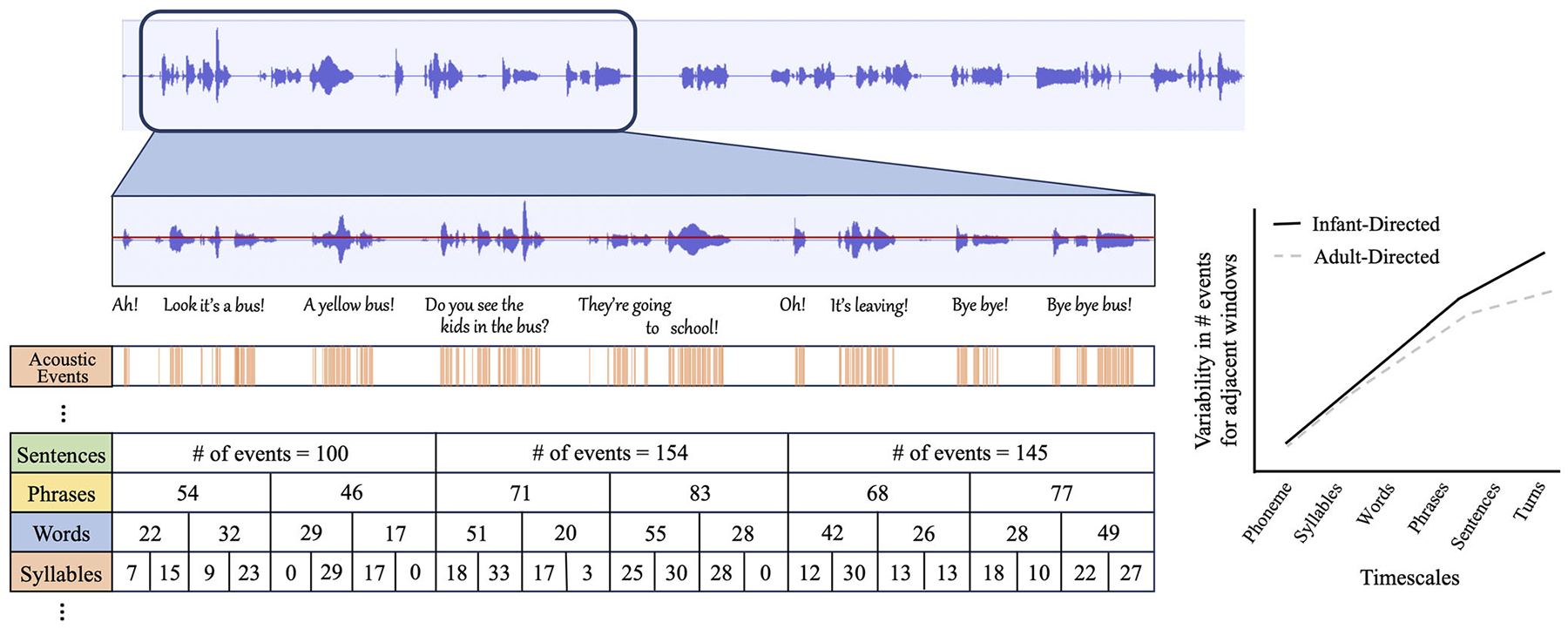 Figure 1
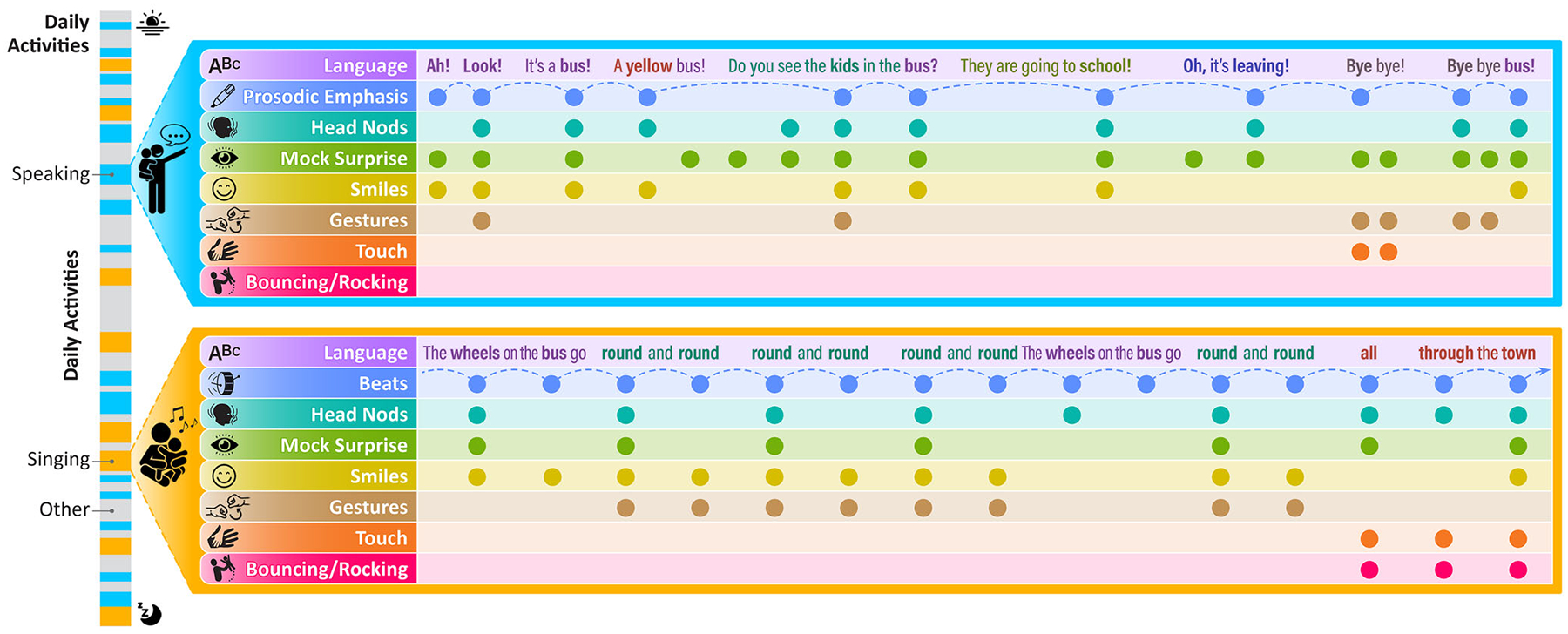 Figure 2
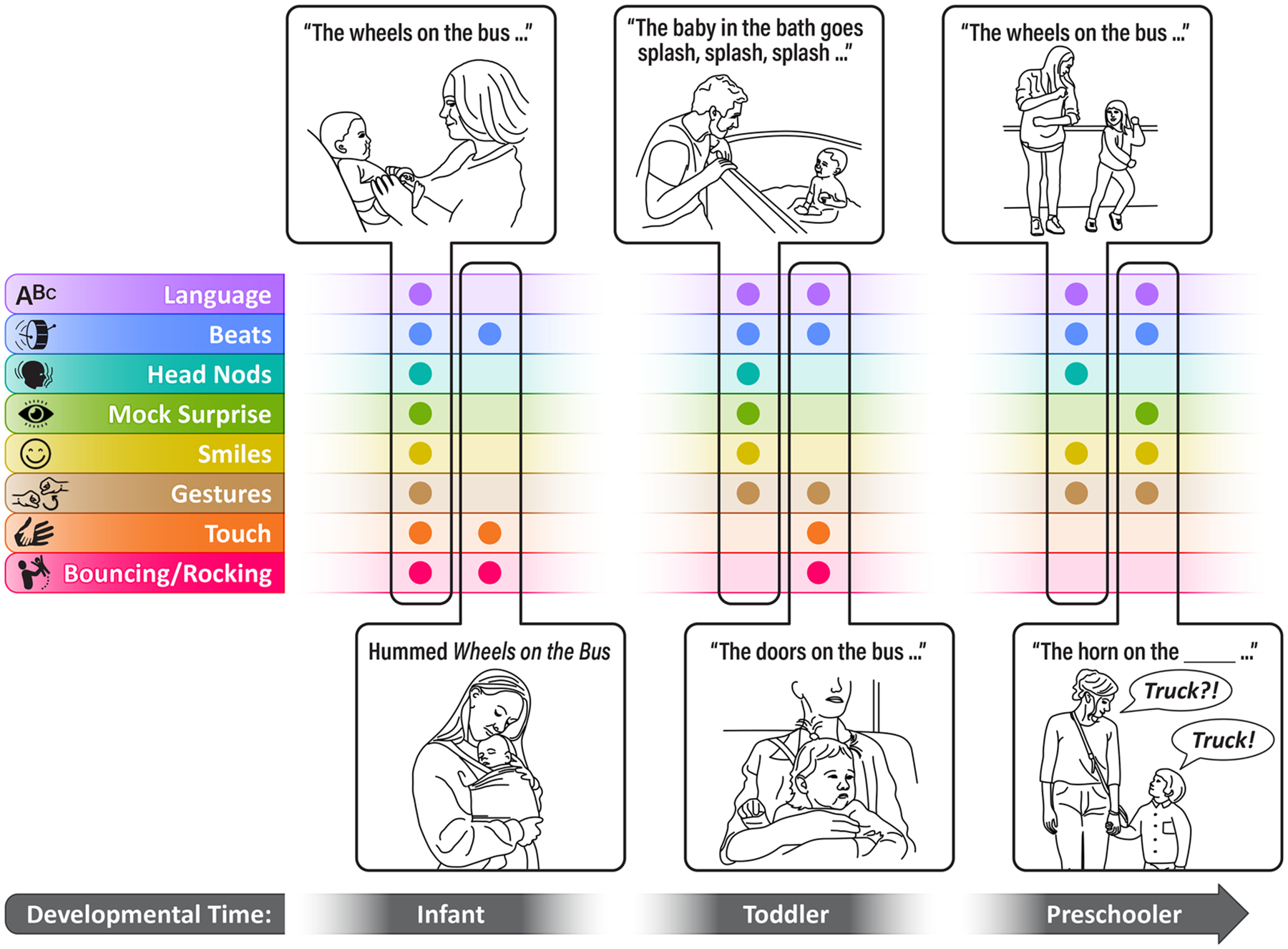 Figure 3
Peer Reviews
No public reviews on file for this paper yet. If you reviewed it on a platform where reviews are public (OpenReview, ICLR, NeurIPS, ICML), you can paste yours below so the community can read it here.
Videos
No videos yet. Explain this paper in a talk, walkthrough, or lecture? Add one.
Taxonomy
TopicsLanguage Development and Disorders · Child and Animal Learning Development · Neuroscience and Music Perception