Structural basis and functional analysis of NMDA receptor regulation by calmodulin
Aritra Bej, M. Quincy Erickson-Oberg, Aparna Nigam, Isaac Yu, Johannes W. Hell, Jon W. Johnson, James B. Ames

TL;DR
This paper explores how calmodulin interacts with NMDA receptors to regulate calcium-dependent channel desensitization, using structural and functional experiments.
Contribution
The study reveals novel structural interactions between calmodulin and specific NMDA receptor subunit regions that are crucial for channel desensitization.
Findings
GluN1-C0 binds to both N-lobe and C-lobe of Ca2+-CaM, while GluN2A-C0 binds only to the C-lobe.
Mutations in GluN1 and GluN2A residues disrupt calmodulin binding and reduce calcium-dependent desensitization.
A structural model suggests four calmodulin molecules bind per NMDA receptor tetramer to induce desensitization.
Abstract
The synaptic plasticity mechanisms that are thought to underlie learning and memory require Ca2+ influx mediated by N-methyl-D-aspartate receptors composed of glycine-binding GluN1 and glutamate-binding GluN2 subunits. Calmodulin (CaM) binding to the cytosolic regions in both GluN1 (residues 841–865, called GluN1-C0) and GluN2A (residues 1004–1023, called GluN2A-C0) may be important for Ca2+-dependent channel desensitization (CDD). Here, we report NMR, ITC and electrophysiological experiments to probe the structure and functional role of Ca2+-bound CaM (Ca2+-CaM) binding to both GluN1 and GluN2A subunits. Our ITC studies show that the GluN1-C0 peptide binds to both the N-lobe and C-lobe of Ca2+-CaM, whereas the GluN2A-C0 peptide binds to only the Ca2+-CaM C-lobe. Our NMR analysis reveals GluN2A residues (W1014 and V1018) interact with exposed hydrophobic residues in the Ca2+-CaM C-lobe.…
Genes, proteins, chemicals, diseases, species, mutations and cell lines named across the full text — each resolved to its canonical identifier and authoritative record.
Click any figure to enlarge with its caption.
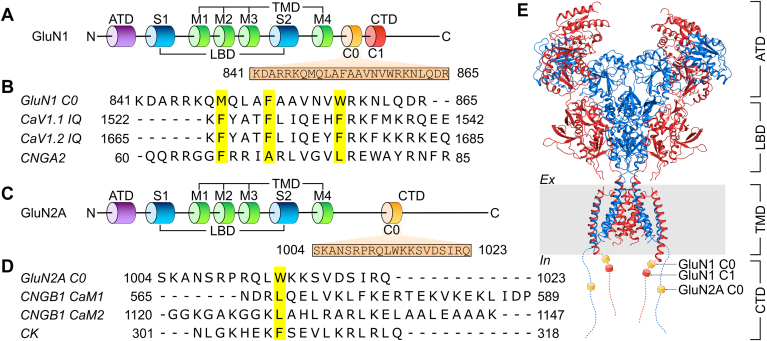 Figure 1
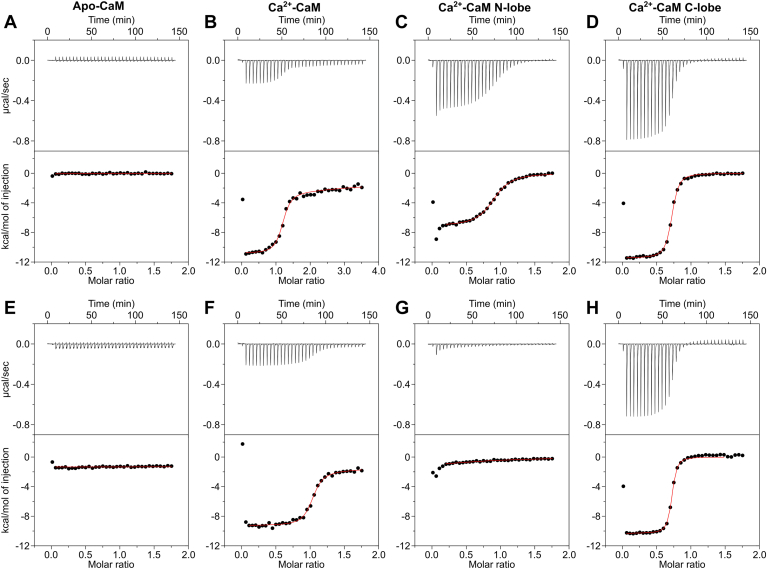 Figure 2
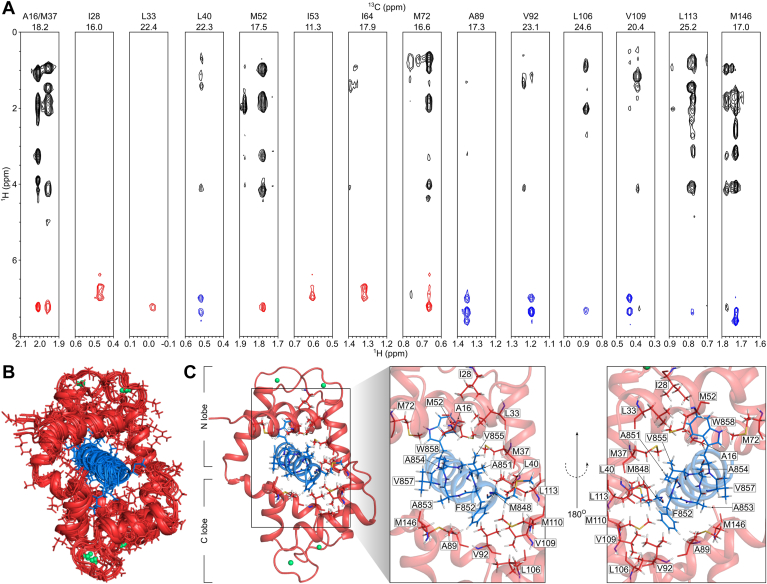 Figure 3
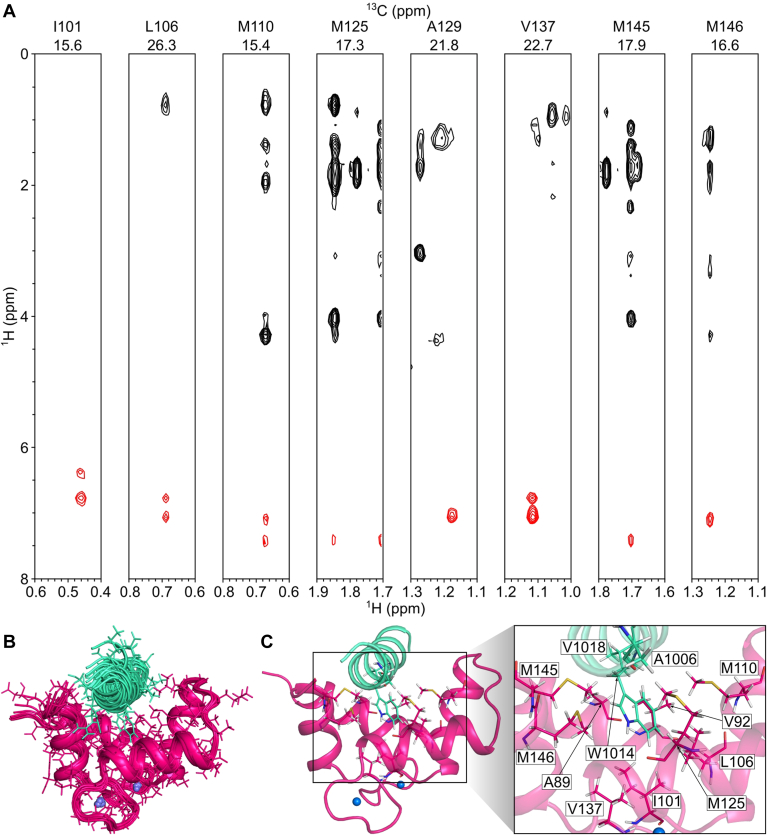 Figure 4
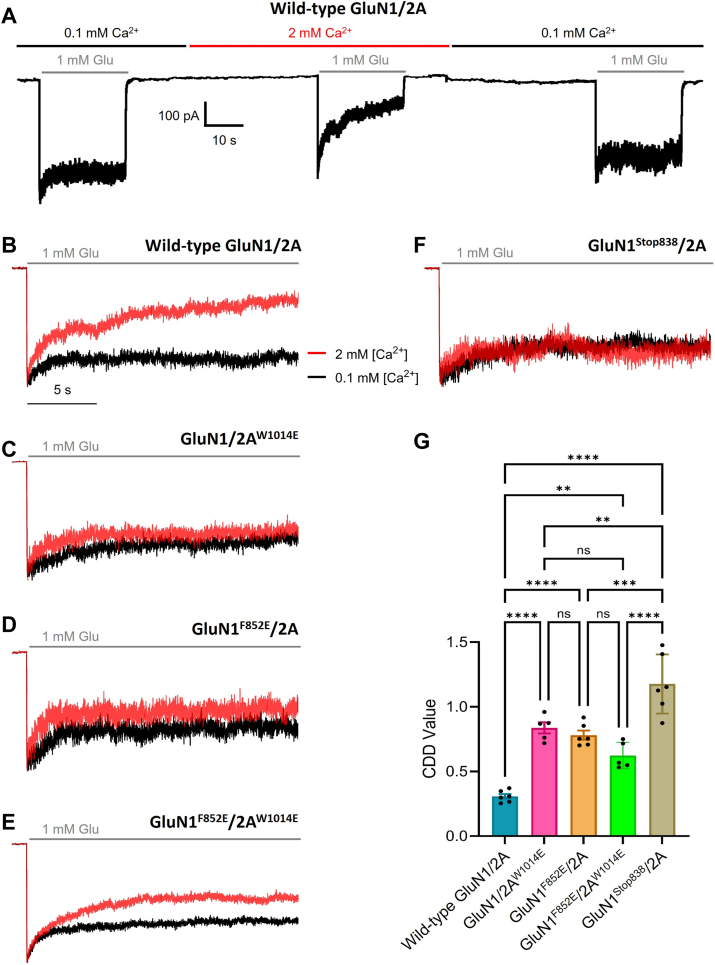 Figure 5
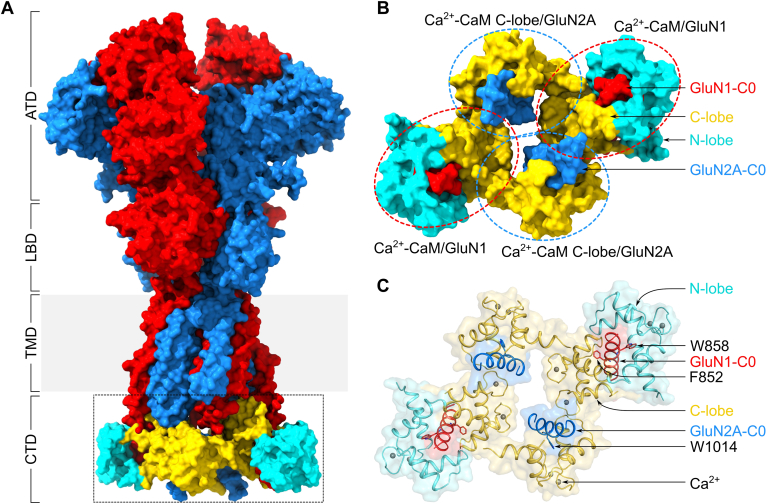 Figure 6
Peer Reviews
No public reviews on file for this paper yet. If you reviewed it on a platform where reviews are public (OpenReview, ICLR, NeurIPS, ICML), you can paste yours below so the community can read it here.
Videos
No videos yet. Explain this paper in a talk, walkthrough, or lecture? Add one.
Taxonomy
TopicsNeuroscience and Neuropharmacology Research · Ion channel regulation and function · Protein Kinase Regulation and GTPase Signaling