Beyond Anopheles gambiae sensu lato: exploring the impact of non-dominant Anopheles species on malaria persistence in high-transmission endemic areas of Burkina Faso
Kelly L. Ngaffo, Aristide S. Hien, Dieudonné D. Soma, Samina Maiga, Emmanuel Sougue, Cheick Oumar W. Ouédraogo, Karama O. Delphine, Didier P. Alexandre Kaboré, Moussa Namountougou, Abdoulaye Diabaté, Etang D. Josiane, Roch K. Dabiré

TL;DR
This study explores how non-dominant Anopheles species contribute to malaria transmission in Burkina Faso, suggesting current control measures may be insufficient.
Contribution
The study identifies and quantifies the role of secondary Anopheles species in malaria transmission in high-transmission areas.
Findings
Anopheles nili and Anopheles coustani were found to be significant contributors to malaria transmission.
Most mosquitoes were collected outdoors and showed strong preference for human blood.
Plasmodium falciparum was detected in all secondary species except Anopheles funestus.
Abstract
Despite widespread implementation of malaria control measures, including insecticide-treated nets (ITNs), indoor residual spraying (IRS), and seasonal malaria chemoprevention (SMC), malaria remains a major public health concern in Burkina Faso. The persistence of transmission is often attributed to increasing insecticide resistance in Anopheles gambiae sensu lato and drug resistance in Plasmodium spp. However, additional factors, such as climatic variability, ecological change, and shifts in vector species composition, may also play a role. This study investigated the geographic distribution of secondary malaria vectors and assessed their potential role in sustaining transmission at the national scale. Between 2023 and 2024, mosquito surveys were conducted across the three main ecological zones of Burkina Faso using human landing catches (HLC) and pyrethroid spray catches (PSC).…
Genes, proteins, chemicals, diseases, species, mutations and cell lines named across the full text — each resolved to its canonical identifier and authoritative record.
Click any figure to enlarge with its caption.
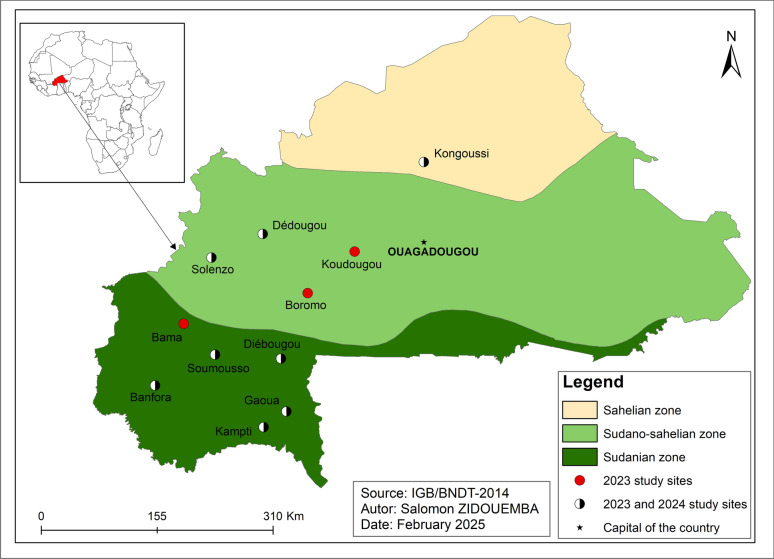 Figure 1
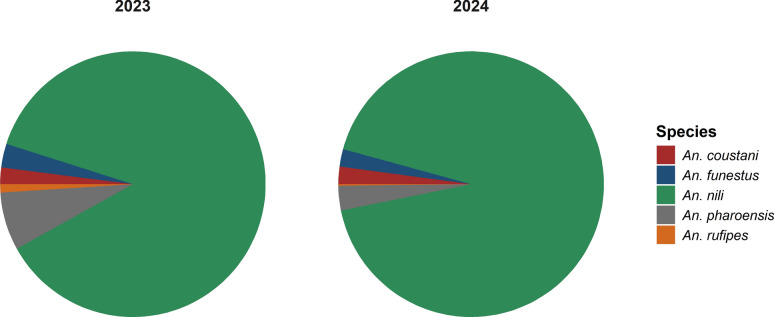 Figure 2
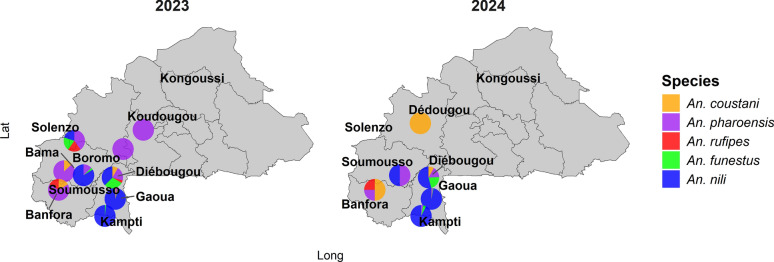 Figure 3
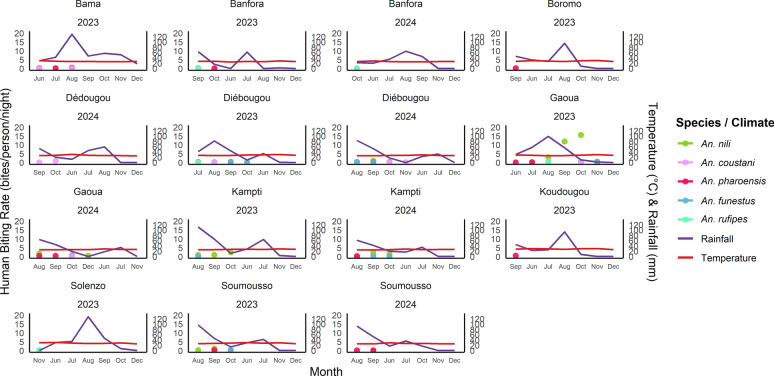 Figure 4
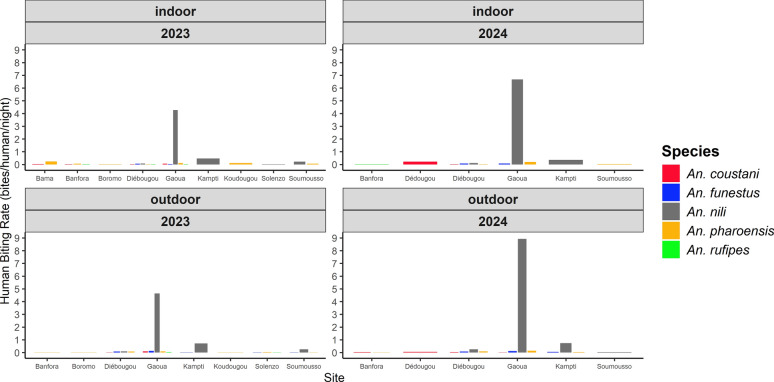 Figure 5
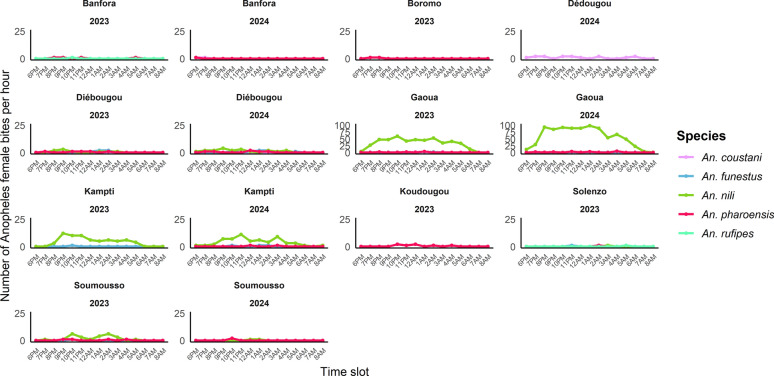 Figure 6
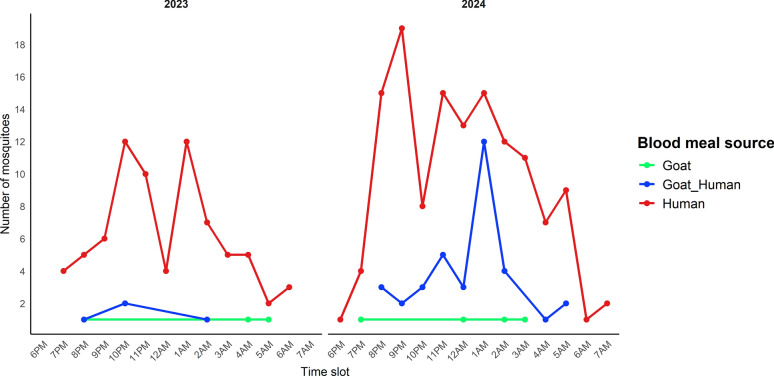 Figure 7
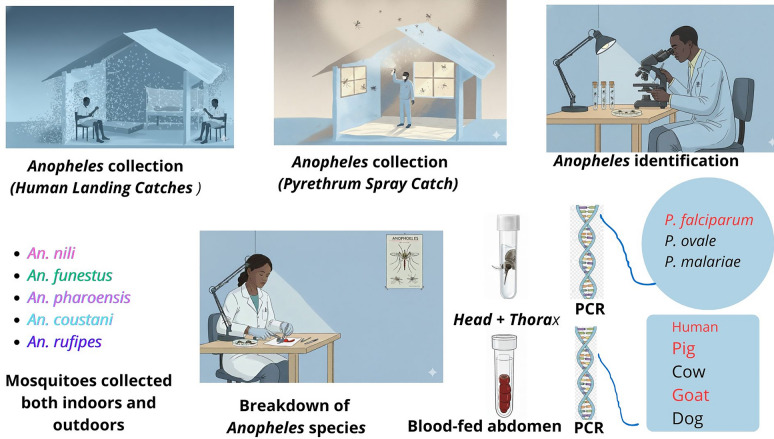 Figure 8
Peer Reviews
No public reviews on file for this paper yet. If you reviewed it on a platform where reviews are public (OpenReview, ICLR, NeurIPS, ICML), you can paste yours below so the community can read it here.
Videos
No videos yet. Explain this paper in a talk, walkthrough, or lecture? Add one.
Taxonomy
TopicsMalaria Research and Control · Mosquito-borne diseases and control · Parasitic Diseases Research and Treatment