Early prediction of in-hospital deterioration after emergency department admission using machine learning models
Chi-Yung Cheng, Ting-Hsuan Hsu, Yu-Lun Hung, Ting-Yu Hsu, Fu-Jen Cheng, Hsiu-Yung Pan, Chun-Hung Richard Lin, I-Min Chiu

TL;DR
This study shows that machine learning models can better predict patient deterioration in hospitals than traditional methods, using data from emergency department admissions.
Contribution
A machine learning-based early warning system is developed and validated to predict in-hospital deterioration more accurately than traditional scoring systems.
Findings
XGB achieved the highest AUC of 0.87 in internal testing, outperforming traditional scores like NEWS, MEWS, and mSOFA.
The ML models maintained strong performance in external testing with an XGB AUC of 0.82, still superior to traditional methods.
Respiratory rate and oxygen support were identified as the most influential predictors of deterioration.
Abstract
Early prediction of clinical deterioration in patients admitted to general wards from the emergency department (ED) is crucial for timely interventions and improved outcomes. Traditional scoring systems often fail to account for dynamic physiological changes occurring during ED stays. Machine learning (ML) offers a promising alternative by integrating comprehensive patient data for enhanced predictive capabilities. This study aimed to develop and validate an ML-based early warning system to predict adverse events, including cardiac arrest, mechanical ventilation, or intensive care unit (ICU) transfer, within 48 h of hospitalization. This retrospective multicenter study included data from 169,807 patients across two medical centers to train ML models for predicting adverse events occurring within 48 h of hospitalization. The prediction time origin (T0) was the moment of hospital…
Genes, proteins, chemicals, diseases, species, mutations and cell lines named across the full text — each resolved to its canonical identifier and authoritative record.
Click any figure to enlarge with its caption.
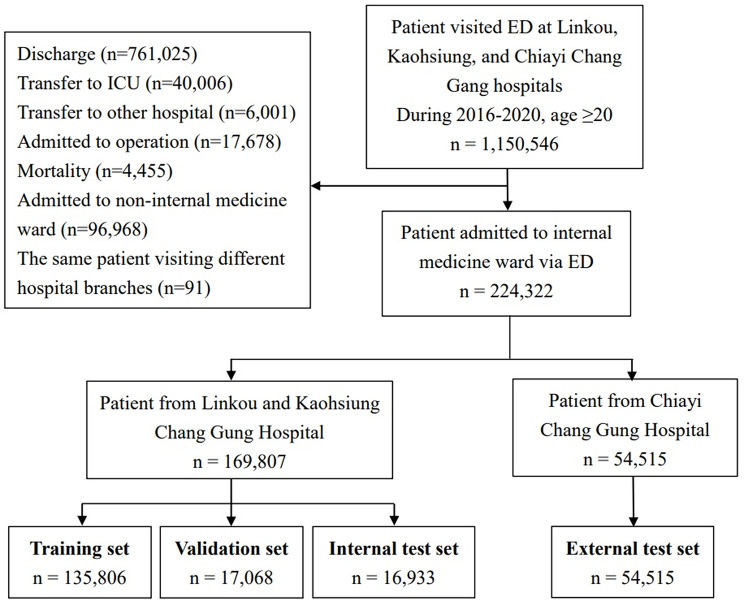 Figure 1
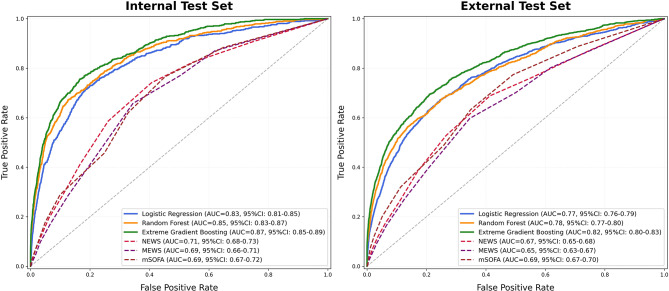 Figure 2
 Figure 3
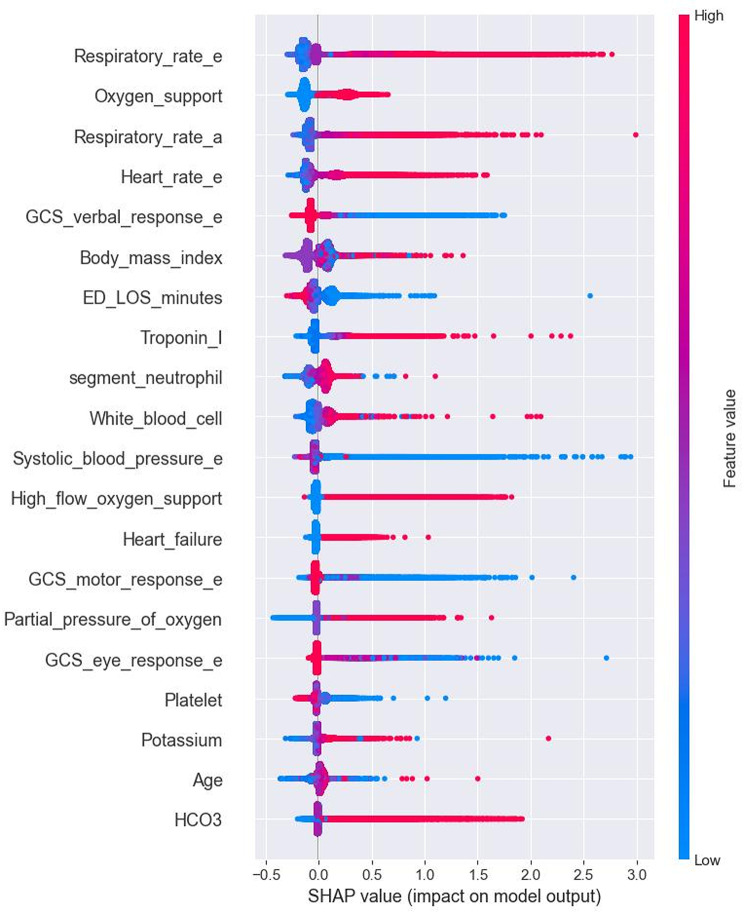 Figure 4
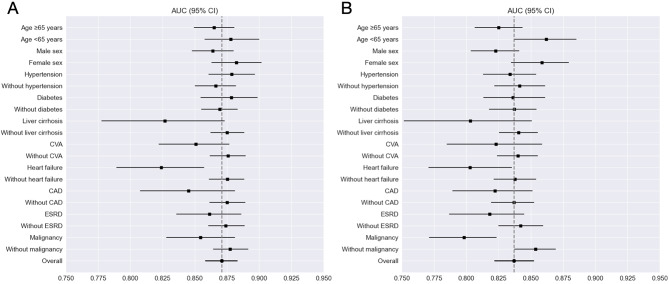 Figure 5
Peer Reviews
No public reviews on file for this paper yet. If you reviewed it on a platform where reviews are public (OpenReview, ICLR, NeurIPS, ICML), you can paste yours below so the community can read it here.
Videos
No videos yet. Explain this paper in a talk, walkthrough, or lecture? Add one.
Taxonomy
TopicsSepsis Diagnosis and Treatment · Emergency and Acute Care Studies · Healthcare Technology and Patient Monitoring