Emergence of autochthonous Leishmania infantum infection in dogs from Costa Rica confirmed by multimodal diagnostics: a case series
Víctor M. Montenegro, Leticia Cajal-Omella, Josué Campos-Camacho, Javier Jiménez-Tuk, Carlos Mata-Somarribas, Alejandro Alfaro-Alarcón, Mariana Guevara-González, Paula Peña, Joban Quesada, Luis M. Romero-Vega, Alicia Rojas

TL;DR
This study confirms the first local Leishmania infantum infections in Costa Rican dogs, highlighting the need for better surveillance and public health measures.
Contribution
The study presents the first confirmed autochthonous cases of canine visceral leishmaniasis in Costa Rica.
Findings
Eight dogs in Costa Rica were confirmed with autochthonous Leishmania infantum infections.
Phylogenetic analysis showed the parasite clustered with Old World L. infantum strains.
Clinical and laboratory evidence confirmed the infections, with some dogs showing severe symptoms.
Abstract
Canine visceral leishmaniasis (CVL) is a vector-borne zoonotic disease caused by Leishmania infantum. This parasite has been reported in humans and dogs from Costa Rica over the past four decades as sporadic reports. In this study, we analyzed eight cases of autochthonous infections in dogs presumably originating from Santa Cruz, Guanacaste, and Santa Ana, San José, Costa Rica, none of which had a history of travel abroad. Eight dogs with suspected CVL were analyzed using serological assays (Speed Leish K® (VIRBAC Diagnostics, France) or Antigen Rapid CaniV-4 (Leish)® (BIONOTE, Mexico)), five dogs were detected in 2023, and three during 2025. Histopathological staining was applied in cases with spleen, dermal, and lymph node involvement to determine the presence of Leishmania amastigotes. Blood, lymph node aspirates, conjunctival swabs, or cutaneous lesion swabs were also analyzed for…
Genes, proteins, chemicals, diseases, species, mutations and cell lines named across the full text — each resolved to its canonical identifier and authoritative record.
Click any figure to enlarge with its caption.
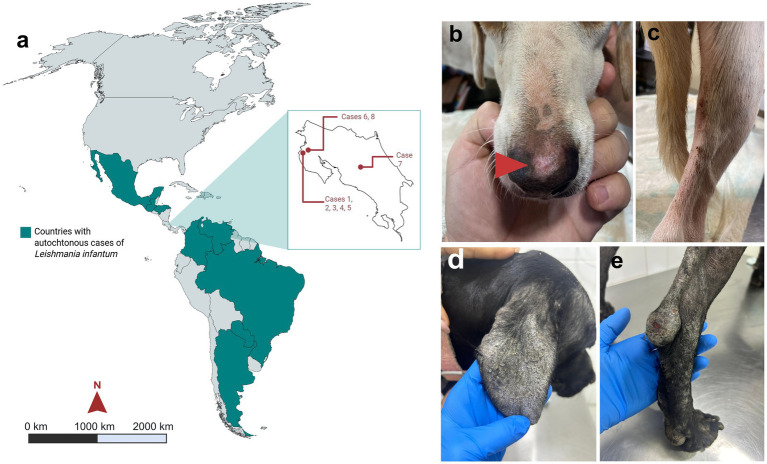 Figure 1
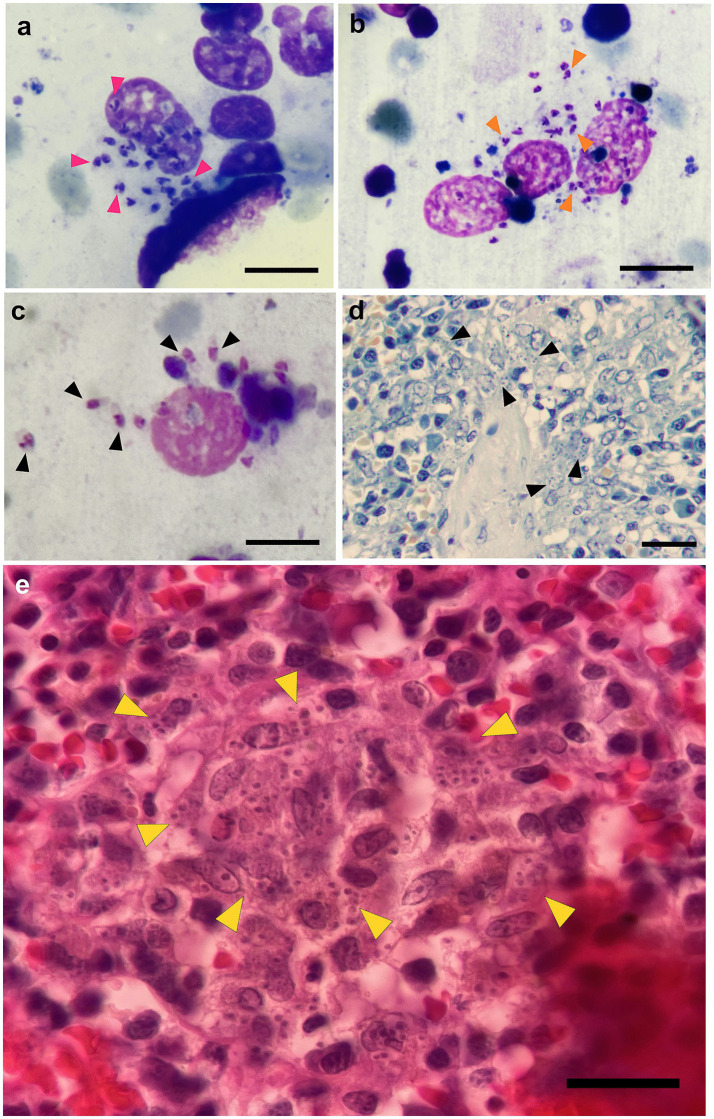 Figure 2
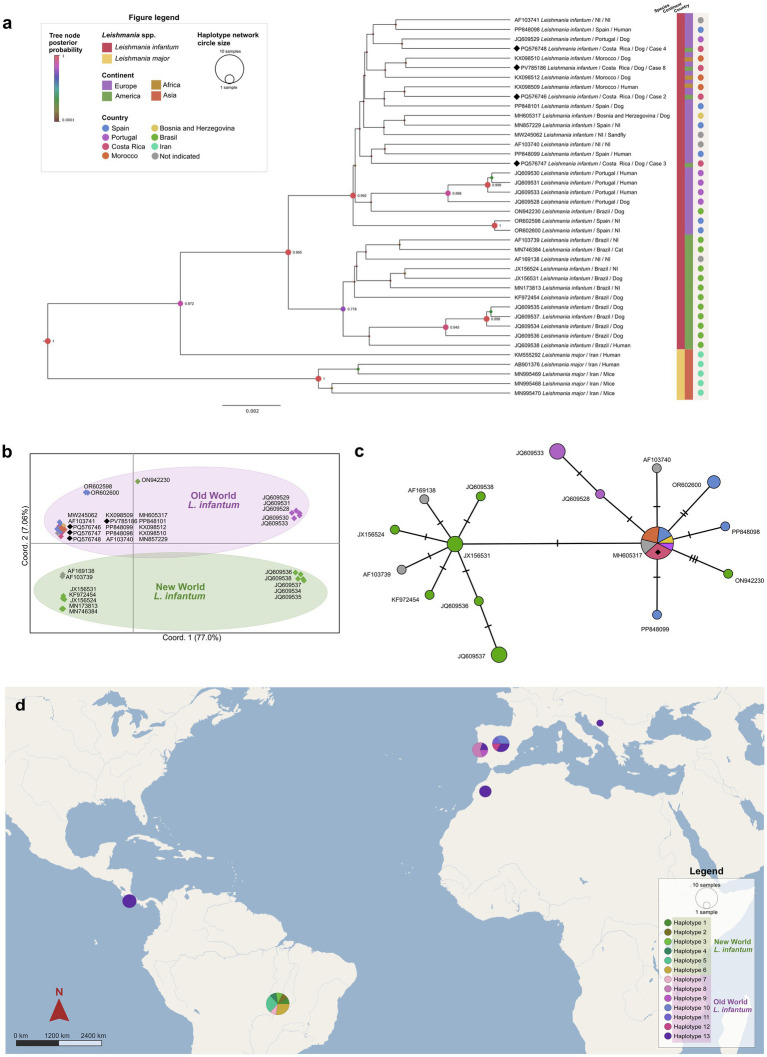 Figure 3
Peer Reviews
No public reviews on file for this paper yet. If you reviewed it on a platform where reviews are public (OpenReview, ICLR, NeurIPS, ICML), you can paste yours below so the community can read it here.
Videos
No videos yet. Explain this paper in a talk, walkthrough, or lecture? Add one.
Taxonomy
TopicsResearch on Leishmaniasis Studies · Trypanosoma species research and implications · Virology and Viral Diseases