Updated peer review of the pesticide risk assessment of the active substance dichlorprop‐P and variant dichlorprop‐P‐2‐ethylhexyl
Fernando Álvarez, Maria Arena, Domenica Auteri, Sofia Batista Leite, Marco Binaglia, Anna Federica Castoldi, Arianna Chiusolo, Angelo Colagiorgi, Mathilde Colas, Federica Crivellente, Chloe De Lentdecker, Isabella De Magistris, Mark Egsmose, Gabriella Fait, Franco Ferilli

TL;DR
This paper updates the risk assessment of the pesticide dichlorprop-P and its variant, including their use and residue levels in crops.
Contribution
The paper provides updated conclusions on the regulatory risk assessment and MRLs for dichlorprop-P and its ester variant.
Findings
Risk assessments were updated for dichlorprop-P and dichlorprop-P-2-ethylhexyl under EU regulations.
Maximum residue levels were evaluated for mandarin and lemon.
Endocrine disruption properties and missing regulatory information were identified.
Abstract
The conclusions of the EFSA following the peer review of the initial risk assessments carried out by the competent authorities of the rapporteur Member State, Ireland and co‐rapporteur Member State, Poland, for the pesticide active substance dichlorprop‐P and the variant dichlorprop‐P‐2‐ethylhexyl and the assessment of applications for maximum residue levels (MRLs) are reported. The context of the peer review was that required by Commission Implementing Regulation (EU) No 844/2012. The conclusions were reached based on the evaluation of the representative uses of dichlorprop‐P as herbicide on cereals, grassland and grass seed crops and of the variant dichlorprop‐P‐2‐ethylhexyl as a plant growth regulator on citrus. MRLs were assessed in mandarin and lemon. The conclusions from 2018 were updated in 2024 following the request from the European Commission regarding the endocrine disruption…
Genes, proteins, chemicals, diseases, species, mutations and cell lines named across the full text — each resolved to its canonical identifier and authoritative record.
Click any figure to enlarge with its caption.
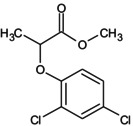 Figure 1
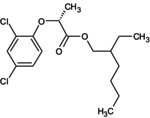 Figure 2
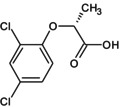 Figure 3
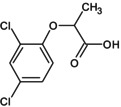 Figure 4
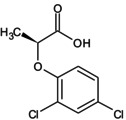 Figure 5
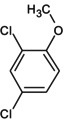 Figure 6
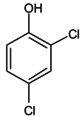 Figure 7
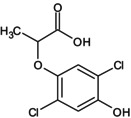 Figure 8
| Compound (name and/or code) | Persistence | Ecotoxicology |
|---|---|---|
| dichlorprop‐P 2‐EHE |
Very low to low persistence Single first‐order DT50 0.9–1.7 days (20°C pF 2 soil moisture) | The risk to soil organisms was assessed as low |
| Undefined ratio of constituent R and S isomers of dichlorprop with the R isomer predominating |
Low to moderate persistence Single first‐order and biphasic kinetics DT50 3.2–17.6 days (DT90 10.7–58.4 days, 20°C 40%–57% MWHC soil moisture) | The risk to soil organisms was assessed as low |
| 2,4‐dichlorophenol (2,4‐DCP) |
Very low to moderate persistence Single first‐order and biphasic kinetics DT50 0.53–6.2 days (DT90 1.8–42.1 days, 20°C 50%–57% MWHC soil moisture) | Data gap for the uses on spring cereal and grassland |
| 2,4‐dichloroanisole (2,4‐DCA) |
Low to moderate persistence Single first‐order DT50 5.2–31.4 days (20°C 50%–57% MWHC soil moisture) | The risk to soil organisms was assessed as low |
| Compound (name and/or code) | Mobility in soil | > 0.1 μg/L at 1 m depth for the representative uses | Pesticidal activity | Toxicological relevance |
|---|---|---|---|---|
| dichlorprop‐P 2‐EHE | No data, dichlorprop endpoints used to complete assessments | No | Yes | Yes |
| Undefined ratio of constituent R and S isomers of dichlorprop with the R isomer predominating |
Very high to high mobility
| No | Yes | Yes |
| 2,4‐dichlorophenol (2,4‐DCP) |
Medium to low mobility
| No | Assessment not triggered | Assessment not triggered |
| 2,4‐dichloroanisole (2,4‐DCA) |
Medium to low mobility
| No | Assessment not triggered | Assessment not triggered |
| Compound (name and/or code) | Ecotoxicology |
|---|---|
| dichlorprop‐P 2‐EHE | Data gap |
| Undefined ratio of constituent R and S isomers of dichlorprop with the R isomer predominating | The risk to aquatic organisms was assessed as low for several scenarios. Data gap for some other scenarios |
| 2,4‐dichlorophenol (2,4‐DCP) | The risk to aquatic organisms was assessed as low |
| 2,4‐dichloroanisole (2,4‐DCA) | The risk to aquatic organisms was assessed as low |
| Compound (name and/or code) | Toxicology |
|---|---|
| dichlorprop‐P 2‐EHE | Acute Tox Cat. 4: H332. Harmful if inhaled |
| Undefined ratio of constituent R and S isomers of dichlorprop with the R isomer predominating | Low acute toxicity by inhalation |
| 2,4‐dichlorophenol (2,4‐DCP) | No specific data are available by inhalation route. The substance is corrosive |
| Representative use | Winter cereals including cereals undersown with rotational grass | Spring cereals including cereals undersown with rotational grass | Grassland (permanent and rotational) | Grass seed crops | Citrus (oranges, mandarin, lemons) | |
|---|---|---|---|---|---|---|
|
| Risk identified | |||||
| Assessment not finalised | ||||||
|
| Risk identified | X | X | |||
| Assessment not finalised | ||||||
|
| Risk identified | X | X | X | X | |
| Assessment not finalised | ||||||
|
| Risk identified | |||||
| Assessment not finalised | X1,2 | X1,2 | X1,2 | X1,2 | X1,2 | |
|
| Risk identified | X | X | X | X | |
| Assessment not finalised | ||||||
|
| Risk identified | X | X | X | X | |
| Assessment not finalised | ||||||
|
| Risk identified | 4/9 FOCUS SW scenarios | 1/5 FOCUS SW scenarios | 2/7 FOCUS SW scenarios | 2/7 FOCUS SW scenarios | |
| Assessment not finalised | ||||||
|
| Legal parametric value breached | |||||
| Assessment not finalised | ||||||
|
| Legal parametric value breached | |||||
| Parametric value of 10 μg/L | ||||||
| Assessment not finalised | ||||||
Peer Reviews
No public reviews on file for this paper yet. If you reviewed it on a platform where reviews are public (OpenReview, ICLR, NeurIPS, ICML), you can paste yours below so the community can read it here.
Videos
No videos yet. Explain this paper in a talk, walkthrough, or lecture? Add one.
Taxonomy
TopicsAgricultural safety and regulations · Pesticide Residue Analysis and Safety · Effects and risks of endocrine disrupting chemicals
SUMMARY
Commission Implementing Regulation (EU) No 844/2012 (hereinafter referred to as ‘the Regulation’) lays down the procedure for the renewal of the approval of active substances submitted under Article 14 of Regulation (EC) No 1107/2009. The list of those substances is established in Commission Implementing Regulation (EU) No 686/2012. Dichlorprop‐P is one of the active substances listed in Regulation (EU) No 686/2012.
In accordance with Article 1 of the Regulation, the rapporteur Member State (RMS), Ireland and co‐rapporteur Member State (co‐RMS), Poland, received an application from Nufarm UK Limited for the renewal of approval of the active substance dichlorprop‐P. In addition, Nufarm UK Limited submitted applications for maximum residue levels (MRLs), as referred to in Article 7 of Regulation (EC) No 396/2005. Complying with Article 8 of the Regulation, the RMS checked the completeness of the dossier and informed the applicant, the co‐RMS (Poland), the European Commission and the European Food Safety Authority (EFSA) about the admissibility.
The RMS provided its initial evaluation of the dossier on dichlorprop‐P and the variant dichlorprop‐P‐2‐ethylhexyl in the renewal assessment report (RAR), which was received by EFSA on 16 March 2017. The RAR included a proposal to set MRLs, submitted under Article 7 of Regulation (EC) No 396/2005. In accordance with Article 12 of the Regulation, EFSA distributed the RAR to the Member States and the applicant, Nufarm UK Limited, for comments on 28 April 2017. EFSA also provided comments. In addition, EFSA conducted a public consultation on the RAR. EFSA collated and forwarded all comments received to the European Commission on 29 June 2017.
Following consideration of the comments received on the RAR, it was concluded that additional information should be requested from the applicant and that EFSA should conduct an expert consultation in the areas of mammalian toxicology, residues, environmental fate and behaviour and ecotoxicology.
In accordance with Article 13(1) of the Regulation, EFSA should adopt a conclusion on whether dichlorprop‐P can be expected to meet the approval criteria provided for in Article 4 of Regulation (EC) No 1107/2009 of the European Parliament and of the Council and give a reasoned opinion concerning MRL applications as referred to in Article 10(1) of Regulation (EC) No 396/2005.
EFSA published its conclusion on the peer review of the pesticide risk assessment of dichlorprop‐P and the variant dichlorprop‐P‐2‐ethylhexyl on 28 June 2018 (EFSA, 2018b). On 14 January 2019, the European Commission sent a mandate to EFSA with a request to review the endocrine‐disrupting properties of dichlorprop‐P.
The approval of dichlorprop‐P includes the following specific restrictions: authorisation is limited to uses as herbicide; for cereals, only spring applications may be permitted, at a maximum rate of 800 g of active substance per hectare per application; use on grassland is not authorised.
In accordance with Article 7 of the Regulation (EC) No 1107/2009, the RMS Ireland received an application from Nufarm UK Limited on 27 May 2021 for the amendment to the conditions of approval of the active substance dichlorprop‐P. The purpose of this application is to extend the existing approval to include the ester variant dichlorprop‐P‐2‐ethylhexyl (Dichlorprop‐P 2‐EHE) under Regulation (EC) No 1107/2009.
Endpoints not relevant to the scope of the proposed amendment of approval conditions were not updated. An initial evaluation of the dossier on dichlorprop‐P was provided by the RMS in a revised DAR and subsequently, a peer review of the pesticide risk assessment on the RMS evaluation was conducted by EFSA in accordance with Article 12 of Regulation (EC) No 1107/2009.
The conclusions laid down in this report were reached on the basis of the evaluation of the representative uses of dichlorprop‐P as herbicide on cereals, grassland and grass seed crops and of dichlorprop‐P‐2‐ethylhexyl as a plant growth regulator on citrus, as proposed by the applicant. MRLs were assessed in mandarin and lemon. Full details of the representative uses and the proposed MRLs can be found in Appendix A of this report.
The use of dichlorprop‐P according to the representative uses proposed at the European Union (EU) level results in a sufficient herbicidal efficacy against the target weeds. The use of dichlorprop‐P‐2‐ethylhexyl according to the representative uses proposed at the EU level results in a sufficient plant growth regulator efficacy.
In the area of identity, physical/chemical properties and analytical methods data gaps were identified for experimental determination of the partition coefficient n‐octanol/water of 2,4‐dichlorophenol and for determination of the emulsion characteristics of ‘CA2134’ using CIPAC MT 36.3.
In the area of mammalian toxicology and non‐dietary exposure, a data gap is identified for an updated literature search on published epidemiological studies on phenoxy herbicides including dichlorprop‐P and dichlorprop. A risk for bystander/residents is identified for representative uses in cereals, grassland and grass seed crops but not in citrus according to the EFSA guidance on non‐dietary exposure.
In the area of residue data gaps were identified for a metabolism study in poultry, a sufficient number of field trials for cereals, grass and citrus, a study addressing the nature of the residues of dichlorprop‐P‐2‐ethylhexyl at processing and representative of the standard hydrolysis conditions and data on residues in pollen and bee products for human consumption. Consequently, the consumer risk assessment could not be finalised and no MRL can be derived.
The data available on environmental fate and behaviour are sufficient to carry out the required environmental exposure assessments at EU level for the representative uses, with the notable exception that information is missing regarding the effect of water treatment processes on the nature of the residues of the dichlorprop metabolites 2,4‐dichlorophenol and 2,4‐dichloroanisole that might be present in surface water, when surface water is abstracted for drinking water. Consequently, the consumer risk assessment from the consumption of drinking water could not be finalised. The potential for groundwater exposure above the parametric drinking water limit of 0.1 μg/L consequent to the uses assessed, was assessed as low for dichlorprop‐P‐2‐ethylhexyl, dichlorprop isomers and their soil metabolites 2,4‐dichlorophenol and 2,4‐dichloroanisole identified as triggering a groundwater exposure assessment, in geoclimatic situations represented by all nine FOCUS groundwater scenarios.
Several data gaps leading to high risk were identified in the section for ecotoxicology in relation to the risk assessments for aquatic organisms, bees and soil organisms. In addition, a high long‐term risk for mammals was concluded for all representative uses of dichlorprop‐P.
According to the available evidence and assessment both for humans and non‐target organisms, dichlorprop‐P (and variant dichlorprop‐P‐2‐ethylhexyl) does not meet the criteria for endocrine disruption according to point 3.6.5 and 3.8.2 of Annex II to Regulation (EC) No 1107/2009, as amended by Commission Regulation (EU) 2018/605, for oestrogen, androgen, thyroid and steroidogenesis (EATS)‐modalities.
BACKGROUND
Commission Implementing Regulation (EU) No 844/20121 (hereinafter referred to as ‘the Regulation’) lays down the provisions for the procedure of the renewal of the approval of active substances, submitted under Article 14 of Regulation (EC) No 1107/2009.2 This regulates for the European Food Safety Authority (EFSA) the procedure for organising the consultation of Member States, the applicant(s) and the public on the initial evaluation provided by the rapporteur Member State (RMS) and/or co‐rapporteur Member State (co‐RMS) in the renewal assessment report (RAR), and the organisation of an expert consultation where appropriate.
In accordance with Article 13 of the Regulation, unless formally informed by the European Commission that a conclusion is not necessary, EFSA is required to adopt a conclusion on whether the active substance can be expected to meet the approval criteria provided for in Article 4 of Regulation (EC) No 1107/2009 within 5 months from the end of the period provided for the submission of written comments, subject to an extension of an additional 3 months where additional information is required to be submitted by the applicant(s) in accordance with Article 13(3).
In accordance with Article 1 of the Regulation, the RMS Ireland and co‐RMS Poland received an application from Nufarm UK Limited for the renewal of approval of the active substance dichlorprop‐P. In addition, Nufarm UK Limited submitted applications for maximum residue levels (MRLs) as referred to in Article 7 of Regulation (EC) No 396/2005.3 Complying with Article 8 of the Regulation, the RMS checked the completeness of the dossier and informed the applicant, the co‐RMS (Poland), the European Commission and EFSA about the admissibility.
The RMS provided its initial evaluation of the dossier on dichlorprop‐P and the variant dichlorprop‐P‐2‐ethylhexyl in the RAR, which was received by EFSA on 16 March 2017 (Ireland, 2017). The RAR included a proposal to set MRLs, submitted under Article 7 of Regulation (EC) No 396/2005.
In accordance with Article 12 of the Regulation, EFSA distributed the RAR to the Member States and the applicant, Nufarm UK Limited, for consultation and comments on 28 April 2017. EFSA also provided comments. In addition, EFSA conducted a public consultation on the RAR. EFSA collated and forwarded all comments received to the European Commission on 29 June 2017. At the same time, the collated comments were forwarded to the RMS for compilation and evaluation in the format of a reporting table. The applicant was invited to respond to the comments in column 3 of the reporting table. The comments and the applicant's response were evaluated by the RMS in column 3.
The need for expert consultation and the necessity for additional information to be submitted by the applicant in accordance with Article 13(3) of the Regulation were considered in a telephone conference between EFSA, the RMS and co‐RMS on 27 September 2017. On the basis of the comments received, the applicant's response to the comments and the RMS's evaluation thereof, it was concluded that additional information should be requested from the applicant and that EFSA should conduct an expert consultation in the areas of mammalian toxicology, residues, environmental fate and behaviour and ecotoxicology.
The outcome of the telephone conference, together with EFSA's further consideration of the comments, is reflected in the conclusions set out in column 4 of the reporting table. All points that were identified as unresolved at the end of the comment evaluation phase and which required further consideration, including those issues to be considered in an expert consultation, were compiled by EFSA in the format of an evaluation table.
The conclusions arising from the consideration by EFSA, and as appropriate by the RMS, of the points identified in the evaluation table, together with the outcome of the expert consultation and the written consultation on the assessment of additional information, where these took place, were reported in the final column of the evaluation table.
A final consultation on the conclusions arising from the peer review of the risk assessment and on the proposed MRLs took place with Member States via a written procedure in April 2018, leading to the finalisation of the EFSA Conclusion (EFSA, 2018b).
Commission Regulation (EU) 2018/6054 introduced new scientific criteria for the determination of endocrine‐disrupting (ED) properties, applicable as of 10 November 2018 to all applications for the approval/renewal of active substances, including pending applications. The peer review on the active substance dichlorprop‐P and the variant dichlorprop‐P‐2‐ethylhexyl was already completed at the time of entry into force of the new criteria, and an assessment of the ED potential in line with the EFSA/ECHA (2018) guidance document5 for this substance was not available.
Since on the basis of the EFSA Conclusion published on 28 June 2018, it was not possible for risk managers to conclude whether or not the active substance dichlorprop‐P and the variant dichlorprop‐P‐2‐ethylhexyl is an endocrine disruptor, on 14 January 2019 the European Commission requested EFSA to reassess the information and update its Conclusion on the ED potential of the substance in accordance with the new criteria. For this purpose, EFSA has performed an assessment of the ED properties of the active substance dichlorprop‐P and the variant dichlorprop‐P‐2‐ethylhexyl in line with the EFSA/ECHA (2018) guidance for further consideration in the peer review.
In the context of this process, following a consultation with Member States in the Pesticide Peer Review Meeting PREV 10 Mammalian toxicology – Ecotoxicology joint session (July 2019), dichlorprop‐P and the variant dichlorprop‐P‐2‐ethylhexyl were not considered to meet the criteria for endocrine disruption for humans for the thyroid (T) modality according to point 3.6.5 of Annex II of Regulation (EC) No 1107/2009, as amended by Commission Regulation (EU) No 2018/605. However, additional testing was required to complete the current data package about the EAS‐mediated adverse effects in relation to human health and to further investigate the ED properties of the substance for non‐target organisms. Therefore, as permitted in the mandate, the applicant was given the opportunity on 9 august 2019, to submit, within a period of 30 months, additional information to address the approval criteria set out in point 3.6.5 and point 3.8.2 of Annex II to Regulation (EC) No 1107/2009, as amended by Commission Regulation (EU) No 2018/605, and/or documentary evidence demonstrating that dichlorprop‐P and the variant dichlorprop‐P‐2‐ethylhexyl may be used such that exposure is negligible, and/or the conditions for application of the derogation under Art.4(7) of Regulation (EC) No 1107/2009 are met.
The additional information submitted by the applicant on 31 January 2022 was subsequently evaluated by the RMS, Ireland. EFSA received the revised RAR from the RMS with the RMS evaluation of the endocrine properties assessment, on 16 May 2022 (Ireland, 2022). Subsequently, a public consultation on the revised RAR was conducted in July–September 2022. All comments received, including those from the applicant, EFSA and Member States, were collated in the format of a reporting table and were considered during the finalisation of the peer review. As a result of the consultation, in light of the comments received, a consultation with Member States in the Pesticide Peer Review teleconference (TC) 92 Mammalian toxicity and Ecotoxicology joint session was conducted in January 2023 and a follow‐up TC 114 Mammalian toxicology and TC 117 Ecotoxicology was conducted in September 2023.
As a consequence, the RMS, Ireland, provided an updated RAR, in line with the outcome of the experts' discussion (Ireland, 2023a).
A final consultation on the updated conclusions arising from the peer review following the mandate from the European Commission took place with Member States via a written procedure in December 2023 to January 2024.
Dichlorprop‐P is currently approved with the following restrictions:
- – Only uses as herbicide may be authorised;
- – As regards cereals, only application in spring may be authorised, at rates not exceeding 800 g active substance per hectare per application;
- – Use on grassland shall not be authorised.
In accordance with Article 7 of the Regulation (EC) No 1107/2009, the rapporteur Member State (RMS) Ireland received an application from Nufarm UK Limited on 27 May 2021 for the amendment to the conditions of approval of the active substance dichlorprop‐P. The purpose of this application is to extend the existing approval to include the ester variant dichlorprop‐P‐2‐ethylhexyl under Regulation (EC) No 1107/2009.
Endpoints not relevant to the scope of the proposed amendment of approval conditions were not updated.
The RMS provided its initial evaluation of the dossier on dichlorprop‐P in the form of a revised DAR which was received by EFSA on 29 May 2023, updated in October 2023 (Ireland, 2023b). The peer review was initiated on 15 February 2024 by dispatching the revised DAR to Member States and the applicant, Nufarm UK Limited for consultation and comments. EFSA also provided comments. In addition, EFSA conducted a public consultation on the revised DAR. The comments received were collated by EFSA and forwarded to the RMS for compilation and evaluation in the format of a reporting table. The applicants were invited to respond to the comments in column 3 of the reporting table. The comments and the applicant's response were evaluated by the RMS in column 3.
The need for experts' consultation and the necessity for additional information to be submitted by the applicant in accordance with Article 12(3) of the Regulation were considered in a telephone conference between EFSA and the RMS, on 12 June 2024. On the basis of the comments received, the applicant's response to the comments and the RMS's evaluation thereof, it was concluded that additional information should be requested from the applicant, and that EFSA should conduct an experts' consultation in the areas of mammalian toxicology and ecotoxicology.
The outcome of the telephone conference, together with EFSA's further consideration of the comments is reflected in the conclusions set out in column 4 of the reporting table. All points that were identified as unresolved at the end of the comment evaluation phase and which required further consideration, including those issues to be considered in an experts' consultation, were compiled by EFSA in the format of an evaluation table.
The conclusions arising from the consideration by EFSA, and as appropriate by the RMS, of the points identified in the evaluation table, together with the outcome of the experts' consultation and the written consultation on the assessment of additional information, where these took place, were reported in the final column of the evaluation table.
A final consultation on the conclusions arising from the peer review of the risk assessment took place with Member States via a written procedure in November–December 2025.
This conclusion report summarises the outcome of the peer review of the risk assessment of the active substance and the representative formulations, evaluated on the basis of the representative uses of dichlorprop‐P and the variant dichlorprop‐P‐2‐ethylhexyl as a herbicide on cereals, grassland and grass seed crops and of dichlorprop‐P‐2‐ethylhexyl as a plant growth regulator on citrus, as proposed by the applicant. MRLs were assessed in mandarin and lemon. In addition, the conclusions were updated with regard to the endocrine‐disrupting properties following the mandate received from the European Commission on 14 January 2019. A list of the relevant end points for the active substance and the formulation and the proposed MRLs is provided in Appendix A.
In addition, a key supporting document to this updated conclusion is the Peer Review Report (EFSA, 2018b, updated 2024, further updated in 2025), which is a compilation of the documentation developed to evaluate and address all issues raised in the peer review, from the initial commenting phase to the conclusion. The peer review report comprises the following documents, in which all views expressed during the course of the peer review, including minority views, where applicable, can be found:
- the comments received on the RAR and on the DAR6;
- the reporting Tables (3 October 2017, 4 November 20227 and 12 June 20248);
- the evaluation Table (14 May 2018 updated in October 2023 and in December 2025);
- the report(s) of the scientific consultation with Member State experts (where relevant);
- the comments received on the assessment of the additional information (where relevant);
- the comments received on the EFSA ED assessment9;
- the comments received on the draft EFSA conclusion and the updated conclusion.
Given the importance of the RAR, including its revisions (Ireland 2018, 2022, 2023, 2025), the Peer Review Report (EFSA, 2018b, updated 2024 and further updated in 2025) and the EFSA ED assessment (EFSA, 2019), all these documents are considered as background documents to this conclusion and thus are made publicly available.
It is recommended that this conclusion report and its background documents would not be accepted to support any registration outside the EU for which the applicant has not demonstrated that it has regulatory access to the information on which this conclusion report is based.
THE ACTIVE SUBSTANCE AND THE FORMULATED PRODUCT
Dichlorprop‐P is the ISO common name for (2R)‐2‐(2,4‐dichlorophenoxy)propionic acid (IUPAC). Dichlorprop‐P‐2‐ethylhexyl (dichlorprop‐P 2‐EHE) is the modified ISO common name for (2RS)‐2‐ethylhexyl (2R)‐2‐(2,4‐dichlorophenoxy)propionate (IUPAC), a variant of dichlorprop‐P.
The representative formulated products for the evaluation were ‘Dichlorprop‐P K 600 SL’ a soluble concentrate (SL) containing 600 g/L dichlorprop‐P as potassium salt and ‘Dichlorprop‐P EHE 25’ (‘CA2134’) an emulsifiable concentrate (EC) containing 25 g/L dichlorprop‐P as dichlorprop‐P‐2‐ethylhexyl.
In the context of the amendment of approval conditions, the information on the active substance and the formulation for representative uses ‘Dichlorprop‐P EHE 25’ (‘CA2134’), including the co‐formulants in this formulation, was considered in the overall assessment during the peer review. None of the co‐formulants is an unacceptable co‐formulant listed in Annex III of Regulation (EC) No 1107/200910; a component, present at < 1%, of a co‐formulant is a non‐approved active substance under Regulation (EC) No 1107/2009.11
Details on the composition of the formulations cannot be reported in conclusions because of the provisions in Article 63(2)(d) of Regulation (EC) No 1107/2009, however this information was fully available and evaluated during the peer review. A proposal for classification of the formulation(s) according to Regulation (EC) 1272/2008 was provided by the applicant and assessed by the RMS (please see Volumes 3 CP of the DAR).
The representative uses evaluated were: for ‘Dichlorprop‐P K 600 SL’ conventional field spray against broad leaves weeds in winter and spring cereals (such as wheat, barley, rye, oats and triticale), permanent and rotational grassland and grass seed crops; for ‘Dichlorprop‐P EHE 25’ high volume spray as a plant growth regulator (to increase fruit size and to prevent plant drop) on citrus (such as oranges, mandarins and lemons). Full details of the representative uses can be found in the list of end points in Appendix A.
Data were submitted to conclude that the representative uses of dichlorprop‐P and dichlorprop‐P‐2‐ethylhexyl proposed at EU level result in a sufficient herbicidal efficacy against the target weeds and a sufficient plant growth regulator efficacy following the guidance document SANCO/2012/11251‐rev. 4 (European Commission, 2014b).
CONCLUSIONS OF THE EVALUATION
General aspects
The mammalian toxicity information available for the formulation for representative uses (‘CA2134’) was discussed at the Pesticides Peer Review Experts' Meeting (TC 158, January 2025). The provided studies demonstrated skin and eye irritation properties and no acute toxicity by oral or dermal exposure nor skin sensitisation properties. With regard to the co‐formulants contained in ‘CA2134’, sufficient toxicological data were available for all components but two. For these two co‐formulants (one below 10% and the other well above 10% in the formulation), the experts considered that the available toxicological information did not sufficiently address the genotoxicity, repeated dose toxicity information over the short‐ and long‐term toxicity (including carcinogenicity) and that they might be considered for further assessment. The collected information including information from the existing uses other than plant protection products (e.g. one is used in cosmetics), under regulated EU frameworks, did not highlight any concern (data gap, see Section 8).12
The availability of ecotoxicity data with the formulation for representative uses ‘CA2134’ (Dichlorprop‐P EHE 25) was discussed at the Pesticides Peer Review Experts' Meeting (TC 161, February 2025).13
The experts agreed to set data gaps for toxicity information on the formulation for representative uses of ‘CA2134’ (see Sections 5 and 8). Furthermore, a robust data retrieval search for available ecotoxicity data for the individual components was not available at the time of the meeting and therefore it was not possible to reach a conclusion on the safety of the formulation for representative uses ‘CA2134’ (data gap, see Section 8).
For what concerns the (eco)toxicological assessment of the formulation for representative uses ‘CA2134’, the applicant provided additional information in an updated Volume 4 of the DAR (June 2025) after the Pesticides Peer Review Expert's Meeting. Since this additional data was submitted outside the clock‐stop window (26 June 2024–24 September 2024), as such it is not eligible and has not been peer reviewed. Regarding the toxicological assessment, this information does not address the identified data gap. Regarding the ecotoxicological assessment, the RMS considered that the submitted acute toxicity studies with honey bees and bumble bees with ‘CA2134’ were reliable and would address the identified data gap. However, the RMS did not consider that the remaining identified data gaps would be addressed with the submitted information.
IDENTITY, PHYSICAL/CHEMICAL/TECHNICAL PROPERTIES AND METHODS OF ANALYSIS
1
The following guidance documents were followed in the production of this conclusion: SANCO/3029/99‐rev. 4 (European Commission, 2000a), SANCO/3030/99‐rev. 4 (European Commission, 2000b) and SANCO/825/00‐rev. 8.1 (European Commission, 2010).
It should be noted that data for both dichlorprop‐P and dichlorprop‐P‐2‐ethylhexyl were submitted and assessed.
The proposed specification for dichlorprop‐P is based on batch data from industrial scale production and quality control data. The proposed minimum purity of the technical material is 920 g/kg. 2,4‐dichlorophenol is considered a relevant impurity with a maximum content of 5 g/kg. Polychlorinated dibenzo‐p‐dioxins (PCDDs) and polychlorinated dibenzofurans (PCDFs) are also considered relevant, expressed as a sum of 2,3,7,8‐tetrachlorodibenzo‐p‐dioxin (TCDD) toxic equivalents (TEQs) at a maximum content of 0.01 mg/kg.
It is proposed the reference specification to be updated based on the data for renewal since higher minimum purity of the active substance could be set and new impurities should be included. There is no Food and Agriculture Organization (FAO) specification available for dichlorprop‐P. The batches used in the (eco)toxicological assessment support the proposed specification (see Sections 2 and 5).
The proposed specification for the variant dichlorprop‐P‐2‐ethylhexyl is based on batch data from industrial scale production. The proposed minimum purity of the technical material is 920 g/kg. 2,4‐dichlorophenol is considered a relevant impurity with a maximum content of 3 g/kg. PCDDs and PCDFs are also considered relevant, expressed as a sum of TCDD TEQs at a maximum content of 0.01 mg/kg. The batches used in the (eco)toxicological assessment support the proposed specification (see Sections 2 and 5).
The assessment of the data package revealed no issues that need to be included as critical areas of concern with respect to the identity, physical, chemical and technical properties of dichlorprop‐P or the representative formulation. However, data gaps were identified for the experimental determination of the partition coefficient n‐octanol/water of 2,4‐dichlorophenol and for the determination of the emulsion characteristics of ‘CA2134’ using CIPAC MT 36.3. The main data regarding the identity of dichlorprop‐P and its physical and chemical properties are given in Appendix A.
Adequate methods are available for the generation of pre‐approval data required for the risk assessment. Methods of analysis are available for the determination of the active substance in the technical material and in the representative formulations and for the determination of the respective impurities in the technical material. A CIPAC method is proposed for determination of 2,4‐dichlorophenol in the representative formulations. Since dioxins and furans are considered as relevant impurities, analytical methods for their determination in the representative formulations are required. However, based on the very low levels demonstrated in the technical material and considering that these impurities cannot be formed during the storage, EFSA is of the opinion that a method for their determination in the formulations should not be requested.
A common residue definition for dichlorprop‐P and dichlorprop‐P‐2‐ethylhexyl in all matrices was defined, and therefore, post‐approval monitoring methods are applicable for both substances.
Residues of dichlorprop (including dichlorprop‐P), its salts, esters and conjugates can be monitored as a total phenoxy acid present in food and feed of plant origin by liquid chromatography with tandem mass spectrometry (LC–MS/MS) with a limit of quantification (LOQ) of 0.01 mg/kg in all commodity groups. Components of residue definition (dichlorprop (including dichlorprop‐P), its salts, esters and conjugates expressed as dichlorprop) in food of animal origin can also be determined as a total phenoxy acid present by LC–MS/MS with LOQ of 0.01 mg/kg in all animal matrices.
Residues of dichlorprop (including dichlorprop‐P) and its salts can be monitored as a total phenoxy acid present in water, soil and air by LC–MS/MS with LOQs of 0.01 μg/L, 0.01 mg/kg and 0.278 μg/m^3^, respectively. LC–MS/MS method exists for monitoring of 2,4‐dichlorophenol residue in soil with LOQ of 0.05 mg/kg. Although 2,4‐dichlorophenol is not included in the residue definition for monitoring in water, it should be noted that LC–MS/MS method with a LOQ of 0.1 μg/L is available.
LC–MS/MS method can be used for monitoring of dichlorprop (including dichlorprop‐P), its salts, esters and conjugates residues in body fluids with a LOQ of 0.05 mg/L. Dichlorprop (including dichlorprop‐P), its salts, esters and conjugates residues in body tissues can be determined by using the monitoring methods for residue in food of animal origin.
Information regarding identity, physical/chemical/technical properties and methods of analysis was not re‐assessed in the application to amend the approval conditions. The conclusions drawn above remain applicable.
MAMMALIAN TOXICITY
2
The toxicological profile of the active substance dichlorprop‐P was discussed at the Pesticides Peer Review Experts' TC 164, TC 176 (February 2018) and TC 114 (September 2023) and assessed based on the following guidance documents: SANCO/221/2000 – rev. 10‐final (European Commission, 2003), SANCO/10597/2003 – rev. 10.1 (European Commission, 2012), guidance on dermal absorption (EFSA PPR Panel, 2012) and guidance on non‐dietary exposure (EFSA, 2014a).
An updated search of the scientific peer‐reviewed open literature was conducted to complete the assessment needed for the amendment of approval conditions. An assessment of the search and the resulting publications was included in the DAR (Ireland, 2025). The resulting literature did not identify information having an impact on the toxicological assessment conducted previously.
To assess the toxicological profile of active substance dichlorprop‐P, the applicant submitted a set of valid toxicity studies. Although most toxicity studies were performed with dichlorprop‐P, some studies were available with dichlorprop and dichlorprop‐P 2‐EHE. For risk assessment purposes, bridging between dichlroprop, dichlorprop‐P and dichlorprop‐P 2‐EHE was considered appropriate. Considering the toxicological profile of dichlorprop‐P and the identity of impurities the proposed (old and new) technical specifications for both dichlorprop‐P and its ester dichlorprop‐P 2‐EHE are considered covered by the toxicity studies. 2,4‐dichlorophenol is a relevant impurity in both dichlorprop‐P and its ester dichlorprop‐P 2‐EHE (5 and 3 g/kg, respectively, as maximum content is acceptable from toxicological point of view). Dioxins and furans are considered as relevant impurities in dichlorprop‐P and its ester since they could be (theoretical/potentially) formed in other sources (maximum content of 0.01 mg/kg).
Dichlorprop‐P and its ester are extensively and rapidly absorbed after oral administration in rats (> 87% based on urinary excretion). Metabolic patterns in the different species were similar. No unique human metabolite is expected.
In the acute toxicity studies, dichlorprop‐P has moderate acute toxicity when administered orally and low acute toxicity when administered dermally or by inhalation to rats. Dichlorprop‐P was found to be not an irritant to the skin of rabbits, but it is a severe eye irritant. It is not a skin sensitiser and not phototoxic. Dichlorprop‐P 2‐EHE is skin sensitiser and of moderate acute inhalation toxicity to rats.
After (short‐ and long‐term) oral repeated administration of dichlorprop‐P in rats, mice and dogs, the target organ of toxicity included kidney, liver and blood system. In addition, reduced absolute body weight, body weight gain, food consumption and reduced grip strength were also observed in rats. The relevant short‐term oral no observed adverse effect level (NOAEL) is 35 mg/kg body weight (bw) per day (90‐day rat study) and the relevant long‐term oral NOAEL is 6 mg/kg bw per day (18‐month mouse study). In addition to systemic effects, dogs showed local effects in the oral cavity (erosion). The relevant NOAEL for local effects in dogs is 3.5 mg/kg bw per day from the 1‐year study.
The weight of evidence suggests that dichlorprop‐P induced polyploidy in vitro but it is unlikely to be genotoxic in vivo. Dichlorprop‐P and dichlorprop showed no carcinogenic potential in mice and rats, respectively. No specific human data are available concerning epidemiological evidence for a carcinogenic potential of dichlorprop‐P and/or dichlorprop. However, a data gap is identified for an updated literature search on published epidemiological studies on phenoxy herbicides including dichlorprop‐P and dichlorprop. The applicant is also advised to conduct a systematic literature review on human health covering a date span from 1980 on dichlorprop and dichlorprop‐P following EFSA guidance on literature review (EFSA, 2011) since relevant publications might be available.
In the multi‐generation study in rats with dichlorprop, the relevant NOAEL for parental toxicity is 8.3 mg/kg bw per day based on kidney weight effect at 42 mg/kg bw per day, which represents the NOAEL for reproductive toxicity (reduced fertility index of F1 males, prolonged gestation, dams with stillborn pups and reduced number of pups/dam) and offspring toxicity (pup mortality, decreased viability, survival, reduced body weight, increased kidney weight and reduced grip reflex). In the new extended one‐generation reproductive toxicity study in rats with dichlorprop‐P, submitted under the clock stop for assessing endocrine disruption, the majority of experts at the Pesticides Peer Review Experts' TC 114 agreed to set the NOAEL for parental, reproductive and offspring toxicity at 35.9 mg/kg bw per day based on decreased body weight gain and increased kidney weight (parental toxicity), prolonged gestation length and total litter loss (reproductive toxicity) and decreased body weight (offspring toxicity).14 In the developmental toxicity studies with dichlorprop‐P, fetal skeletal variations and retardations in rats and increased number of foetuses with accessory 13th rib(s) in rabbits were observed in the presence of maternal toxicity (reduced body weight (gain) and food consumption in rat; and marginal body weight loss, reduced food consumption in rabbit). The relevant maternal NOAELs are 20 mg/kg bw per day for the rat and 50 mg/kg bw per day for the rabbit whereas the developmental NOAELs are 80 and 50 mg/kg bw per day, respectively. Developmental toxicity studies with dichlorprop were considered of low reliability.
According to the RMS, the non‐GLP and non‐OECD guideline mouse developmental study on dichlorprop and dichlorprop‐P showed evidence of maternal toxicity and embryotoxicity including teratogenicity. However, interpretation is limited by the lack of information on the test materials and in the reporting of the maternal effects. Therefore, this study would not challenge the conclusion reached during the experts' meeting.
The substance did not show a neurotoxic potential in acute and repeated neurotoxicity studies in rats.
The reassessment of the toxicological profile of dichlorprop‐P leads to a revision of some of the existing toxicological reference values (European Commission, 2013). The experts at the Pesticides Peer Review Experts' TC 114 agreed to maintain the Health Based Guidance Values (HBGVs) as previously set at the Pesticides Peer Review Experts' TC 164 and TC 176. The acceptable daily intake (ADI) of 0.06 mg/kg bw per day was established on the basis of the relevant long‐term NOAEL of 6 mg/kg bw in the 18‐month study in mice based on chronic nephropathy at 64 mg/kg bw per day. An uncertainty factor of 100 was applied. The majority of experts agreed to revise the acute reference dose (ARfD). The ARfD is 0.2 mg/kg bw based on the NOAEL of 20 mg/kg bw per day for decreased food consumption and body weight/body weight gain observed at 80 mg/kg bw per day in the developmental toxicity study in rats. An uncertainty factor of 100 was applied. The majority of experts agreed to revise the acceptable operator exposure level (AOEL). The AOEL is 0.08 mg/kg bw per day on the basis of the relevant parental NOAEL of 8.3 mg/kg bw per day in the multi‐generation study in rats based on increased kidney weight at 42 mg/kg bw per day. An uncertainty factor of 100 was applied. No correction factor for oral absorption is needed to derive the AOEL. The experts agreed that the acute acceptable operator exposure level (AAOEL) should be set on the same basis as the ARfD. The resulting AAOEL is 0.2 mg/kg bw. No correction factor for oral absorption is needed to derive the AAOEL.
For the renewal assessment of dichlorprop‐p, the RMS estimated non‐dietary exposure (i.e. for operators, workers, bystanders and residents) according to the EFSA (2014a) and considering dermal absorption values of dichlorprop‐P in ‘Dichlorprop‐P K 600 SL’ of 19% for the concentrate and of 45% for the dilution and in ‘Dichlorprop‐P 2‐EHE 25 g/L (CA21134)’ of 75% for both the concentrate and the dilution.
Considering the representative uses with ‘Dichlorprop‐P K 600 SL (CA3121)’ as herbicide in grassland/grass seed crops, the operator exposure was below the AOEL (31% of the AOEL) with the use of personal protective equipment (PPE: gloves during mixing, loading and application and work wear‐arms, body and legs covered, and closed cabin). Worker exposure was above the AOEL (work wear, 118% of the AOEL). Bystander15 child exposure to spray drift and resident child and adult exposure was above the AAOEL/AOEL, maximum exposure 151% of the AOEL for resident child exposure to spray drift located at 2–3 m.16 Estimation of recreational exposure of children and adult residents (relevant to grassland uses) was above and below the AOEL for child (122% of the AOEL) and adult, respectively (34% of the AOEL). Considering the representative uses with ‘Dichlorprop‐P K 600 SL (CA3121)’ as herbicide in cereals the operator exposure was below the AOEL (25% of the AOEL) with the use of personal protective equipment (PPE: gloves during mixing, loading and application and work wear‐arms, body and legs covered and closed cabin). Worker exposure was below the AOEL (work wear, 94.5% of the AOEL). Bystander child exposure and resident child exposure to spray drift and resident child entry into treated crops was above the AAOEL/AOEL (maximum exposure 120% of the AOEL; resident child exposure to spray drift if located at 2–3 m).17
Considering the representative uses with ‘CA2134’ as plant growth regulator in citrus trees the operator exposure was below the AOEL (18% of the AOEL) with the use of personal protective equipment (PPE: gloves during mixing, loading and application) and with open cabin. Worker exposure was below the AOEL with the use of PPE (work wear and gloves, 63.8% of the AOEL). Bystander and resident exposure was below the AAOEL/AOEL (5 m distance). Considering the representative uses with ‘CA2134’ as plant growth regulator in citrus trees manual/knapsack application is not envisaged in the submitted dossier.
For the amendment of the approval conditions (for inclusion of dichlorprop‐p 2‐EHE variant), the RMS provided non‐dietary exposure estimates (i.e. for operators, workers, bystanders and residents) according to the EFSA Guidance 2022 (EFSA, 2022) and considering dermal absorption values of dichlorprop‐P 2‐EHE in ‘Dichlorprop‐P 2‐EHE 25 g/L (CA21134)’ of 70% for both the concentrate and the dilution.
Considering the representative uses with ‘CA2134’ as plant growth regulator in citrus trees of normal crop density, the operator exposure estimates were below the (A)AOEL in case of vehicle‐mounted, manual hand‐held and manual knapsack applications (wearing standard workwear and gloves during mixing/loading and workwear only during application). EFSA notes that in case of hand‐held or knapsack application on dense crops, the operator exposure estimates are above the AOEL even when using gloves and respiratory protective equipment (i.e. FP2, P2 or similar). Worker exposure was below the AOEL. Bystander and resident exposure was below the (A)AOEL.
RESIDUES
3
The assessment in the residue section is based on the OECD guidance document on overview of residue chemistry studies (OECD, 2009b), the OECD publication on MRL calculations (OECD, 2011), the European Commission guideline document on MRL setting (European Commission, 2011) and the Joint Meeting on Pesticide Residues (JMPR) recommendations on livestock burden calculations (JMPR, 2004, 2007) and OECD guidance document on residue definition (OECD, 2009a).
Dichlorprop‐P was discussed at the Pesticides Peer Review Experts' Meeting 173 in February 2018.
Representative use residues
3.1
Metabolism of dichlorprop‐P was investigated in wheat and of dichlorprop‐P 2‐EHE in oranges applying [^14^C] ring‐labelled active substance. The study on wheat was with one foliar application at 750 g a.s./ha at BBCH 31 (0.6 N rate). Identification of metabolites was not conducted in wheat grain although the total radioactive residue (TRR) amounted 0.021 mg/kg and the remained unextracted radioactive residues in wheat accounted for 60% TRR. The identified substances in mature straw were dichlorprop‐P and 2,4‐dichlorophenol accounting for 18.7% TRR (0.257 mg eq/kg) and 1.8% TRR (0.024 mg eq/kg), respectively. Dichlorprop‐OH having a tentative structure ascribed accounted for 5.3% TRR (0.071 mg eq/kg). Only two metabolites out of 11 occurred above 10% TRR. One was characterised as multicomponent consisting of glycosides and accounting for 14.4% TRR (0.197 mg eq/kg) and the other as dichlorprop‐P methyl ester accounting for 14.1% (0.193 mg eq/kg). In foliage and straw, a similar metabolic pattern was observed at maturity. In comparison to that, less metabolites were observed in ears in comparison to foliage at the same immature growth stage. Although underdosed and with limited characterisation in the edible part, the study can be used for the risk assessment.
Dichlorprop‐P 2‐EHE was applied to young orange trees in pots as foliar treatment at a rate of ca 7 mg a.s./tree at BBCH 71–73 (DAT1) and some trees were treated a second time with the same amount at BBCH 81 (DAT2). The application rate corresponds to ca 120 g a.s./ha (ca. 1.6 N). Although the tree/ha ratio in this study does not represent the situation encountered in orchards, the study is found suitable to elucidate the metabolism in this crop. Dichlorprop‐P 2‐EHE and dichlorprop‐P were the only identified compounds in extracts of pulp, peel, juice and leaves at the various growth stages from day 0 for both applications to the harvest (46 DAT2 and 159 DAT1). The remainder of the radioactivity is attributed to conjugates or to unknown compounds, each accounting for less than 10% TRR (0.01 mg eq/kg).
On the basis of the two metabolism studies, the residue definition for risk assessment and enforcement is set as sum of dichlorprop (including dichlorprop P), its salts, esters and conjugates expressed as dichlorprop for cereals and citrus fruit.
Residue trials for cereals and grass compliant with the critical good agricultural practice (GAP) were submitted. However, it is not demonstrated that the analytical method used analyses all compounds covered by the residue definition. Furthermore, samples from most of the trials with cereals were stored for longer periods than supported by storage stability for all the compounds covered by the residue definition. Therefore, a sufficient number of residue trials in cereals and grass according to the critical GAP and analysing for all compounds covered by the residue definition and covered by storage stability data in a time interval where acceptable storage stability is demonstrated is required (data gap).18 Residue trials for oranges and mandarins according to critical GAP and analysing for all compounds covered by the residue definition in a time interval where acceptable storage stability is demonstrated have been submitted. However, some of them were replicates resulting in a too low number of valid trials for the proposed uses in citrus (orange, mandarin and lemon). Therefore, a data gap was identified for sufficient number of residue trials for citrus.
Metabolism of dichlorprop‐P under processing conditions has been investigated and the substance has been demonstrated to be stable under all processing conditions. However, a study addressing the nature of the residues at processing and representative of the standard hydrolysis conditions is required for all compounds covered by the residue definition (data gap).
The animal dietary burden calculation available is provisional pending the results from valid field trials with cereals and grass. However, results from field trials with cereals which are underestimating the residue already indicated that a poultry metabolism study is triggered (data gap). A metabolism study with lactating goats using [^14^C] ring‐labelled dichlorprop‐P and two dose rates of 0.1569 and 1.5193 mg/kg bw per day was available. Dichlorprop‐P was the only identified compound and was found in liver and kidney in the high dosed animals at levels of 0.025 mg eq/kg and 0.419 mg eq/kg, respectively. However, enzymatic treatment released further dichlorprop‐P from the goat kidney (5%, 0.023 mg eq/kg) in the high dose group indicating the presence of conjugates. In milk, muscle and fat radioactivity in the high dose group was below or at 0.01 mg eq/kg in the high dosed animals. In the context of Art 12 evaluation (EFSA, 2014b), the residues reported in this ruminant study were used as the basis to set MRLs. In the absence of an animal dietary burden calculation due to non‐valid field trials, it cannot be estimated now whether the residues from the metabolism study, could be used to propose MRLs or whether a feeding study with ruminants would be triggered. Based on this metabolism study the residue definition both for risk assessment and enforcement for ruminants is set as sum of dichlorprop (including dichlorprop P), its salts, esters and conjugates expressed as dichlorprop. It is noted that the residue definition differs from that previously set for ruminant animal products in the Article 12 MRL review (EFSA, 2014b) since it now also includes esters and conjugates which are also occurring in these matrices in line with OECD (2009a). Therefore, the revision of the Article 12 MRL review might be needed. Considering that dichlorprop‐P 2‐EHE has a logPo/w greater than 3 a fish study would have been triggered. However, citrus that could be treated with dichlorprop‐P 2‐EHE is not used in fish food, so these data are not essential in the context of the representative uses being assessed.
A consumer risk assessment could not be finalised as valid field trials for all representative uses are missing. When considering the proposed MRLs for the authorised uses reported in the framework of the Article 12 review which also include cereals and citrus and the toxicological reference values agreed in this peer review (see Section 2), the highest chronic exposure would represent 4% of the ADI (Dutch child with PRIMo 2 and German child with PRIMo 3.1) and the highest acute exposure would amount to 20% or 7% of the ARfD, with PRIMo 2 and PRIMo 3.1, respectively, both for oranges. The data gaps set during this peer review are not likely to change these calculations considerably.
A data gap was set with regard to potential residue levels in pollen and bee products.
A data gap set in the context of the Article 12 MRL review for a confirmatory method for enforcement in animal commodities has been addressed since the analytical method is available.
Information regarding residues was not re‐assessed in the application to amend the approval conditions. The conclusions drawn above remain applicable.
An updated search of the scientific peer‐reviewed open literature was conducted to complete the assessment needed for the amendment of approval conditions. An assessment of the search and the resulting publications was included in the DAR. The resulting literature did not identify information having an impact on the consumer risk assessment via dietary intake conducted previously.
It is noted that in the context of the MRL application for the modification of existing maximum residue levels for dichlorprop‐P in cereal grains a high temperature hydrolysis study conducted with dichlorprop‐P 2‐EHE and dichlorprop‐P glucose conjugate and a new poultry study were submitted and evaluated under this process. In the EFSA Reasoned Opinion (EFSA, 2024) the two data gaps for hydrolysis study and poultry metabolism study set by the EU pesticides peer review on the renewal of the approval of dichlorprop‐P (see above) are addressed.19
Maximum residue levels
3.2
No MRL has been proposed as valid field trials for all representative uses are missing.
ENVIRONMENTAL FATE AND BEHAVIOUR
4
Dichlorprop‐P was discussed at the Pesticides Peer Review Experts' TC 166 in February 2018.
The rates of dissipation and degradation in the environmental matrices investigated were estimated using FOCUS (2006) kinetics guidance. In soil laboratory incubations under aerobic conditions in the dark, dichlorprop‐P exhibited low to moderate persistence, forming the major (> 10% applied radioactivity (AR)) metabolites 2,4‐dichlorophenol (2,4‐DCP, max. 11.6% AR) and 2,4‐dichloroanisole (2,4‐DCA, max. 13.1% AR), which exhibited very low to moderate and low to moderate persistence, respectively. Mineralisation of the phenyl ring ^14^C radiolabel to carbon dioxide accounted for 39%–43% AR after 56 to 90 days. The formation of unextractable residues (not extracted by acidified acetonitrile/water or acidified acetone) for this radiolabel accounted for 34%–62% AR after 56 to 90 days. Dichlorprop‐P‐2‐ethylhexyl (dichlorprop‐P 2‐EHE) exhibited very low to low persistence transforming to dichlorprop‐P. Information in the published scientific literature indicated that the R isomer of dichlorprop (dichlorprop‐P) is converted to its S‐isomer (dichlorprop‐M) though the S‐isomer usually degrades faster than the R‐isomer. In anaerobic soil incubations dichlorprop‐P was essentially stable whilst dichlorprop‐P 2‐EHE exhibited very low to low persistence transforming to dichlorprop‐P. In the available laboratory soil photolysis study the route and rate of degradation of dichlorprop‐P was comparable to that which occurred in the dark aerobic incubations though the maximum formation of 2,4‐DCP (23.6% AR) was observed in this investigation. Dichlorprop‐P/dichlorprop exhibited very high to high mobility in soil. 2,4‐DCP and 2,4‐DCA exhibited medium to low soil mobility. It was concluded that the adsorption of these three compounds was not pH dependent.
In laboratory incubations in dark aerobic natural sediment water systems, dichlorprop‐P exhibited moderate persistence with chromatographically resolved transformation products accounting for < 5% AR. The unextractable sediment fraction (not extracted by acetonitrile/water) was a sink for the phenyl ring ^14^C radiolabel, accounting for 11%–19% AR at study end (91 days). Mineralisation of this radiolabel accounted for 81%–91% AR at the end of the study. In dichlorprop‐P 2‐EHE dosed aerobic natural sediment water systems the ester partitioned to sediment and exhibited very low to low persistence transforming to dichlorprop‐P. The rate of decline of dichlorprop‐P in a laboratory sterile aqueous photolysis experiment was comparable to that occurred in the aerobic sediment water incubations. No chromatographically resolved component (excluding dichlorprop) accounted for > 5% AR. The necessary surface water and sediment exposure assessments (Predicted environmental concentrations (PEC) calculations) were carried out for the soil metabolites 2,4‐DCP and 2,4‐DCA using the FOCUS (FOCUS, 2001) step 1 and step 2 approach (version 3.2 of the Steps 1–2 in FOCUS calculator). For the active substances dichlorprop‐P and dichlorprop‐P 2‐EHE, appropriate step 3 (FOCUS, 2001) calculations were available.20 For dichlorprop‐P 2‐EHE adsorption endpoints for dichlorprop‐P were used as input in the Step 3 simulations.
The necessary groundwater exposure assessments were appropriately carried out using FOCUS (European Commission, 2014a) scenarios and the models PEARL 4.4.4, PELMO 5.5.3 and MACRO 5.5.4.^19^ For dichlorprop‐P 2‐EHE adsorption endpoints for dichlorprop‐P were used as input in simulations (which would overestimate actual exposure potential of dichlorprop‐P 2‐EHE). The potential for groundwater exposure from the representative uses by dichlorprop‐P, dichlorprop‐P 2‐EHE, 2,4‐DCP and 2,4‐DCA above the parametric drinking water limit of 0.1 μg/L was concluded to be low in geoclimatic situations that are represented by all nine FOCUS groundwater scenarios.
The applicant provided appropriate information to address the effect of water treatment processes on the nature of residues of dichlorprop that might be present in surface water, when surface water is abstracted for drinking water. The conclusion of this consideration was that dichlorprop would be transformed to small two carbon chain compounds such as acetic/oxalic acids or formic acid/carbon dioxide and chloride salts, due to oxidation at the disinfection stage of usual water treatment processes. However, the information provided was not appropriate to address the effect of water treatment processes on the nature of the 2,4‐DCP and 2,4‐DCA residues that might be present in surface water, when surface water is abstracted for drinking water. This has led to the identification of a data gap (see Section 7) and results in the consumer risk assessment not being finalised (see Section 10.1.1).
The PEC in soil, surface water, sediment and groundwater covering the representative uses assessed can be found in Appendix A of this conclusion. FOCUS air (FOCUS, 2008) guidance was adhered to when calculating the available PEC.
An updated search of the scientific peer‐reviewed open literature was conducted to complete the assessment needed for the amendment of approval conditions. An assessment of the search and the resulting publications was included in the DAR (Ireland, 2024). The resulting literature did not identify information having an impact on the fate and behaviour assessment conducted previously.
Apart from the updated peer‐reviewed literature assessment discussed above, the environmental fate and behaviour assessment was not re‐assessed in the application to amend the approval conditions. The scope of the amendment of approval conditions did not impact the outcome of the risk assessment in this section. The conclusions drawn above remain applicable.
ECOTOXICOLOGY
5
The following documents were considered for the risk assessment: European Commission (2002), SETAC (2001), EFSA (2009), EFSA PPR Panel (2013) and EFSA (2013).
Some aspects of the risk assessment for birds and mammals and the probabilistic risk assessment for non‐target terrestrial plants were discussed at the Pesticides Peer Review Experts' meeting 174 (February–March 2018), TC 117 (September 2023) and TC 161 (February 2025).
Considering the ecotoxicological profile of dichlorprop‐P and the identity of impurities, the proposed (old and new) technical specifications for both dichlorprop‐P and its ester dichlorprop‐P 2‐EHE are considered covered by the ecotoxicological studies.
On the basis of the available data and assessments, a low risk to birds was concluded for all the representative uses. Low acute risk to mammals was concluded for all representative uses. The ecotoxicological relevant endpoint for mammals was discussed in the Peer Review Experts' meeting TC 117 in light of the additional studies performed for the assessment of endocrine disruption. Based on the agreed endpoint,21 high long‐term risk for mammals was concluded for all representative uses of dichlorprop‐P. Available refinements based on residue decline studies were not sufficient to demonstrate low risk. Low risk was concluded for the representative uses of dichlorprop‐P 2‐EHE. Low risk to mammals was concluded for exposure to contaminated water for all the representative uses of dichlorprop‐P and dichlorprop‐P 2‐EHE. Low risk22 for the pertinent metabolite 2,4 dichloroanisole (2,4‐DCA) for all representative uses. For the pertinent metabolite, 2,4 dichlorophenol (2,4‐DCP), low risk was concluded for birds for all representative uses and for mammals for the representative uses of dichlorprop‐P‐EHE. However, for mammals, a high chronic risk could not be excluded for exposure to contaminated water based on a screening assessment (i.e. using 10 times lower endpoint than the parent and the screening exposure calculation) for the representative uses of dichlorprop‐P. No other assessment was available (data gap).
Laboratory studies were available for aquatic organisms with the active substance dichlorprop‐P as acid form or as salt form, on dichlorprop‐P 2‐EHE, on related formulations and on the metabolite 2,4‐dichlorophenol. For the metabolite 2,4‐dichloroanisole, peer‐reviewed data from the conclusion of 2,4‐D (EFSA, 2014c) were considered.
The data for aquatic plants indicated a magnitude of sensitivity to dichlorprop‐P several orders higher than the endpoints for the other aquatic organisms. Therefore, the regulatory acceptable concentration (RAC) used in the risk assessment is based on the data for aquatic plants. The risk assessments resulted in a low risk for more than half of the relevant FOCUS step 3 surface water scenarios. However, a number of scenarios indicated a high risk (data gap).
Considering dichlorprop‐P 2‐EHE, the available data (with the exception of an acute study for daphnids) were not sufficient to be used in the risk assessment as they did not represent appropriately the toxicity of dichlorprop‐P 2‐EHE (data gap for the representative uses on citrus). Nevertheless, it is noted that a long‐term exposure of aquatic organisms to dichlorprop‐P 2‐EHE is not expected due to its rapid transformation (hydrolysis) to dichlorprop‐P (DT_50_ in water sediment systems: 0.17–0.3 days).
A low risk to aquatic organisms was concluded for the metabolites (2,4‐DCP and 2,4‐DCA) on the basis of the available data and FOCUS step 2 exposure estimations.
The risk to potential bioaccumulation was also considered as low.
For honeybees, only acute studies were available for dichlorprop‐P 2‐EHE. Laboratory studies as requested by EFSA (2013) were available for dichlorprop‐P, except for honeybee larvae for which only a single dose study was available. Since these data indicated a higher sensitivity of larvae than adults and low risk could not be concluded for larvae for all the representative uses, a data gap was identified.
The risk assessment for bees was partially conducted according to EFSA (2013). At screening step (contact and dietary oral route of exposure), a low risk was concluded for dichlorprop‐P 2‐EHE. It is noted that with the exception of the acute assessments, the toxicity data for dichlorprop‐P were used considering a rapid decomposition of the ester form into the acid form in the environment. As regards dichlorprop‐P, the tier 1 risk assessments resulted in a low risk for the use in winter cereals and spring cereals, with the exception of the weed scenario for spring cereals (data gap). For the use on grassland, the tier 1 risk assessments resulted in a low risk, with the exception of the weed scenario and the treated crop scenario (data gap).
A low risk was concluded for dichlorprop‐P from the exposure via surface water. No assessment for the puddle water was available and from the screening assessment for the consumption of guttation water, a low risk could not be concluded (data gap).
As regards dichlorprop‐P 2‐EHE, on the basis of the acute assessments for guttation water, a low risk was concluded from the exposure via water consumption.
No risk assessment was provided for the metabolites potentially occurring in pollen and nectar (i.e. dichlorprop‐OH was identified > 10% TRR in wheat foliage) (data gap).
No data were available on accumulative effects or on other species of bees.
It is noted that, considering procedural aspects, the RMS did not agree with the identified data gaps related to the risk assessment for bees.
On the basis of the available data (tier 1 and tier 2 laboratory tests), a low risk was concluded for non‐target arthropods.
On the basis of the available data on earthworms and soil macro‐ and microorganisms, a low risk was concluded for the representative uses for dichlorprop‐P, dichlorprop‐P 2‐EHE and for the soil metabolites, with the exception of the metabolite 2,4‐dichlorophenol for the representative uses on spring cereal and grassland, where the risk was assessed as high for collembolan (data gap).
A low risk was concluded for non‐target terrestrial plants for the representative use on citrus (dichlorprop‐P 2‐EHE). As regards the representative uses for dichlorprop‐P, a low risk was concluded provided that risk mitigation corresponding to a 5 m no‐spray buffer zone or 50% spray drift reduction is applied.
A low risk was concluded for the organisms involved in biological methods for sewage treatment.
An updated search of the scientific peer‐reviewed open literature was conducted to complete the assessment needed for the amendment of approval conditions. An assessment of the search and the resulting publications was included in the DAR (Ireland, 2024). The resulting literature did not identify information having an impact on the ecotoxicology assessment conducted previously.
Information regarding ecotoxicology and environmental risk assessment was not re‐assessed in the application to amend the approval conditions. The scope of the amendment of approval conditions did not impact the outcome of the risk assessment in this section. The conclusions drawn above remain applicable.
However, the assessment of the available data for the formulation for representative uses ‘CA2134’ was discussed during the Pesticides Peer Review Experts Meeting TC 161. It was noted that data with the formulation for representative uses of dichlorprop‐P 2‐EHE was only available for aquatic plants and non‐target arthropods. The experts agreed with the RMS that a data gap was needed for formulation data, covering both acute and chronic, for birds, mammals, fish, aquatic invertebrates, algae, honey bees, earthworms, other soil macro‐organisms, soil microorganisms and non‐target terrestrial plants. The experts emphasised that the data gaps for vertebrate species should be addressed without vertebrate studies unless such data are essential.
ENDOCRINE DISRUPTION PROPERTIES
6
Dichlorprop‐p was discussed at the Pesticides Peer Review Experts' Meeting 10 (Mammalian Toxicology and Ecotoxicology, July 2019) and at the Pesticides Peer Review Experts' TC 92 (January 2023).
All the available studies considered in the context of the assessment of the endocrine disruption were conducted with dichlorprop‐P. Nevertheless, the available assessment was considered to also cover its variant dichlorprop‐P‐2‐ethylhexyl (see Sections 2 and 5).
With regard to the assessment of the endocrine disruption (ED) potential of dichlorprop‐P for humans according to the ECHA/EFSA guidance (2018), in determining whether dichlorprop‐P interacts with the oestrogen, androgen and steroidogenesis (EAS) and thyroid (T) mediated pathways, the number and type of effects induced and the magnitude and pattern of responses observed across studies were considered. Additionally, the conditions under which effects occur were considered; in particular, whether or not endocrine‐related responses occurred at dose(s) that also resulted in overt toxicity. The assessment is therefore providing a weight‐of‐evidence analysis of the potential interaction of dichlorprop‐P with the EAS and T signalling pathways using the available evidence in the dataset. With regard to EATS modalities, the data set was considered complete and a pattern of EATS‐mediated adversity was not identified. Therefore, based on the available and sufficient dataset, it was concluded that the ED criteria are not met for the EATS modalities (Scenario 1a of the ECHA/EFSA, 2018 ED Guidance).
The outcome of the assessment reported above for humans also applies to wild mammals as non‐target organisms.
For non‐target organisms other than mammals, an Amphibian Metamorphosis Assay (AMA, OECD TG 231) and a Fish Short‐Term Reproduction Assay (FSTRA, OECD TG 229) were available.
Both studies were discussed at the Pesticide Peer Review Experts' TC 92 (January 2023).
In the available AMA, no changes were observed in any of the measured parameters.
Regarding the FSTRA, all experts agreed that the study was reliable with restriction due to some abnormalities observed both in the control and treated animals. Nevertheless, the experts also agreed that those findings did not affect the interpretation of the findings, and therefore, the study could still be used in the ED assessment.23 Overall, the experts concluded that there was no pattern of endocrine activity through the EAS‐modalities.
Based on the above considerations, dichlorprop‐p and its variant dichlorprop‐P‐2‐ethylhexyl are not considered to meet the ED criteria for humans and non‐target organisms as laid down in points 3.6.5 and 3.8.2 of Annex II to Regulation (EC) No 1107/2009, as amended by Commission Regulation (EU) 2018/605 for the EATS modalities.
The assessment of the endocrine disruption potential of dichlorprop‐p and its variant dichlorprop‐P‐2‐ethylhexyl was not re‐assessed in the application to amend the approval conditions. The conclusions drawn above remain applicable.
OVERVIEW OF THE RISK ASSESSMENT OF COMPOUNDS LISTED IN RESIDUE DEFINITIONS TRIGGERING ASSESSMENT OF EFFECTS DATA FOR THE ENVIRONMENTAL COMPARTMENTS (TABLES 1, 2, 3, 4)
7
This section has not been amended in the framework of the amendment of approval conditions.
DATA GAPS
8
This is a list of data gaps identified during the peer review process, including those areas in which a study may have been made available during the peer review process but not considered for procedural reasons (without prejudice to the provisions of Article 56 of Regulation (EC) No 1107/2009 concerning information on potentially harmful effects). Data gaps identified in the previous conclusion (EFSA, 2024), which remain unaddressed and are not impacted by the scope of the amendment, are still applicable. Specific data gaps were identified within the scope of the evaluation of the amendment of approval conditions and are also listed below.
- Amendment of approval conditions: For two of the components of the formulation for representative uses ‘CA2134’, genotoxicity and repeated dose toxicity information over the short‐ and long‐term (including carcinogenicity) was not available; therefore, in order to allow a final conclusion on the safety assessment of ‘CA2134’, genotoxicity and repeated dose toxicity data for these components (short‐ and long‐term) might be considered for further assessment (to be confirmed by Member States when assessing applications for PPP authorisation; relevant for all representative uses evaluated; see Section ‘General aspects’).
- Experimental determination of the partition coefficient n‐octanol/water of 2,4‐dichlorophenol (relevant for all representative uses evaluated; submission date proposed by the applicant: unknown; see Section 1).
- Determination of the emulsion characteristics of ‘CA2134’ using CIPAC MT 36.3 (relevant for formulation ‘CA2134’, use as a plant growth regulator; submission date proposed by the applicant: unknown; see Section 1).
- Updated literature search on published epidemiological studies on phenoxyherbicides including dichlorprop‐P and dichlorprop (relevant for all representative uses evaluated; submission date proposed by the applicant: unknown; see Section 2).
- Metabolism study in poultry (relevant for uses in cereals; submission date proposed by the applicant: unknown; see Section 3).
- A sufficient number of field trials for cereals, grass, citrus (oranges, mandarins and lemon) analysing for all compounds covered by the residue definition and performed in a timeframe for which storage stability for all compounds covered by the residue definition is demonstrated (relevant for uses in cereals,24 grass and citrus; submission date proposed by the applicant: unknown; see Section 3).
- Determination of residues as proposed for risk assessment residue definition in pollen and bee products for human consumption (relevant for use on cereals and grass; submission date proposed by the applicant: unknown; see Section 3).
- A study addressing the nature of the residues at processing and representative of the standard hydrolysis conditions is required (relevant for uses in citrus fruit; submission date proposed by the applicant: unknown; see Section 3).
- An OECD 309 aerobic mineralisation study was not available (not relevant for any representative uses evaluated at EU level following EU FOCUS exposure guidance; submission date proposed by the applicant: unknown; see Section 4 of the evaluation table contained in the Peer Review Report, EFSA, 2018b, updated 2024).
- Information to address the effect of water treatment processes on the nature of the metabolite residues (2,4‐dichlorophenol and 2,4‐dichloroanisole) that might be present in surface water, when surface water is abstracted for drinking water was not available. Probably in the first instance, a consideration of the processes of ozonation and chlorination would appear appropriate. Should this consideration indicate novel compounds might be expected to be formed from water treatment, the risk to human or animal health through the consumption of drinking water containing them should be addressed (relevant for all representative uses evaluated; submission date proposed by the applicant: unknown; see Section 4).
- Further information for the risk assessment through contaminated water for the metabolite 2,4‐DCP for mammals (relevant for all representative uses evaluated; submission date proposed by the applicant: unknown; see Section 5).
- A chronic or long‐term study for fish which fulfils the data requirement as set in Commission Regulation (EU) 283/2013 (not relevant for the representative uses evaluated; submission date proposed by the applicant: unknown; see Section 5 of the evaluation table contained in the peer review report, EFSA, 2018b, updated 2024).
- Further information on the toxicity of dichlorprop‐P to algae (not relevant for the representative uses evaluated; submission date proposed by the applicant: unknown; see Section 5 of the evaluation table contained in the peer review report, EFSA, 2018b, updated 2024).
- Further information on the toxicity of dichlorprop‐P 2‐EHE on aquatic organisms and for an appropriate risk assessment (relevant for the representative use on citrus; submission date proposed by the applicant: unknown; see Section 5).
- Further risk assessments for dichlorprop‐P for situations represented by R4 FOCUS surface water scenario for the use on spring cereals, for situations represented by D1, D2, R1 and R3 FOCUS surface water scenarios for the use on winter cereals, and for situations represented by D1 and D2 FOCUS surface water scenarios for the use on grassland (relevant for the representative use on cereals and grassland; submission date proposed by the applicant: unknown; see Section 5).
- Further information on the toxicity of dichlorprop‐P to honeybee larvae (relevant for all representative uses evaluated; submission date proposed by the applicant: unknown; see Section 5).
- Further information to address the risk to honeybees (relevant for the representative use on spring cereals and grasslands; submission date proposed by the applicant: unknown; see Section 5).
- Further information to address the risk to non‐target soil macro‐organisms other than earthworms of the metabolite 2,4‐dichlorophenol (relevant for the representative use on spring cereals and grasslands; submission date proposed by the applicant: unknown; see Section 5).
- Amendment of approval conditions: Toxicity data with the formulation for representative uses of dichlorprop‐P 2‐EHE (Dichlorprop‐P EHE 25 = CA2134) or additional information are needed (both acute and chronic) for birds, mammals, fish, aquatic invertebrates, algae, honey bees, earthworms, other soil macro‐organisms, soil microorganisms and non‐target terrestrial plants (relevant for the representative uses of dichlorprop‐P 2‐EHE; submission date proposed by the applicant: unknown; see Section 5).
- Amendment of approval conditions: Further information is needed to conclude on the ecotoxicological safety of the formulation for representative uses of dichlorprop‐P 2‐EHE (Dichlorprop‐P EHE 25 = CA2134) (relevant for the representative uses of dichlorprop‐P 2‐EHE; submission date proposed by the applicant: unknown; see Section on the conclusions of the evaluation).
PARTICULAR CONDITIONS PROPOSED TO BE TAKEN INTO ACCOUNT TO MANAGE THE RISK(S) IDENTIFIED
9
- Considering the representative uses with ‘Dichlorprop‐P K 600 SL’ as herbicide in grassland/grass seed crops operators should use personal protective equipment (PPE: gloves during mixing, loading and application and work wear‐arms, body and legs covered and closed cabin) to reduce exposure below the AOEL. Resident and bystander exposure estimates should be located at 10 m to reduce exposure below the AOEL. However, estimation of recreational exposure of children was above the AOEL (122% of the AOEL) (see Section 2).
- Considering the representative uses with ‘Dichlorprop‐P K 600 SL’ as herbicide in cereals operator should use personal protective equipment (PPE: gloves during mixing, loading and application and work wear‐arms, body and legs covered and closed cabin) to reduce exposure below the AOEL (25% of the AOEL) (see Section 2).
- Considering the representative uses with ‘CA2134’ as plant growth regulator in citrus trees operator should use personal protective equipment (PPE: gloves during mixing and loading) in case of vehicle‐mounted, knapsack and manual application on crops of normal density to reduce exposure below the AOEL (see Section 2).
- As regards to the representative uses for dichlorprop‐P, a low risk for non‐target terrestrial plants was concluded only when a risk mitigation measure with an efficiency equivalent to a 5 m no‐spray buffer zone or to 50% spray drift reduction was taken into consideration (see Section 5).
CONCERNS
10
Concerns for the representative uses evaluated
10.1
Issues that could not be finalised
10.1.1
An issue is listed as ‘could not be finalised’ if there is not enough information available to perform an assessment, even at the lowest tier level, for the representative uses in line with the uniform principles in accordance with Article 29(6) of Regulation (EC) No 1107/2009 and as set out in Commission Regulation (EU) No 546/201125 and if the issue is of such importance that it could, when finalised, become a concern (which would also be listed as a critical area of concern if it is of relevance to all representative uses).
An issue is also listed as ‘could not be finalised’ if the available information is considered insufficient to conclude on whether the active substance can be expected to meet the approval criteria provided for in Article 4 of Regulation (EC) No 1107/2009.
- A consumer risk assessment could not be finalised as valid field trials for all representative uses are missing i.e. covering the uses on cereals, cereals undersown with rotational grass, grassland, grass seed crops and citrus. Also the absence of final animal feedstuff residue levels, precludes accurate estimates of animal intake calculations that are needed to estimate residues levels in animal products. Data are missing regarding poultry metabolism and more information might be needed regarding investigation of ruminant animal transfer (see Section 3).
- The consumer risk assessment from the consumption of drinking water could not be finalised, whilst satisfactory information was missing on the effect of water treatment processes on the nature of the residues 2,4‐dichlorophenol and 2,4‐dichloroanisole (metabolites of dichlorprop) that might be present in surface water, when surface water is abstracted for the production of drinking water (see Section 4).
Critical areas of concern
10.1.2
An issue is listed as a critical area of concern if there is enough information available to perform an assessment for the representative uses in line with the uniform principles in accordance with Article 29(6) of Regulation (EC) No 1107/2009 and as set out in Commission Regulation (EU) No 546/2011, and if this assessment does not permit the conclusion that, for at least one of the representative uses, it may be expected that a plant protection product containing the active substance will not have any harmful effect on human or animal health or on groundwater, or any unacceptable influence on the environment.
An issue is also listed as a critical area of concern if the assessment at a higher tier level could not be finalised due to lack of information, and if the assessment performed at the lower tier level does not permit the conclusion that, for at least one of the representative uses, it may be expected that a plant protection product containing the active substance will not have any harmful effect on human or animal health or on groundwater, or any unacceptable influence on the environment.
An issue is also listed as a critical area of concern if, in the light of current scientific and technical knowledge using guidance documents available at the time of application, the active substance is not expected to meet the approval criteria provided for in Article 4 of Regulation (EC) No 1107/2009.
None.
Overview of the concerns identified for each representative use considered
10.1.3
(If a particular condition proposed to be taken into account to manage an identified risk, as listed in Section 9, has been evaluated as being effective, then ‘risk identified’ is not indicated in Table 5.)
Issues related to the maximum residue level applications
10.2
None.
ABBREVIATIONSAAOELacute acceptable operator exposure levelADIacceptable daily intakeAOELacceptable operator exposure levelARapplied radioactivityARfDacute reference dosea.s.active substancebwbody weightCASChemical Abstracts ServiceCIconfidence intervalCIPACCollaborative International Pesticides Analytical Council LimitedDARdraft assessment reportDATdays after treatmentDMdry matterDT_50_ period required for 50% dissipation (define method of estimation)DT_90_ period required for 90% dissipation (define method of estimation)dwdry weightEATSoestrogen, androgen, thyroid and steroidogenesisECHAEuropean Chemicals AgencyEDendocrine disruptionEECEuropean Economic CommunityFAOFood and Agriculture Organization of the United NationsFOCUSForum for the Co‐ordination of Pesticide Fate Models and their UseGAPGood Agricultural PracticeHBGVshealth based guidance valuesISOInternational Organization for StandardizationIUPACInternational Union of Pure and Applied ChemistryJMPRJoint Meeting of the FAO Panel of Experts on Pesticide Residues in Food and the Environment and the WHO Expert Group on Pesticide Residues (Joint Meeting on Pesticide Residues)LCliquid chromatographyLC–MS‐MSliquid chromatography with tandem mass spectrometryLOAELlowest observable adverse effect lvelLODlimit of detectionLOQlimit of quantificationmNmilli‐newtonMRLmaximum residue levelNOAELno observed adverse effect levelOECDOrganisation for Economic Co‐operation and DevelopmentPapascalPCDDspolychlorinated dibenzo‐p‐dioxinsPCDFspolychlorinated dibenzofuransPHIpre‐harvest intervalPPEpersonal protective equipmentRACregulatory acceptable concentrationRARRenewal Assessment ReportSDstandard deviationSMILESsimplified molecular‐input line‐entry systemSTMRsupervised trials median residueTERtoxicity exposure ratioTMDItheoretical maximum daily intakeTRRtotal radioactive residueTSHthyroid‐stimulating hormone (thyrotropin)WGwater‐dispersible granuleWHOWorld Health Organization
REQUESTOR
European Commission
QUESTION NUMBERS
EFSA‐Q‐2016‐00241, EFSA‐Q‐2019‐00023, EFSA‐Q‐2022‐00500
COPYRIGHT FOR NON‐EFSA CONTENT
EFSA may include images or other content for which it does not hold copyright. In such cases, EFSA indicates the copyright holder and users should seek permission to reproduce the content from the original source.
NOTE/UPDATE
This scientific output, approved on 19 December 2025, supersedes the previous output published on 19 March 2024 (EFSA, 2024).
Supporting information
APPENDIX A: List of end points for the active substance and the representative formulation
The reference list from the paper itself. Each links out to its DOI / PubMed record.
- 1EFSA (European Food Safety Authority) . (2008). Opinion on a request from EFSA related to the default Q 10 value used to describe the temperature effect on transformation rates of pesticides in soil. EFSA Journal, 6(1), 622. 10.2903/j.efsa.2008.622 · doi ↗
- 2EFSA (European Food Safety Authority) . (2009). Guidance on risk assessment for birds and mammals on request from EFSA. EFSA Journal, 7(12), 1438. 10.2903/j.efsa.2009.1438 40123698 PMC 11926626 · doi ↗ · pubmed ↗
- 3EFSA (European Food Safety Authority) . (2011). Submission of scientific peer‐reviewed open literature for the approval of pesticide active substances under Regulation (EC) No 1107/2009. EFSA Journal, 9(2), 2092. 10.2903/j.efsa.2011.2092 · doi ↗
- 4EFSA (European Food Safety Authority) . (2013). EFSA guidance document on the risk assessment of plant protection products on bees (Apis mellifera, Bombus spp. and solitary bees). EFSA Journal, 11(7), 3295. 10.2903/j.efsa.2013.3295 PMC 1017385237179655 · doi ↗ · pubmed ↗
- 5EFSA (European Food Safety Authority) . (2014 a). Guidance on the assessment of exposure of operators, workers, residents and bystanders in risk assessment for plant protection products. EFSA Journal, 12(10), 3874. 10.2903/j.efsa.2014.3874 PMC 876509135079284 · doi ↗ · pubmed ↗
- 6EFSA (European Food Safety Authority) . (2014 b). Reasoned opinion on the review of the existing maximum residue levels (MR Ls) for dichlorprop‐P according to Article 12 of Regulation (EC) No 396/2005. EFSA Journal, 12(2), 3552. 10.2903/j.efsa.2014.3552 PMC 1188313440061611 · doi ↗ · pubmed ↗
- 7EFSA (European Food Safety Authority) . (2014 c). Conclusion on the peer review of the pesticide risk assessment of the active substance 2,4‐D. EFSA Journal, 12(9), 3812. 10.2903/j.efsa.2014.3812 PMC 1192663940123697 · doi ↗ · pubmed ↗
- 8EFSA (European Food Safety Authority) , Arena, M. , Auteri, D. , Barmaz, S. , Brancato, A. , Brocca, D. , Bura, L. , Cabrera, L. C. , Chiusolo, A. , Civitella, C. , Court Marques, D. , Crivellente, F. , Ctverackova, L. , De Lentdecker, C. , Egsmose, M. , Erdos, Z. , Fait, G. , Ferreira, L. , Goumenou, M. , … Villamar‐Bouza, L. (2018). Conclusion on the peer review of the pesticide risk assessment of the active substance dichlorprop‐P and variant dichlorprop‐P‐2‐ethylhexyl. EF · doi ↗ · pubmed ↗