Correction: Pain and overall quality of life in palliatively treated colorectal cancer patients 1 year after diagnosis– results from the EDIUM cohort
Sophie Klara Schellack, Clara Breidenbach, Christoph Kowalski, Ulrich Wedding, Birgitt van Oorschot, Thomas Seufferlein, Stefan Benz, Martin Schnell, Jörg Köninger, Christina Klein, Johann Ockenga, Björn Freitag, Uwe A. Wittel, Roger Wahba, Mia Kim, Saleem Elhabash

Abstract
Genes, proteins, chemicals, diseases, species, mutations and cell lines named across the full text — each resolved to its canonical identifier and authoritative record.
Click any figure to enlarge with its caption.
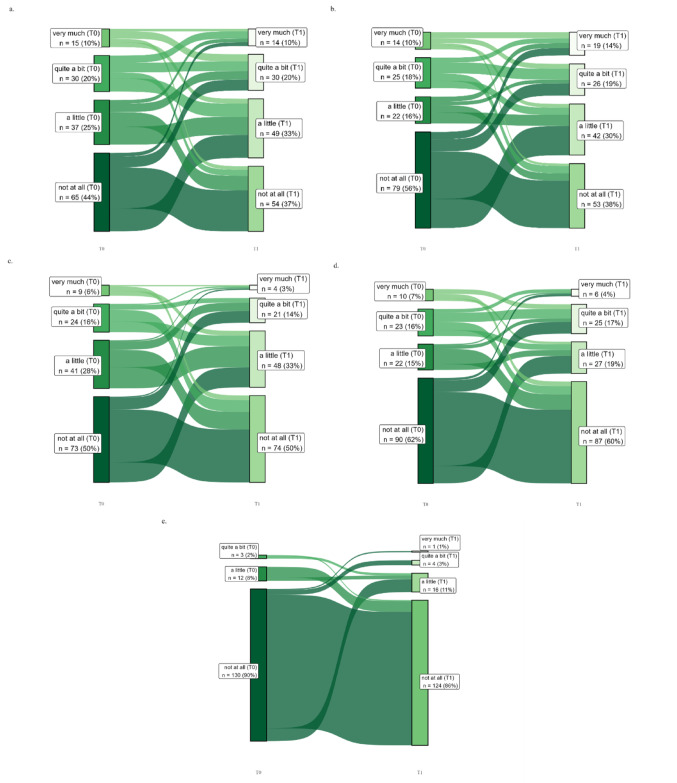 Figure 2
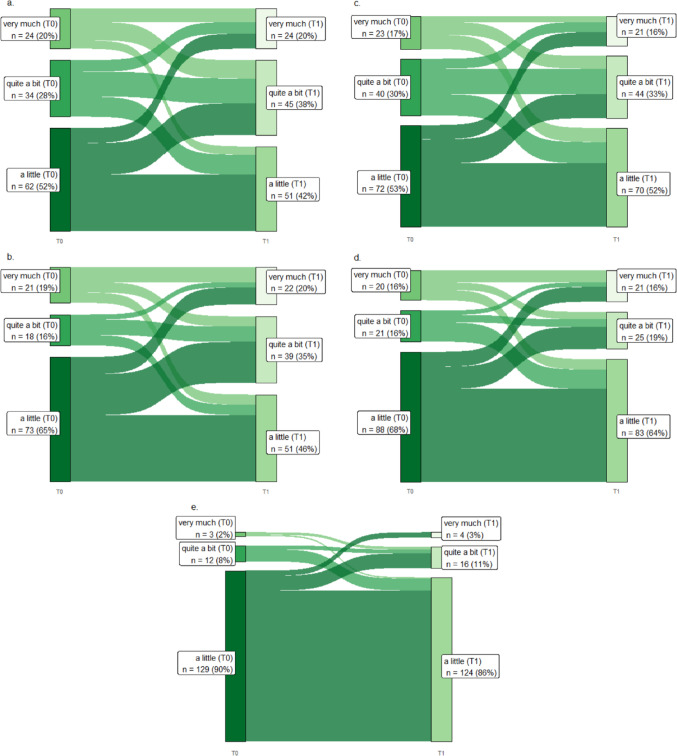 Figure 2
Peer Reviews
No public reviews on file for this paper yet. If you reviewed it on a platform where reviews are public (OpenReview, ICLR, NeurIPS, ICML), you can paste yours below so the community can read it here.
Videos
No videos yet. Explain this paper in a talk, walkthrough, or lecture? Add one.
Taxonomy
TopicsPain Management and Opioid Use · Palliative Care and End-of-Life Issues · Cancer survivorship and care
Correction to: Journal of Cancer Research and Clinical Oncology (2025) 151:127 10.1007/s00432-025-06186-x
Following the publication of the article, errors were discovered in Table 2, Figure 2, and Table S2. Additionally, the text in the main body of the article related to the affected areas also requires correction.
In the abstract section of this article, the sentence was incorrectly given as “Higher pain levels persisted at both time points, with no patients reporting absence of pain.” and should have been “Higher pain levels persisted at both time points”
In the Pain and quality of life section of this article, the paragraph was incorrectly given as “Figure 2 shows the development of pain symptoms for T0 and T1 for the items “pain”, “interference with daily activities”, “abdominal pain”, “buttock pain”, and “dysuria”, in Sankey plots. None of the colorectal cancer patients reported having no pain at all at either of the two time points. “Interference with daily activities” showed the highest increase: 44% of colon cancer patients reported having more than a little interference with daily activities due to pain at T0, increasing to 57% at T1. In rectal cancer patients, the interference of pain with their daily activities showed an increase from 32 to 56% at T1 (Fig. 2).” and should have been “Figure 2 shows the development of pain symptoms for T0 and T1 for the items “pain”, “interference with daily activities”, “abdominal pain”, “buttock pain”, and “dysuria”, in Sankey plots. “Interference with daily activities” showed the highest increase: 49.2% of colon cancer patients reported having a little or more than a little interference with daily activities due to pain at T0, increasing to 62.5% at T1. In rectal cancer patients, the interference of pain with their daily activities showed an increase from 39.24% to 61.73% at T1 (Fig. 2).”
In this article, the Figure 2 caption was incorrectly given as 'Sankey diagram for pain items from the EORTC QLQ-CR29 and C30 in colorectal cancer patients at T0 and T1. a, Pain (n = 120); b, interference with daily activities (n = 112); c, abdominal pain (n = 135); d, buttock pain (n = 129); e, dysuria (n = 144). The Sankey diagrams only include colorectal cancer patients who responded to the item at T0 and T1.' but should have been ' Sankey diagram for pain items from the EORTC QLQ-CR29 and C30 in colorectal cancer patients at T0 and T1. a, Pain (n = 147); b, interference with daily activities (n = 140); c, abdominal pain (n = 147); d, buttock pain (n = 145); e, dysuria (n = 145). The Sankey diagrams only include colorectal cancer patients who responded to the item at T0 and T1'.
In the Pain and quality of life section of this article, the paragraph was incorrectly given as “Overall, these results highlight the symptomatic burden of pain that palliatively treated colorectal cancer patients face before and 12 months after the initiation of treatment. No patients reported that they were free of pain at either T0 or T1. Pain at T0 predicted survival at T1, but the results need to be interpreted with caution due to the smallness of the sample and the lack of potential confounding variables. It also remains unclear whether the reported pain is caused by cancer symptoms, treatment, or other comorbidities.” and should have been “Overall, these results highlight the symptomatic burden of pain that palliatively treated colorectal cancer patients face before and 12 months after the initiation of treatment. Pain at T0 predicted survival at T1, but the results need to be interpreted with caution due to the smallness of the sample and the lack of potential confounding variables. It also remains unclear whether the reported pain is caused by cancer symptoms, treatment, or other comorbidities.”
The wrong Supplementary file 2 was originally published with this article; it has now been replaced with the correct file.
In Table 2 of this article, the data in the column headed To & T1 were incorrectly published. For completeness and transparency, the old incorrect version and the corrected version of Table 2 are displayed below.
Incorrect Table: Table 2EORTC QLQ-C30 and -CR29: quality of life and pain levelsat T0 and T1. The pain score consists of the two items “interferencewith daily activities, last week” and “pain, last week”. The quality oflife score consists of the two items “global health status” and “overallquality of life. The scores for abdominal pain, buttock pain, and dysuriaare converted from the corresponding items. A higher value forthe pain scores indicates more severe pain, and a higher value for thequality of life score indicates a better quality of life status (both rangingfrom 0 to 100)Colon cancer patients (n = 66)Rectal cancer patients (n = 81)T0T1T0T1Quality of life^1,^51 (25)56 (22)52 (24)51 (22) Unknown01Pain^1,^34 (33)35 (32)26 (32)35 (32)Pain, last week^2^ Not at all0000 A little23 (40%)25 (42%)42 (56%)29 (40%) Quite a bit20 (35%)20 (33%)17 (23%)29 (40%) Very much14 (25%)15 (25%)16 (21%)15 (21%)Unknown9668Interference with daily activities, last week^2^ Not at all0000 A little32 (56%)24 (44%)48 (68%)31 (44%) Quite a bit11 (19%)18 (33%)12 (17%)26 (37%) Very much14 (25%)13 (24%)11 (15%)13 (9%)Unknown9111011Abdominal pain^1,^33 (34)29 (30)21 (28)18 (24)Abdominal pain, last week^2^ Not at all0000 A little27 (46%)28 (44%)46 (58%)46 (58%) Quite a bit20 (34%)21 (33%)21 (27%)27 (34%) Very much12 (20%)14 (22%)12 (15%)7 (8.8%)Unknown7321Buttock pain^1,^10 (23)19 (28)33 (36)24 (32)Unknown1010Buttock pain, last week^2^ Not at all0000 A little52 (81%)41 (64%)38 (54%)47 (62%) Quite a bit7 (11%)14 (22%)15 (21%)14 (18%) Very much5 (7.8%)9 (14%)18 (25%)16 (21%) Unknown22104Dysuria^1,*^4 (13)4 (12)4 (13)8 (19) Unknown1001Dysuria, last week^2^ Not at all0000 A little58 (89%)59 (89%)73 (90%)66 (84%) Quite a bit6 (9.2%)6 (9.1%)6 (7.4%)10 (13%) Very much1 (1.5%)1 (1.5%)2 (2.5%)3 (3.8%) Unknown1002^1^Mean (SD); ^2^n (%); * converted score
Corrected Table:
In this article, Fig. 2 appeared incorrectly and has now been corrected in the original publication. For completeness and transparency, the old incorrect version and the corrected version of Fig. 2 are displayed below.
Incorrect version of Fig. 2:Fig. 2. Sankey diagram for pain items from the EORTC QLQ-CR29 and C30 in colorectal cancer patients at T0 and T1. a, Pain (n = 120); b, interference with daily activities (n = 112); c, abdominal pain (n = 135); d, buttock pain (n = 129); e, dysuria (n = 144). The Sankey diagrams only include colorectal cancer patients who responded to the item at T0 and T1.
Corrected version of Fig. 2:
Fig. 2. Sankey diagram for pain items from the EORTC QLQ-CR29 and C30 in colorectal cancer patients at T0 and T1. a, Pain (n = 147); b, interference with daily activities (n = 140); c, abdominal pain (n = 147); d, buttock pain (n = 145); e, dysuria (n = 145). The Sankey diagrams only include colorectal cancer patients who responded to the item at T0 and T1
The original article has been updated.
Supplementary Information
Below is the link to the electronic supplementary material.
Supplementary Material 1