Relationship of MicroRNA-146a rs2910164 SNP and tobacco consumption with the susceptibility of digestive system cancer
Jian Wang, Hao Qiu, Shuchen Chen, Ting Dai

TL;DR
This study finds that tobacco use increases digestive system cancer risk in people with specific genetic variants of miR-146a.
Contribution
The study reveals a significant interaction between miR-146a rs2910164 genotypes and tobacco consumption in digestive system cancer susceptibility.
Findings
Tobacco users with rs2910164 CC/CG genotypes had higher DSC risk (OR = 1.39).
The miR-146a rs2910164 polymorphism was linked to increased DSC risk in both smokers and non-smokers.
Tobacco users with CC/CG genotypes showed significantly higher esophageal cancer risk (OR = 2.33).
Abstract
Many studies reported that microRNA (miR)-146a rs2910164 could influence the risk of digestive system cancer (DSC). The purpose of this meta-analysis was to assess a possible effectof rs2910164 C to G variant in miR-146a gene and the smoking status with risk of DSC. The EMBASE, PubMed and CBM databases were searched to retrieve eligible papers up to January 20, 2025. Finally, 11 independent case-control studies involving 17,484 subjects were included. The association of rs2910164 polymorphism and tobacco using with DSC susceptibility was evaluated. In this pooled-analysis, we found significant difference in DSC risk between tobacco users and non-tobacco users who carried rs2910164 CC/CG genotypes (OR = 1.39, 95% CI = 1.05–1.84). In addition, there was significant difference between rs2910164 polymorphism (dominant model) and DSC susceptibility in both non-tobacco (OR = 1.19, 95% CI =…
Genes, proteins, chemicals, diseases, species, mutations and cell lines named across the full text — each resolved to its canonical identifier and authoritative record.
Click any figure to enlarge with its caption.
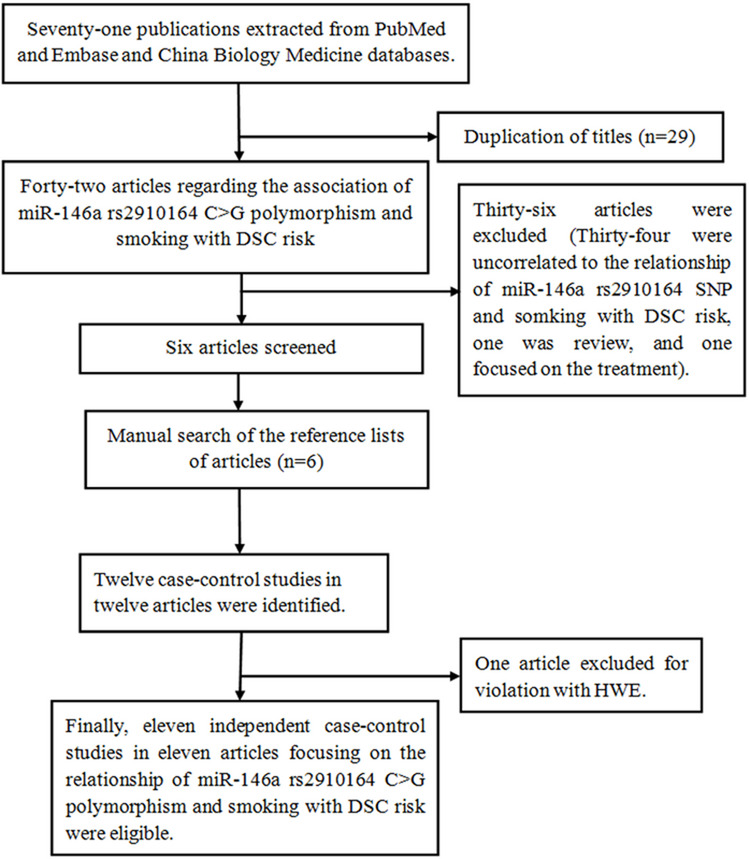 Figure 1
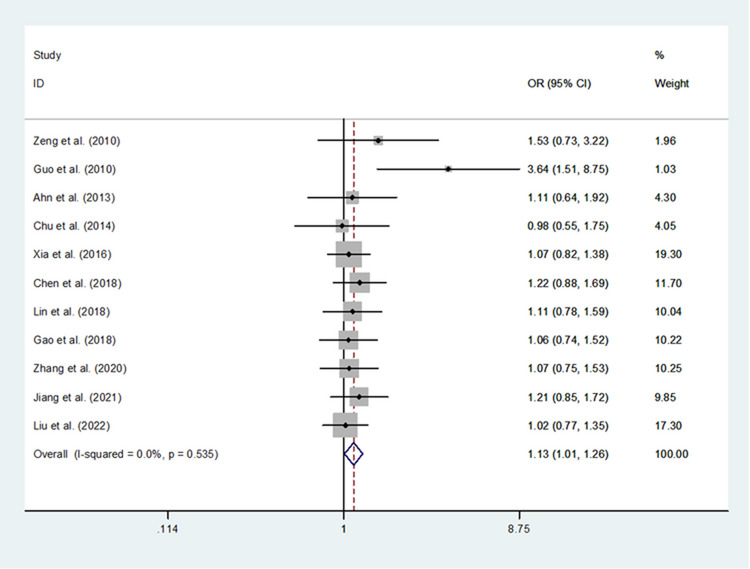 Figure 2
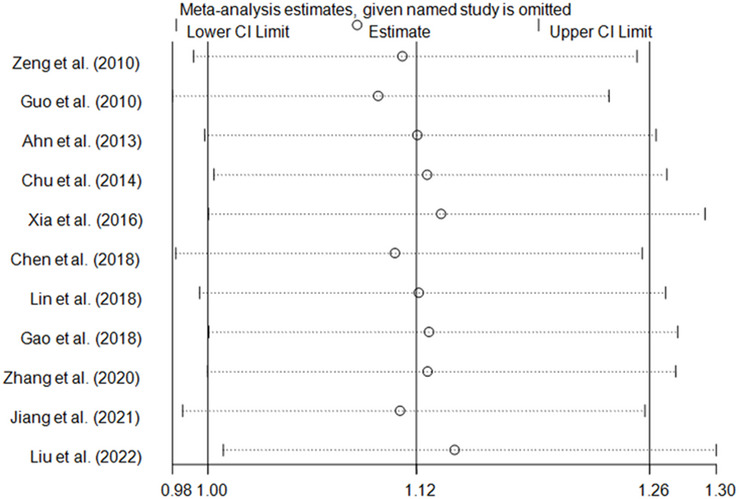 Figure 3
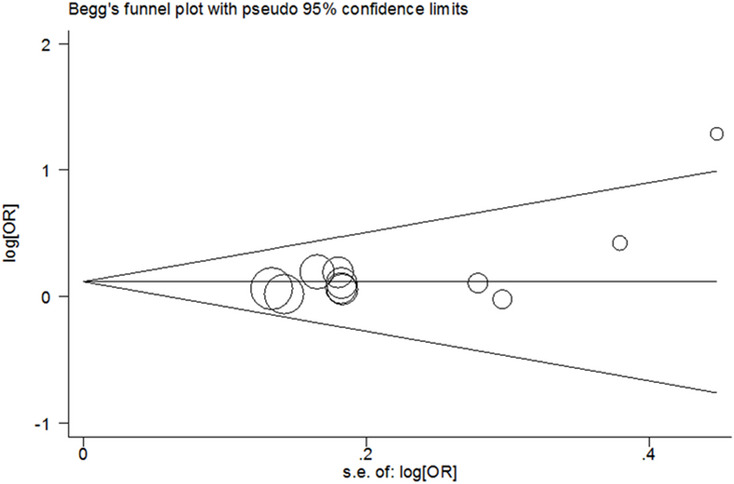 Figure 4
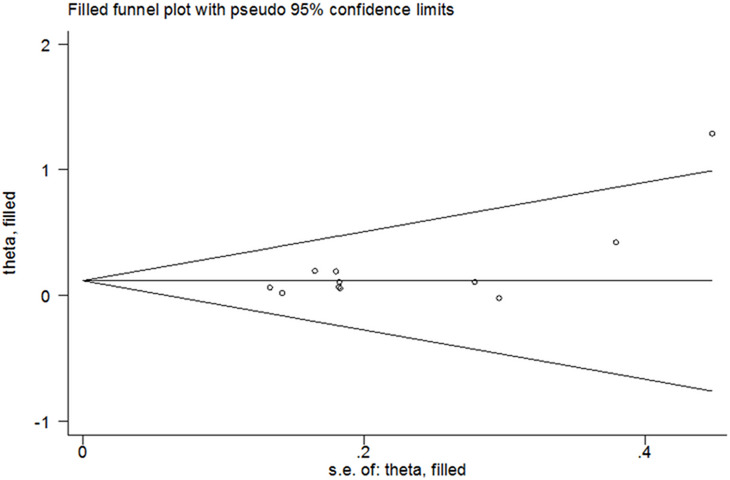 Figure 5
- —Scientific research project of Wuxi Administration of Traditional Chinese Medicine
Peer Reviews
No public reviews on file for this paper yet. If you reviewed it on a platform where reviews are public (OpenReview, ICLR, NeurIPS, ICML), you can paste yours below so the community can read it here.
Videos
No videos yet. Explain this paper in a talk, walkthrough, or lecture? Add one.
Taxonomy
TopicsMicroRNA in disease regulation · Cancer-related molecular mechanisms research · Helicobacter pylori-related gastroenterology studies
Introduction
Digestive system cancer (DSC) is a major public health problem especially in Asians, which influences patients’ survival seriously. DSCs, such as pancreatic cancer (PC), gallbladder cancer (GBC), gastric carcinoma (GC), hepatocellular cancer (HCC), esophageal carcinoma (EC), oral carcinoma (OC), and colorectal carcinoma (CRC), are commonly diagnosed malignancies and lead to serious cancer-related death worldwide. Notwithstanding the risk factor of DSCs was not well explained, more and more investigations suggested that DSCs might be triggered by interactions of genetic components and environmental factors. Since single nucleotide polymorphism (SNP) is a common genetic variant, it might be involved in the development and progression of DSCs along with multiple environmental factors.
MicroRNA (miR), in eukaryotes, is composed of about 22 single strand nucleotide acids. Accumulating evidences indicated that miRs could regulate the expression of their target genes. A number of studies demonstrated that miR could play a vital role in regulating multiple biological functions via controlling target genes [10, 12, 27, 39–41, 54]. Tobacco consumption has been considered as an important risk factor for DSC. There was growing evidence that miRs could participate ininflammatory, immune, apoptosis, proliferation, migration, and invasion [6, 24, 32, 42, 44, 45, 49, 59]. MiR-146a involved inaprocess of posttranscriptional regulatory. Several studies demonstrated that miR-146a is implicated in the development of DSCs [5, 14]. A recent investigation suggested that miR-146a could facilitate oncogenesis of CRC and influence tumor microenvironment [8]. In addition, Li et al. reported that miR-146a combining with cigarette smoke extract could reduce the level of inflammatory factorsin lung adenocarcinoma cells [26]. Thus, miR-146a might combine with tobacco consumption and then affected the susceptibility of DSCs.
SNPs influence the miRs’ biological function and stability, lead to disorderin regulating target gene. MiR-146a rs2910164, a C→G variant, might alter the chance of survival in CRC patients via influencing the level of cyclooxygenase-2 and apoptosis process [57]. Jiang et al. found that rs2910164 CC/CG genotypes and tobacco using could significantly increase the risk of CRC [20]. In addition, arecent investigation also found that tobacco using and miR-146a rs2910164 CC/CG genotypes conferred a risk to esophageal squamous cell carcinoma (ESCC) and GC [29]. However, some case-control studies suggested that tobacco using and miR-146a rs2910164 CC/CG genotypes did not alter the risk of DSCs. On the contrary, Xia et al. reported that tobacco using and miR-146a rs2910164 CC/CG genotypes could decrease the risk of GC [50]. A few pooled-analyses indicated that rs2910164 SNP could affect the susceptibility of DSC [28, 33, 51–53]. Nowadays, several publications focused on the association of rs2910164 SNP and tobacco using with the development of DSCs. However, none pooled-analysis was performed. Since the eligible information was pooled and the random error could be reduced in meta-analysis, the confidence level of investigation might be promoted. In this study, we used a meta-analysis to evaluate a potential correlation of rs2910164 genotype and tobacco using with DSC susceptibility.
Materials and methods
Searching
The potential literatures were searched in CBM, Pubmed, and Embase databases by harnessing the following strategy: (rs2910164 OR microRNA-146a2 OR miR-146a2) AND (cancer OR carcinoma) AND (polymorphism OR SNP) AND (smoking OR tobacco OR cigarette) (the last searching data was January 20, 2025). To obtain data as much as possible, we retrieved the bibliographies of eligible studies. There was no language restriction in the current study.
Inclusion criteria
Publications meeting the major included criteria were recruited in this meta-analysis: (a) case-control study; (b) considering miR-146a2 rs2910164SNP and tobacco using with DSCsusceptibility; and (c) data could be extracted from publications to assess the strength of these associations by using odds ratio (OR) with 95% confidence interval (CI). In this study, details were not restricted for selection: (a) the years and number of tobacco using, and (b) type of tobacco.
Information extraction
According to a standard protocol, the corresponding information was extracted by two authors (H. Qiu and J. Wang) independently. We obtained the following data: the first author’s surname, tobacco using status, publication years, country, genotyping method, ethnicities, type of DSC, study design (hospital-based or population-based study), and the number of rs2910164 genotypes for different tobacco using status. If there was conflicting measurement, another author (T. Dai) would take part in a discussion and make a vote. Finally, consistent opinions had been reached.
StatisticalAnalysis
In this study, the pooled-analysis was conducted by using Stata12.0 software, (Stata Corp., College Station, Texas). P value (two-sided) ≥ 0.05 were defined as no statistical significance. The calculated ORs with 95%CIs were harnessed to observe the strength of the relationships. By using the miR-146a2 rs2910164 genotypes in controls and Pearson’s χ^2^ test, the P value of Hardy–Weinberg equilibrium (HWE) was calculated for each included case-control study. The heterogeneity among the studies included in this pooled-analysis was measured using I^2^-test and Q statistics-test. When no significance for heterogeneity was found (P ≥ 0.1 and I^2^ < 50%), a fixed-effects model (Mantel–Haenszel) could be harnessed to obtain a measurement of this SNP and tobacco using with the susceptibility of DSC [34]. Otherwise, random-effects model (DerSimonian and Laird method) was employed to calculate a relationship of this SNP and tobacco using with DSC [11, 17]. Sensitivity analysis was carried out to evaluate the stability of our observations by omitting each individual study in turn, and calculating ORs with 95%CIs of the remainders. The possible bias of publication was evaluated by using Egger’s test and Begg’s test. And P < 0.05 was used as statistical significance for bias. The Newcastle-Ottawa Quality Assessment Scale (NOQAS) was harnessed to assess quality score [2, 4, 23, 25, 35, 47].
Results
Overall characteristics
A total of 71 publications were retrieved from Embase, PubMed and China Biology Medicine (CBM) databases. When a detailed filtrate made, 60 publications were ineligible. The selecting process is listed in Fig. 1. Finally, 11 investigations involving 7051 cases of DSC and 10,433 controls were included [1, 7, 9, 13, 16, 20, 21, 50, 55, 56]. Of them, publication years ranged from 2010 to 2025 and the participants’ number ranged between 525 and 2740. In brief, there were five studies focusing on GC [1, 7, 21, 50, 55], two studies on ESCC [16, 20], two studies on CRC [13, 20] and 2 studies on HCC [9, 56]. Additionally, alleligible studies were performed on Asian populations. Table 1 presents characteristics of the included publications. The distribution of rs2910164 genotypes is summarized in Table 2.Fig. 1. Flow diagram of the meta–analysisTable 1Characteristics of the studies in meta-analysisAuthorYearSample sizeCancer typeCountryYearStudy designQualityZeng et al.2010304/304GCChina2010HB8Guo et al.2010444/468ESCCChina2010HB7Ahn et al.2013461/447GCKorea2013HB7Chu et al.2014188/337HCCChina2014HB8Xia et al.20161125/1196GCChina2016PB8Chen et al.20181063/1677GCChina2018HB7Lin et al.2018490/1476GCChina2018HB7Gao et al.2018560/780CRCChina2018HB7Zhang et al.2020584/923HCCChina2020HB7Jiang et al.20211003/1303CRCChina2021HB7Liu et al.2022829/1522ESCCChina2022HB7GC Gastric cancer;CRC Colorectal cancer;HCC Hepatocellular cancer;ESCC Esophageal squamous cell carcinoma;HB Hospital-basedPB Population-basedTable 2Distribution of miR-146a rs2910164 C > G genotypes and smoking statusThe association between the miR-146a rs2910164 C>G polymorphism and tobacco use on cancer risk.AuthorYearCase-No. of user CCControl-No. of user CCCase-No. of non-user CCControl-No. of non-user CCBetween tobacco users and non-tobacco users among individuals homozygous for the major allele (CC)Zeng *et al.*201021216895Guo *et al.20107201322Ahn et al.2013334724117Chu et al.*201434475094Xia *et al.*2016148206249214Chen *et al.*201899138228506Lin *et al.*201869174113409Gao *et al.*20186710278118Zhang *et al.*202079130115229Jiang *et al.*202194111274405Liu *et al.*2022160159134421AuthorYearCase-No. of user CG+GGControl-No. of user CG+GGCase-No. of non-user CG+GGControl-No. of non-user CG+GGBetween tobacco users and non- tobacco users who are minor allele carriers (CG+GG)Zeng *et al.*20105234163151Guo *et al.2010289227135199Ahn et al.2013688774196Chu et al.*2014466558131Xia *et al.*2016291380437396Chen *et al.*2018188215526815Lin *et al.*2018110249194640Gao *et al.*2018193277222283Zhang *et al.*2020128197253365Jiang *et al.*2021158154454630Liu *et al.*2022267260244675AuthorYearCase-No. of non-user CG+GGControl-No. of non-user CG+GGCase-No. of non-user CCControl-No. of non-user CCBetween non- tobacco users homozygous for the major allele and non- tobacco users who are minor allele carriersZeng *et al.*20101631516895Guo *et al.20101351991322Ahn et al.20137419624117Chu et al.*2014581315094Xia *et al.*2016437396249214Chen *et al.*2018526815228506Lin *et al.*2018194640113409Gao *et al.*201822228378118Zhang *et al.*2020253365115229Jiang *et al.*2021454630274405Liu *et al.*2022244675134421AuthorYearCase-No. of user CG+GGControl-No. of user CG+GGCase-No. of user CCControl-No. of user CCBetween tobacco users homozygous for the major allele and tobacco users who are minor allele carriersZeng *et al.*201052342121Guo *et al.2010289227720Ahn et al.201368873347Chu et al.*201446653447Xia *et al.*2016291380148206Chen *et al.*201818821599138Lin *et al.*201811024969174Gao *et al.*201819327767102Zhang *et al.*202012819779130Jiang *et al.*202115815494111Liu *et al.*2022267260160159
Quantitative synthesis
Table 3 presents all main results. In this pooled-analysis, we identified no difference in DSC susceptibility between tobacco users and non-tobacco users who carried rs2910164 CC genotype (OR = 0.137, 95% CI = 0.98–1.92, P = 0.063). However, we found significant difference in DSC risk between tobacco users and non-tobacco users who carried rs2910164 CC/CG genotypes (OR = 1.39, 95% CI = 1.05–1.84). In addition, there was significant difference between rs2910164 SNP (dominant model) and DSC susceptibility in both non-tobacco (OR = 1.19, 95% CI = 1.06–1.33) and tobacco users (Fig. 2, OR = 1.13, 95%CI = 1.01–1.26). In view of these findings, tobacco consumption could increase DSC susceptibility compared to non-tobacco consumption, regarding rs2910164 CC/CG genotypes.Table 3. Results of the meta-analysisNo. of studiesBetween tobacco users and non-tobacco users among individuals homozygous for the major allele (CC)Between tobacco users and non- tobacco users who are minor allele carriers (CG + GG)OR (95% CI)P**I^2^P (Q-test)OR (95% CI)P**I^2^P (Q-test)Total111.37 (0.98–1.92)0.06387.0% < 0.0011.39 (1.05–1.84)****0.02190.1% < 0.001Cancer type GC51.42 (0.83–2.42)0.20489.2% < 0.0011.29 (0.87–1.92)0.19789.1% < 0.001 ESCC21.49 (0.29–7.65)0.63088.0%0.0042.33 (1.55–3.50)**** < 0.00180.5%0.023 HCC21.25 (0.93–1.69)0.1440.0%0.7301.18 (0.70–1.97)0.53871.4%0.062 CRC21.15 (0.90–1.48)0.2720.0%0.3891.12 (0.74–1.79)0.61885.0%0.010Sample sizes < 1,00041.53 (0.82–2.84)0.18067.6%0.0261.79 (1.48–2.17)**** < 0.0010.0%0.642 ≥ 1,00071.32 (0.87–1.98)0.18891.0% < 0.0011.24 (0.86–1.80)0.24393.8% < 0.001Quality scores ≥ 831.00 (0.54–1.86)0.99778.5%0.0101.13 (0.62–2.05)0.70086.2%0.001 < 881.55 (1.11–2.16)****0.00982.3% < 0.0011.50 (1.13–1.99)****0.00689.1% < 0.001No. of studiesBetween non- tobacco users homozygous for the major allele and non- tobacco users who are minor allele carriersBetween tobacco users homozygous for the major allele and tobacco users who are minor allele carriersOR (95% CI)P**I^2^P (Q-test)OR (95% CI)P**I^2^P (Q-test)Total111.19 (1.06–1.33)****0.00340.6%0.0781.13 (1.01–1.26)****0.0410.0%0.535Cancer type GC51.27 (1.02–1.58)****0.03265.6%0.0201.14 (0.97–1.34)0.1230.0%0.903 ESCC21.14 (0.90–1.43)0.2750.0%0.9781.80 (0.52–6.20)0.35586.4%0.007 HCC21.11 (0.68–1.81)0.67670.6%0.0651.04 (0.77–1.42)0.7840.0%0.798 CRC21.10 (0.93–1.30)0.2930.0%0.5851.14 (0.88–1.46)0.3250.0%0.605Sample sizes < 100041.29 (0.90–1.84)0.16250.3%0.1101.45 (0.88–2.38)0.14955.1%0.083 ≥ 100071.17 (1.07–1.28)****0.00140.8%0.1191.10 (0.97–1.24)0.1270.0%0.983Quality scores ≥ 831.06 (0.77–1.46)0.72861.2%0.0761.09 (0.87–1.36)0.4660.0%0.619 < 881.23 (1.12–1.35)** < 0.00120.3%0.2691.14 (1.01–1.30)**0.044**11.4%0.342GC Gastric cancer;CRC Colorectal cancer;HCC Hepatocellular cancer;ESCC Esophageal squamous cell carcinomaFig. 2Meta-analysis of between tobacco users homozygous for the major allele and tobacco users who are minor allele carriers (fixed–effects model)
When stratified analyses were conducted by different type of DSC, we found significant difference in ESCC risk between tobacco users and non-tobacco users who carried rs2910164 CC/CG genotypes (OR = 2.33, 95% CI = 1.55–3.50). We also found significant difference between rs2910164 SNP (dominant model) and GC susceptibility in non-tobacco using participants (OR = 1.27, 95% CI = 1.02–1.58).
Heterogeneity
Significant heterogeneity was found between rs2910164 SNP and DSC susceptibility in CC, CC/CG genotypes, and non-tobacco consumption subgroup ( P < 0.001, P < 0.001 and P = 0.078). However, we found related low heterogeneity between tobacco users with CC genotype and tobacco users with CG/GG genotype and DSC susceptibility (P = 0.535). We conducted subgroup analysis to assess the potential reason for significant heterogeneity. This meta-analysis indicated that GC, ESCC, HCC, sample size ≥ 1,000 participants and NOQAS ≥ 8 subgroups might lead to major heterogeneity of this pooled-analysis.
Sensitivity analysis
In this pooled-analysis, we conducted sensitivity analysis to assess the reliability of our findings. We found that omitting any independent study could not significantly change the results of meta-analysis (Fig. 3).Fig. 3. Sensitivity analysis of meta–analysis (between tobacco users homozygous for the major allele and tobacco users who are minor allele carriers, fixed–effects model)
Publication bias
Bias analysis for publication indicated that significant bias had been happened between rs2910164 SNP (dominant model) and DSC susceptibility in tobacco users (Begg’s Test: P = 0.213, Egger’s test: P = 0.029, Fig. 4). In other comparison, we did not find any publication bias (data not shown). In this study, we performed nonparametric “trim-and-fill” method to adjust the potential bias [3, 15, 38, 43, 46, 48, 58]. The results indicated no trimming performed and data unchanged (Fig. 5). Findings were calculated as following: OR = 1.13, CI = 1.01–1.26, P = 0.041, indicating the reliability of our findings.Fig. 4. Begg’s funnel plot of meta–analysis (between tobacco users homozygous for the major allele and tobacco users who are minor allele carriers, fixed–effects model)Fig. 5. Results of nonparametric “trim-and-fill” method (between tobacco users homozygous for the major allele and tobacco users who are minor allele carriers, fixed–effects model)
Discussion
In this investigation, a systematic review and pooled-analysis was conducted to assess a potential relationship of miR-146a2 rs2910164 SNP and tobacco using with DSC susceptibility. We observed the following findings: (a)The current pooled-analysis suggested that tobacco using could significantly increase the DSC development in rs2910164 CC/CG genotypes. Additionally, this study indicated that a potential correlation of rs2910164CC/CG genotypes and tobacco using with DSC susceptibility in ESCC subgroup, and (b) In tobacco using subjects, rs2910164 CC/CG genotype also could significantly increase the DSC development.
The current pooled-analysis indicated that rs2910164 CC/CG genotypes increased a susceptibility of DSC among non-tobacco users. These observations were similar to the previous meta-analysis for the association between rs2910164 SNP and DSC development [30]. Additionally, among tobacco users, rs2910164 CC/CG genotypes increased a susceptibility of DSC. These conflicting findings in the present pooled-analysis could be interpretated by the included sample sizes. Admittedly, in non-tobacco users, there was a relationship of DSC susceptibility with rs2910164 CC/CG genotypes. The potential link between rs2910164 SNP and DSC development was: (a) miR-146a linked with the invasion and migration of cancer [31]; (b) the expression of miR-146a was associated with immunosuppressive tumor microenvironment and drug resistant [22]; and (c) G allele was correlated with the level of miR-146a [18, 19, 36]. Nadi et al. reported that a significantly decreased expression of miR-146a in cigarette smoke exposure subjects [37]. Li et al. reported that miR-146a combining with cigarette smoke extract could reduce the level of inflammatory factors in lung adenocarcinoma cells [26]. Here, we might speculate that the rs2910164 SNP and cigarette consumption could affect miR-146a level and lead to DSC susceptibility.
In the present study, significant heterogeneity was found in several comparison. We assessed the source of heterogeneityby subgroup analysis. The GC, ESCC, larger sample size (≥ 1,000 subjects), and high quality score (≥ 8) subgroups might lead to significant heterogeneity.
Some merits could be addressed in this pooled-analysis. Firstly, the current meta-analysis indicated a possible association of rs2910164 SNP and tobacco using with DSC risk. Secondly, the sample sizes included in this meta-analysis were large. The observations could be less bias. Finally, in the present meta-analysis, we found that tobacco using could significantly increase the DSC development in rs2910164 CC/CG genotypes.
Some limitations also should be acknowledged. Firstly, all included investigations were designed in Asian populations, and other populations was not considered. Thus, these observations might be only adapted to Asians. Secondly, we only focused on the association of rs2910164 SNP and tobacco using with DSC susceptibility. The potential confounders (e.g., age, sex, alcohol use, H. pylori infection for gastric cancer, hepatitis status for HCC) and issues of population structure were not adequately considered. The findings should be interpreted more cautiously. Thirdly, in certain comparison, publication bias had been identified. Fourthly, the definition of smoking was inconsistent across the included studies. Finally, in the current pooled-analysis, we only considered the association of rs2910164 SNP and tobacco using with DSC susceptibility. And the potential relationship of another vital *miR-*SNPs and tobacco using with DSC susceptibility also should been taken into account. In the future, more studies with prospective cohorts, Mendelian randomization, and functional assays should be carried out to better address causality.
In summary, the current pooled-analysis highlights that tobacco using significantly increases the DSC development in rs2910164 CC/CG genotypes. In the future, the potential relationship of rs2910164 SNP and other habits with DSC susceptibility also should been taken into account.
The reference list from the paper itself. Each links out to its DOI / PubMed record.
- 1Ghasemi A, Ghasemi M, Rashidian M, Bastan F, Baghaei A. Efficacy of melatonin on drug- or contrast-induced acute kidney injury: a systematic review and GRADE-assessed meta-analysis of experimental and clinical studies. Int Urol Nephrol, 2025.10.1007/s 11255-024-04333-w 39786701 · doi ↗ · pubmed ↗
- 2Jiang J, Zhang S, Tang W, Qiu Z. Lack of association between mi R-146a rs 2910164 C/G locus and colorectal cancer: from a case-control study to a meta-analysis. Biosci Rep 41(1), 2021.10.1042/BSR 20191729 PMC 778504233289522 · doi ↗ · pubmed ↗
- 3Khsim IEF, Rodriguez MM, Riquelme Gallego B, Caparros-Gonzalez RA, Amezcua-Prieto C. Risk Factors for Post-Traumatic Stress Disorder after Childbirth: A Systematic Review. Diagnostics 12(11), 2022.10.3390/diagnostics 12112598 PMC 968938936359442 · doi ↗ · pubmed ↗
- 4Li M, Huang J, Lu W, Guo Y, Xia G, Hu Q. Serum glycosylated hemoglobin and prostate cancer risk: results from a systematic review and dose-response meta-analysis. Urol Oncol, 2024.10.1016/j.urolonc.2024.09.00739393995 · doi ↗ · pubmed ↗
- 5Liu C, Gao W, Shi Y, Lv L, Tang W. Association between mi R-146a rs 2910164, mi R-196a 2 rs 11614913, and mi R-499 rs 3746444 polymorphisms and the risk of esophageal carcinoma: A case-control study. Cancer Med, 2022.10.1002/cam 4.4729 PMC 963650135499218 · doi ↗ · pubmed ↗
- 6Mohamed RH, Pasha HF, Gad DM, Toam MM. mi R-146a and mi R-196a-2 genes polymorphisms and its Circulating levels in lung cancer patients. J Bio Chem, 2019.10.1093/jb/mvz 04431127299 · doi ↗ · pubmed ↗