Expression of Concern: Effects of Ramadan fasting on aspirin resistance in type 2 diabetic patients

Abstract
Genes, proteins, chemicals, diseases, species, mutations and cell lines named across the full text — each resolved to its canonical identifier and authoritative record.
Click any figure to enlarge with its caption.
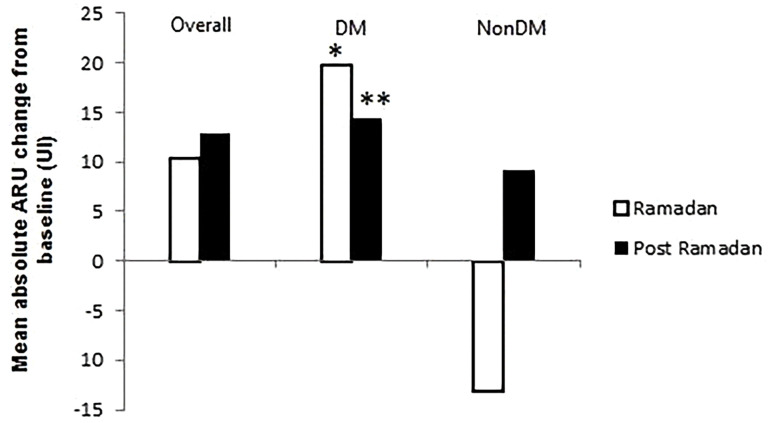 Figure 1
Peer Reviews
No public reviews on file for this paper yet. If you reviewed it on a platform where reviews are public (OpenReview, ICLR, NeurIPS, ICML), you can paste yours below so the community can read it here.
Videos
No videos yet. Explain this paper in a talk, walkthrough, or lecture? Add one.
Taxonomy
TopicsDietary Effects on Health · Berberine and alkaloids research · Circadian rhythm and melatonin
After publication of this article [1], concerns were raised about the ethics approvals, patient consent, and text overlap. Specifically:
The corresponding author stated that the Institutional Review Board of Fattouma Bourguiba University Hospital initially approved a Ramadan fasting study with an open objective to assess the clinical and biological changes during Ramadan month, and that the date of 25^th^ March 2016 refers to a secondary IRB approval specifically for the aspirin resistance study in [1]. They also stated that the incorrect patient consent form in S2 File was included in error and that only Fattouma Bourguiba University Hospital was involved in the ethical approval process for [1]. The corresponding author noted that the following are no longer available:
PLOS requested institutional follow-up. At the time of publication of this Expression of Concern, the institution has not provided input, and therefore the above questions about whether the study met with appropriate clinical ethical standards are unresolved.
Regarding the text overlap between [1] and [2], the corresponding author stated that both studies are on prospective Ramadan cohorts with type 2 diabetics and cardiovascular risk, with one on aspirin and the other on clopidogrel. They stated that each article has nearly identical design, but the patient cohorts and outcomes differ and each paper reports independent sample sizes and endpoints.
In following up on these issues, a statistical reviewer noted that:
Contrary to the declaration in the Data Availability statement, the original raw data files supporting the article’s results were not provided with the article, and the authors have not provided these data following editorial request. As the original raw data files supporting the article’s results have not been made available, this article [1] does not comply with the PLOS Data Availability policy.
In light of the above concerns, the PLOS One Editors issue this Expression of Concern.
The corresponding author provided additional clarifications and corrections as follows:
The reference list from the paper itself. Each links out to its DOI / PubMed record.
- 1Bouida W, Beltaief K, Baccouche H, Sassi M, Dridi Z, Trabelsi I, et al. Effects of Ramadan fasting on aspirin resistance in type 2 diabetic patients. P Lo S One. 2018;13(3):e 0192590. doi: 10.1371/journal.pone.0192590 29529091 PMC 5846719 · doi ↗ · pubmed ↗
- 2Bouida W, Baccouche H, Sassi M, Dridi Z, Chakroun T, Hellara I, et al. Effects of Ramadan fasting on platelet reactivity in diabetic patients treated with clopidogrel. Thromb J. 2017;15:15. doi: 10.1186/s 12959-017-0138-0 28588426 PMC 5457725 · doi ↗ · pubmed ↗