Figurative Archive: an open dataset and web-based application for the study of metaphor
Maddalena Bressler, Veronica Mangiaterra, Paolo Canal, Federico Frau, Fabrizio Luciani, Biagio Scalingi, Chiara Barattieri di San Pietro, Chiara Battaglini, Chiara Pompei, Fortunata Romeo, Luca Bischetti, Valentina Bambini

TL;DR
The Figurative Archive is a new open dataset of Italian metaphors with ratings and tools for studying linguistic and cognitive processes.
Contribution
The dataset introduces a measure of metaphor inclusiveness and a web-based interface for customized consultation.
Findings
The Archive includes 996 metaphors validated through correlations between familiarity and other measures.
It offers a larger and more diverse collection of metaphors compared to previous resources.
The web-based interface supports customized exploration of metaphor features.
Abstract
Research on metaphor has steadily increased over the last decades, as this phenomenon opens a window into a range of linguistic and cognitive processes. At the same time, the demand for rigorously constructed and extensively normed experimental materials increased as well. Here, we present the Figurative Archive, an open database of 996 metaphors in Italian enriched with ratings and corpus-based measures (from familiarity to semantic distance and preferred interpretations), derived by collecting stimuli used across 11 studies. It includes both everyday and literary metaphors, varying in structure and semantic domains, and is validated based on correlations between familiarity and other measures. The Archive has several aspects of novelty: it is increased in size compared to previous resources; it offers a measure of metaphor inclusiveness, to comply with recommendations for…
Genes, proteins, chemicals, diseases, species, mutations and cell lines named across the full text — each resolved to its canonical identifier and authoritative record.
Click any figure to enlarge with its caption.
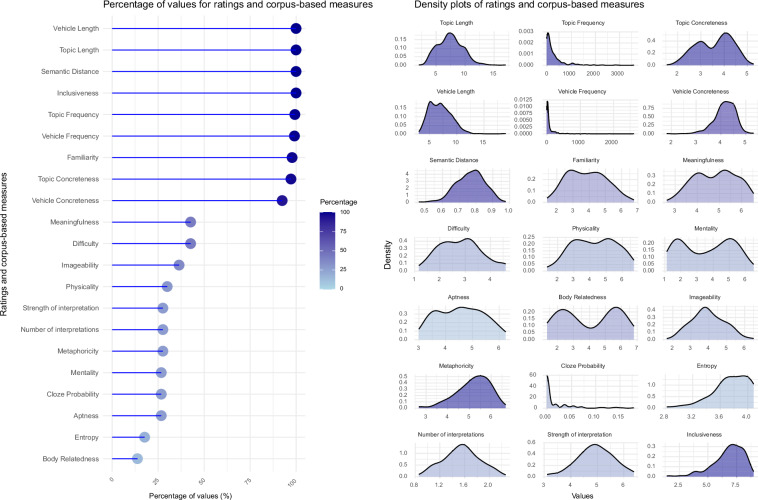 Figure 1
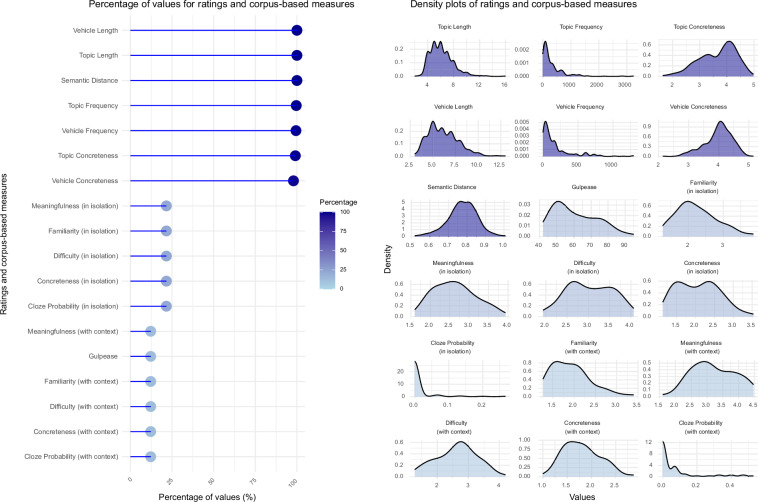 Figure 2
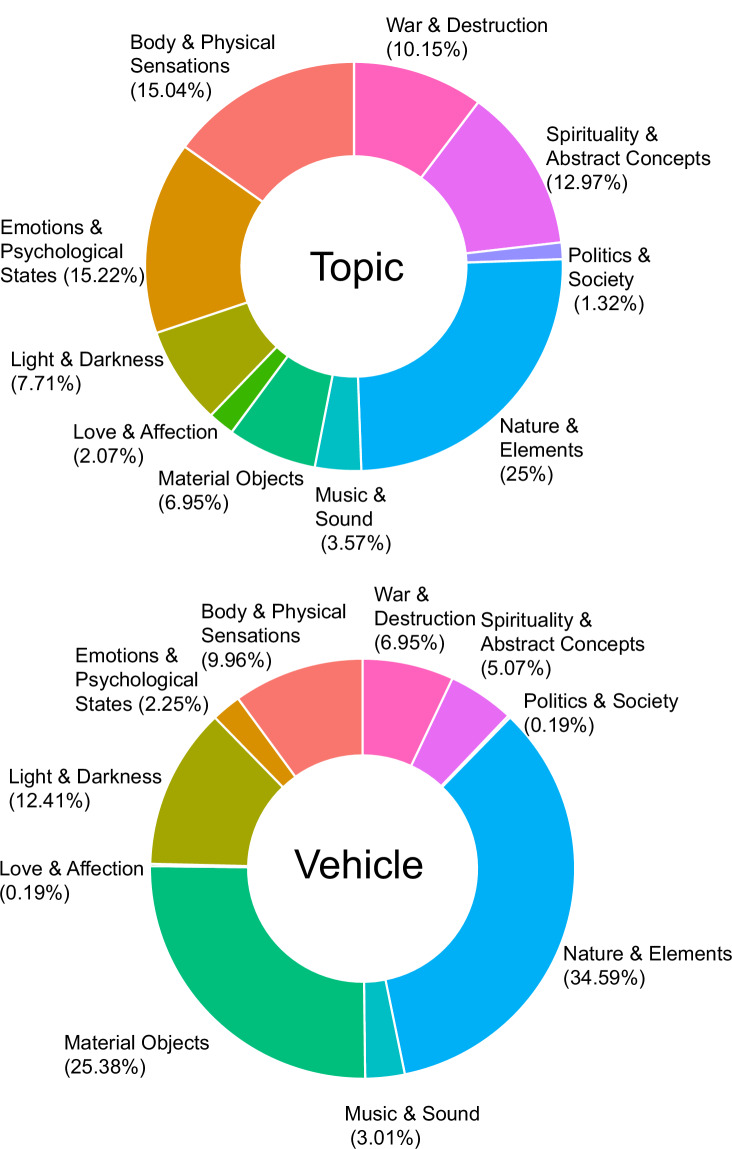 Figure 3
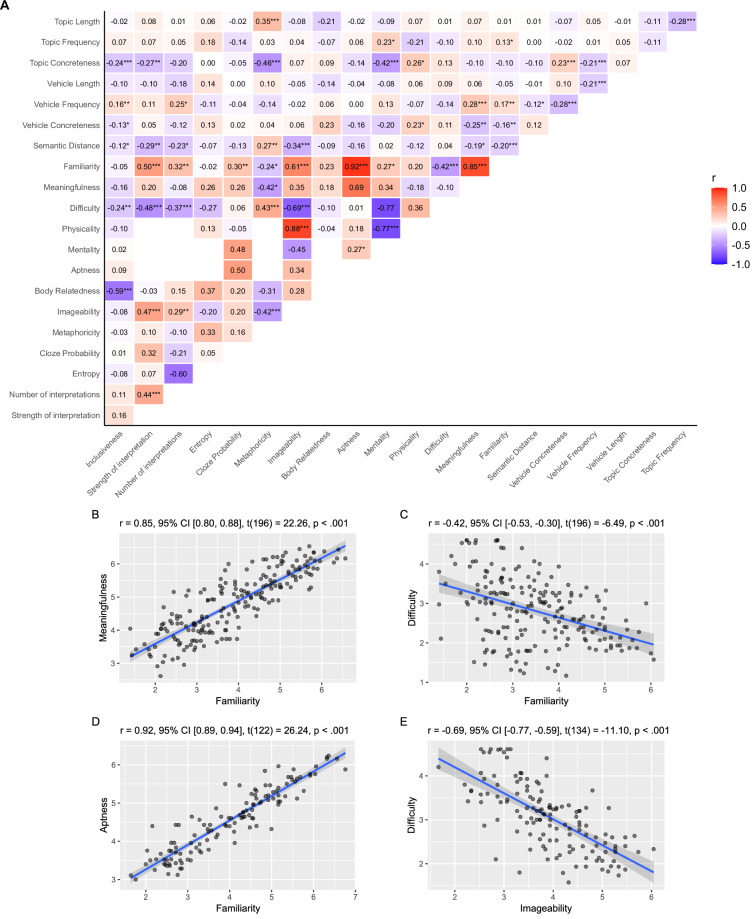 Figure 4
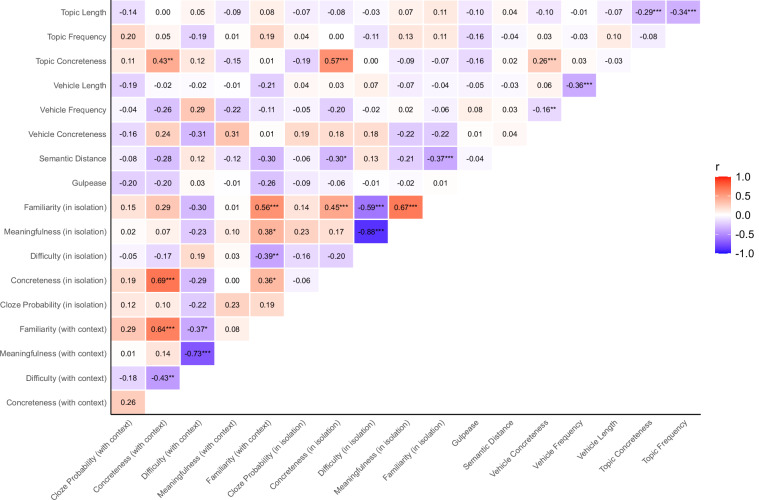 Figure 5
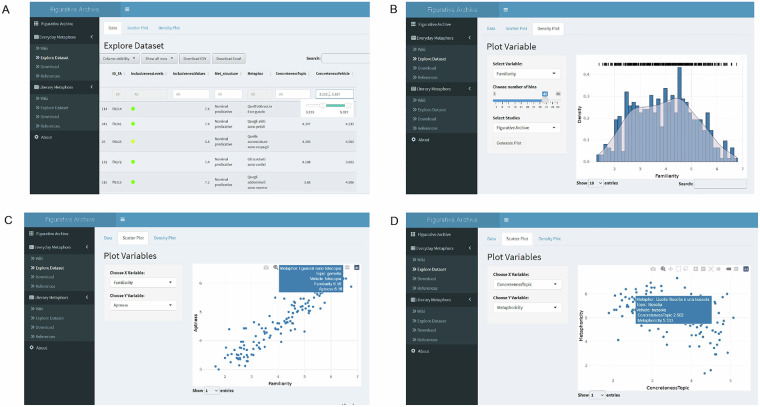 Figure 6
- —https://doi.org/10.13039/100010663EC | EU Framework Programme for Research and Innovation H2020 | H2020 Priority Excellent Science | H2020 European Research Council (H2020 Excellent Science - European
Peer Reviews
No public reviews on file for this paper yet. If you reviewed it on a platform where reviews are public (OpenReview, ICLR, NeurIPS, ICML), you can paste yours below so the community can read it here.
Videos
No videos yet. Explain this paper in a talk, walkthrough, or lecture? Add one.
Taxonomy
TopicsLanguage, Metaphor, and Cognition · Action Observation and Synchronization · Neurobiology of Language and Bilingualism
Background
Typically defined as a language use where one thing is described in terms of something else that is conceptually very different (as in the case of This archive is a gem), metaphor is a phenomenon that straddles the border between rhetoric, philosophy, linguistics, and psychology^1^. In the last few decades, metaphor research has expanded well beyond classic literary studies, entering the fields of psycholinguistics, neurolinguistics, and cognitive neuroscience more broadly^2–4^. Bibliometric studies^5–7^ indicate a stable upward trend in metaphor research over time, with a marked rise in the early 2010s due to the introduction of experimental methods^8,9^. One of the reasons behind such a growing interest is that metaphor offers a window into different cognitive processes. It is used, for instance, to investigate inferential mechanisms within the field of Experimental Pragmatics and neuropragmatics^10–13^, to explore embodied and simulation processes within the field of Cognitive Linguistics and Grounded Cognition^14^, to test abstraction in neurotypical as well as clinical samples^1,15,16^, to study high-level language acquisition in L1 and L2^17,18^, up to aesthetic appreciation in neurocognitive poetics^19,20^.
One finding that emerges clearly from the literature above is that each metaphor is a multifaceted object, with many attributes affecting its processing^21^. These encompass metaphor familiarity, which might reduce processing efforts^22–24^ and the degree of sensorimotor reenactment^14,25^, concreteness of metaphorical expressions, with different patterns of acquisition and decay in the lifespan for more concrete vs. more abstract metaphors^26–28^, aptness^29^, which eases comprehension and favors the categorization processes^30^, as well as a number of word-level semantic features^31,32^. Such evidence has stimulated a large debate over the distinctiveness of the metaphor features^33^ and, in general, has elucidated that metaphors elicit different behavioral and brain response patterns depending on their specific linguistic characteristics^34^.
Given the scenario above, experimental research on metaphor requires a great deal of attention when constructing and selecting the testing material. In most cases, each study includes a specific phase devoted to crafting the metaphors and collecting de novo rating measures from participants. This, however, is not only time-consuming but also hampers reproducibility. In an attempt to overcome these limitations, a number of datasets enriched with human ratings have been published in recent decades, especially for English. Starting from the pioneering work of Katz et al.^35^, which comprises 260 nonliterary (i.e., of use in everyday life and ordinary language) and 204 literary metaphors with 10 dimensions, a portion of which (n = 50) was recently renormed by Campbell & Raney^36^, other datasets include those of Cardillo et al.^37^ and Cardillo et al.^38^, respectively with 280 and 120 metaphors and 10 measures, Roncero & de Almeida^39^, with 84 metaphors and seven measures, and Thibodeau et al.^33^, with 36 metaphors rated for five dimensions. Sparse and lower-scale efforts to create datasets in other languages were conducted, for instance, for German^40,41^, Italian^42^, Dutch^43^, and Serbian^44^, as well as in other language families such as Chinese^45,46^, also in a cross-language perspective^47,48^.
The Figurative Archive presented here follows in the trail of providing an open dataset of Italian metaphors with ratings for future research. Capitalizing on more than 10 years of psycholinguistic and neurolinguistic investigation on metaphor processing conducted by our research group^24,27,49^, we gathered metaphors and corresponding ratings and corpus-based measures from 11 individual studies, some published (seven) and some currently unpublished (four), standardized and validated them via extensive correlational analysis. The Figurative Archive currently includes two modules. The 464 items of the Everyday Metaphors module are intended to offer a resource for investigating metaphors that occur in ordinary language in different forms. The available measures, which span from familiarity (available for almost 100% of the corpus) to preferred interpretations (available for 27% of the corpus) to body relatedness (available for 14% of the corpus), show a substantial degree of variation, allowing for investigating specific features of metaphorical language. Moreover, the whole Everyday Metaphors module was complemented with a de novo collected dimension that has never been explored before, namely, inclusiveness. In doing metaphor research over more than a decade timeframe, we have experienced a change in speakers’ sensitivity to metaphors’ discriminatory value, with participants starting, in debriefing sessions, to report low acceptance of certain metaphors, especially those referring to bodily attributes. Such a change matches the current attention at the societal level for inclusive language^50^. This aspect, however, has never been empirically measured in metaphor research. Hence, we developed an ad hoc questionnaire and used its outcome to complement each item with an indicator of possible discriminatory interpretations. The Literary Metaphors module is intended to offer a dataset of 532 original metaphors extracted from Italian literary texts, centered around classical domains such as emotions (e.g., love), natural elements (e.g., fire), physical locations (e.g., river) and events (e.g., storm). The values available for the literary metaphors (mostly corpus-based) are sufficiently distributed to make the dataset useful for exploring the role of creativity and poetic aspects.
Moreover, we organized all data both in a Zenodo repository and in an online searchable platform developed for easy navigation and customized search. The web interface was designed to offer easy and flexible consultation at different levels. In addition to displaying the 996 items and their characteristics, it allows users to constrain the search by selecting specific metaphorical terms (such as topics or vehicles) or ranges of values for the different properties. Within each module, the interface also provides two interactive tabs for the evaluation of the distribution of values and associations between measures across the dataset. Further detailed information is described in the Data Records and Usage Notes sections.
The Figurative Archive can promote metaphor research in several ways. As a first, most obvious advantage, it offers a set of readily usable and extensively described metaphors, mostly paired with literal counterparts, thereby reducing the time required for experiment implementation. In this light, the variety of types included in the dataset makes the Figurative Archive a valuable resource for research on different aspects of metaphor. Second, the Archive encourages reproducible research in metaphor studies, both when addressing the neurocognitive effects investigated in the original studies from which the metaphors were extracted and when serving as a shared source of material for future studies. Third, the plethora of attributes included in the Archive allows for systematic and large-scale investigations into the properties of metaphor, their relationships, and their impact on processing, which is still a matter of lively debate^28,33,51,52^. Fourth, it may promote the systematic testing of figurative language abilities of Large Language Models (LLMs)^53–58^. For instance, the Archive might serve as a base to construct benchmarks for Italian, aligning with the rising need for resources in languages other than English^59^. Also, the Archive may help mitigate the pitfalls of over-reliance on English^60^ in metaphor research. Granted that the Archive contains Italian metaphors and that metaphors cannot easily be mapped from one language to another^21^, some metaphorical expressions show a considerable degree of stability across languages^61^. In this vein, the Archive provides the English translations of the Italian metaphorical expressions, to ensure accessibility to non-Italian-speaking readers, and enables users to search for metaphors associated with specific topics or vehicles, which may be more easily translatable into English or other languages. Our plan for the future is to continue expanding the data collection by contributing new datasets ourselves and by encouraging colleagues worldwide to develop parallel or joint initiatives, to unravel the interplay between biological and cultural roots behind metaphors.
Methods
Everyday metaphors
The Everyday Metaphors module of the Figurative Archive comprises 464 unique metaphorical expressions in Italian (405, 87.28%, paired with a literal counterpart) pooled from nine studies conducted by members of the NEPLab (https://www.neplab.it/). A unique alphanumeric ID was assigned to each metaphorical expression based on the chronological order of the original studies. The dataset features various types of metaphorical expressions, including nominal predicative metaphors (e.g., That lawyer is a shark), nominal metaphors in word pairs (e.g., lake - crystal), and predicate metaphors (e.g., Luigi pushes forward through life’s problems), with indication – for each expression – of the topic (i.e., the subject of the metaphor, e.g., lawyer in the first example above) and the vehicle (i.e., the term used to convey the metaphorical meaning, e.g., shark in the first example above). A literal English translation is given for each metaphorical item, for accessibility purposes. For some of the predicate metaphors in the study by Frau et al.^62^, a more idiomatic translation is provided as well, to aid the understanding of the meaning of the expression. Each metaphorical item is accompanied by a set of relevant measures, either obtained through rating tasks (familiarity, meaningfulness, difficulty, physicality, mentality, aptness, body relatedness, imageability, metaphoricity, cloze probability, entropy, number of interpretations, and strength of interpretation) or corpus-based (semantic distance between topics and vehicles, length, frequency, and concreteness of both topics and vehicles, the latter henceforth termed topic concreteness and vehicle concreteness), extracted from the original studies. The availability of these measures varies, with some present for all items (100%) and others available for different subsets (down to 14%). For a portion of items in the module (124, 26.72%) we provide also a list of preferred interpretations, namely the features generated by participants to explain each metaphorical expression. To ensure consistency, original rating measures were standardized to homogeneous scales, while corpus-based measures were recalculated on up-to-date and open corpus resources. Additionally, new inclusiveness ratings were collected for all items.
Collection of metaphors and ratings
The metaphors and the relative psycholinguistic variables were drawn from studies that addressed figurative language processing with various methodologies and included a stage devoted to constructing and rating the stimuli. Additional information for each study is available in the Zenodo repository^63^ and in each individual downloadable dataset. All studies were conducted on samples of native speakers of Italian, for a total of 630 undergraduate and graduate students. Across studies, participants were young adults with university education (316 F; age: M = 25.57, SD = 3.76; education in years: M = 16.52, SD = 2.50). Data acquisition was conducted in compliance with the General Data Protection Regulation (GDPR) and following the guidelines of the Declaration of Helsinki. Data reuse in aggregated form was allowed in full compliance with the GDPR.
Forty-two nominal predicative metaphorical sentences, along with their matched literal counterparts, were taken from the study by Bambini et al.^64^, which investigated reaction times during a sensicality judgment task in response to metaphors, metonymies, and approximations vs. literal and anomalous statements. The 42 metaphors appeared in the form Quegli X sono Y (Eng. Tr.: “Those Xs are Ys”), with X and Y being common nouns, e.g., Quegli avvocati sono squali (Eng. Tr.: “Those lawyers are sharks”). Literal counterparts were obtained by replacing the topic with semantically compatible terms, e.g., Quei pesci sono squali (Eng. Tr.: “Those fish are sharks”). All items were rated for meaningfulness, familiarity, and difficulty by a sample of 85 native speakers of Italian (42 F; age: M = 26.85, SD = 3.80; education in years: M = 18.02, SD = 2.04). Additionally, the same sample also provided cloze probability (CP) values for all sentences truncated before the target words, such as Quegli X sono… (Eng. Tr.: “Those Xs are…”).
Sixty-four nominal predicative metaphorical sentences, along with their matched literal counterparts, were taken from the study by Bambini et al.^24^, which analyzed the brain correlates of metaphor processing using the electroencephalography (EEG) technique. This study used stimuli constructed by expanding the set used in a previous neuroimaging study on metaphor comprehension Bambini et al.^49^ and included metaphors in different sentential structures, to modulate the contextual information given across two experiments. In the first experiment, metaphors were embedded in a minimal context in the form Sai che cos’è quell’X? È un Y (Eng. Tr.: “Do you know what that X is? It’s a Y”), with X and Y being common nouns, e.g., Sai che cos’è quel soldato? È un leone (Eng. Tr.: “Do you know what that soldier is? He’s a lion”). In the second experiment, metaphors were embedded in a supportive context in the form Quell’X è molto Z. È un Y (Eng. Tr.: “That X is very Z. It’s a Y”), with Z being an adjective that denoted a property linking X to Y, e.g., Quel soldato è molto coraggioso. È un leone (Eng. Tr.: “That soldier is very brave. He’s a lion”). Literal counterparts were obtained by replacing the topic with a term in a literal relationship with the vehicle, e.g., Sai che cos’è quel felino? È un leone (Eng. Tr.: “Do you know what that feline is? It’s a lion”) and Quel felino è molto coraggioso. È un leone (Eng. Tr.: “That feline is very brave. It’s a lion”) respectively. CP values were collected from two groups of native speakers of Italian for sentences truncated before the target word: 15 participants for the minimal context sentences in the form Quell’X è un… (Eng. Tr.: “That X is a…”), and 14 for the supportive context sentences in the form Quell’X è molto Z. È un… (“That X is really Z. It’s a…”). Additionally, the lexical frequency of the topic and vehicle was extracted from the CoLFIS database^65^.
Eighty-two nominal predicative metaphorical sentences, along with their matched literal counterparts, were taken from the magnetoencephalography (MEG) study by Lago et al.^66^. The set overlapped significantly (62%) with the stimuli used in the study by Bambini et al.^24^. All sentences appeared in the form Quell’X è un Y (Eng. Tr.: “That X is a Y”), with X and Y being common nouns, e.g., Quel matrimonio è una quercia (Eng. Tr.: “That marriage is an oak”). Literal counterparts were obtained by replacing the topic with a term in a literal relationship with the vehicle, e.g., Quell’albero è una quercia (Eng. Tr.: “That tree is an oak”). All items were rated for familiarity by 39 native speakers of Italian (20 F; age: M = 27.05, SD = 4.54, range = 20–43; education in years: M = 16.69, SD = 2.44, range = 11–21). Additionally, a sample of 17 native speakers of Italian (12 F; age: M = 29.00, SD = 6.29, range = 22–46; education in years: M = 16.00, SD = 2.74, range = 13–21) provided CP and entropy values for all sentences truncated before the target words, such as Quell’ X è un… (Eng. Tr.: “That X is a…”). Vehicle frequency was extracted from the itWAC corpus^67^; semantic distance between topic and vehicle was calculated using WEISS (Word-Embeddings Italian Semantic Space^68^).
One hundred and twenty-four nominal predicative metaphorical sentences formed the set used in the study by Canal et al.^27^ to investigate the role of Theory of Mind (ToM) in processing physical vs. mental metaphors with EEG methods. All sentences appeared in the form Spec Xs sono Ys (Eng. Tr.: “Spec Xs are Ys”), with Spec being certi/certe/alcuni/alcune/quelli/quelle (Eng. Tr.: “certain/some/those”) or the plural definite articles i/gli/le (Eng. Tr.: “the”), Xs being common nouns denoting human beings, Ys being common nouns denoting concrete non-human entities, and the relationship between X and Y being based either on physical characteristics, e.g., Certi cantanti sono usignoli (Eng. Tr.: “Some singers are nightingales”) or mental ones, e.g., Alcuni scolari sono uragani (Eng. Tr.: “Some pupils are hurricanes”). No literal sentences were associated with the metaphorical ones in the original study. However, literal counterparts matched to 65 of the metaphors in Canal et al.^27^ were created for other EEG studies (IUSS NEPLab MetaImagery study and IUSS NEPLab MetaStep study) and included here. Metaphorical sentences were rated for familiarity, physicality, mentality, and aptness by 53 native speakers of Italian (40 F; age: M = 23.91, range = 21–32; education in years: M = 15.83, range = 13–18). Vehicle frequency values were extracted from the CoLFIS database^65^, while vehicle concreteness was sourced using the norms from Brysbaert et al.^69^ after translation of items into English. Semantic distance between the topic and the vehicle was computed using WEISS^68^. To complement these measures, we also added the preferred metaphor interpretations collected by Battaglini et al.^70^ from a sample of 76 Italian-speaking undergraduate students (age: M = 22.08, SD = 1.52; education in years: M = 15.00, SD = 0.76): participants were asked to write the meaning of each metaphor in a booklet, and were encouraged to identify key characteristics (features) essential for understanding each metaphor^68^.
One hundred and twenty-eight metaphorical word pairs, along with their matched literal counterparts, were taken from the study by Bambini et al.^71^, which investigated the processing costs of multimodal metaphors compared to verbal ones using the EEG technique. In the verbal condition, nominal metaphors in word pairs were used, in the X – Y form, e.g., linguaggio – ponte (Eng. Tr.: “language – bridge”), with X denoting abstract entities for half of the items and concrete ones for the other half, and Y denoting concrete entities. Literal counterparts were created by replacing X with a word in a literal relation with Y, e.g., fiume – ponte (Eng. Tr.: “river – bridge”). In the multimodal condition, the X from verbal pairs was combined with a picture representing Y, e.g., the image of a bridge. In the Figurative Archive, only verbal items are included. All items were rated for familiarity, difficulty, imageability, metaphoricity, number of interpretations, and strength of metaphorical interpretations by various subsamples from a pool of 122 native speakers of Italian (68 F, age: M = 24.34, SD = 1.97). Vehicle frequency was extracted from the CoLFIS database^65^. Semantic distance between the two terms in each metaphorical pair was computed using WEISS^68^.
Sixty predicate metaphors were taken from Frau et al.^62^, which inquired into motor cortex involvement in action-language processing in two motor neuron diseases, Amyotrophic Lateral Sclerosis (ALS) and the SPG4 variant of Hereditary Spastic Paraplegia (HSP-SPG4). The metaphors appeared in the form Subj V (Ind)Obj, with V being the vehicle expressed by a verb and (Ind)Obj being the topic expressed by a direct or indirect object^72^, e.g., Alice disegna il suo futuro con Alberto (Eng. Tr.: “Alice is shaping her future with Alberto”) and Lisa corre verso l’amore con ingenuità (Eng. Tr.: “Lisa rushes into love with innocence”) respectively. Half of the sentences (30) described upper-limb-related action, as seen in the first example above, while the other half depicted lower-limb-related action, as in the second example above. Literal sentences were created by replacing the topic with an object in a literal relationship with the vehicle, e.g., Il figlio disegna un ritratto della mamma (Eng. Tr.: “The son draws a portrait of his mum”), Francesca corre verso casa con il cane (Eng. Tr.: “Francesca runs home with the dog”). All items were rated for meaningfulness and familiarity by a sample of 60 native speakers of Italian (35 F; age: M = 26.65, SD = 3.85; education in years: M = 15.80, SD = 2.15).
Sixty-four nominal predicative metaphorical sentences, along with their matched literal counterparts, were taken from the unpublished IUSS NEPLab MetaBody study. Sentences appeared in the form: Quel(quegli) X è(sono) [un] Y (Eng. Tr.: “That(those) X(s) is(are) [a] Y(s)”). Xs and Ys were common nouns, with Xs referring to body parts, e.g., Quei bicipiti sono sassi (Eng. Tr.: “Those biceps are stones”), or to objects, e.g., Quella casa è un gioiello (Eng. Tr.: “That house is a jewel”). Literal counterparts were created by replacing the vehicle with a semantically compatible adjectival phrase: for the body-related items, e.g., Quei bicipiti sono allenati (Eng. Tr.: “Those biceps are trained”), and for the object-related items, e.g., Quella casa è molto spaziosa (Eng. Tr.: “That house is very spacious”). All items were rated for meaningfulness, familiarity, and body relatedness by 49 native speakers of Italian (27 F; age: M = 27.35, SD = 3.55; education in years: M = 15.82, SD = 2.76). Vehicle frequency was extracted from the CoLFIS database^65^.
Eighty nominal predicative metaphorical sentences, along with their matched literal counterparts, were taken from the unpublished IUSS NEPLab MetaEducation study. Of these, 42 were adapted from Bambini et al.^64^, while 38 were newly created. Sentences were presented in the form Quel(quegli) X è(sono) [un] Y (Eng. Tr.: “That(those) X(s) is(are) [a] Y(s)”). Xs and Ys were common nouns, with Xs being either abstract or concrete topics. Each metaphor was embedded within a single-sentence context, e.g., Nei momenti difficili le speranze sono stelle che illuminano l’anima (Eng. Tr.: “In hard times hopes are stars that light up the soul”). Literal counterparts were created by modifying the topic of the metaphor and the context to ensure a literal interpretation, e.g., Quelle luci nel cielo notturno sono stelle di galassie lontane (Eng. Tr.: “Those lights in the night sky are stars of distant galaxies”). The items from Bambini et al.^64^ were already rated for meaningfulness, familiarity, and difficulty. The newly created items were rated for the same measures by 49 native speakers of Italian (age: M = 21.69; SD = 1.38).
Moreover, for forty-two nominal predicative metaphors pooled from various studies above, values of imageability and physicality were added, taking them from the unpublished IUSS NEPLab MetaImagery study, which examined the role of visual mental imagery in metaphor processing using the EEG technique. This study used metaphors already included in the Everyday Metaphors module from other studies (i.e., Bambini et al. 2013, 2016; Canal et al.^24,27,64^, and the IUSS NEPLab MetaBody study) and collected additional ratings values of imageability and physicality from 64 native speakers of Italian (41 F; age, M = 24.13, SD = 2.47; education in years, M = 15.77, SD = 2.22).
Overall, a total of 622 metaphors, with rating values for different measures, were extracted from nine studies. After removing duplicates, i.e., metaphors that appeared in more than one study in the same or a slightly different form (approximately 25% of all items), the Everyday Metaphors module of the Figurative Archive comprises 464 unique metaphors. Of these, 321 metaphors (69.18%) have a nominal predicative structure, e.g., Quegli avvocati sono squali (Eng. Tr.: “Those lawyers are sharks”), 60 (12.93%) are predicate metaphors, e.g., Alice disegna il suo futuro con Alberto (Eng.Tr.: “Alice is shaping her future with Alberto”), and 83 metaphors (17.89%) are nominal word pairs, e.g., linguaggio – ponte (Eng. Tr.: “language – bridge”). The 464 metaphors are displayed in the Everyday Metaphors module keeping their original structure of nominal word pairs, predicate metaphors, or nominal metaphors, with the latter type limited to the “X(s) is/are Y(s)”, after dropping the broader context in the case of the study by Bambini et al.^24^ and in the IUSS NEPLab MetaEducation study, also reporting topics and vehicles in specific columns. The overall distribution of types in the Archive reflects the metaphor structures mostly used in psycho-neurolinguistic studies^35,37^, being based mostly on nouns (87.07%) and partly on verbs (12.93%). Furthermore, the distribution of types closely aligns with the occurrence of metaphors in real-life language, where nominal and verbal metaphors dominate (63% of metaphorical occurrences in classroom discourse^73^ and 80% of metaphors collected in corpus-based research^74^).
Since different studies collected different ratings and corpus-based measures, some measures are more heavily represented than others (see Fig. 1, lollipop plot on the left). Overall, the distribution of values for each dimension exhibits sufficient variability between items and highlights distinct characteristics of the stimuli across the dataset (Fig. 1, density plots on the right). For instance, familiarity approximates a normal distribution, with most items showing moderate values. Conversely, body relatedness – defined as the inclusion of body parts or motor aspects in a sentence – shows a bimodal distribution. This may be because this dimension is represented only in one study (IUSS NEPLab MetaBody study), where items were constructed to be either body-related, thus scoring high in body relatedness, or object-related, thus scoring low in body relatedness. Mentality (i.e., how much a metaphor describes psychological qualities of the topic) also showed a bimodal distribution, while physicality (i.e., how much a metaphor describes physical qualities of the topic) closely resembled a normal distribution. This pattern seems to suggest that all metaphors can, to some extent, be interpreted physically, while a mental interpretation seems to be more specific for some metaphors (i.e., in our case, those originally constructed to express mental properties^26,27,70^). Regarding single-word measures, vehicles tended to be concrete across the dataset and, at the same time, topics displayed a broader range of concreteness values, aligning with the idea that metaphors often use more concrete, immediate terms to describe more abstract concepts (see Kövecses 2000 on emotion metaphors^75^) and offering the opportunity to test multimodal aspects of metaphor processing.Fig. 1. Percentage of values for ratings and corpus-based measures in the Everyday Metaphors module. The lollipop plot on the left displays, for each variable, the percentages of metaphors that are described by that variable, over the total of the 464 metaphors from the Everyday Metaphors module. The density plots on the right illustrate the distribution of values for each variable. Darker shading indicates a higher proportion of items (i.e., percentage over the total) in the Everyday Metaphors module (lighter for lower coverage, e.g., body relatedness = 13.79%; darker for higher coverage, e.g., topic and vehicle length, semantic distance, and inclusiveness = 100%).
Standardization and recalculation
To ensure uniformity and reproducibility, some ratings and corpus-based measures were recalculated or automatically re-extracted for the final dataset of 464 metaphors. Rating values originally collected on a 1–5 Likert scale were rescaled to a 1–7 Likert scale, the one most commonly employed across our studies. Then, in the case of a metaphor included in more than one study and with multiple ratings for a given dimension, we averaged the available ratings for that dimension, considering that the samples of raters were homogeneous in terms of age and education (see the additional information for each study available in the dedicated files on Zenodo^63^). Before averaging, the consistency of the conceptualization of the given dimension across studies was verified: for example, while labeled differently, some dimensions (e.g., meaningfulness and sensicality) were defined in the same way, and rating instructions provided to raters were equivalent (see the Wiki section of individual datasets available on Zenodo^63^). Corpus-based measures, including word frequency, word concreteness, and semantic distance, were extracted de novo for each metaphorical item in the Archive, using exclusively open-access tools for Italian. For example, absolute frequencies of topics and vehicles were extracted from the CoLFIS database^65^, while vehicle concreteness and topic concreteness values were sourced from the MEGAHR-Crossling multilanguage dataset^76^. Semantic distance between the topic and vehicle was calculated using the Italian word embeddings from fastText^77^, a set of pre-trained word vectors based on Common Crawl and Wikipedia. The main dataset of the Figurative Archive provides access to these recalculated and re-extracted values, while the original values are preserved in the downloadable version of each dataset for individual studies.
Additional de novo ratings
To assess the alignment of metaphors with current perspectives on inclusive language, ratings for inclusiveness were collected de novo for all items in the Everyday Metaphors module of the Figurative Archive. Prior research in the field of psycholinguistics^78,79^ considered the related construct of offensiveness, which refers to those expressions that are perceived as having a negative impact on the sense of self and well-being of the interlocutor^71^, often including a moral judgment^80^. For the purposes of the Figurative Archive, however, we chose to focus on the broader measure of inclusiveness, which we defined as a form of communication that recognizes diversity, conveys respect for others, is sensitive to differences, and promotes equal opportunities, based on the guidelines of the Linguistic Society of America (https://www.lsadc.org/guidelines_for_inclusive_language). In doing so, we accounted for a wider spectrum of potentially inappropriate uses of language, considering, in addition to expressions carrying a negative attitude toward certain social groups (such as the idea that wives are annoying, as a possible interpretation of the metaphor Certe mogli sono martelli, Eng. Tr.: “Some wives are hammers”)^81,82^, also expressions perpetuating positive stereotypes (such as the idea that girls are fragile, as a possible interpretation of the metaphor Alcune fanciulle sono porcellane, Eng. Tr.: “Some girls are porcelaines”)^83^.
To collect the rating, we developed a novel online questionnaire (hosted on LimeSurvey^®^), involving 15 Italian native speakers with experience in the study of language and ethical matters (graduate students and postgraduate fellows with backgrounds in linguistics, philosophy, and psychology; 9 F; age: range = 18–34; education in years: range = 18–21). Participants were asked to rate each metaphor on a Likert scale, evaluating how respectful the metaphor was toward individual differences and how free it was from stereotypes and prejudices. Following previous studies on the related construct of offensiveness^78,79^, we used a 9-point Likert scale, with lower ratings reflecting stronger stereotypical meanings and higher ratings indicating greater respectfulness. Metaphors were divided into three lists. The study was approved by the Ethics Committee of the Department of Brain and Behavioral Sciences of the University of Pavia (protocol number 123/2023). All participants provided written and informed consent, in accordance with the principles of the Declaration of Helsinki.
Literary metaphors
The Literary Metaphors module includes 532 unique genitive metaphorical expressions in Italian sourced from literary works (poetry or prose), assembled from two studies conducted by members of the NEPLab. All metaphorical expressions appear in the form X di Y (Eng. Tr.: “X of Y”). A unique alphanumeric ID was assigned to each metaphorical expression based on the chronological order of the studies. Literal English translations are given for all metaphorical items, maintaining the terms as similar as possible to the Italian original. In addition to the author and the textual source from which they were extracted, each metaphor is accompanied by a set of relevant measures, obtained through rating tasks (meaningfulness, familiarity, difficulty, cloze probability, metaphor concreteness) and corpus-based indexes (frequency, topic and vehicle concreteness, readability index, semantic distance between the topic and vehicle). The availability of these measures varies, with some present for all items (100%) and others available for different subsets (down to 12%). Additional information for each study is available in the Zenodo repository^63^ and in each individual downloadable dataset, detailed in the Wiki section of the available spreadsheets.
One hundred and fifteen genitive metaphors were taken from the study by Bambini et al.^42^, which provided the first collection of Italian literary metaphors, half from poetry and half from prose, with psycholinguistic measures. The metaphorical expressions appeared in the form X di Y (Eng. Tr.: “X of Y”), with X and Y being common nouns. Of these, 24 (20.87%) expressions displayed the topic-vehicle (TV) order, with X being the topic and Y being the vehicle, e.g., Labbra di rubino (Eng. Tr.: “Lips of ruby”), and 91 (79.13%) displayed the vehicle-topic (VT) order, with X being the vehicle and Y being the topic, e.g., Ombra di tristezza (Eng. Tr.: “Shadow of sadness”). All items were rated in isolation (out of the literary context) for familiarity, metaphor concreteness, difficulty, and meaningfulness by 105 Italian native speakers (83 F; age: M = 23.00, SD = 4.31). CP values were collected by truncating the metaphor after the preposition di (Eng. Tr.: “of”). A subset of 65 items was also rated for the same variables in the original context (average text length = 50 words) by 180 native speakers of Italian (145 F; age: M = 20.00, SD = 2.50). Word frequency of the topic and vehicle was extracted from the CoLFIS database^65^, phrase frequency was calculated in the Google search engine, and readability was measured through the Gulpease index^84^.
Additionally, 417 genitive metaphors, 41% extracted from poetry and 59% extracted from prose, were taken from the unpublished IUSS NEPLab MetaLiterary study, which applied a semi-automatic methodology to extract metaphorical sentences from Italian prose and poetry literary texts. Initially, all occurrences of the NOUN di NOUN string (Eng. Tr.: “NOUN of NOUN”) were isolated through PoS-tagging^85^. Following the approach outlined by Bambini et al.^42^, expressions containing known metaphorical sources (such as physical locations and events) were manually reviewed. All extracted metaphorical expressions were in the form X di Y (Eng. Tr.: “X of Y”), with X and Y being common nouns. Of these, 118 (28.30%) expressions followed a topic-vehicle (TV) order, e.g., Capelli di fiamma (Eng. Tr.: “Hair of flame”), while 299 (71.70%) displayed the vehicle-topic (VT) order, e.g., Nebbia di malinconia (Eng. Tr.: “Fog of melancholy”). Lexical frequency of the topic and vehicle for each item was obtained from the CoLFIS database^65^, and topic and vehicle concreteness values were sourced from the MEGAHR-Crossling multilanguage dataset^76^. Semantic distance between the topic and vehicle was calculated using the pre-trained Italian word embeddings from fastText^77^.
Overall, a total of 532 metaphors were extracted from two studies and included in the Literary Metaphors module of the Figurative Archive, 390 (73.31%) with the VT order and 142 metaphors (26.69%) with the TV order.
Since different studies collected different ratings and corpus-based measures, some measures are more heavily represented than others (see Fig. 2, lollipop plot on the left). Overall, the distribution of values for each dimension exhibits sufficient variability between items, highlighting distinct characteristics of the stimuli across the dataset (Fig. 2, density plots on the right).Fig. 2. Percentage values for ratings and corpus-based measures in the Literary Metaphors module. The lollipop plot on the left displays, for each variable, the percentages of metaphors that are described by that variable, over the total of the 532 metaphors from the Literary Metaphors module. The density plots on the right illustrate the distribution of values for each variable. Darker shading indicates a higher proportion of items (i.e., percentage over the total) in the Literary Metaphors module (lighter for lower coverage, e.g., cloze probability, metaphor concreteness, difficulty, familiarity, Gulpease index, and meaningfulness for metaphors presented with context = 12.22%; darker for higher coverage, e.g., topic and vehicle length and semantic distance = 100%).
To create a summary of the semantic domains covered in the Literary Metaphors module, we relied on the capability of LLMs to perform automatic topic modeling^86,87^. Methodologically, we used ChatGPT since it has been found to outperform human raters in topic detection^88^. Operationally, we prompted the model to cluster topics and vehicles into up to a feasible number (n = 10) of semantic classes, with a sufficient level of granularity^89^, in line with previous works on literary texts^90^. Metaphorical topics and vehicles spanned a wide range of semantic classes (Fig. 3): most topic words referred to natural elements (25.00%), e.g., Cielo di perla (Eng. Tr.: “Sky of pearl”), emotions or psychological states (15.22%), e.g., Esplosione di dolore (Eng. Tr.: “Explosion of pain”), and body and physical sensations (15.04%), e.g., Viso di mela (Eng. Tr.: “Face of apple”). Meanwhile, the automatic clustering revealed that the majority of vehicle words described natural elements (34.59%), e.g., Fiume di lacrime (Eng. Tr.: “River of tears”), material objects (25.38%), e.g., Corpo di alabastro (Eng. Tr.: “Body of alabaster”), or light and darkness (12.41%), e.g., Lampo di gelosia (Eng. Tr.: “Lightning of jealousy”). We hypothesize that the model’s ability to assign clear semantic categories might have been enhanced by the metaphors being extracted via specific keywords (e.g., physical locations and events), thus limiting a priori the metaphors to specific conceptual domains and increasing classification reliability.Fig. 3. Distribution of the ten semantic classes of metaphorical topics and vehicles in the Literary Metaphors module. The upper panel displays the percentages for metaphor topics, while the lower panel shows the percentages for vehicles.
Data Records
The Figurative Archive is available on Zenodo^63^ at 10.5281/zenodo.14924803.
The materials in Zenodo consist of:
- The folder Data, including the main datasets for both the Everyday Metaphors and the Literary Metaphors modules (uploaded as .csv files).
- The folder Original Files, including the datasets of the individual studies (uploaded as .xlsx files). Each dataset contains metaphors and their ratings as originally collected in the published studies^24,27,62,64,71^ and in the IUSS NEPLab MetaBody, MetaEducation, and MetaImagery. For the items from Canal et al.^27^, a separate interoperable .xlsx file provides the preferred interpretations at the single-trial level^70^. For a subset of the items, the audio recordings, as used in the IUSS NEPLab MetaStep study, are available (uploaded as .wav files) and included in a compressed subfolder.
- The folder Code, including the code for replicating the Technical Validation and the code for locally accessing the web interface.
- The folder Tables, including tables with additional information for each study.
- The Data-Sharing Policy for future contributors, which outlines the procedures that prospective contributors must follow when proposing the addition of new datasets to the Archive.
The datasets in Data and Original Files are accompanied by a Wiki sheet that describes the content of their columns and provides additional information about the study, including detailed descriptive statistics about rating values and participants’ demographics. Column headings are harmonized across datasets to ensure interoperability and facilitate comparisons of equivalent (or identical) measures. All materials are distributed under the Creative Commons Attribution 4.0 International (CC-BY) license.
Technical Validation
First, we assessed the reliability of the newly collected inclusiveness ratings using the Intraclass Correlation Coefficient (ICC), calculated across three item lists, each rated by five expert judges. The average ICC across lists was 0.58, indicating moderate inter-rater agreement (List A: ICC = 0.64, F(215, 860) = 2.77, p < 0.001; List B: ICC = 0.75, F(216, 864) = 4.03, p < 0.001; List C: ICC = 0.35, F(30, 120) = 1.55, p = 0.052). Rating values homogeneity was further evaluated using Cronbach’s alpha. The average alpha was 0.99, indicating excellent internal consistency (List A: α = 1; List B: α = 1; List C: α = 0.97), in line with previous ratings of metaphorical expressions^39,40,45^. Moreover, we tested for the difference in inclusiveness ratings between genders: the t-test came out inconclusive, with numerically higher rating values among males (M = 7.53, SD = 1.95) vs. females (M = 6.98, SD = 1.53), a difference that fell short of significance (t(13) = −0.61, p = 0.554).
Then, to validate the measures available for the two modules of the Figurative Archive, we conducted a series of correlations between all measures for each module, expecting patterns of association consistent with those reported in the literature. Based on the seminal work by Katz and colleagues^35^, we expected everyday and literary metaphors to exhibit similar patterns. More specifically, for both modules, we anticipated a broad spectrum of robust correlations between classic rating measures, for instance, between metaphor familiarity and aptness, between familiarity and difficulty, and between difficulty and imageability^33,35,36^. Differently, we expected a more scattered pattern of associations between single-word corpus-based measures and rating ones, but significant associations between familiarity and metaphoricity on the one hand and features of the topic and the vehicle, such as word-level concreteness^31,91^ and semantic distance between the two^92,93^, on the other hand. Pearson’s zero-order correlations were computed on data after standardization, recalculation, and averaging of ratings and corpus-based measures. To compensate for the high number of associations tested and to minimize Type I errors, ps were corrected with the False Discovery Rate (FDR) method by applying the Benjamini-Hochberg procedure.
Everyday metaphors
Results generally confirmed our predictions. First, we found an extensive pattern of significant associations between most rating variables, as shown in Fig. 4. Familiarity emerged as a key dimension, with very strong positive correlations with aptness (r(122) = 0.92) and meaningfulness (r(196) = 0.85), moderate correlations with imageability (r(167) = 0.61), strength of interpretation (r(126) = 0.50), and difficulty (r(196) = −0.42), and weak correlations with mentality (r(122) = 0.27), number of interpretations (r(126) = 0.32), cloze probability (r(112) = 0.30), and metaphoricity (r(126) = −0.24). These correlations align with patterns reported in the literature, confirming the large overlap between familiarity and aptness^33^ and the moderate relation of familiarity with difficulty and imageability^37^. Moreover, difficulty positively correlated with metaphoricity (r(124) = 0.43) and was negatively related to imageability (r(134) = −0.69), strength of interpretation (r(125) = −0.48), and number of interpretations (r(125) = −0.37). The latter two were also inter-related (r(126) = 0.44). Furthermore, imageability was positively associated with strength (r(126) = 0.47) and number of interpretations (r(126) = 0.29) and negatively related to metaphoricity (r(126) = −0.42). Experimentally, these results align with established results reported in classical studies^35^ and more recent work on literary metaphors^94^.Fig. 4. Correlograms between ratings and corpus-based measures of the Everyday Metaphors module. Panel A shows the correlogram for all variables in the Everyday Metaphors module. The strength of the associations is represented by color (red for positive and blue for negative correlations), with significant (FDR-corrected) correlations marked by asterisks (*p < 0.05, **p < 0.01, ***p < 0.001). The empty cells correspond to correlations that have not been calculated, as there are no pairs of items with shared measures. Panel B presents the scatterplot showing the relationship between familiarity and meaningfulness. Panel C illustrates the scatterplot showing the relationship between familiarity and difficulty. Panel D depicts the relationship between familiarity and aptness. Panel E shows the relationship between imageability and difficulty.
Two other sets of significant correlations are worth noting. First, physicality was strongly and positively associated with imageability (r(40) = 0.88) and negatively associated with mentality (r(122) = −0.77). This pattern is indicative of the relationship between metaphor and mental imagery processes^95–97^. Second, the novel measure of inclusiveness significantly correlated with body relatedness (r(62) = −0.59), topic concreteness (r(449) = −0.24), and difficulty (r(196) = −0.24), suggesting that metaphors describing body parts might perpetuate stereotypical or offensive representations, besides being more difficult (e.g., Quelle labbra sono un canotto, Eng. Tr.: “Those lips are a dinghy”).
Concerning corpus-based measures, as expected, results showed a sparser pattern of correlations. Meaningful patterns of associations involved, in particular, word-level concreteness. Topic and vehicle concreteness were positively correlated with metaphor physicality (r(130) = 0.26 and r(131) = 0.23, respectively), while topic concreteness was negatively correlated with metaphor mentality (r(115) = −0.42), as well as with metaphoricity (r(124) = −0.46). These findings suggest that sensory-motor properties of the single terms and in particular of the topic directly impact the sensory-motor characterization of the whole figurative expression and possibly its metaphoricity. Interestingly, longer metaphorical topics (in characters) were related to greater metaphoricity values (r(126) = 0.35). Semantic distance stood out as the most relevant corpus-based measure: our analysis highlighted a positive association with metaphoricity (r(126) = 0.27) and negative relations with imageability (r(167) = −0.34) and strength of interpretation (r(126) = −0.29). These findings are indicative of the complexity of the semantic connections between topics and vehicles that underlie metaphorical relationships^35^.
Overall, this correlation analysis supports the validity of the values reported in the Everyday Metaphors module, which can be used as an extensively normed set of experimental stimuli in the study of metaphor processing.
Literary metaphors
The correlational analysis confirmed our prediction (see Fig. 5). Literary metaphors in isolation and those presented in context exhibited similar patterns, replicating the findings of Bambini and colleagues^42^. In both sets, familiarity emerged as a key dimension: it was moderately negatively correlated with difficulty (r(113) = −0.59 for isolated metaphors; r(63) = −0.37 for metaphors evaluated within context), and moderately positively correlated with metaphor concreteness (r(113) = 0.45 and r(63) = 0.64, respectively). Moreover, difficulty and meaningfulness were strongly negatively correlated (r(113) = −0.88 and r(63) = −0.73, respectively). In contrast, some associations emerged as specific to one set only. Notably, familiarity was moderately positively correlated with meaningfulness only for literary metaphors rated in isolation (r(113) = 0.67), while the association was negligible for metaphors embedded in context (r(63) = 0.08). Conversely, difficulty was moderately negatively correlated with metaphor concreteness only for literary metaphors evaluated within context (r(63) = −0.43), an association not found for the set of metaphorical expressions rated in isolation (r(113) = −0.20). Across the in-isolation and in-context sets, familiarity (r(63) = 0.56) and metaphor concreteness (r(63) = 0.69) showed moderate-to-strong positive correlations, indicating that these two dimensions are relatively stable for literary metaphors, regardless of contextual presentation condition.Fig. 5. Correlograms between ratings and corpus-based measures of the Literary Metaphors module. The strength of the associations is represented by color (red for positive and blue for negative correlations), with significant (FDR-corrected) correlations marked by asterisks (*p < 0.05, **p < 0.01, ***p < 0.001).
With respect to corpus-based measures, the pattern of associations appeared more scattered. Topic and vehicle concreteness values at the word level stood out as key measures, in line with previous findings on everyday metaphors^31^: topic concreteness was negatively related to topic length (r(525) = −0.29), with the latter also negatively associated with topic frequency (r(528) = −0.34). Differently, vehicle concreteness was negatively related to vehicle frequency (r(519) = −0.16), with the latter also negatively associated with vehicle length (r(527) = −0.36). Moreover, topic concreteness was positively correlated with vehicle concreteness (r(514) = 0.26), and with concreteness of the whole metaphorical expression, both when rated in isolation (r(113) = 0.57) and in context (r(63) = 0.43). Another set of meaningful associations emerged between semantic distance and ratings collected for metaphors in isolation, specifically with metaphor concreteness (r(113) = −0.30) and familiarity (r(113) = −0.37), confirming the role of the semantic relationship between topic and vehicle in the generation of figurative meaning in literary items^98^.
Overall, the correlation patterns between dimensions found in the Everyday module and those found in the Literary module closely resembled each other, in line with Katz et al.^35^. Rating measures clustered together, and so did corpus-based measures, with limited intercorrelation: this suggests that metaphor properties are weakly influenced by the lexical properties of topics and vehicles, with the notable exception of topic and vehicle concreteness, which impact especially metaphor concreteness and metaphoricity.
Limitations and future directions
While the Figurative Archive is a valuable resource for advancing metaphor research, especially in Italian, some relevant aspects remain less covered and deserve attention for future expansions.
First, it would be relevant to address the variation of metaphor types, from nominal predicative to genitive and predicate metaphors. While the Figurative Archive includes a diverse range of metaphor types, encompassing the most widely attested types both in psycholinguistics^35,37^ and in real-life uses of language^73,74^, we acknowledge that a great variety exists across contexts, e.g., in advertising^71^, and purposes, e.g., persuasive ones^99,100^. Future research might explore further the effects of using these metaphorical structures in other contexts.
Second, all rating measures are collected in samples of young and educated adults. Future studies should expand the present research by investigating the role of demographic factors such as age, which has been shown to have an effect on metaphor processing^28,51,52^, and education, especially in relation to exposure to reading^101^. Given the modular architecture of the Archive, potential new datasets of metaphors, derived from future studies addressing these limitations, could be integrated into the resource, following the procedures indicated in the Data-Sharing Policy for future contributors available on Zenodo^63^.
Third, offering English translations for our Italian metaphors inevitably confronts a main challenge in metaphor research, i.e., cross-linguistic and cross-cultural adaptation. Since metaphors are deeply embedded in cultural, cognitive, and linguistic contexts, their meanings often resist a direct translation^61,102^. The same vehicle may evoke different connotations^103^, emotional resonances^104^, or conceptual mappings across languages^105^. Thus, while the Figurative Archive, both in the web interface and in downloadable .csv files, offers a valuable entry point for identifying and comparing metaphorical patterns, it stands as the lower rung of a much larger ladder toward broader cross-linguistic metaphor research.
Usage Notes
The Figurative Archive is an initiative that aims to make available a large set of experimental stimuli, developed over the years for the study of metaphor processing, in a single resource. To pursue this aim, we standardized the data, originally collected from different participant samples and across various studies, by assigning a unique alphanumeric ID to each metaphor and ensuring uniformity in the labels for each rating and corpus-based measure. Metadata explaining each label is provided in the Wiki section of the web interface. Furthermore, rating measures were aggregated by rescaling to a 7-point Likert scale and averaging across studies where necessary. Corpus-based measures were uniformly re-collected, often using open-access tools to ensure reproducibility. The result of this process is a harmonized and cohesive archive of experimental stimuli that supports the reuse of existing materials, also for large-scale studies. Original data are still available for consultation to retrieve measures used in the individual studies.
Due to its modular nature, the Figurative Archive is well-suited for future expansions, both by the original team of contributors and by the broader academic community. Since it is an ongoing initiative, the participation of researchers in metaphor studies is welcomed and encouraged, promoting resource sharing and allowing broader replicability of results, in adherence to the FAIR principles (Findable, Accessible, Interoperable, and Reusable). Future expansions will undergo a process to guarantee their quality and, although each module can maintain its specificity, contributors will be asked to conform to a standardized basic data structure established in the dedicated Data-Sharing Policy for future contributors.
In addition to the Zenodo repository described in the Data Record section, to ensure a user-friendly experience with the Figurative Archive, we developed a web-based graphical user interface in R^106^ with the Shiny^107^ and shinydashboard packages^108^ where the user can access each metaphor, its ratings and corpus-based measures and plot the data (Fig. 6). The web interface is freely accessible at https://neplab.shinyapps.io/FigurativeArchive/ and follows the modular architecture of the Figurative Archive, currently comprising two main parts: the Everyday Metaphors module and the Literary Metaphors module.Fig. 6. Sections of the Figurative Archive web interface. Panel A shows the Data subsection of Explore Dataset, featuring an example from the Everyday Metaphors module displaying a search filtered for specific values of vehicle concreteness. Panel B shows the Density Plot subsection of Explore Dataset, with histogram and density plot illustrating the distribution of familiarity ratings for metaphors from the Everyday Metaphors module. Panels C and D show the Scatter Plot subsection of Explore Dataset, with two different variable combinations plotted: familiarity and aptness in Panel C and topic concreteness and metaphoricity in Panel D. All panels show examples from the Everyday Metaphors module of the Figurative Archive, and the same structure applies to the Literary Metaphors module.
The reference list from the paper itself. Each links out to its DOI / PubMed record.
- 1Coulson, S. Metaphor Comprehension and the Brain. in The Cambridge Handbook of Metaphor and Thought (ed. Gibbs, R. W. Jr.) 177–194 (Cambridge University Press, 2008).
- 2Gonzalez-Marquez, M., Mittelberg, I., Coulson, S. & Spivey, M. J. (eds.) Methods in Cognitive Linguistics. 10.1075/hcp.18 (John Benjamins Publishing Company, 2007).
- 3Noveck, I. Experimental Pragmatics: The Making of a Cognitive Science. (Cambridge University Press, 2018).
- 4Canal, P. & Bambini, V. Pragmatics Electrified. in Language electrified. Principles, methods, and future perspectives of investigation (eds. Grimaldi, M., Brattico, E. & Shtyrov, Y.) 583–612, 10.1007/978-1-0716-3263-5_18 (Humana, 2023).
- 5Bischetti, L., Frau, F. & Bambini, V. Neuropragmatics. in The Handbook of Clinical Linguistics, Second Edition (eds. Ball, M. J., Müller, N. & Spencer, E.) 41–54, 10.1002/9781119875949.ch 4 (Wiley, 2024).
- 6Cuccio, V. The figurative brain. in The Routledge Handbook of Semiosis and the Brain (eds. García, A. M. & Ibáñez, A.) 130–144, 10.4324/9781003051817-11 (Routledge, 2022).
- 7Bolognesi, M. & Werkmann Horvat, A. The Metaphor Compass, 10.4324/9781003041221 (Routledge, 2022).
- 8Krennmayr, T. & Steen, G. VU Amsterdam Metaphor Corpus. in Handbook of Linguistic Annotation (eds. Ide, N. & Pustejovsky, J.) 1053–1071, 10.1007/978-94-024-0881-2_39 (Springer Netherlands, 2017).