Perception and acceptance of a multicomponent routine program of active breaks for office workers
Daniel Dias Sandy, Paula Cristina Moreira Couras Silva, Bernardo Minelli Rodrigues, Daniel Medeiros Lima, Leandra Batista

TL;DR
A program of short active breaks helped remote office workers feel more energetic, less stressed, and improved their overall well-being and productivity.
Contribution
A multicomponent program with education, guidance, support groups, and a mobile app successfully promoted active breaks among remote workers.
Findings
95% of participants adopted active breaks into their routine after the intervention.
Significant improvements were seen in energy levels, stress reduction, lower back pain, and sleep quality.
73% reported increased vitality and reduced stress, with 88.1% expressing high satisfaction.
Abstract
Sedentary behavior in the workplace is associated with adverse health outcomes and decreased productivity. Active breaks have emerged as a promising strategy to mitigate these negative effects. To evaluate the effects of active breaks on well-being, productivity, and physical activity levels among 93 remote office workers (aged 18-59). Participants completed standardized questionnaires before and after the intervention, which consisted of a multicomponent program with four stages: (1) educational lectures, (2) individualized guidance, (3) support groups, and (4) the use of a mobile application. Active breaks lasted 3-5 minutes and were performed four times per day at two-hour intervals. Following the intervention, 95% of participants incorporated active breaks into their daily routine (p < 0.001). Significant improvements were observed in perceived energy levels (p < 0.001), stress…
Genes, proteins, chemicals, diseases, species, mutations and cell lines named across the full text — each resolved to its canonical identifier and authoritative record.
Click any figure to enlarge with its caption.
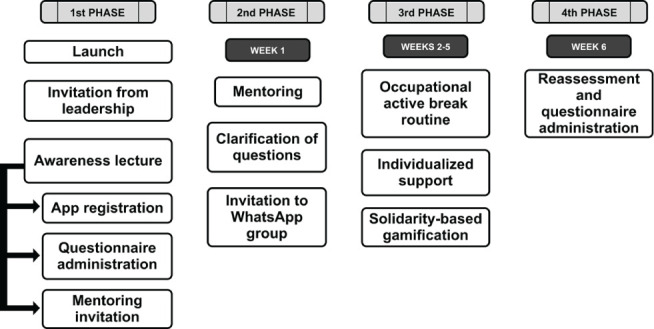 Figure 1
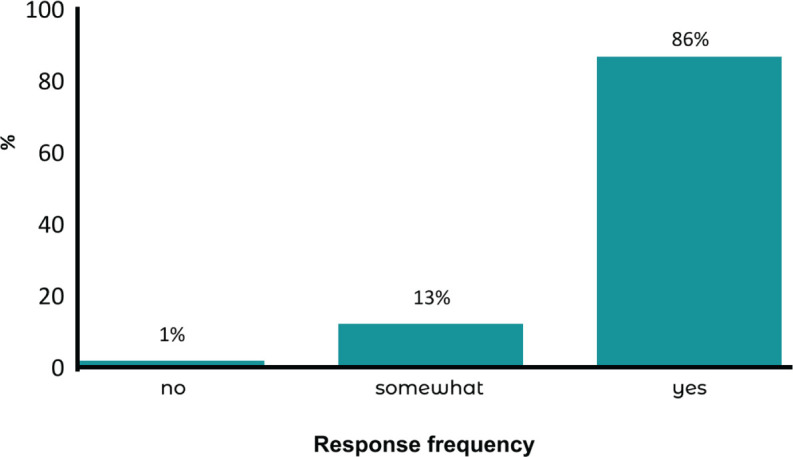 Figure 2
| Active break routine | p-value | ||||||||||
|---|---|---|---|---|---|---|---|---|---|---|---|
| Never | Rarely | Once/day | 2-3 times/day | 4 times/day | |||||||
| Pre n (%) | Post n (%) | Pre n (%) | Post n (%) | Pre n (%) | Post n (%) | Pre n (%) | Post n (%) | Pre n (%) | Post n (%) | ||
| Overall | |||||||||||
| Workers n = 93 | - | - | - |
| - |
| - |
| - |
| < 0.001 |
| Age group (years) | |||||||||||
| 18-29 | - | - | - | - | - | 5 (33) | - | 5 (33) | - | 5 (33) | < 0.001 |
| 30-39 | - | - | - | 3 (7) | - | 8 (19) | - | 25 (58) | - | 7 (16) | |
| 40-49 | - | - | - | 2 (7) | - | 4 (15) | - | 20 (74) | - | 1 (4) | |
| 50-59 | - | - | - | - | - | 2 (25) | - | 4 (50) | - | 2 (25) | |
| Sex | |||||||||||
| Female | - | - | - | 3 (5) | - | 13 (21) | - | 36 (57) | - | 11 (18) | 0.001 |
| Male | - | - | - | 2 (7) | - | 6 (20) | - | 18 (60) | - | 4 (13) | |
| Job role | - | - | < 0.001 | ||||||||
| Leadership | - | - | - | 1 (4) | - | 5 (19) | - | 17 (65) | - | 3 (11) | |
| Staff | - | - | 4 (6) | - | 14 (21) | - | 37 (55) | - | 12 (18) | ||
| Occupational sedentary behavior (hours per day) | Pre (n = 93) | Post (n = 93) | p-value |
|---|---|---|---|
| n (%) | n (%) | ||
| More than 10 | 18 (19.4) | 9 (9.7) | < 0.001 |
| 8-10 | 42 (45.2) | 32 (34.4) | |
| 5-7 | 31 (33.3) | 37 (39.8) | |
| 1-4 | 2 (2.2) | 15 (16.1) | |
| Weekly exercise frequency | |||
| None | 27 (29.0) | 10 (10.8) | < 0.001 |
| 1 | 11 (11.8) | 5 (5.4) | |
| 2 | 11 (11.8) | 14 (15.1) | |
| 3 | 18 (19.4) | 15 (16.1) | |
| 4 | 9 (9.7) | 17 (18.3) | |
| 5 | 9 (9.7) | 18 (19.4) | |
| 6 | 5 (5.4) | 8 (8.6) | |
| 7 | 3 (3.2) | 6 (6.5) | |
| Energy and vitality at work | |||
| Discouraged, no energy or vitality | 11 (11.8) | - | < 0.001 |
| Low energy and vitality | 23 (24.7) | 2 (2.2) | |
| Some energy and vitality | 28 (30.1) | 29 (31.2) | |
| Energetic and vigorous | 27 (29.0) | 53 (57.0) | |
| Highly energetic and vigorous | 4 (4.3) | 9 (9.7) | |
| Stress perception | |||
| Constantly | 5 (5.4) | 1 (1.1) | < 0.001 |
| Very often | 18 (19.4) | 6 (6.5) | |
| Occasionally | 38 (40.9) | 27 (29.0) | |
| Rarely | 30 (32.3) | 44 (47.3) | |
| Not at all | 2 (2.2) | 15 (16.1) | |
| Back pain frequency (times per week) | |||
| Very frequently (4 or more) | 7 (7.5) | 3 (3.2) | < 0.001 |
| Frequently (at least 2-3) | 27 (29.0) | 5 (5.4) | |
| Occasionally (1) | 36 (38.7) | 43 (46.2) | |
| None | 23 (24.7) | 42 (45.2) | |
| Sleep quality | |||
| Very poor | 3 (3.2) | - | < 0.001 |
| Poor | 39 (41.9) | 20 (21.5) | |
| Good | 41 (44.1) | 51 (54.8) | |
| Very good | 10 (10.8) | 22 (23.7) |
Peer Reviews
No public reviews on file for this paper yet. If you reviewed it on a platform where reviews are public (OpenReview, ICLR, NeurIPS, ICML), you can paste yours below so the community can read it here.
Videos
No videos yet. Explain this paper in a talk, walkthrough, or lecture? Add one.
Taxonomy
TopicsCanadian Policy and Governance · SAS software applications and methods · Census and Population Estimation
INTRODUCTION
The workplace — particularly in roles that involve prolonged sitting — plays a central role in managing sedentary time. Jobs that require continuous computer use can lead employees to remain seated for over 80% of the workday, increasing the risk of sedentary behavior.^1^ This behavior is associated with negative health outcomes such as fatigue, heightened stress reactivity, and musculoskeletal disorders, all of which compromise both productivity and employee well-being.^2^ Strategies such as active breaks, movement, and brief exercises have shown potential to mitigate these effects and improve quality of life in occupational settings.^1^
Moreover, prolonged sedentary time in the workplace is closely tied to excessive sitting, which has become one of the leading public health concerns globally. Sitting time is a significant risk factor for increased mortality and the prevalence of noncommunicable diseases, including cardiovascular disease, diabetes, and certain types of cancer. It is also linked to mental health issues. Beyond individual health impacts, sedentary behavior carries a substantial global economic burden by straining health care systems and affecting the financial stability of both individuals and societies.^1^ Thus, initiatives aimed at reducing sedentary behavior — especially in workplace — are critical for promoting public health and lowering the economic burden it imposes.
As society transitions from a physically active culture to a technology-driven one that minimizes physical effort, new challenges emerge regarding the sedentary habits that support seated work.^3^ Despite its adverse health effects, sedentary behavior tends to persist due to the convenience afforded by modern technology and routine-based lifestyles. Studies suggest that addressing this issue requires shared responsibility, particularly among workers themselves, to promote health and productivity. Evidence-based multicomponent interventions — such as active breaks — are recommended to reduce sitting time in workplace.^4-7^
Therefore, the present study investigated the potential effects of a multicomponent active break program implemented during the workday, with a focus on daily physical activity and workers’ self-perceived well-being and productivity. The findings may serve as a foundation for developing coordinated guidelines and actions to institutionalize active breaks as an accessible, effective strategy to mitigate the health impacts of sedentary behavior in workplace and to promote workers’ health and safety.
METHODS
This was an intervention study with a quasi-experimental design, characterized as a single-arm study (without a control group) with pre- and post-intervention assessments. A multicomponent method was applied throughout 5 weeks in a real-life setting. The study included an initial lecture, an individual interview (mentoring), a support group, and the use of an application available on both desktop and mobile devices. Data collection was based on self-reports. The intervention was structured into four main phases to assess the feasibility and perceived benefits of implementing a routine of active breaks during the workday of office workers (Figure 1).
Implementation protocol procedure of the Occupational Active Break Routine® program.App = application.
The study protocol was approved by the Human Research Ethics Committee (Protocol No. 6.335.707), and all participants were provided with an informed consent form, which was accepted remotely prior to participation in the study.
SAMPLE
The study included 93 remote office workers of both sexes whose occupational roles and responsibilities were sedentary, working sitting at a table. Participants were eligible to participate if they met the following criteria: (1) accepted the invitation from company leadership; (2) attended the awareness lecture; (3) registered in the application (app); (4) completed the structured questionnaire; (5) agreed to participate in the study; (6) were between 18 and 59 years old; (7) were physically capable of performing activities independently; (8) were employed by the company; (9) were not on vacation during the intervention period; (10) held administrative roles performed primarily while seated at a desk with a computer; and (11) agreed to attend the mentoring session within 7 days of the awareness lecture. Interested participants were instructed to attend a presentation led by the principal investigator to receive guidance, complete registration, and undergo initial assessment.
PROCEDURE
The first phase consisted of launching the program, which included an invitation from company leadership, followed by participation in a 1-hour remote lecture aimed at raising awareness about the risks of prolonged sitting, the importance of active breaks for productivity and well-being, and guidance on the protocol’s goals and the app’s usability. Participants were also registered through the app and given access to a scheduling channel to book a 45-minute one-on-one session for further guidance on the routine, goals, and use of the app.
Following an internal communication campaign, the 60-minute awareness and orientation lecture was scheduled remotely. All company employees were invited to register in the app, complete the initial questionnaire, download the app to their smartphones, and keep the web version open on their work computers. All procedures and activities were conducted remotely.
After the initial lecture, participants attended an individual 60-minute mentoring session, aimed at reinforcing guidance on incorporating active breaks into the daily work routine, demonstrating the app’s functionality, and promoting acceptance and understanding of its application.
Throughout 4 weeks, participants were encouraged to engage in daily active break routines. Communication and awareness-raising efforts were implemented during the first week to reinforce the study’s information and stimulate participation. All participants had ongoing access to the study researcher for questions and technical support. On the final day of the fifth week, each participant received a personalized link via a messaging app (WhatsApp^®^) to complete the follow-up questionnaire, with a deadline of up to 3 days for submission. All participants were encouraged to remain physically active and engage in recreational or sports activities during their free time. They were informed that participation in the active breaks was voluntary and incorporated into their regular working hours, in compliance with the legally mandated break periods as outlined in Article 71 of the Brazilian Consolidation of Labor Laws (CLT, 1943).
ACTIVE BREAK ROUTINE
The active break routine consisted of four breaks throughout the workday, spaced 2 hours apart.^7^ The program was structured in the following manner: participants were first introduced to the concept of an active break, defined as a deliberate interruption of sitting time to move the body for 3-5 minutes, through activities such as jumping jacks, stretching, functional exercises, or dancing. Everyday activities such as walking to another room, hydrating, or eating were not considered active breaks.
Participants were encouraged to perform the first active break at the beginning of the workday, either by following video tutorials available in the app or individually. The second break was scheduled 2 hours after starting work, the third after returning from lunch, and the fourth 2 hours later — totaling four breaks per day, or approximately 12-20 minutes of movement. Although suggested times were based on common work schedules, participants were allowed flexibility in timing as long as the 2-hour interval between breaks was maintained.^7^
SOCIODEMOGRAPHIC QUESTIONNAIRE
Upon registering in the app, participants completed a self-report sociodemographic questionnaire consisting of only closed-ended items. The purpose was to collect demographic data such as age, sex, height, and weight (used to calculate body mass index [BMI]), professional role (leadership or staff) as well as behavioral and emotional variables related to work. These included occupational sedentary behavior,^8,9^ frequency of daily active breaks,^10,11^ weekly exercise frequency,^12^ perceived energy and vitality at work,^13^ subjective stress perception,^14^ lower back pain,^15^ and sleep quality.^16^ Questions were derived from validated, linguistically adapted scales.
After the fifth week of intervention, the same questionnaire was administered again for post-intervention analysis, including two additional closed-ended questions to assess acceptability and participant satisfaction (Appendix 1).
MENTORING
The individualized meeting for reinforcement and guidance on the routine and app usage was structured in three phases. In the first phase, the specialist reviewed the participant’s responses to the sociodemographic questionnaire and discussed their current situation. In the second phase, barriers, limitations, and goals for implementing the routine were identified. In the third phase, the participant described their daily work routine, and strategies were developed to incorporate active breaks at the suggested times, aiming to encourage daily practice and minimize non-compliance.^7^ All participants were informed that the active breaks did not need to be performed at exact scheduled times, but rather within the proposed time intervals.^7^
APPLICATION
To support the implementation of active breaks, a specialized app was used to manage sitting time and promote workplace movement. Available in Portuguese and accessible on both mobile and desktop versions, the app sent scheduled reminders aligned with the guidance provided during mentoring sessions and offered guided video lessons directly on the participants’ work computers.
DATA ANALYSIS
A qualitative and quantitative (mixed methods) approach was adopted to evaluate, compare, and assess the feasibility, acceptability, and benefits of incorporating active breaks into the workday, as well as other relevant variables.
For sociodemographic analysis, frequency analysis was used to determine participants’ age, sex, BMI, and job role for sample stratification. Descriptive statistics were then applied by frequency distribution to assess the following sample characteristics: Active Breaks (AB), Occupational Sedentary Behavior (OSB), Weekly Exercise Frequency (WEF), Perceived Energy and Vitality at Work (PEVW), Frequency Of Back Pain (FBP), Perceived Stress (PS), and Sleep Quality (SQ).
To assess program adherence, the total sample was stratified by age group, sex, and job role. Frequency analysis was then conducted pre- and post-implementation of the active break routine, both overall and by category. The Wilcoxon signed-rank test was used to compare paired samples and assess population distribution differences before and after the intervention, under the null hypothesis (H_0_) that there is no significant difference between the group distributions, versus the alternative hypothesis (H_1_) that there is a significant difference — thus assessing program feasibility.
To evaluate changes in daily movement behavior (OSB and WEF), self-perceived well-being and productivity (PEVW, FBP, PS, and SQ), and associations between these variables and the active break routine, the Wilcoxon test was again used for paired-sample comparisons to determine whether the pre- and post-intervention distributions were significantly different. The same hypotheses (H0 and H1) were applied.
Descriptive analysis was used to assess the perceived benefits and satisfaction of participants. Acceptability and satisfaction were evaluated using the number and percentage of responses per category. Open-ended responses to the question “Why?” were also analyzed to identify patterns in perceived benefits.
Statistical analyses were conducted with a significance level of p < 0.05, and p-values > 0.05 were interpreted as sufficient evidence to reject the null hypothesis in favor of the alternative. All analyses were performed using IBM SPSS Statistics for Windows, version 25.0 (IBM Corp., Armonk, N.Y., USA).
RESULTS
Initially, 106 employees accepted the invitation to participate in the study. During the mentoring phase, 3 participants were excluded for not meeting the eligibility criteria due to dismissal, vacation, or being over the age of 60. A total of 103 participants qualified and agreed to participate in the study. Of these, 93 participants (90%) completed all study procedures — including the awareness lecture, app registration and questionnaire completion, mentoring, 4 weeks of the active break routine, and the post-intervention reassessment — and were included in data analysis.
All participants held desk-based positions involving computer use. Sample consisted predominantly of women (n = 63, 68%) and non-managerial staff (n = 67, 72%). The average age was 39 years (standard deviation [SD], 9.33 years). At the start of the study, the average BMI was 30.1 (SD, 8.34). Additionally, 29% reported not engaging in physical exercise at the time of intervention, none of the participants practiced active breaks daily, and 98% reported sitting for more than 6 hours per day on workdays (Tables 1 and 2).
Table 2: Work-related behavioral and emotional indicators before and after intervention and their association with the active break routine7
ADHERENCE TO THE ACTIVE BREAK ROUTINE
At the beginning of the study, none of participants engaged in active breaks. After intervention, 95% of workers reported adopting the daily practice of active breaks over a 4-week period (p < 0.001). Of these, 5% reported rare practice, indicating low adherence to the program; 20% practiced 1 active break per day; and 54% and 16% reported implementing 2 to 3 and 4 active breaks per day, respectively, during their workday. No participant reported “Never practicing active breaks” after intervention (Table 1).
When analyzed by category, statistically significant adherence was observed across all age groups (p < 0.001), both sexes (p < 0.001), and job roles (p < 0.001) (Table 1).
EFFECTIVENESS OF THE CONSCIOUS ACTIVE BREAK ROUTINE
Data analysis revealed statistically significant improvements (p < 0.001) in all behavioral and emotional indicators assessed after implementation of active break routine.
For OSB, a significant reduction was observed in the proportion of workers sitting for more than 10 hours per day (19.4% pre-test vs. 9.7% post-test). Simultaneously, there was a marked increase in participants who reduced their sedentary time to 1-4 hours per day, from 2.2% to 16.1%.
Regarding WEF, there was a substantial decrease in the group that did not engage in any physical activity (29% vs. 10.8%), accompanied by an increase in those who began exercising four or more times per week (19.4% vs. 37.7%).
In terms of PEVW, results showed a sharp decline in the proportion of workers feeling discouraged or with low energy (36.5% vs. 2.2%), while the category “energetic and vigorous” significantly increased (29% vs. 57%).
PS also showed notable improvement, with a drop in the frequency of high stress reports (“constantly” or “very often”) from 24.8% to 7.6%. Conversely, the proportion of participants reporting “little” or “no” stress increased from 34.5% to 63.4%.
As for FBP, there was a significant reduction in frequent reports (36.5% vs. 8.6%), while the “none” category rose from 24.7% to 45.2%.
Finally, SQ improved significantly, with a reduction in the proportion of individuals rating their sleep as “poor” or “very poor” (45.1% vs. 21.5%) and an increase in those rating it as “good” or “very good” (54.9% vs. 78.5%). These findings demonstrate that implementing active breaks is associated with significant improvements across multiple occupational behavior and self-reported well-being indicators, reinforcing its potential as a workplace health promotion strategy (Table 2).
PERCEIVED BENEFITS AND SATISFACTION WITH THE ACTIVE BREAK ROUTINE
In the context of implementing the active break routine, workers reported perceived benefits in both productivity and well-being, along with high levels of satisfaction with the practice (Figure 2). Open-ended responses revealed that 73% reported improvements in vitality and productivity, reductions in emotional or physical stress, reduced fatigue, and improved sleep quality. Additionally, 15% mentioned other types of benefits, and 12% reported no perceived improvement. Overall, a high level of satisfaction was observed, with a satisfaction rate of 88.1% (Appendix 1).
The extent to which the active break routine positively impacted participants’ productivity and emotional well-being.
DISCUSSION
The results of this study demonstrate that implementing a multicomponent active break program was feasible, well accepted, and perceived as beneficial by all participants. This finding is significant, considering the predominance of sedentary work among administrative professionals,^17^ driven by increasing automation,^18^ and cultural and organizational barriers that reinforce sedentary behavior.^17^ This context highlights the urgent need for multicomponent approaches to educate workers and mitigate health risks among those with high sedentary occupational demands.^19^
After stratifying the demographic profile of participants — since factors such as job role and age could influence adherence — the program showed high acceptance across all age groups, sexes, and job roles, with acceptance and satisfaction rates of 86% and 88%, respectively, consistent with previous studies.^20,21^ At baseline, none of participants engaged in daily active breaks, likely due to lack of awareness, habitual behavior, or organizational barriers.^17^ After intervention, daily practice increased significantly, with 95% adherence (p < 0.001), corroborating findings by Ojo et al.,^22^ who reported 91% adherence in a similar intervention using computer-based prompts.
Moreover, the frequency of taking two or more active breaks per day rose substantially to 74% (Table 1), which aligns with studies supporting the feasibility of multicomponent interventions for managing sitting time and promoting health benefits.^7,19,23^ These results indicate that the program had considerable potential to raise awareness and reinforce the importance of medium- and long-term multicomponent actions, adapted to individual needs, for sustainable adoption of healthy practices in the workplace.^24^
Several findings highlight the effectiveness of well-structured, technology-supported interventions — such as software and mobile apps that encourage reducing sitting time and promote conscious movement.^23,24^ Programs that include online self-help tools have also been shown to enhance participation in sedentary time management initiatives.^25^
Although the results are promising, the limitations of the study underscore the need for more rigorously controlled research to comprehensively assess the effects of implementing active breaks every 2 hours with technological support in real-world corporate settings. Such studies would help confirm the benefits and provide a deeper understanding of long-term impacts.
There was a consistent level of agreement and high perceived benefit among participants, consistent with Wilkerson et al.,^26^ who also reported strong acceptability of multicomponent programs involving sit-stand desks.
In open-ended responses, 73% of participants reported improvements in vitality, productivity, reduced emotional or physical stress, decreased fatigue, and better sleep quality. Meanwhile, 12% reported no perceived benefit or lack of engagement. These respondents primarily belonged to the groups who answered “Somewhat” or “No,” which confirms a predominantly positive perception overall (Appendix 1). These findings align with Rosenkranz et al.,^27^ who linked reduced sedentary behavior to improved well-being, reinforcing the potential of simple interventions, such as active breaks, to promote physical and mental health.
Although the qualitative nature and design of the study limit definitive conclusions, the results were promising — indicating benefits in sedentary behavior management and self-perceived well-being (Table 2). Additionally, there was a notable reduction in perceived sitting time, particularly among those who had been sitting for more than 10 hours per day, supporting findings from studies highlighting the effectiveness of multicomponent strategies in reducing sedentary behavior.^7^ The practice of active breaks may also contribute to increased motivation for engaging in leisure-time exercise.^5,7,26,28^
With regard to well-being, there was a significant increase in perceived energy and a reduction in stress (p < 0.001), which may be attributed to improved blood circulation, enhanced brain oxygenation, and nervous system regulation. The practice also reduced back pain and improved sleep quality (p < 0.001), possibly due to muscle activation, improved circulation, and better circadian rhythm regulation.^29^
The decision to recommend breaks every 2 hours was based on international guidelines.^5-8,11^ This frequency showed high acceptance, corroborating Rogers et al.,^29^ who found that 2-hour breaks were the most accepted option (89%). In contrast, Hargreaves et al.^30^ reported that 30-minute breaks, although beneficial, were not feasible in real-world workplace settings.
The proposed multicomponent program stood out for its accessibility, low cost, and ease of implementation, requiring no special equipment or structural changes.^30^ These features made it suitable for organizations of various sizes, reinforcing its effectiveness in promoting employee well-being and productivity. This study contributes to the growing body of evidence supporting practical and accessible technological strategies to encourage active breaks in workplace.
STUDY LIMITATIONS
Several challenges were encountered, particularly in terms of methodological control. The main limitation was the inability to establish a control group, as the study was conducted in a real-life setting with the intervention group defined by the participating company. Secondly, all interventions and data analyses were conducted remotely, which made it difficult to control variables.
The active break routine app^7^ was used to support the practice through educational videos, visualization of the routine established during mentoring sessions, and reminders encouraging the breaks. However, due to the characteristics of the sample and the technology used, it was not possible to directly validate the performance of active breaks through the app, as there was no way to confirm whether breaks were actually taken after receiving the reminders. Additionally, many participants may have chosen to perform the breaks without using the available instructional videos, leading to the evaluation of active break frequency through self-report.
Data on sedentary behavior and sitting time were not collected using accelerometers due to logistical constraints. Instead, self-report scales were used, which may carry bias in estimating total daily sitting time and weekly physical activity.
CONCLUSIONS
This study demonstrated that the implementation of a multicomponent program promoting active breaks was feasible as a behavioral intervention for managing sitting time in the daily routine of office workers. The high adherence and acceptability rates reinforce its potential as a promising strategy to promote well-being and productivity among professionals engaged in cognitively demanding, sedentary work.
The findings highlight the importance of practical and accessible interventions to mitigate the negative effects of sedentary behavior in occupational settings, based on participants’ perceptions of their health and well-being. However, further research is needed to confirm and expand upon these findings, as well as to strengthen strategies that support the development of inclusive and sustainable workplace health policies focused on promoting well-being.
This study contributes to the growing body of evidence supporting the implementation of active breaks as an effective approach to improving office workers perceived health and quality of life. Nonetheless, future research should directly evaluate the physiological and clinical impacts of such interventions.
The reference list from the paper itself. Each links out to its DOI / PubMed record.
- 1Kim J Mizushima R Nishida K Morimoto M Nakata Y Multi-component intervention to promote physical activity in japanese office workers: a single-arm feasibility study Int J Environ Res Public Health 20221924168593655473710.3390/ijerph 192416859 PMC 9779824 · doi ↗ · pubmed ↗
- 2Bailey DP Sedentary behaviour in the workplace: prevalence, health implications and interventions Br Med Bull.2021137142503371027010.1093/bmb/ldaa 039 · doi ↗ · pubmed ↗
- 3Shaikh M Chandrasekaran B “Occupational sitting kills; but who cares?”: quantitative analysis of barriers and facilitators of sedentary behavior in Indian white-collar workers Arch Environ Occup Health 2022772961083330568710.1080/19338244.2020.1853018 · doi ↗ · pubmed ↗
- 4Pedisic Z Bennie JA Timperio AF Crawford DA Dunstan DW Bauman AE Salmon J Workplace sitting breaks questionnaire (SITBRQ): an assessment of concurrent validity and test-retest reliability BMC Public Health 20141412492547678810.1186/1471-2458-14-1249 PMC 4289328 · doi ↗ · pubmed ↗
- 5Islam H Gibala MJ Little JP Exercise snacks: a novel strategy to improve cardiometabolic health Exerc Sport Sci Rev.20225013173466962510.1249/JES.0000000000000275 · doi ↗ · pubmed ↗
- 6Safe Work Australia Topic: sitting and standing [Internet]Canberra Safe Work Australia 2023 accessed 2025 Feb 10Available: https://www.safeworkaustralia.gov.au/safety-topic/hazards/sitting-and-standing
- 7Batista-Ferreira L Sandy DD Silva PCMC Medeiros-Lima DJM Rodrigues BM Impact of active breaks on sedentary behavior and perception of productivity in office workers Rev Bras Med Trab.2024222 e 202312133937128610.47626/1679-4435-2023-1213 PMC 11452120 · doi ↗ · pubmed ↗
- 8Tremblay MS Aubert S Barnes JD Saunders TJ Carson V Latimer-Cheung AE Sedentary behavior research network (SBRN) - terminology consensus project process and outcome Int J Behav Nutr Phys Act.2017141752859968010.1186/s 12966-017-0525-8PMC 5466781 · doi ↗ · pubmed ↗