Concurrent Formation of Ice Network within Mineral Colloids with Suppressed Volume Expansion
Hongkun Li, Yunchen Long, Junda Shen, Xinxue Tang, Jiahua Liu, Chong Wang, Binbin Zhou, Bo Li, Jing Zhong, Xiao Ma, Chunyi Zhi, Jian Lu, Yang Yang Li

TL;DR
Mineral particles like calcite can significantly reduce water's volume expansion when freezing, offering new insights into natural processes.
Contribution
Discovery that mineral colloids form ice networks to suppress water expansion during freezing.
Findings
Calcite colloids reduce water expansion by 69% at 243 K.
Ice-like hydration water forms a network bound to mineral surfaces.
Concurrent crystallization limits free water expansion.
Abstract
The freezing behaviors of water are one of the most critical factors that define the formats of life and the landscapes on Earth. The current methods for regulating the freezing behaviors mainly rely on ice-structuring proteins or nanomaterials to hinder the conversion of water into crystalline ice (I h) under low temperatures. Here we report that the presence of minuscule mineral particles can significantly suppress the volume expansion of water upon freezing into ice. In particular, colloidal precipitates of calcite, a primary mineral accounting for ∼4 wt % of the Earth’s crust and the most abundant biomineral on Earth, are able to reduce water expansion by 69% (from 8.4% to 2.6%) at 243 K. The mechanism of expansion suppression involves the formation of a continuous network of fairly ordered “ice-like” hydration waters that are bound to the surface of the mineral colloids at room…
Genes, proteins, chemicals, diseases, species, mutations and cell lines named across the full text — each resolved to its canonical identifier and authoritative record.
Click any figure to enlarge with its caption.
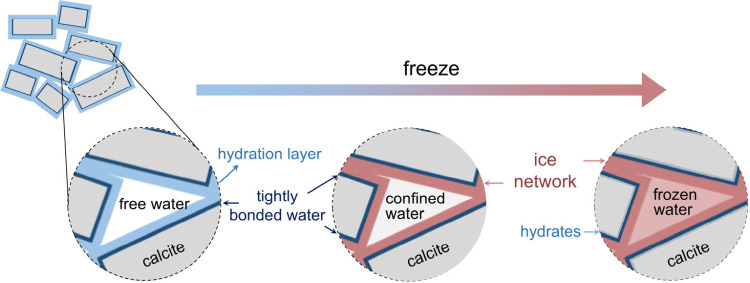 Figure 1
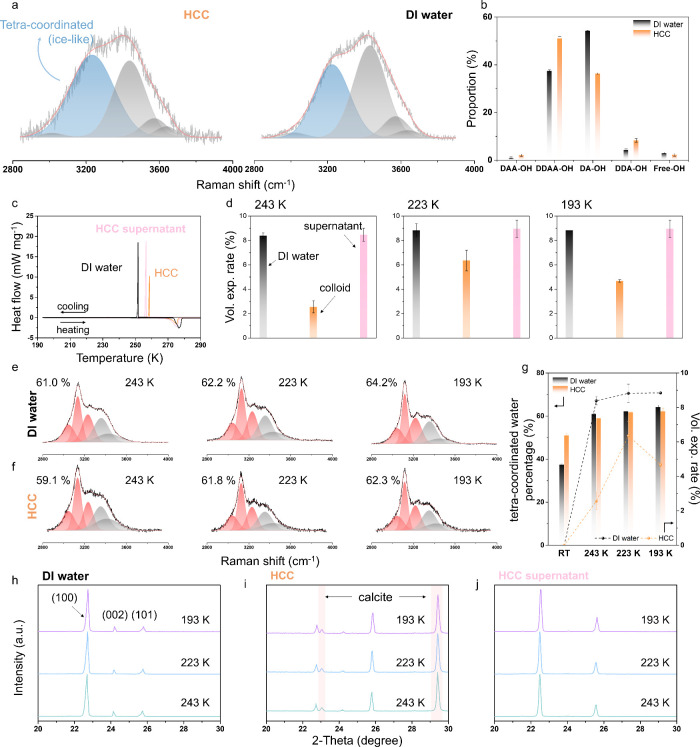 Figure 2
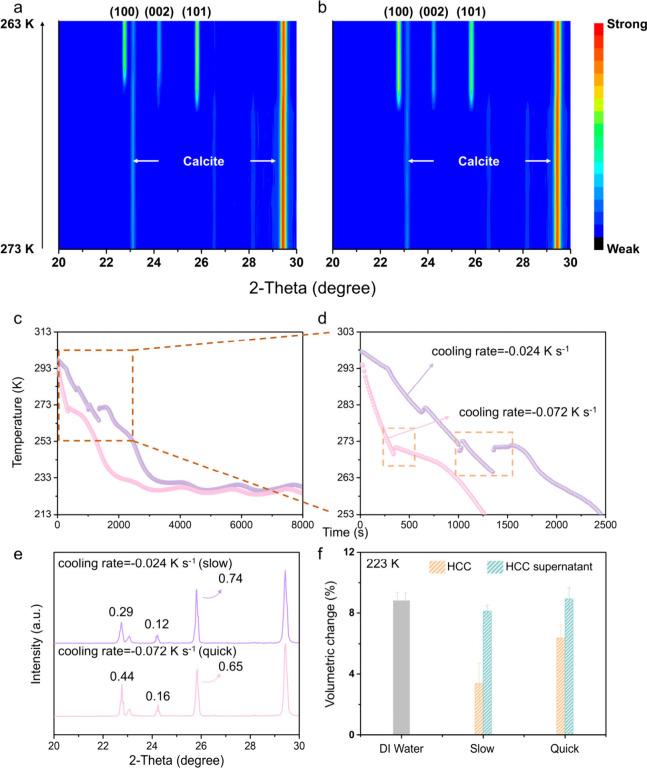 Figure 3
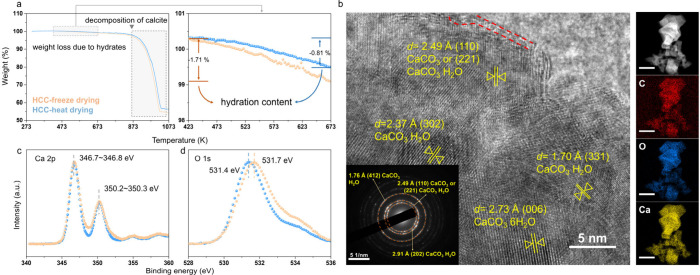 Figure 4
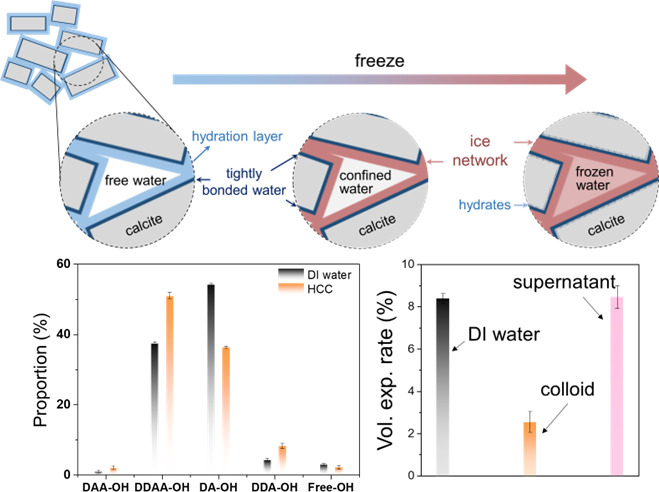 Figure 5
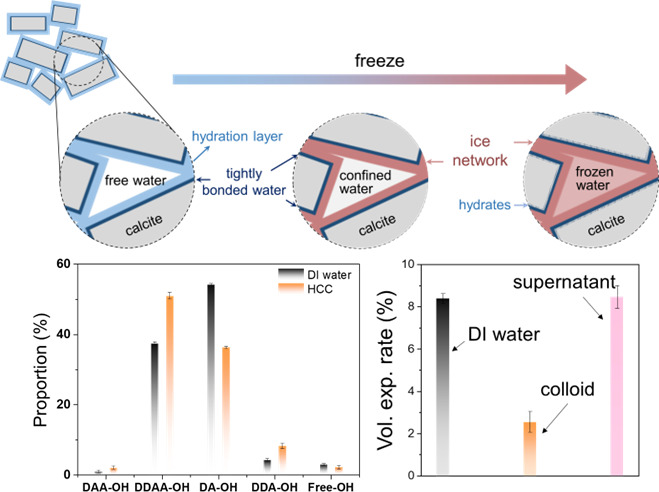 Figure 6
- —Innovation and Technology Commission10.13039/501100003452
- —Science and Technology Planning Project of Guangdong Province10.13039/501100012245
- —Shenzhen Science and Technology Innovation Program10.13039/501100017610
- —Hong Kong JLFS-RGC-Joint Laboratory Funding SchemeNA
Peer Reviews
No public reviews on file for this paper yet. If you reviewed it on a platform where reviews are public (OpenReview, ICLR, NeurIPS, ICML), you can paste yours below so the community can read it here.
Videos
No videos yet. Explain this paper in a talk, walkthrough, or lecture? Add one.
Taxonomy
TopicsCalcium Carbonate Crystallization and Inhibition · Origins and Evolution of Life · nanoparticles nucleation surface interactions
The unique freezing behaviors of water are essential in various fields, such as biology, geology, industry, and agriculture. ?−? ? ? ? ? ? ? ? ? ? The most interesting feature is the unusual volumetric expansion upon freezing into crystalline ice I h, which is not only critical for preserving aquatic life in cold climates but also a major cause of biological frostbite. ?−? ? The water molecule coordinates with 0 to 4 neighbors at the liquid state, whereas I h ice consists of stacks of puckered hexagonal planes with each water molecule forming 4 hydrogen bonds (3 in the plane and 1 connecting the adjacent plane).? The abnormal volume expansion upon freezing is a result of the formation of a more open lattice held up by a larger number of hydrogen bonds.? Originally, ice-structuring proteins (ISP) rich in alanine, threonine, galactose, and N-acetyl galactosamine were believed to possess a high surface energy that can tightly bind to free water through hydrogen bonds and prevent them from turning into I h ice, slowing down ice growth and enabling varied thermodynamic properties of ice. ?,? Similar regulatory effect on water freezing behavior was also discovered in polymer materials that are capable of strong bonding with water molecules. ?−? ? ? However, a detailed and systematic study of the ice-binding and nonice-binding faces of antifreezing proteins (AFP) provides a deep understanding of ice-structuring behavior. The nonice-binding face of AFP, due to its low compatibility with ice order, disrupts the hydrogen bonding network of water and thus becomes the core strength to inhibit the ice crystal growth, whereas the ice-binding faces facilitate the formation of the ice lattice.?
There are very few types of inorganic materials (mainly mesoporous silica and carbon nanomaterials) that are recognized as ice-structuring materials. For mesoporous silica, smaller pores were reported to more effectively promote the emergence of the less common ice phase I c, due to the larger content of interface water and the stronger confinement effect.? Carbon-based materials have also attracted great attention in recent years for their influence on the freezing behaviors of water: Oxidized carbon nanomaterials were used to study the heterogeneous ice nucleation.? Subsequently, through altering the size of graphene oxide nanosheets, the existence and the size range of critical ice nucleus during water freezing were experimentally demonstrated for the first time.? Graphene oxide and oxidized quasi-carbon nitride quantum dots were shown to be good inhibitors for the growth or enlarged grain size of ice. ?,? Moreover, carbon nanotubes have a remarkable impact on the phase transformation of water confined within them: a single-walled carbon nanotube with a diameter of 1.05 nm can elevate the melting point of the ice trapped inside to even above 105 °C.?
Although researchers have made important discoveries in the freezing behaviors of water, ?,? there is a lack of effective ways to address the grand challenge of controlling the volume expansion of water upon freezing into I h. Here this study discloses that substantial suppression of the volume expansion of water upon freezing into ice (e.g., from 8.4% to 2.6% at 243 K) can be achieved via the minuscule particles of minerals, the most common and ubiquitous components of Earth’s crust, e.g., calcite which is a primary component of sedimentary rocks such as limestone and marble, comprises ∼4 wt % of the crust, and plays a significant role in biomineralization, geological processes and carbon cycling. ?,? Different from the previous studies which focus on the formation of ice within rocks and the counterforce provided by the rock structures or the capillary force against expansion during freezing-thawing cycles.? The suppression of expansion via flowable mineral colloids is achieved through the formation of a hydrogen bonding network at the mineral surface at room temperature. These underscore the vital role of minerals as a key factor in understanding many important issues such as historical relics conservation, evolution of life, geomorphic changes, and soil formation.
As mentioned above, the extraordinary ice-regulating capabilities of organic macromolecules and inorganic nanomaterials are attributed to two key factors in literature: the strong interactions between water and substrates (e.g., the formation of surface hydration on ISP) and the spatial confinement of water (e.g., as in mesoporous silica or carbon nanotubes). In this context, closely packed mineral colloids represent a potentially significant class of undiscovered ice-structuring materials. The abundant metal or oxygen ions present on the surfaces of these colloids can form strong hydrogen bonds with adjacent water molecules, resulting in the creation of appreciable surface hydration layers. These layers may exhibit a lower density than free water due to their relatively ordered structure, leading to less expansion upon freezing. Furthermore, when mineral colloids are closely packed, the surface hydration layers come into contact with one another, forming a continuous hydration network throughout the colloidal system. Upon cooling, these hydration layers facilitate heterogeneous nucleation, enabling concurrent and rapid freezing to form a continuous nanostructured ice framework. This framework can exert a confinement effect on the interstitial free water trapped among the colloidal particles (the volumetric ratio of water in colloids is about 70% and the dominant pore sizes of all samples after drying are below 10 nm). Therefore, the combination of strong surface bonding with buffering effect and spatial confinement allows for regulated freezing behaviors with significantly reduced volume expansion of water in closely packed mineral colloids (Figure).
Here we take calcite, one of the most abundant minerals on Earth, as an example to verify the above-proposed mechanism. Colloidal calcite was produced by simply mixing the CaCl_2_ and Na_2_CO_3_ solutions, followed by repetitive washing and centrifugation to remove salt in the water phase and to closely pack the colloidal particles (denoted as hydrated calcite colloids, HCC). Characterizations showed that the produced colloidal system possesses the calcite phase (Figure S1a), a particle size range from a few hundred nanometers to approximately 2 μm (Figure S1b), high viscosity and solid-like storage/loss modulus that are typical for colloidal materials (Figure S1c,d), and a total water content of 42.7 wt % (Figure S1e). Raman spectroscopy analysis confirmed the presence of multiple hydration species (Figurea). Following previous research,? the water signal at high wavenumbers was divided into five peaks at 3014, 3226, 3432, 3572, and 3636 cm^–1^, corresponding to DAA–OH, DDAA–OH, DA–OH, DDA–OH, and free H_2_O, respectively (D and A indicate donor and acceptor of the hydrogen bond). Notably, the percentage of tetra-coordinated water (DDAA–OH) (also referred to as “ice-like” water) reached 51.1%, which was significantly higher than the DI water (37.4%) (Figureb and Figure S2), indicating that calcite particles considerably enhance the content of more ordered “ice-like” water in the colloidal system. The contact angle test in Figure S3 further verifies the enhanced formation of tetra-coordinated water within HCC is not attributed to the hydrophobic surfaces proposed previously? but associated with the hydration ability of calcite itself.
Moreover, the differential scanning calorimetry (DSC) measurements found that water in HCC froze at a higher temperature (258.7 K) than the DI water (251.7 K), demonstrating that the presence of calcite particles facilitates the freezing of water (Figurec). Interestingly, after frozen at low temperatures, water in HCC displayed much lower volume expansion rates than DI water, with an expansion rate (calibrated according to the water volume ratios) recorded to be only 2.6% at 243 K, compared to 8.4% for DI water at the same temperature (Figured). The volume expansion rate increased at lower temperatures for water in HCC but still significantly lower than DI water: 6.4% at 223 K and 4.7% at 193 K, compared to 8.8% for pure water at both temperatures. To confirm the above-observed reduced volume expansion, another displacement method that employed ethanal as the soaking media was used, showing similar measurement results (Figure S6).
In-situ Raman techniques were used to study the bonding states and lattice structures during the cooling process (Figuree,f). Upon cooling, HCC and DI water both exhibited an increase in the content of tetra-coordinated water molecules.? It is well documented that the volume expansion of water upon freezing into ice is due to the repulsion caused by the formation of additional hydrogen bonds or tetra-coordinated water. First, water in HCC had fewer hydrogen bonds forming upon freezing than DI water, indicating that its relatively lower degree of structural rearrangement or repulsion occurs upon freezing (Figureg). Moreover, from the normalized amount of tetra-or-more-coordinated water molecules and the calculated contribution coefficients of the formation of hydration layer (eq S4, Table S1), it can be seen that the hydration water of tetra-coordinated hydrogen bonds is critical for enabling the antiexpansion effect. The lattice structures of ice at different temperatures were recorded in X-ray diffraction patterns (Figureh–j and Figure S7). The growth of ice in HCC was distinct from that of DI water or its supernatant, showing a noticeable orientation preference: The (101)_ Ih _ peaks were significantly higher than the (100)_ Ih _ ones, contrary to the behavior observed on ice and the supernatant (Figureh–j). This pattern is similar to those seen in antifreezing polymers, which also enhance the prominence of the (101)_ Ih _ peak,? indicating the strong ice-regulating effect of HCC.
For comparison, saline calcite colloids (SCC) were synthesized using the same method (e.g., centrifuged at 5000 rpm after reaction to precipitate the colloidal particles) but without additional washing with DI water. SCC exhibited the same phase of calcite as HCC (Figure S8a), but a lower viscosity and a lower content of tetra-coordinated water (Figure S8b–d) (the exact concentration of tetra-coordinated water was calculated according to three random tests in Figure S9), revealing that the existence of the sodium and chloride ions in the liquid phase weakened the hydrogen bonding between calcite and its surface hydration and thus its antiexpansion capability. Expectedly, relatively higher water expansion rates upon freezing were achieved by SCC (the lowest being 5.6%, observed at 193 K) (Figure S8e). Similarly, loosely packed SCC and HCC (LHCC and LSCC), which were obtained by using a lower centrifuge speed of 2000 rpm, possessed lowered viscosities, decreased contents of tetra-coordinated water, and hence worsened capability to suppress the freezing expansion of water (Figure S10). Besides, based on the tetra-coordinated water’s concentration and expansion rate of DI water, LHCC, and HCC, a linear relationship was revealed (Figure S11): as the amount of tetra-coordinated water rises, the expansion volume rate decreases linearly.
From the above characterizations, the tightly bonded surface hydration and closely packed morphology are counted for the underlying freezing-regulation mechanism of mineral colloids. Specifically, the innermost water layers tightly bonded to the mineral surface possess a high content of tetra-coordinated configurations and a low density (the deep blue layer in Figurea).? They can be viewed as nonfreezable and thus do not make an appreciable contribution to volume expansion upon freezing. Meanwhile, featuring a more ordered “ice-like” structure, these innermost interfacial hydrations offer a ubiquitous large working surface throughout the colloidal material to facilitate the energetically favored heterogeneous nucleation (as evidenced by the fact that HCC can induce a higher freezing point than DI water or its supernatant, Figurec). Furthermore, the outer moderately bounded hydration layers possess more ordered structures less dense than free water and can readily freeze upon cooling. These factors, along with the close contact among the surface hydration layers, facilitate the rapid formation of a continuous ice network when the temperature drops, leaving some free water trapped in the interstitial spaces among the mineral particles (Figure). Under this condition, internal growth of ice received a compression from outer concurrent ice structure, which is revealed by the positive relationship between locations and angle’s increasement in Figure S12. These interstitial water molecules are not only confined but also possibly compressed by the ice network, due to the volume expansion caused by the freezing event of the hydration water, hindering their transformation into crystalline ice (I h).
Note that, to enable the formation of the continuous ice network, the colloidal particles need to be closely packed to allow their surface hydration layers to come in close contact. This is consistent with the above observation that loosely packed HCC and SCC did not offer the same capability to suppress water expansion upon freezing. To further verify this mechanism, in situ XRD measurements were used to monitor the freezing process of HCC and LHCC (Figurea,b). The initial appearance of the (101)_ Ih _ peak before other peaks, resulting from a higher content of tightly bonded hydration water (as for HCC), was recognized as an indicator for the interfacial crystallization of water. The (101)_ Ih _ peak emerged first (1 K ahead of the (100)_ Ih _ and (002)_ Ih _ features) and stayed as the strongest peak for HCC (as shown in Figuresi and ?a,b), whereas the (101)_ Ih _ and (100)_ Ih _ peaks appear simultaneously for LHCC. This sharp contrast indicates that a close-packed morphology is essential for directing the initial ice crystallization exclusively at the mineral surface.
According to the classic nucleation theory, compared to the homogeneous nucleation, the heterogeneous nucleation lowers the energy barrier for forming a critical nucleus for crystal growth by utilizing foreign surfaces, leading to the requirement of a lower undercooling degree, which is desirable to study the contribution of the hydration layer or the surface of mineral colloid. Inspired by this idea, a slow, stepwise cooling approach was employed to optimize the freezing behavior of HCC at the target temperature of 223 K. The cooling rates were recorded using a temperature sensor with an interval of 10 s: 0.072 K s^–1^ for fast cooling and 0.024 K s^–1^ for slow cooling (Figurec,d). HCC displayed more sluggish freezing kinetics upon slow cooling. Observations further showed that the (101)_ Ih _ peakan indicator of interfacial heterogeneous nucleationexhibited a stronger normalized intensity in the slowly cooled sample compared to the rapidly cooled sample (Figuree). Furthermore, the water freezing expansion rate decreased from 6.4% to 3.3%. Based on the classical nucleation theory, heterogeneous nucleation is more effective at initiating crystallization, or freezing, at lower degrees of supercooling, whereas homogeneous nucleation requires higher degrees of supercooling. Consequently, in experiments utilizing a slow, stepwise cooling approach, which imposes a lower degree of supercooling at each step, heterogeneous nucleation achieves a higher nucleation priority compared to homogeneous nucleation in the initial direct cooling experiments. With this difference, the reduction of expansion provides additional evidence that improved heterogeneous nucleation is crucial to the antiexpansion capability (Figuref). This supports the previously discussed mechanism.
To obtain more insights into the hydration-mineral interaction, the composition, surface valence states, and lattice arrangement of freeze-dried HCC were compared with those of heat-dried HCC (343 K for 120 h). Previous research has demonstrated that water molecules can infiltrate the mineral lattice and form mineral hydrates under pressure (i.e., to undergo the chemical reaction of hydration).? As a readily hydrated mineral,? calcite is likely to react with water under pressure, producing various hydration species at the water-calcite interface. The thermogravimetric measurement showed a higher content of tightly bound water, obtained from the weight loss between 423 to 673 K, for freeze-dried HCC (Figurea), indicating the formation of hydrated minerals from freezing.
Exotic surface hydrate species of the freeze-dried HCC were revealed by X-ray photoelectron spectroscopy (XPS) and high-resolution transmission electron microscopy (HRTEM) (Figureb–d and S13). Compared with the XPS spectra of heat-dried HCC, freeze-dried HCC exhibited only minor fluctuations (up to 0.1 ∼0.2 eV) for the C and Ca peaks, but distinct O 1s features, suggesting the distinct chemical states of its carbonate ions and pointing to the presence of ample bound water within the calcite lattice of the freeze-dried HCC. ?,? Furthermore, HRTEM of freeze-dried HCC spotted lattice features characteristic of hydrated calcite (Figureb), which is consistent with the monohydrate calcite phase detected from the selective area electron diffraction (SAED) patterns (Figureb). All of the above observations suggest that a variety of hydrated calcium carbonate products were produced during the freezing process of the closely packed HCC.
To assess the universality of the ice-regulation mechanism observed with minerals, another most common mineral, calcium phosphate, was synthesized into closely packed saline colloids (denoted as SCPC) and hydrated colloids (HCPC, Figure S14), whose viscosities exceed 40000 and 60000 Pa s, respectively. In comparison to HCC, both SCPC and HCPC exhibited a lower content of ice-like hydration (21.5% and 31.4%, respectively) (Figure S14g,h) as well as higher expansion rates during water freezing. For instance, the minimum expansion rate of 3.2% was recorded for HCPC at 243 K, which is 1.3 times greater than that of HCC at the same temperature (Figure S14d). These differences can be attributed to the weaker hydration capability of calcium phosphate compared to calcite, ?,? which further emphasizes the importance of hydration capacity instead of the structural constraint for reducing expansion to a smaller value.
Besides, the particle sizes of all the calcite and phosphate mineral colloids studied in this work range from submicron to 100 μm, as measured using the dynamic light scattering method (Figure S15). For calcite systems, a higher centrifugation rate is able to reduce the particle size, while the washed colloids possess a larger particle size, suggesting the existence of sodium or chlorine ions would increase the surface charge. Interestingly, for tricalcium phosphate, the washed colloids display a smaller particle size, indicating a different influence of the dissolved salt ions on the surface properties of the phosphate colloids. The surface area and the pore size distribution were characterized using nitrogen adsorption/desorption (Figure S16). The dominant pore sizes of all samples are below 10 nm. For calcite colloids, the smaller particle size (as revealed by dynamic light scattering, DLS) does render higher surface areas. Interestingly, the tricalcium phosphate colloids exhibit a larger surface area in spite of their larger particle sizes (as revealed by the above DLS results), suggesting the porous nature of these particles.
In summary, this study reports the remarkable ice-regulating properties of minerals and reveals the important role of surface hydration in the antiexpansion mechanism. We discovered that purely inorganic mineral colloids can effectively suppress the volume expansion rate of water upon freezing at low temperatures (e.g., 8.4% lowered to 2.6% at 243 K) due to a new mechanism: The interfacial water layers on the mineral surfaces feature a more ordered “ice-like” structure and form a continuous network in a colloidal system with closely packed mineral particles. Upon cooling, they concurrently freeze into an ice framework with the aid of heterogeneous nucleation, accompanied by less volume expansion, while confining the interstitial free water. Therefore, minerals, the most ubiquitous, abundant, diverse, and “dirt-cheap” materials on Earth, are now added to the family of ice-regulating materials, bringing fresh insights into the various water-related fields, such as mineralogy, geology, astronomy, biomineralization, and cryopreservation.
Supplementary Material
The reference list from the paper itself. Each links out to its DOI / PubMed record.
- 1Knight C. A.De Vries A. L.Oolman L. D.Fish antifreeze protein and the freezing and recrystallization of ice Nature 1984308595629529610.1038/308295 a 06700733 · doi ↗ · pubmed ↗
- 2De Vries A. L.Biological antifreeze agents in cold water fishes Comparative Biochemistry and Physiology Part A: Physiology 198273462764010.1016/0300-9629(82)90270-5 · doi ↗
- 3Davies P. L.Hew C. L.Biochemistry of fish antifreeze proteins FASEB J.1990482460246810.1096/fasebj.4.8.21859722185972 · doi ↗ · pubmed ↗
- 4Yang D. S. C.Sax M.Chakrabartty A.Hew C. L.Crystal structure of an antifreeze polypeptide and its mechanistic implications Nature 1988333617023223710.1038/333232 a 03368002 · doi ↗ · pubmed ↗
- 5Segovia R. A.Pennington R. T.Baker T. R.Coelho de Souza F.Neves D. M.Davis C. C.Armesto J. J.Olivera-Filho A. T.Dexter K. G.Freezing and water availability structure the evolutionary diversity of trees across the Americas Science Advances 2020619 eaaz 537310.1126/sciadv.aaz 537332494713 PMC 7202884 · doi ↗ · pubmed ↗
- 6Pawlowicz R.Mc Dougall T.Feistel R.Tailleux R.A historical perspective on the development of the Thermodynamic Equation of Seawater–2010 Ocean Sci.2012816117410.5194/os-8-161-2012 · doi ↗
- 7Mc Dougall T. J.Barker P. M.Feistel R.Galton-Fenzi B. K.Melting of ice and sea ice into seawater and frazil ice formation Journal of Physical Oceanography 20144471751177510.1175/JPO-D-13-0253.1 · doi ↗
- 8Koop T.Luo B.Tsias A.Peter T.Water activity as the determinant for homogeneous ice nucleation in aqueous solutions Nature 2000406679661161410.1038/3502053710949298 · doi ↗ · pubmed ↗