AI-driven routing and layered architectures for intelligent ICT in nanosensor networked systems
Alaa Kamal Yousif Dafhalla, Tahani Abdalla Attia Gasmalla, Ameni Filali, Nada Mohamed Osman Sid Ahmed, Tijjani Adam, Mohamed Elshaikh Elobaid, Subash Chandra Bose Gopinath

TL;DR
This paper reviews how AI and modern communication technologies can enhance nanosensor networks for healthcare, environmental monitoring, and smart infrastructure.
Contribution
It introduces a unified framework for intelligent, resource-efficient nanosensor communication systems using AI and novel architectures.
Findings
Machine learning improves data routing, anomaly detection, and predictive maintenance in nanosensor networks.
Edge computing and cloud federated models enhance system performance in terms of latency and energy efficiency.
Biological-inspired solutions and quantum-based learning offer potential for addressing computational and privacy challenges.
Abstract
This review examines the emerging integration of nanosensor networks with modern information and communication technologies to address critical needs in healthcare, environmental monitoring, and smart infrastructure. It evaluates how machine learning and artificial intelligence techniques improve data processing, energy management, real-time communication, and scalable system coordination within nanosensor environments. The analysis compares major learning approaches, including supervised, unsupervised, reinforcement, and deep learning methods, and highlights their effectiveness in data routing, anomaly detection, security, and predictive maintenance. The review also assesses new system architectures based on edge computing, cloud federated models, and intelligent communication protocols, focusing on performance indicators such as latency, throughput, and energy efficiency. Key…
Click any figure to enlarge with its caption.
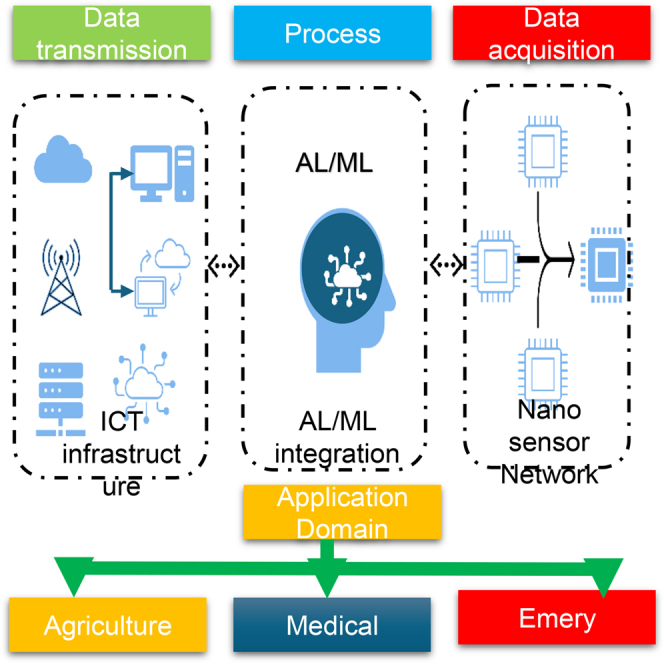 Figure 1
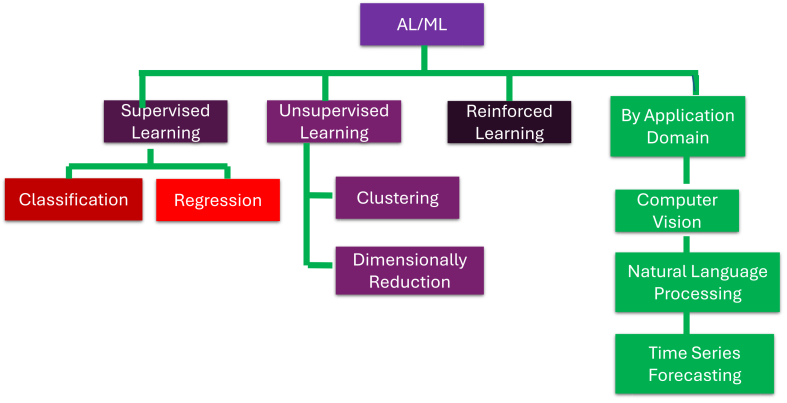 Figure 2
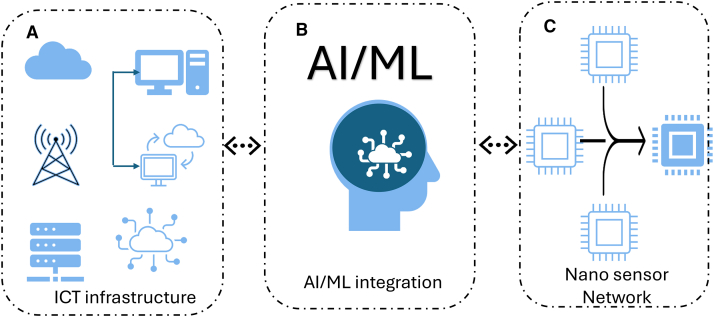 Figure 3
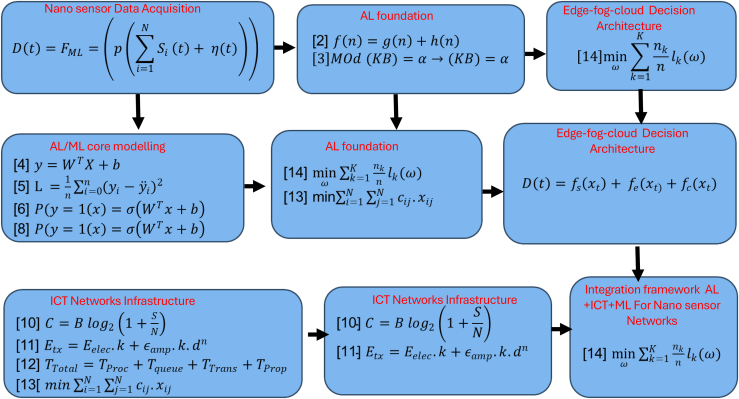 Figure 4
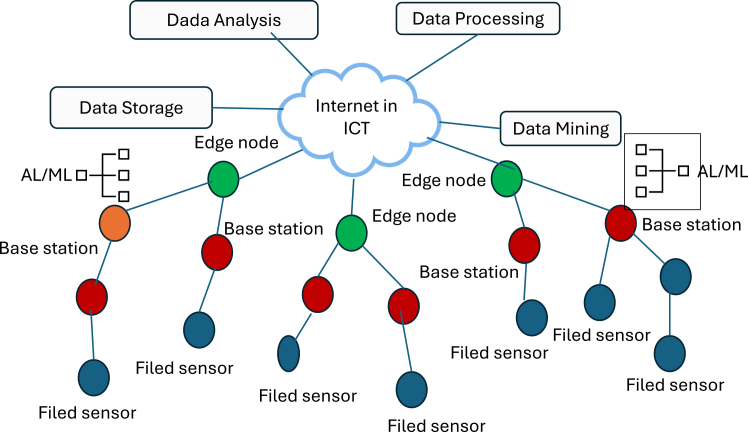 Figure 5
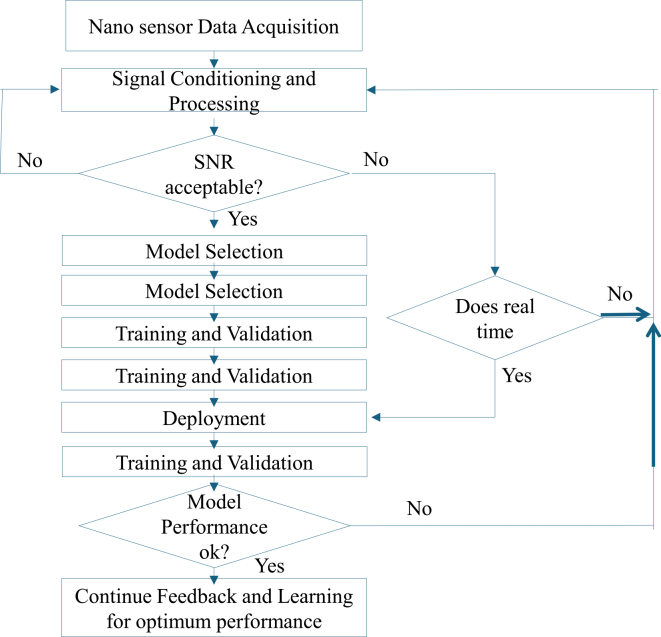 Figure 6
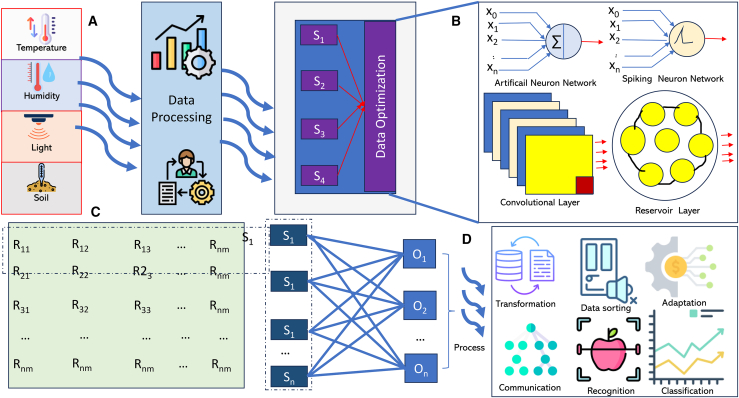 Figure 7
Peer Reviews
No public reviews on file for this paper yet. If you reviewed it on a platform where reviews are public (OpenReview, ICLR, NeurIPS, ICML), you can paste yours below so the community can read it here.
Videos
No videos yet. Explain this paper in a talk, walkthrough, or lecture? Add one.
Taxonomy
TopicsMolecular Communication and Nanonetworks · IoT and Edge/Fog Computing · Software-Defined Networks and 5G
Introduction
Rapid developments in nanosensors—miniaturized sensing devices capable of detecting molecular-level changes—have gained tremendous attention.1 The underlying atomic-scale phenomena enable precise engineering of their surfaces and architectures, establishing nanosensors as pivotal components in the evolution of modern sensing technologies and their seamless integration with information and communication technology (ICT) systems.1^,^2 These sensors exhibit unique characteristics such as high sensitivity, rapid response time, and adaptability for networked or embedded environments, making them highly suitable for real-time monitoring applications.3 The growing demand across diverse sectors—including biomedical diagnostics, environmental surveillance, agriculture, smart cities, and defense systems—has intensified efforts toward developing integrated ICT-enabled nanosensor systems capable of performing autonomously and with high accuracy.4 Within networked ICT infrastructures, nanosensors play a transformative role in enabling intelligent, interconnected, and data-driven operations. Nanosensors allow and facilitate seamless data collections, enabling intelligent systems to perceive, process, and react to dynamic conditions at micro and nano scales.5 To use the full potential of nanosensor networks, there is a growing need toward integrating Artificial Intelligence (AI) and Machine Learning (ML) into ICT frameworks.6 These approaches will allow powerful tools for handling the massive volume and complexity of data generated by nanosensors.7 Recent advances in edge computing and federated learning (FL) enable low-latency, privacy-preserving, and scalable distributed intelligence by training models directly on edge devices without sharing raw data. Moreover, deep reinforcement learning (DRL) have also made it feasible to embed intelligence closer to the sensor nodes. On the other hand, it enables decentralized decision making, adaptive system behavior, predictive maintenance, and anomaly detection.8 This trend is redefining traditional ICT paradigms, transforming passive nanosensor systems into proactive, self-optimizing networks.9 The approach has tremendous advancements; even with this progress, several critical challenges remain, which need serious attention. Nanosensor-enabled networks often operate under stringent protocols and constraints.10 Due to limited computational capacity, energy scarcity, bandwidth limitations, and real-time responsiveness they face unlimited constraints. Moreover, the heterogeneous nature of sensor data, the dynamic topology of sensor networks, and security vulnerabilities further complicate the integration of ML/AI into existing ICT architectures.11 Several challenges such as issues related to scalability, model generalization, data privacy, and hardware compatibility also hinder widespread adoption.12 This review aims to provide a comprehensive and systematic analysis of the current state of the art in ML and AI integration for nanosensor-based ICT systems. We explore various ML paradigms, AI-driven network architectures, and performance enhancement techniques.13 The review categorizes and compares existing methods, highlights application-specific use cases, and identifies key performance indicators.14 Furthermore, it investigates the limitations of current approaches and proposes future directions involving edge intelligence, explainable AI, and sustainable computing for nanosensor networks.15 This study introduces a novel AI-driven framework that integrates miniaturized nanosensor networks with optimized ICT systems to address key challenges in real-time data processing, energy efficiency, and communication reliability. Unlike existing models that focus narrowly on either sensor performance or network protocols, this framework combines hybrid ML techniques including supervised, unsupervised, and RL with edge computing strategies to enable adaptive, scalable, and low-latency decision-making in complex environments. The contribution is further strengthened by benchmarking the framework using multiple publicly available datasets across healthcare, environmental monitoring, and smart infrastructure domains, ensuring reproducibility and cross-domain applicability. This work not only advances the design of intelligent nanosensor networks but also lays the groundwork for next-generation cyber-physical systems with practical impact across critical sectors.
The taxonomy present in Figure 1 categorizes AI/ML methodologies into four principal branches: supervised learning, unsupervised learning, RL, and application-driven approaches.16^,^17 Under supervised learning, methods such as classification and regression are employed to predict labeled outputs, with classification specifically highlighted due to its relevance in categorical prediction tasks.18 Unsupervised learning includes clustering for pattern discovery and dimensionality reduction for data simplification.19 RL represents a distinct paradigm where agents iteratively learn from environmental feedback to optimize decision-making strategies.20 Finally, the taxonomy extends to key application domains, including computer vision, natural language processing, and time-series forecasting highlighting the practical implementation of AI/ML techniques across diverse real-world scenarios.21 The sections explored the AI/ML integration in nanosensor-enabled ICT systems. This review introduces a holistic synthesis that unifies nanosensors, AI/ML, and ICT architectures, a perspective seldom addressed in the existing literature. It emphasizes AI-driven integration frameworks including edge computing, FL, and hybrid ML as transformative enablers for intelligent, adaptive nanosensor systems. The study also provides structured comparative analyses through detailed tables and figures, summarizing nanosensor types, communication strategies, and ML algorithms while outlining key performance trade-offs. Furthermore, the review identifies critical research gaps, notably the scarcity of nanosensor-specific datasets and the complexities of multimodal data integration, thereby establishing a foundation for advancing standardized, scalable, and data-driven nanosensor-ICT convergence.Figure 1. Taxonomy of AI/ML approaches based on learning types and key application domains
AI/ML integration in nanosensor-enabled ICT systems
Figure 2 presents a comprehensive architectural framework that delineates the synergistic integration of nanosensor networks, AI/ML algorithms, and ICT infrastructure, forming a dynamic, self-adaptive cyber-physical ecosystem.22 At its foundation, the architecture embodies a bidirectional and hierarchical data flow, where nanosensors act as the primary data generators, continuously capturing high-resolution, multimodal signals from complex physical environments. These data streams traverse heterogeneous ICT layers spanning edge nodes, fog gateways, and cloud servers where AI/ML models are strategically deployed based on computational demand, latency constraints, and energy availability. The integration of supervised, unsupervised, and RL algorithms within this layered architecture enables context-aware analytics, predictive modeling, and autonomous decision-making, allowing real-time adaptation of sensing and communication parameters.23 The framework operationalizes a closed-loop intelligence cycle, where insights derived from AI inference are propagated back to the nanosensor layer for adaptive calibration, fault detection, and resource optimization.24^,^25 This feedback mechanism significantly enhances system resilience, energy efficiency, and scalability under dynamically changing environmental or physiological conditions. However, despite its transformative potential, this architecture faces notable technical constraints, including communication latency across multi-tier networks, energy depletion at nanoscale nodes, and data heterogeneity that complicates model convergence. Moreover, maintaining security, privacy, and interoperability across distributed AI-enabled layers remains an unresolved challenge that limits large-scale, real-world deployment. Therefore, while the proposed architecture establishes a conceptually robust and integrative foundation for next-generation intelligent nanosensor systems, its practical realization demands further optimization of lightweight learning models, adaptive communication protocols, and cross-layer security frameworks to ensure reliable, efficient, and sustainable cyber-physical intelligence.26Figure 2. Conceptual architecture of a hardware–software co-designed system integrating multimodal sensing(A) data acquisition through ICT infrastructure, (B) AI/ML-based computing of data obtained from diverse sources, and (C) autonomous edge applications enabled by a Nanosensor Network.
The integration of AI and ML within nanosensor-enabled ICT systems can be formally characterized through the computational models and learning functions presented in the equations in Figure 3, which encapsulate the relationships between sensor data acquisition, feature transformation, decision inference, and adaptive system optimization27: Recent studies have increasingly emphasized the need to integrate AI and ML approaches to address persistent limitations in nanosensor performance.28 Traditional nanosensor systems often face challenges such as signal noise, baseline drift, and energy constraints, which significantly affect detection accuracy and long-term reliability.27 To overcome these issues, researchers have developed AI/ML techniques that enhance signal processing, adaptability, and efficiency. For instance, denoising autoencoders and convolutional neural networks (CNNs) have been applied to reduce random noise and improve feature extraction from complex sensor data.29 Similarly, adaptive and online learning algorithms have shown potential in compensating for signal drift by enabling real-time recalibration without manual intervention.30 Moreover, lightweight and energy-efficient ML models are being designed to operate on edge devices, minimizing computational load and extending sensor lifespan under constrained power conditions. By linking these nanosensor limitations with targeted AI/ML strategies, the literature demonstrates a growing shift from isolated algorithmic optimization toward holistic, intelligent sensing frameworks. This integration not only strengthens analytical understanding but also paves the way for the development of autonomous and resilient nanosensing systems capable of performing in dynamic and resource-limited environments.31
Figure 3. Theoretical linkage of AI/ML integration in nanosensor-enabled ICT systems, showing the relationship between learning types and application domains for intelligent data processing and decision-making
Equation 1 models the end-to-end data pipeline, initiating with signal acquisition from an array of nanosensors Si(t), where NNN represents the total number of deployed nanosensors at a given time t. These nanosensors are designed to detect minute variations in physical, chemical, or biological parameters, as mathematically represented in Equation 1. The aggregated signal is affected by noise η(t), which may result from environmental interference, cross-sensitivity, or instrumental drift effects that are more significant at the nanoscale. To ensure that the raw data are usable by AI systems, a preprocessing stage P(⋅) is essential. This stage includes operations such as noise filtering, normalization, feature extraction, and dimensionality reduction, allowing the system to capture meaningful patterns from the data while reducing complexity. The transformed features are then input into an ML model FML(·), such as neural networks, support vector machines (SVMs), or decision trees.31 These models learn from prior data to detect patterns, classify events, and make real-time decisions for adaptive control.32 The final output D(t) represents the intelligent decision or prediction made at time t, based on current and past nanosensor data. This dynamic output can be utilized in various smart environments, including health diagnostics, precision agriculture, environmental monitoring, and industrial automation. By integrating nanoscale sensing with AI/ML inface, such ICT systems achieve higher levels of sensitivity, specificity, and adaptability. Recent studies highlight the effectiveness of these models in real-world systems, validating the importance of both signal fidelity and computational intelligence.32 Moreover, AI systems rely on fundamental mathematical models. One key example is the A∗ search algorithm, commonly used in pathfinding and graph traversal, defined as f(n) = g(n)+h(n), where f(n) is the estimated total cost of the path through node n, g(n) is the cost from the start node to n, and h(n) is the heuristic estimate from n to the goal (Equation 2). This equation helps AI systems make efficient decisions.33^,^34 Similarly, knowledge representation in propositional logic applies the model-theoretic notation Mod(KB) ⊨ α ⇒KB ⊨ α, meaning that if α is true in all models of the knowledge base (KB), then α is entailed by KB (Equation 3). These formulations form the basis for logical reasoning in AI applications.
: Estimated total cost of path through node
n : Cost from start node to
n : Heuristic estimate of cost from n to goal
Similarly, ML uses statistical models to learn from data. In linear regression, the output is predicted as y = w^T^x+b, where x represents input features, w are the weights, and b is the bias term. The Mean Squared Error loss function, , measures the prediction error (Equation 4). For classification, logistic regression estimates probabilities using the sigmoid function . SVMs classify data by maximizing the margin, solving subject to yi(w^T^xi+b) ≥ 1. Neural networks compute outputs through layers using z = ∑(wixi)+b, followed by an activation function a = ϕ(z).34 RL updates state-action values with Q-learning, , where γ is the discount factor, α the learning rate, and r the reward ((Equation 10), (Equation 11), (Equation 5), (Equation 6), (Equation 7), (Equation 8) and 11).
: Input features
: Weights
: Bias
: Output prediction
Logistic Regression (Classification)
SVM
Neural Networks (Forward Propagation)
For a neuron in a hidden layer:
∅(z): Activation function.
RL
α: Learning rate
γ: Discount Factor
r: Intermediate Reward
Q(s,a): Current State
: State, Action, and Next State
In ICT systems, particularly those using nanosensor networks, channel capacity is defined by Shannon’s theorem: C = B log_2_(1 + S/N), where C is the capacity in bits per second, B is bandwidth, and S/N is the signal-to-noise ratio. Wireless sensor energy usage is modeled as: E_tx = E_elec·k + ε_amp·k·d^n^, where E_tx is the energy to send k bits over distance d, E_elec is electronics energy, ε_amp is the amplifier constant, and n is the path loss exponent. Latency in ICT systems is given by: D(t) = fs(xt)+fe(xt)+fc(xt) Equation 13, summing delays from processing, queuing, transmission, and propagation. Routing optimization problems aim to minimize communication cost: min ΣΣ c_ij·x_ij, where c_ij is the cost between nodes i and j, and x_ij is a binary variable indicating link usage. Based on Shannon’s capacity theorem,35
C: Chanel Capacity.
B: Bandwidth.
Energy consumption in wireless sensor networks (WSNs)
: Energy to transmit k bits over distance d. : Energy of Electronicϵamp: Amplifier Energy Constant : Path Loss Exponent
Latency modeling
: Processing delay
Routing Optimization (Objective Function)
: cost of transmission from node i to j
Integration framework—AL+ICT +ML for nanosensor networks.
FL loss aggregation
: loss on device k
: loss on data size
nk: Local data size
Edge Intelligence Decision Function
fs(xt): On-device sensing inference
: Edge server inference
: Cloud inference
: Input data at time t
Integrated systems that combine AI, ML, and ICT utilize FL, edge computing, and hybrid optimization to enhance performance and scalability. FL minimizes global loss across distributed devices as shown in Equation 14: , where lk is the local loss at device k and nk is the local data size. Edge intelligence integrates decisions from local, edge, and cloud models as in Equation 15: D(t) = fs(xt)+fe(xt)+fc(xt), where xt is the input data at time t and fs(xt), fe(xt), and fc(xt) represent the local, edge, and cloud models, respectively. These formulations enable low-latency, energy-efficient, and secure operations, forming the foundation of robust nanosensor-based ICT infrastructures. The convergence of nanosensors, AI/ML algorithms, and ICT technologies allows precision sensing, distributed intelligence, and real-time adaptive decision-making, with nanoscale sensing layers capable of detecting environmental, biological, or chemical parameters with exceptional sensitivity and spatial resolution. The acquired signals, however, are inherently prone to stochastic fluctuations, sensor drift, and environmental interference, which introduce noise and uncertainty into the data stream factors rigorously modeled and quantified in (Equation 1), (Equation 2), (Equation 3), (Equation 4), (Equation 5). As highlighted by Zhang et al.,36 advanced signal processing techniques and ML-based denoising strategies are essential to extract meaningful information, ensure reliable data transmission, and maintain system robustness across varying operational conditions.37 While nanosensors offer high-resolution detection, their output is inherently noisy, necessitating advanced preprocessing pipelines. These pipelines employ techniques such as Kalman filtering, wavelet decomposition, and dimensionality reduction, which enhance signal-to-noise ratio (SNR) and optimize data structure for ML input.38 Upon preprocessing, data enter the ML model FML, wherein supervised or unsupervised algorithms conduct classification, regression, or anomaly detection. Research by Harrou et al.39 provides an expansive foundation on deep learning architectures applicable here; however, their effectiveness in low-power, edge environments is limited due to high computational demands. In contrast,40 emphasize the importance of class imbalance in sensor data, advocating for balanced training to avoid misclassification, especially in anomaly detection tasks such as fault prediction or pollutant level alerting. A pivotal element of modern intelligent nanosensor systems is FL, which addresses privacy, scalability, and communication overhead. Instead of centralizing raw sensor data, FL aggregates model updates from multiple edge nodes while preserving local data sovereignty40^,^41. Another research42 demonstrated the scalability of FL for real-world applications, albeit with trade-offs in convergence speed and model accuracy. Their work contrasts with traditional cloud-centric AI approaches,43 which, while more accurate due to centralized data access, raise significant privacy and latency concerns. To ensure efficiency and feasibility, the underlying ICT framework must be optimized. Shannon’s channel capacity theorem44 defines the theoretical upper bound of data throughput, guiding bandwidth allocation in wireless nanosensor networks. Researchers45^,^46 further developed an energy model detailing the power cost of data transmission based on signal distance and amplification, offering essential insights for energy-harvesting and low-power sensor applications. Nonetheless, their model assumes static topology, which limits its relevance in dynamic, mobile sensor environments. Moreover, latency defined as the total delay from data capture to decision actuation is critically analyzed using the decomposition TTotal = TProc+Tqueue+TTrans+TProp Equation 12.47^,^48 This framework identifies queueing delays as a dominant bottleneck in dense sensor networks, prompting the integration of edge intelligence. Edge intelligence further augments this architecture via a distributed decision function D(t) = fs(xt)+fe(xt)+fc(xt), blending local, edge, and cloud-based inference. Compared with centralized AI systems,49^,^50 this model enhances latency reduction and real-time responsiveness, albeit requiring coordination protocols to ensure model consistency and accuracy across layers. The hierarchical model provides resilience, enabling immediate local decisions while utilizing cloud-level resources for deep insights and long-term planning. Lastly, intelligent reasoning and optimization leverage symbolic AI and classical planning models.51 A∗ pathfinding algorithms and propositional logic support goal-driven decision-making, while linear models and neural networks provide probabilistic inference. However, the limitations of symbolic AI such as inflexibility and brittleness in unstructured environments necessitate hybrid approaches combining symbolic reasoning with neural learning, an area still in active research.52 In the context of edge AI, recent studies have demonstrated that deploying models at the edge can reduce latency from approximately 150 ms to below 50 ms. Additionally, offloading computations to low-power microcontrollers has been shown to decrease energy consumption by up to 40%.53^,^54^,^55^,^56^,^57 These findings provide further support for the technical and performance advantages of edge deployment, enhancing the analytical depth of our discussion. Overall, while the integration of nanosensors with AI/ML and ICT infrastructures demonstrates immense potential, several critical challenges remain. Traditional models, though foundational, often struggle to handle the dynamic, high-dimensional, and privacy-sensitive nature of nanosensor data. Similarly, FL and edge intelligence, despite their promise, require further improvement in algorithmic efficiency, hardware compatibility, and real-world implementation. A comparative synthesis of recent studies highlights the need for adaptive, scalable, and privacy-preserving architectures to fully exploit the capabilities of AI-enhanced nanosensing. The following section provides a general overview of recent efforts in integrating nanosensor technologies within ICT systems.
Overview of nanosensor technologies in ICT
Following the theoretical feasibility analysis conducted in this study, the integration of nanotechnology with ICT has fundamentally redefined the mechanisms through which data are acquired, processed, and utilized across diverse sectors. At the nanoscale, sensor arrays can enable ultra-sensitive, real-time detection of physical, chemical, or biological stimuli, while their integration with ICT infrastructures facilitates high-throughput data transmission, edge-level processing, and intelligent decision-making. This convergence enables the deployment of distributed nanosensor networks capable of in situ analytics, autonomous operation under constrained energy and computational resources, and dynamic adaptation to environmental stimuli through AI-optimized communication protocols and embedded processing architectures.58 Nanosensor technologies, defined by their ability to operate at the molecular or atomic level, offer ultra-sensitive, real-time detection capabilities.59 However, while their potential is vast, the integration of nanosensors into existing ICT infrastructure presents both engineering opportunities and substantial scientific challenges, especially in terms of reliability, standardization, and scalability. Nanosensors are classified into various types based on their specific applications and generally exhibit superior sensitivity and selectivity toward target analytes or environmental conditions compared with conventional sensors. However, like all technologies, they possess both distinct advantages and inherent limitations, which are discussed in detail in the following section.
Types of nanosensors: Capabilities and limitations
Nanosensors exhibit a high degree of functional diversity, typically classified by their transduction mechanisms such as optical, electrochemical, or piezoelectric—and target detection modalities, including chemical, biological, and environmental analytes. Their enhanced performance arises from nanoscale effects like quantum confinement and high surface-to-volume ratios, enabling highly sensitive and selective detection. Chemical nanosensors, particularly those based on carbon nanotubes and metal oxide nanoparticles, have demonstrated exceptional sensitivity to volatile organic compounds and environmental pollutants.60 However, issues such as baseline drift, cross-sensitivity to non-target gases, and long-term stability remain unresolved.61 Biosensors utilizing nanostructured transducers are central to precision diagnostics. Gold nanoparticles and graphene-based platforms have enabled low detection limits and enhanced selectivity.62 Yet, the reproducibility of such biosensors at the point-of-care scale is hampered by challenges in biointerface engineering and surface functionalization consistency.63 Optical nanosensors provide compelling solutions for label-free and multiplexed analysis, employing phenomena such as surface plasmon resonance (SPR) and Förster resonance energy transfer (FRET).64 Despite their demonstrated efficacy under controlled laboratory conditions, the integration of AI with nanosensor systems in real-world environments presents a set of unique and persistent challenges. In complex, dynamic media, such as biological fluids, soil, or urban atmospheres, signal attenuation, photobleaching, and nonlinear environmental interactions can significantly degrade sensor performance and data reliability. These effects not only compromise detection sensitivity but also introduce variability that complicates real-time AI-driven interpretation. Furthermore, the heterogeneity of data from nanosensors operating under diverse conditions demands advanced AI models capable of robust generalization and adaptive learning. Ensuring synchronization between nanoscale signal acquisition and macroscopic decision-making, while maintaining low power consumption, minimal latency, and high fidelity, remains a critical bottleneck. Overcoming these hurdles requires innovations in AI model robustness, noise-aware signal processing, and context-adaptive learning algorithms that can function reliably in the presence of physical constraints inherent to nanoscale sensing.65 Physical nanosensors, notably nano-electromechanical systems, are adept at measuring stress, pressure, or temperature with unprecedented precision.66 However, their inherent mechanical fragility and vulnerability to environmental noise present major challenges for reliable field deployment, especially in dynamic outdoor environments or in vivo biomedical applications where structural stability and signal fidelity are critical.67 The miniaturization to the nanoscale does not inherently guarantee superiority. Instead, it necessitates precise material control, robust calibration protocols, and advanced signal processing frameworks to ensure accuracy and utility across varied deployment scenarios.68
Communication technologies: Bridging the nano-to-macro gap
While the previous section discussed the functional classifications, performance advantages, and limitations of nanosensors across various applications, their effective integration into real-world systems demands more than advanced sensing capabilities. One of the key challenges lies in ensuring reliable and efficient data transmission from the nanoscale domain to macroscopic ICT systems. The following subsection explores Communication Technologies that address this challenge by bridging the nano-to-macro gap, ensuring that sensor data are efficiently captured, transmitted, and utilized in broader networks. The data output of nanosensors must be efficiently communicated, interpreted, and acted upon a task that demands equally advanced communication technologies.69 Conventional wireless protocols like ZigBee and Bluetooth Low Energy offer low-power operation and are suitable for wearable or indoor nanosensor applications.70 However, their limited data throughput and short-range capabilities constrain broader deployments, especially in smart cities or precision agriculture.71 LoRa (Long Range) technology has emerged as a promising alternative, offering extended coverage with minimal energy consumption.72 While ideal for sporadic data transmission from nanosensor nodes in remote areas, its low bandwidth makes it unsuitable for high-frequency or image-based sensing.73 Emerging Terahertz (THz) communications represent a critical leap forward, especially in nano-networks where data rates and node density are exceptionally high.74 Nevertheless, THz systems currently face formidable barriers in terms of signal propagation loss, antenna miniaturization, and channel modeling.75 Additionally, the required nanophotonic and plasmonic components are still in the experimental stage, limiting practical implementations.76 Nano-communication frameworks, particularly molecular and plasmonic communication models, are gaining traction for in-body applications such as drug delivery and neural interfacing.77 These systems are biocompatible and energy efficient but are far from maturity.78 The lack of standardized architectures, synchronization issues, and high latency in molecular propagation make them suitable only for niche applications at present.79 The overarching limitation remains the absence of a unified protocol stack or interoperability model that bridges nanoscale networks with conventional ICT layers. Without this, the vision of seamless nano-macro integration will remain theoretical.80^,^81 Building on the discussion of nanosensor classifications and their communication frameworks bridging the nano-to-macro interface, it becomes evident that the true potential of these technologies is realized through their integration within broader ICT ecosystems. The synergy between nanoscale sensing and advanced ICT infrastructure enables real-time monitoring, intelligent decision-making, and adaptive system responses across various domains. The following section delves into the applications of ICT, emphasizing its transformative impact, integration strategies with nanosensor networks, and the emerging prospects that define the next frontier of smart and connected systems.
ICT applications: Impact, integration, and future prospects
The application landscape of nanosensors within ICT is broad and multidisciplinary, yet practical deployments remain uneven across sectors.82 In healthcare, nanosensors embedded in wearable systems have transformed real-time monitoring of biomarkers such as glucose, lactate, and cortisol.83 Despite this potential, few have achieved widespread clinical adoption due to biosafety concerns, calibration complexity, data privacy issues, and stringent regulatory requirements.84 In agriculture, nanosensors enable detailed soil health analysis, pest detection, and crop phenotyping.85 When integrated with IoT platforms, they support data-driven precision agriculture.86 However, challenges such as economic feasibility, device durability in harsh environments, data ownership, and cybersecurity risks persist, particularly in developing regions.87 Environmental monitoring has advanced significantly with nanosensors capable of detecting heavy metals, pathogens, and greenhouse gases at ultra-trace concentrations.88 Nevertheless, large-scale deployment remains limited due to high production costs, device fouling, and insufficient energy autonomy.89 In smart infrastructure, embedded nanosensors are increasingly used for structural health monitoring of bridges, tunnels, and buildings, providing early warnings of stress or fatigue. Yet, integrating these sensors into existing structures while maintaining long-term energy supply, data fidelity, and network security remains a major challenge.90 Beyond technical barriers, non-technical factors such as regulatory uncertainty, data security, privacy in nanoscale communication, and ethical implications of large-scale sensor deployments are critical concerns. Addressing these requires robust governance frameworks and interdisciplinary collaboration among experts in nanofabrication, systems engineering, data analytics, and cyber-physical systems design. Moreover, evolving regulatory and ethical guidelines are essential to ensure the safe, equitable, and sustainable integration of nanosensor technologies within ICT infrastructures.91^,^92
Table 1 delineates the progressive diversification of nanosensor deployment across biomedical, environmental, and industrial domains, emphasizing the interplay between material design, detection principles, and communication architectures. Chemiresistive nanosensors, particularly those based on metal oxide semiconductors and carbon nanotube (CNT) polymer composites, have gained prominence due to their superior sensitivity and molecular selectivity arising from quantum confinement effects and tunable surface functionalization.66^,^67 The integration of these nanosensors with low-power communication protocols such as radiofrequency identification (RFID), Wi-Fi, and Zigbee facilitates real-time, distributed monitoring frameworks with enhanced scalability and minimal energy expenditure, enabling continuous data acquisition in dynamic field conditions.68^,^69 Nevertheless, despite their functional versatility, these systems face persistent limitations associated with signal instability under fluctuating environmental conditions, susceptibility to electromagnetic interference, and degradation of surface-active sites over time.70 Such challenges highlight the necessity for the incorporation of intelligent compensation mechanisms such as adaptive calibration, noise-aware filtering, and temperature-humidity compensation algorithms within the sensing and communication pipeline.71^,^72 Addressing these issues is crucial for maintaining signal integrity, improving cross-sensor interoperability, and ensuring reliable, long-term deployment in safety-critical and high-precision applications.73 In biomedical diagnostics, nanosensors have shown exceptional promise due to their ability to provide high selectivity and sensitivity toward disease biomarkers. For instance, aptamer-based biosensors, enzyme-functionalized gold nanoparticles, and antibody-coated Au nanoparticles utilize mechanisms such as electrochemical sensing, catalytic reactions, and SPR to enable early-stage disease detection. These devices, when integrated with optical signaling or fiber-optic links, facilitate non-invasive, real-time monitoring, which is crucial for applications in diabetes management, cancer detection, and genetic screening. Nevertheless, challenges such as biofouling, short operational lifespan, and matrix interference in complex biological fluids continue to hinder their widespread clinical translation, highlighting the need for further material optimization and robust anti-fouling strategies. Physical and chemical sensing applications further demonstrate the versatility of nanomaterials and detection mechanisms. Quantum dot-based fluorescence sensors for pH sensing, ZnO nanowire piezoelectric sensors for pressure,64 and ruthenium-based phosphorescence quenching sensors for oxygen monitoring are indicative of the fine-tuned material-signal transduction pairings made possible by nanoscale engineering.74 These sensors, integrated with fluorescent, capacitive, and luminescent communication channels, are particularly effective for intracellular monitoring, wearable devices, and respiratory diagnostics. Yet, issues such as photobleaching, sensitivity to ambient conditions, and the need for consistent calibration underscore the importance of improving both stability and selectivity for reliable real-time sensing in physiological environments. Lastly, the integration of nanosensors in agricultural, industrial, and defense domains showcases their adaptability and utility in high-impact fields. Applications such as soil nutrient monitoring using ion-selective electrode-based nanosensors,54 toxic gas leakage detection with Pd-decorated graphene nanosensors,55 and explosive detection via nanowire field-effect transistors exemplify the transition from lab-scale prototypes to field-deployable technologies. Exploring advanced communication protocols such as LoRaWAN and Zigbee, nanosensor networks demonstrate the capability for long-range, low-power, and reliable data transmission, an essential feature for precision agriculture, industrial safety, and real-time environmental security applications.75 These protocols offer high scalability and low-energy footprints, which are particularly advantageous for energy-constrained nanoscale devices that rely on limited power sources.76 Nevertheless, several critical challenges remain unresolved. Nanosensors deployed in harsh or variable environments face degradation in sensing accuracy and communication stability due to mechanical stress, temperature fluctuations, and electromagnetic interference.77 Furthermore, issues related to sensor ruggedization, reusability, and large-scale cost-effective manufacturing continue to hinder their widespread industrial adoption.78 Overcoming these barriers requires a convergence of multidisciplinary innovations advances in nanofabrication techniques; the development of energy-harvesting mechanisms such as piezoelectric, thermoelectric, and Random Forest (RF)-based power recovery; and the design of adaptive, fault-tolerant communication architectures capable of supporting edge intelligence and self-organizing behavior.79^,^80 Achieving these developments will be pivotal in establishing fully autonomous, resilient, and scalable nanosensor networks for next-generation smart environments.81Table 1. Classification of nanosensors based on functionality and communication techniquesFunctionalityType of NanosensorDetection MechanismCommunication TechniqueApplication DomainReferenceGases detectionMetal oxide nanosensorsChemiresistiveElectromagnetic (RFID/Wi-Fi)Environmental monitoringChaturvedi et al.89BiomarkerAptamer-based biosensorsElectrochemicalOptical signalingBiomedical diagnosticsTripathy et al.93pH sensingQuantum dot nanosensorsFluorescenceFluorescent modulationIntracellular monitoringIslam et al. 94Temperature and humidity sensingCNT-based thermal nanosensorsThermoelectric effectElectromagnetic (Infrared (IR), Radio Frequency (RF))Nanoelectronics, health monitoringHuang et al.95Glucose sensingEnzyme-functionalized gold nanosensorsCatalytic reactionElectrochemical signalDiabetes managementZhu et al.,96DNA/RNA detectionGraphene oxide nanosensorsFRET (fluorescence resonance)Optical nanocommunicationGenetic screeningLi et al.97Pathogen detection (E. coli)Magnetic nanoparticle biosensorsMagnetic field variationMagnetic couplingFood safety, healthcareXiong et al.98Pressure sensingZnO nanowire piezoelectric sensorsPiezoelectric responseCapacitive/ResistiveWearable devices, roboticsLiu et al.99Drug delivery and monitoringMesoporous silica nanosensorsControlled release detectionBioluminescent signalTargeted therapyPancino et al.29Volatile Organic Compound (VOC) sensingPolymer-coated CNT sensorsChemiresistiveWireless signal (Zigbee/Wi-Fi)Industrial safetyHemdan et al.100Humidity detectionGraphene oxide humidity sensorsCapacitance changeCapacitive communicationEnvironmental sensorsMim et al.101Explosive detectionNanowire field-effect transistor sensorsField-effect modulationElectrical signal transmissionDefense and securityJalalvand et al.102Heavy metal ion detectionFunctionalized silica nanoparticlesSurface adsorption spectroscopyOptical nanocommunicationWater purificationDarwish et al.103Cancer biomarker detectionAntibody-functionalized Au nanoparticles (NPs)SPR (Surface Plasmon Resonance)Optical fiber linkEarly cancer diagnosticsJang et al.104Chemical monitoringFluorescent nanosensorsIon-sensitive fluorophoresFluorescentNeuroscienceRaghu et al.105Radiation detectionScintillating nanoparticle sensorsRadioluminescenceOptical readoutNuclear, medical imagingBoruah et al.93Strain sensingCNT/polymer nanocompositesPiezoresistive effectWireless strain transmissionStructural health monitoringRawtani et al.106Oxygen level monitoringRuthenium-based nanosensorsPhosphorescence quenchingLuminescence-based signalingRespiratory diagnosticsGhosh et al.107Real-time sweat analysisWearable flexible nanosensorsElectrochemical sensingBluetooth/IoT integrationSports medicine, health monitoringGhorbian et al.108Smart farming (soil nutrient sensing)Nanosensors embedded in soilIon-selective electrodesWireless communication (LoRa)Precision agricultureM. Sharma et al.109Toxic gas leakage detectionPd-decorated graphene nanosensorsConductance modulationZigbee/LoRaWANIndustrial safetySiqi et al.110Neurotransmitter detectionCarbon quantum dot sensorsFluorescence or electrochemicalWireless or optical signalingNeurological researchKulkarni et al.111
Figure 4 presents a hierarchical architecture integrating sensors, base stations, and cloud-based ICT functions. Sensors collect raw data, which are aggregated and transmitted via base stations to the cloud. ICT layers handle data processing, mining, analysis, and storage. While efficient, challenges remain in latency, interoperability, and real-time scalability.95^,^112^,^113^,^114 Recent advances in nano-enabled Internet of Things (IoT) platforms have led to the emergence of smart nanosensor networks capable of supporting a wide range of applications, from biomedical diagnostics and environmental monitoring to industrial automation.96^,^115 It further illustrates a cloud-based hierarchical architecture designed to manage, process, and analyze data generated by these nanosensors.93^,^98^,^99^,^100^,^101^,^102^,^103^,^104^,^105^,^106^,^107^,^108^,^116^,^117^,^118^,^119 This architecture underscores the essential components and data flow pathways that facilitate communication between nanosensors, aggregation layers (base stations), and cloud-based computational resources.120 At the heart of this model lies a centralized cloud infrastructure, which integrates diverse services including data analysis, processing, mining, and storage.109 This centralized model offers scalability, flexibility, and support for computationally intensive tasks such as ML-based anomaly detection and predictive diagnostics. However, this architecture also introduces potential bottlenecks related to latency, bandwidth constraints, and cloud dependency especially in time-critical domains like neurophysiological monitoring or automated surgical interventions.110 The lower layers of the architecture represent the distributed nanosensor nodes (depicted in light blue), which serve as the primary data acquisition units. These nanosensors are linked to intermediate aggregation points or base stations (green), which handle local preprocessing, protocol conversion, and data buffering. This intermediate layer is particularly vital for reducing energy consumption, minimizing data redundancy, and managing communication overhead.111 Nonetheless, the current architecture does not elaborate on key operational challenges such as data synchronization, collision avoidance, or energy-harvesting strategies, which are critical for sustaining long-term deployments in energy-constrained environments.121 The upper architectural layer focuses on advanced computational functionalities hosted in the cloud. Data analysis modules support feature extraction and classification, while data mining mechanisms uncover hidden correlations across spatial and temporal datasets. Data storage ensures historical data archiving for longitudinal studies.122 Despite these advantages, the absence of edge or fog computing paradigms limits real-time decision-making and local autonomy. For high-throughput applications such as real-time sweat analysis or toxic gas detection in industrial settings, edge computing can offer improved responsiveness, reduced network congestion, and enhanced fault tolerance. While the figure offers a clear visualization of system functionality and modular interactions, it overlooks several practical considerations.123 These include cybersecurity protocols, encryption schemes, and interoperability standards, which are fundamental to ensuring secure, seamless operation across heterogeneous IoT platforms.124 Moreover, to improve the resiliency and adaptability of nanosensor networks, future architectures should incorporate blockchain-based data integrity mechanisms, AI-powered edge nodes, and self-healing network capabilities. Addressing these issues will significantly enhance the robustness and applicability of nanosensor networks in next-generation IoT ecosystems.125 As nanosensors become increasingly embedded within ICT infrastructures and communication technologies continue to evolve, the complexity and volume of data generated at the nanoscale necessitate advanced analytical approaches. ML has emerged as a pivotal enabler in this context, offering powerful tools for pattern recognition, anomaly detection, predictive modeling, and system optimization. The following section explores the role of ML in nanosensor systems, highlighting how data-driven intelligence enhances the performance, adaptability, and scalability of nanosensor-based applications across diverse fields.Figure 4. Architecture of a Typical Nanosensor Network with ICT Components
Role of machine learning in nanosensor systems
The integration of ML into nanosensor systems has catalyzed a transition from static sensing platforms to intelligent, self-adaptive systems capable of learning, interpreting, and acting upon complex environmental or physiological signals. This synergy is not merely a computational enhancement, it represents a fundamental shift in how nanoscale sensing architectures interface with dynamic, uncertain real-world conditions. Nevertheless, while ML offers substantial promises, its practical deployment in nanosensor-based frameworks is still constrained by data scarcity, power limitations, and interpretability challenges. Within the broader application of ML in nanosensor systems, supervised learning models play a central role in enabling predictive analytics by learning from labeled datasets.126 These models ranging from decision trees to deep neural networks are instrumental in identifying complex patterns and making accurate inferences based on sensor data. However, despite their predictive power, they often face practical constraints such as data labeling requirements, overfitting risks, and computational costs. The following section critically examines supervised learning models, weighing their strengths in predictive accuracy against the limitations and trade-offs encountered in real-world nanosensor applications.
Supervised learning models: Predictive accuracy vs. practical constraints
Supervised learning models remain the most widely applied ML category in nanosensor applications, largely due to their predictive reliability when trained on labeled datasets.127 SVMs have demonstrated excellent performance in classifying biosensor outputs, such as cancer biomarkers and bacterial strains, owing to their capacity to handle high-dimensional feature spaces.10 However, the model’s sensitivity to kernel parameters and limited scalability under large-scale datasets constrains its broader applicability, especially in streaming sensor data. RFs offer improved robustness through ensemble learning and feature importance metrics, making them particularly useful in multi-parameter chemical sensing and environmental monitoring. Yet, RFs can be computationally expensive, with memory demands and inference time increasing with the number of estimators.128 k-Nearest Neighbors (k-NNs), despite its conceptual simplicity and non-parametric nature, performs poorly in nanosensor networks due to its intensive computation at inference and susceptibility to noisy data a common feature in low-power or harsh-environment nanosensing.129 Artificial Neural Networks (ANNs), known for their ability to model complex, nonlinear input-output relationships, have been effectively applied to chemical vapor detection, Volatile Organic Compound (VOC) profiling, and multimodal biosignal interpretation.130 However, in practice, they suffer from overfitting in small-sample conditions, a prevalent issue in nanosensor domains where large, annotated datasets are difficult to obtain.131 In short, while supervised learning enables robust classification and regression, its dependency on high-quality labeled datasets and compute-heavy training regimes makes it less suitable for resource-constrained or decentralized nanosensor deployments.132 While supervised learning offers high predictive accuracy, its dependence on labeled datasets poses challenges, particularly in nanosensor environments where annotated data are often scarce or costly to obtain. In such cases, unsupervised learning provides a compelling alternative by uncovering hidden patterns, clusters, and structures within unlabeled data. This capability is especially valuable for anomaly detection, feature extraction, and exploratory data analysis in dynamic or data-sparse nanosensor systems. The following section explores the exploratory power of unsupervised learning, emphasizing its strengths and limitations in enabling autonomous insights where labeled data are minimal or unavailable.
Unsupervised learning: exploratory power in low-labeled environments
In contrast to supervised approaches, unsupervised learning models address the challenge of unlabeled or sparsely labeled data, an inherent condition in real-time, in situ nanosensor operation.133 K-means clustering has been widely applied to analyze sensor outputs in environmental monitoring and spatial mapping, owing to its algorithmic simplicity, scalability, and low computational overhead. Despite its effectiveness in partitioning high-dimensional sensor data, it assumes spherical clusters and equal variance, which may limit accuracy in heterogeneous sensing environments.97 Nevertheless, its assumption of isotropic cluster geometry and sensitivity to initialization often leads to poor clustering in heterogeneous or high-noise data.16 DBSCAN overcomes some of these limitations by identifying clusters of arbitrary shape and handling noise more effectively, an essential feature when working with chemically unstable or biofouling-prone sensors.133 Yet, its effectiveness is hindered by its sensitivity to the epsilon parameter, particularly in unevenly distributed datasets. Principal Component Analysis (PCA) serves as a powerful tool for feature dimensionality reduction, particularly for high-dimensional outputs like hyperspectral sensor data or multiplexed bioassays.134 While PCA enhances model efficiency and mitigates overfitting, its assumption of linearity often results in loss of information critical for interpreting nonlinear nanoscale interactions. Overall, unsupervised learning offers critical value in data exploration and anomaly detection but requires post hoc interpretation mechanisms to extract actionable insights—a step often neglected in real-world implementations. Beyond supervised and unsupervised approaches, RL and DRL offer powerful frameworks for enabling nanosensor systems to learn optimal actions through interaction with dynamic environments.135^,^136 These models support continuous adaptation, decision-making under uncertainty, and long-term performance optimization critical capabilities for autonomous and responsive nanosystems. The following section examines how RL and DRL contribute to the development of adaptive nanosensor systems, focusing on their learning paradigms, application potential, and implementation challenges.
Reinforcement and deep reinforcement learning: toward adaptive nanosystems
RL offers a fundamentally different paradigm centered on sequential decision-making and continuous policy optimization through interaction with dynamic environments. This framework aligns well with the operational demands of intelligent nanosensor systems, enabling autonomous adaptation to non-stationary conditions, real-time resource allocation, and long-term performance optimization under uncertainty. Applications range from adaptive sampling strategies in mobile sensor swarms to real-time feedback control in biosensing and drug delivery. Despite this alignment, RL methods suffer from significant limitations, including sample inefficiency, slow convergence, and vulnerability to non-stationary conditions, challenges that are magnified in nanoscale platforms with limited memory and computational throughput. DRL extends this paradigm by integrating neural networks to approximate high-dimensional policies and value functions, enabling complex behavior learning in autonomous nano systems. For example, DRL has been explored for adaptive thresholding in wearable biosensors and environmental optimization in closed-loop sensing systems. However, DRL models are prone to instability during training and often require extensive hyperparameter tuning. Their black-box nature also raises concerns about interpretability and safety, especially in biomedical or critical infrastructure applications.67^,^72^,^86^,^137 While individual ML paradigms supervised, unsupervised, and RL offer distinct advantages, real-world nanosensor systems often require more resilient and generalizable solutions. Hybrid and ensemble approaches address this need by combining multiple models or learning strategies to leverage their complementary strengths and mitigate individual weaknesses. This model fusion enhances predictive robustness, adaptability, and fault tolerance in complex and dynamic sensing environments. The following section explores how hybrid and ensemble methods contribute to robust nanosensor intelligence, emphasizing their architectures, integration strategies, and performance benefits.
Hybrid and ensemble approaches: robustness through model fusion
Hybrid and ensemble ML models offer promising pathways to overcome the limitations of individual algorithms, especially when dealing with the multidimensional, heterogeneous, and noisy data characteristic of nanosensors. CNN-Recurrent Neural Network (RNN) hybrids have been employed to capture both spatial and temporal dynamics in nanosensor time-series data, demonstrating high accuracy in applications such as physiological monitoring and speech-driven environmental sensing. Ensemble models, such as XGBoost or Stacked Generalization Frameworks, enhance prediction robustness and reduce model variance. In nanosensor systems, they have shown superior performance in multi-class chemical detection and composite material degradation monitoring. However, these approaches often introduce significant computational overhead, which may be incompatible with the real-time constraints and energy budgets of embedded nanosensor platforms.138^,^139 Moreover, the deployment of hybrid models requires careful tuning of fusion strategies (early vs. late fusion) and often suffers from reduced model interpretability an important concern in regulated sectors such as healthcare and environmental compliance.140 ML has undoubtedly enhanced the intelligence and functional capacity of nanosensor systems. However, true realization of autonomous nanosensing networks requires more than high accuracy; it demands interpretability, adaptability, and computational frugality. A future-proof ML-nanosensor integration strategy must therefore address not only algorithmic performance but also embedded system constraints, ethical deployment, data privacy, and cross-domain standardization.
The integration of ML algorithms into nanosensor networks has significantly advanced intelligent sensing platforms across biomedical, environmental, and industrial domains. Table 2 provides a structured comparison of major ML paradigms—supervised, unsupervised, reinforcement, hybrid, and ensemble learning—detailing their application areas, performance metrics, and inherent constraints. Supervised algorithms such as SVMs, RFs, k-NNs, and ANNs have achieved strong predictive accuracy across various nanosensor applications; for example, SVMs have attained 90–98% accuracy in cancer diagnostics involving high-dimensional datasets. However, these conventional models exhibit critical limitations when deployed in nanosensor environments characterized by energy scarcity, limited on-node computation, and non-stationary data streams. Their reliance on large, well-labeled datasets and intensive hyperparameter tuning often leads to overfitting, degraded generalization, and excessive power consumption under real-time nanosensor constraints. Moreover, the lack of adaptability to dynamic sensing conditions and insufficient model interpretability hinder their deployment in safety-critical biomedical and environmental monitoring scenarios. These challenges underscore the necessity for lightweight, noise-aware, and resource-adaptive ML architectures specifically optimized for nanosensor-based intelligent systems.149 Despite this, their computational intensity often renders them unsuitable for real-time or embedded applications. RFs, frequently applied in gas sensor networks, resist overfitting and strong generalization capabilities. However, their performance can degrade with poorly curated or imbalanced datasets. k-NN remains a favored choice for microbial sensing due to its simplicity and non-parametric nature but suffers from latency and scalability issues as data volume increases. ANNs, with their capacity to learn complex, nonlinear mappings, have proven valuable in chemical pattern analysis, delivering accuracies around 96%.150 Nevertheless, these models present inherent challenges related to overfitting, hyperparameter sensitivity, and limited interpretability, which become increasingly critical under low-sample, high-noise nanosensor conditions where data variability and signal drift are significant. Unsupervised learning algorithms, particularly K-Means and DBSCAN, have been employed for clustering and anomaly detection within nanosensor and chemical data contexts. While K-Means remains popular due to its computational efficiency and scalability, its reliance on predefined cluster numbers and sensitivity to initial centroid selection often lead to suboptimal convergence and poor robustness in nonlinearly separable or high-dimensional feature spaces. In contrast, DBSCAN offers improved performance in detecting irregular cluster boundaries and noise points, yet it is constrained by the difficulty of parameter selection (ε, MinPts) and its declining effectiveness in high-dimensional nanosensor datasets. These limitations underscore the need for adaptive and hybrid unsupervised learning frameworks capable of dynamically tuning parameters and preserving data structure fidelity in complex nanosensor environments.101 DBSCAN, conversely, is well suited for applications like gas leak detection due to its robustness to noise and ability to identify arbitrarily shaped clusters. However, its performance is contingent on precise parameter selection, particularly the epsilon radius and minimum point threshold. Dimensionality reduction techniques such as PCA play a pivotal role in feature reduction and noise filtration. PCA has demonstrated around 95% effectiveness in enhancing classifier performance by eliminating redundant data. Its main drawback lies in its linear assumptions, which can underperform in nonlinear sensor datasets common in biomedical and chemical domains. RL methods like Deep Q-Learning and Deep Deterministic Policy Gradient (DDPG) are gaining traction for adaptive sensing and control tasks in dynamic environments. These models excel at learning delayed reward strategies and optimizing sensor actuation policies.94 However, their high computational demand and sample inefficiency restrict their deployment on edge or low-power IoT nodes. Hybrid models such as the CNN-RNN combination are increasingly applied to wearable sensor systems to exploit both spatial and temporal correlations. With a reported performance of 97%, these models offer state-of-the-art accuracy in activity recognition and physiological monitoring.142 However, the associated inference costs and memory footprints can pose constraints for deployment in embedded nanosystems. Finally, ensemble learning algorithms such as XGBoost stand out in multi-class nanosensor applications like chemical compound detection, where they exhibit superior accuracy (98–99%) and resilience to missing data. The trade-off lies in their computational and memory expense, which requires efficient model compression for resource-limited platforms. In summary, while each algorithm offers distinct advantages tailored to specific application needs, there is a growing need for adaptive, hybridized approaches that integrate the strengths of multiple models while minimizing their weaknesses. Future directions should emphasize energy-aware learning, online model updating, and explainable AI to ensure reliability, interpretability, and real-world viability in nanosensor-driven smart systems.Table 2. Summary of ML algorithms used in Nanosensor applications with performance outcomesML AlgorithmCategoryApplication in real applicationStrengthsLimitationsReported PerformanceReferenceSupport Vector MachineSupervisedCancer diagnostics by measuring molecular concentrationHandles high-dimensional dataSlow90–98%Thikra et al.119Random ForestSupervisedGas sensors by measuring gas concentrationReduces overfittingPoor data handling95%Sun et al.141k-Nearest NeighborsSupervisedMicrobial sensing by measuring gram +ve and gram -veEasy to implementSlow85–92%Princz et al.22Artificial Neural NetworkSupervisedChemical pattern analysis by identifying chemical contentLearns nonlinear mappings; flexibleRisk of overfitting96%Carone et al.142K-MeansUnsupervisedChemical clustering by mapping compoundEasy to implementSensitive to initialization80–90%Arjun et al.143DBSCANUnsupervisedGas leak detection by gas componentRobust to noiseLow sensitivity86%Alimisis et al.144Principal Component AnalysisUnsupervisedFeature reduction for data quantificationNoise filteringCaptures only linear variance95%Kim et al.145Deep Q-Learning/DDPGReinforcementAdaptive sensing for heavy data classificationLearns complex behavior; supports delayed rewardsHigh computation requirements89%Wang et al.146CNN-RNN HybridHybridWearable systems for health determinationCaptures spatial and temporal featuresHigh inference cost97%Jouini et al.147XGBoostEnsembleMulti-class chemical detection by chemical component sensingHigh accuracy; handles missing dataExpensive98–99%Godwin et al.148
Figure 5 shows the workflow of ML integration in nanosensor data processing, providing a comprehensive scientific architecture that maps the data journey from nanosensor signal acquisition to intelligent decision-making through machine learning.143^,^151 At its core, this framework reflects the hierarchical flow of nanoscale data through progressively complex computational stages, which transform raw sensor inputs into actionable insights.144^,^145^,^152^,^153 The architecture begins with the Nanosensor Data Acquisition Layer, where nanodevices collect environmental, physiological, or biochemical data.154^,^155 These sensors, due to their high sensitivity and low power consumption, are crucial in precision monitoring tasks such as biomedical diagnostics, environmental sensing, and smart agriculture.156 However, they often produce noisy, non-linear, and high-frequency signals that require conditioning.157 The preprocessing and signal conditioning stage addresses signal integrity challenges through amplification, filtering (Kalman filtering or bandpass filtering), and normalization techniques.158 This layer is vital to improving the SNR and preparing data for the downstream stages.159 A notable decision block at this point checks the SNR threshold, ensuring that only quality data proceed further, which prevents compounding errors in later ML stages.160 In high-dimensional sensing systems, this step may also include denoising algorithms and data interpolation to recover missing signals, especially in time-series biomedical or environmental applications where data continuity is essential.161 Subsequently, the Data Fusion and Feature Engineering Layer performs multi-sensor data integration and extraction of meaningful features. Data fusion techniques such as Bayesian inference or PCA are used to consolidate disparate sensor readings into a cohesive dataset, enabling holistic interpretation.162 Feature engineering then isolates the most informative variables using methods like mutual information or autoencoders.163 At this point, the system applies decision logic to validate the statistical relevance of extracted features.146 This is a critical aspect for reducing computational load in later stages and avoiding overfitting in ML models, particularly when deploying deep learning models on edge devices.164 In the Model Selection and Training Layer, the workflow adapts based on the nature and structure of the dataset whether labeled or unlabeled, static or streaming.165 Supervised learning models in SVM, RF are used for classification and regression tasks when labels are available, while unsupervised methods (clustering or dimensionality reduction) help in anomaly detection or pattern recognition when labels are absent.166 This layer also supports RL in dynamic or decision-critical environments such as autonomous sensing systems.167 The model training process includes hyperparameter optimization (grid search or Bayesian methods), cross-validation, and performance evaluation using metrics like accuracy, F1-score, or mean absolute error.168 Finally, the Deployment and Feedback Layer operationalizes the trained models across edge, fog, or cloud platforms depending on latency, power, and computational constraints.169 The workflow integrates lightweight AI models (TinyML, quantized neural nets) for edge deployment, while deep inference models are deployed in the cloud for large-scale analytics.170 Importantly, a feedback loop ensures real-time model revalidation and adaptation through techniques such as concept drift detection or online learning.171^,^172 This loop is essential for sustaining long-term model accuracy in non-stationary environments, making the entire system intelligent, adaptive, and resilient. Overall, this scientifically grounded workflow facilitates scalable, efficient, and intelligent processing of nanosensor data within modern ICT ecosystems.147^,^173^,^174^,^175^,^176 As nanosensor systems generate increasingly complex and high-volume data streams within ICT networks, the role of AI extends beyond signal interpretation to encompass data optimization and autonomous decision-making. By integrating AI at various layers of networked infrastructures, it becomes possible to enhance data flow efficiency, reduce latency, prioritize critical information, and enable intelligent resource allocation.177 The following section explores the transformative impact of AI-driven optimization and decision-making within networked ICT systems, highlighting its significance in achieving scalable, responsive, and context-aware nanosensor deployments.Figure 5. Workflow of ML Integration in Nanosensor Data Processing
AI-driven data optimization and decision-making in networked ICT systems
Figure 6 presents a layered, modular architecture integrating nanosensors with AI-driven decision-making. This systematic layout spanning sensing, preprocessing, data optimization, AI modeling, and actuation aligns with traditional IoT architectures but introduces nanoscale sensing as the foundational innovation. Most prior works primarily describe macro-scale sensor networks with limited adaptability. The introduction of nanosensors in this figure reflects a shift toward ultra-precise, real-time contextual monitoring, a key demand in modern ICT applications.148^,^178 While traditional WSNs often utilize coarse-grained sensors (temperature, humidity), the nanosensor network here enables detection at molecular or atomic resolution. Compared with conceptual nanonetworks, the present architecture adds depth by coupling these sensors with immediate AI processing.179^,^180 This contrasts with older frameworks that required external servers for analysis, increasing latency and reducing responsiveness especially in time-sensitive domains like disease detection or smart agriculture, signal preprocessing, and edge intelligence.181^,^182 The inclusion of preprocessing at the sensor node level is a major advancement over legacy IoT models. Literature by Natarajan et al.183 on edge computing advocates pushing intelligence to the “edge” to reduce latency and bandwidth usage. The figure goes a step further by integrating this with nanosensors implying ultralightweight preprocessing techniques at the molecular level. However, the computational limits of nanoscale devices remain a concern, and future iterations may need hybrid approaches using microcontrollers or neuromorphic chips.184 Many IoT studies underemphasize the Human–Machine Interface (HMI), focusing instead on backend processing. Your figure places it prominently in architecture, suggesting a human-in-the-loop paradigm that increases transparency and trust. Unlike other AI systems criticized in some literature, this system could allow users to inspect raw data and model predictions. Sensor selection and data dimensionality reduction are actively researched topics. Most prior systems use manual feature selection or basic algorithms like PCA.185 In contrast, the current framework proposes an AI-optimized, adaptive sensor selection mechanism, where data streams are pruned dynamically based on real-time relevance.186 This innovation echoes the concept of self-optimizing sensor networks discussed by Nwabueze et al.,187 though this model extends it with real-time AI feedback loops for superior performance. The study further presents multi-algorithm and ensemble learning, a current best practice in AI. Many existing systems apply a single model type, resulting in sub-optimal outcomes across varied contexts. This framework suggests a modular approach where different models (SVM for classification, CNNs for vision tasks) are used in tandem or based on application-specific needs, aligning with the AutoML and transfer learning paradigms emerging in the edge-AI literature.141 In contrast to older sensor systems that only report data, this architecture feeds outputs into automated actuation mechanisms—enabling real-time control.188 Such closed-loop systems are rare in the nanosensor literature due to complexity and power constraints.189 However, this model shows clear paths from AI outputs to hardware action, reminiscent of cyber-physical systems but uniquely powered by nanoscale inputs for precision agriculture, environmental remediation, or biomedical implants.190 The application in speech recognition, computer vision (apple detection), and AI predictions demonstrates the system’s multimodal intelligence.191 Few nanosensor-integrated systems in the literature achieve this versatility.192 Some literature demonstrated deep learning in agriculture using only visual data, while this system incorporates voice interaction and predictive analytics, which could enhance usability for non-technical users and optimize deployment in rural or resource-limited settings.193 Contextual knowledge enables explainable and reasoned outputs from AI models, facilitating better decision-making.194 Your system appears to support ongoing learning and improved interpretability, addressing the growing demand of complex data processing.195Figure 6. Integrated pipeline for an intelligent environmental monitoring system(A) transitioning from multi-modal sensor data acquisition.(B) through bio-inspired neural optimization.(C) hardware-efficient crossbar mapping.(D) real-time system applications.
The integration of nanosensors, advanced communication technologies, and AI-driven analytics has laid a strong foundation for intelligent, responsive, and interconnected systems. However, several critical challenges and research opportunities remain. Advancements in energy-efficient designs, real-time learning at the edge, secure data exchange, and seamless interoperability will be pivotal for scaling these technologies. The following section outlines key future directions, offering insights into the emerging trends, technological gaps, and interdisciplinary innovations that will shape the next generation of nano-enabled ICT systems.196
Dataset and research gap
Recent advancements in ML and IoT systems have led to the development of several domain-specific datasets such as the Intel Berkeley Research Lab dataset for environmental monitoring, the HealthIoT-ECG dataset for healthcare applications, and the IoT-23 dataset for cybersecurity analysis (Table 3).199^,^200 While these datasets have enabled targeted applications of supervised and unsupervised learning algorithms, including RF, SVM, Long Short-Term Memory (LSTM), and CNNs, they remain limited in terms of scalability, real-time adaptability, and nano-level sensing.201 For example, the UCI Air Quality dataset and the Intel Berkeley dataset offer useful temporal resolution, yet they lack nanoscale pollutant detection or the ability to interact with adaptive feedback systems. Likewise, biometric datasets like HealthIoT-ECG and Wearable Stress datasets focus on a single modality (ECG or stress) and do not incorporate the richness of biochemical data obtainable through nanosensors. A significant gap exists in the multimodal integration of datasets and the dynamic interoperability between ML models and heterogeneous sensor networks. Current condition monitoring datasets often lack domain-specific customization and are not scalable to diverse physical systems such as nano-enabled smart homes or precision agriculture platforms.202 The IoT-23 dataset, while offering useful insights into IoT traffic anomalies, is largely based on predefined attack scenarios, and it fails to capture emerging threat patterns relevant to nanoscale communication channels. Similarly, datasets used in smart infrastructure applications lack context-awareness and adaptability, limiting their relevance to real-time and unforeseen behaviors.198^,^203^,^204 These deficiencies restrict the generalizability of AI solutions and prevent meaningful deployment in complex, real-world environments. To address these critical gaps, our review highlights the necessity of a unified framework that integrates nanoscale sensors with ICT infrastructure and intelligent ML algorithms. By combining ultra-sensitive nanosensors for physiological, environmental, and biochemical detection with real-time data analytics and contextual learning models, we propose a paradigm shift in data collection, processing, and decision-making.205 This framework not only enables fine-grained monitoring and prediction but also supports adaptive behavior through continuous feedback loops and RL. Unlike traditional datasets that are fixed in structure and scope, the proposed system promotes a modular, self-calibrating architecture that evolves with user context and environmental change.206 In doing so, our review bridges fragmented research across multiple domains, offering a cohesive roadmap for future nano-IoT-ML systems. It contributes to the literature by providing an integrative perspective that emphasizes cross-domain interoperability, long-term scalability, multimodal sensor fusion, and real-time responsiveness. The proposed approach also lays the foundation for ethical and secure deployment of nano-enabled devices by incorporating privacy-preserving anomaly detection and edge AI models. Overall, this study positions itself at the intersection of next-generation computing, nanotechnology, and intelligent sensing offering a critical framework for advancing healthcare, environmental monitoring, infrastructure automation, and cyber-physical security. In summary, the datasets utilized across these studies span diverse domains including environmental monitoring, healthcare, IoT security, and precision medicine. The Intel Berkeley Research Lab and UCI Air Quality datasets focus on environmental sensing, featuring millions of time-series entries analyzed using supervised learning models such as SVM, RF, and KNN. In contrast, the Binary Data and IoT-23 datasets emphasize condition and network monitoring, leveraging unsupervised and anomaly detection techniques including autoencoders. Within healthcare and precision medicine, datasets like HealthIoT-ECG, Wearable Stress, and Wearable Sensor provide rich physiological and biometric signals—spanning thousands of patients or annotated windows—processed through advanced deep learning models such as CNNs, LSTMs, and RL. Additionally, the SmartHome Data capture over 100,000 activity logs with hybrid CNN-RNN architectures for intelligent infrastructure analysis. Collectively, these datasets show the versatility of AI algorithms in managing heterogeneous, large-scale IoT and biomedical data streams. Thus, existing open-access datasets across domains such as environmental monitoring, healthcare, IoT security, and precision medicine, such as the Intel Berkeley Research Lab, IoT-23, HealthIoT-ECG, SmartHome, and Wearable Sensor datasets, demonstrate the broad applicability of AI in managing large-scale time-series and physiological data. These datasets, ranging from millions of sensor readings to thousands of patient and activity records, have enabled advancements through algorithms like SVM, RF, CNN, LSTM, and Autoencoder. However, despite these resources, there remains a notable scarcity of nanosensor-specific datasets, particularly those capturing multimodal data integration across chemical, optical, and biological sensing domains. This limitation restricts the generalization and scalability of AI models in nanosensor-enabled ICT systems. Therefore, establishing standardized data collection protocols and open-access frameworks tailored for nanosensor research is essential to accelerate innovation and cross-domain model development.Table 3. Summary of the datasetDataset NameTypeDomainSizeAI Algorithm AppliedStudyIntel Berkeley Research LabTime-series Sensor DataEnvironmental Monitoring2.3M rows, 54 nodesSupervised Learning (SVM, RF)Princz et al.22Binary dataTime-series Sensor DataCondition Monitoring–Unsupervised Machine learningAhmed et al.1HealthIoT-ECGBiometric Signals (ECG)Healthcare12,000+ patientsDeep CNN, LSTMWang et al.197IoT-23Network Traffic LogsIoT Security1.1M flows, 20 scenariosAnomaly Detection (Autoencoder)Xiong et al.98UCI Air Quality DatasetEnvironmentalAir Pollution Monitoring9,358 hourly entriesRandom Forest, KNN–SmartHome DataBinary/Multiclass LabelsSmart Infrastructure100,000+ activity logsHybrid CNN-RNNAzab et al.198Wearable Stress DatasetPhysiological SignalsPrecision Medicine6,000+ annotated windowsSVM, LSTM, Reinforcement LearningLiu et al.115Wearable Sensor DatasetPhysiological SignalsPrecision Medicine6,000+ annotated windowsSVM, LSTM, Reinforcement LearningShetty et al.28
The integration of nanosensor networks with advanced communication protocols such as LoRaWAN, Zigbee, and 6LoWPAN enables long-range, low-power data transmission, positioning them as key enablers for precision agriculture, industrial safety, and real-time environmental security systems. These protocols provide scalable and energy-efficient data routing mechanisms critical for nanoscale devices that often operate under constrained power and bandwidth conditions. Nonetheless, persistent challenges such as electromagnetic interference, limited ruggedization for harsh environments, and degradation in long-term sensor reliability impede practical deployment. Furthermore, the lack of standardized datasets for nanosensor network performance evaluation limits the benchmarking and reproducibility of AI/ML algorithms designed for such systems. To bridge this gap, several IoT datasets have been explored to emulate nanosensor environments and support AI-driven modeling. Table 3 summarizes representative datasets frequently employed in nanosensor-related IoT studies. These include the Intel Berkeley Research Lab dataset—time-series environmental sensor data comprising 2.3 million readings across 54 nodes, extensively used for supervised learning and regression analyses; HealthIoT-ECG, which contains over 12,000 patient records for biomedical signal processing via deep convolutional and recurrent neural architectures; and IoT-23, a large-scale IoT network traffic dataset (1.1M flows across 20 scenarios) used for cybersecurity anomaly detection employing autoencoder-based frameworks. Similarly, the UCI Air Quality Dataset offers environmental data used for air pollution modeling using RF and KNN algorithms, while SmartHome Data support hybrid CNN-RNN learning for smart infrastructure activity recognition. Physiological datasets such as the Wearable Stress Dataset and Wearable Sensor Dataset are also utilized in precision medicine for stress and activity detection using SVM, LSTM, and RL approaches.28 Despite their relevance, these datasets primarily capture macroscale or IoT-level phenomena, underscoring the urgent need for nanosensor-specific datasets that account for unique operational constraints, such as energy budgets, molecular-scale noise, and limited transmission capacity. Developing such datasets remains a key prerequisite for advancing explainable and data-efficient AI models tailored for nanosensor-based ICT systems.207
The comparative analysis in Table 4 highlights the distinct contributions of the present review in relation to the existing literature. Prior studies, such as those focusing on AI for IoT sensor networks and general ICT frameworks, primarily addressed macro-scale systems with limited applicability to nanoscale communication environments. Although these works explored optimization and routing mechanisms, they lacked attention to nanosensor constraints, including limited energy budgets, high noise levels, and privacy-sensitive data exchange. Similarly, reviews centered on nanosensor communication provided valuable insights into physical and MAC-layer design but did not explore the potential of AI or ML integration for intelligent adaptation and system-level optimization. ML-focused reviews advanced algorithmic discussions but often neglected the complexities introduced by nanoscale device heterogeneity and dynamic environmental interactions. In contrast, the present study bridges these gaps by synthesizing AI-driven routing techniques, edge-cloud collaboration models, and layered ICT architectures explicitly tailored for nanosensor networked systems. Moreover, this work uniquely integrates technical and non-technical dimensions including regulatory, ethical, and data security challenges providing a holistic framework for future development. Overall, this critical comparison underscores that, while existing reviews contribute valuable domain-specific insights, the current study advances the field by presenting a unified, interdisciplinary perspective that connects nanosensor technology, AI/ML models, and intelligent ICT infrastructures for next-generation, adaptive, and secure nanosensor networks.208^,^209^,^210^,^211^,^212^,^213Table 4. Comparison of existing reviews and the present study on AI-driven routing and layered architectures for intelligent ICT in nanosensor networked systemsStudy/ReviewMain FocusScope & CoverageLimitations of Existing ReviewsKey Contributions of the Present WorkAI for IoT Sensor NetworksFocuses on AI-based optimization and routing in general IoT systemsDiscusses classical ML techniques and network efficiencyLimited attention to nanoscale communication and sensing layersIntegrates nanosensor-based ICT frameworks with AI-driven routing and layered architecturesNanosensor Communication and NetworkingExamines nanonetwork protocols and THz communication modelsStrong focus on physical and MAC layersLacks discussion on AI/ML integration and adaptive decision systemsIntroduces AI-enhanced layered architecture linking nanosensor data processing to ICT layersMachine Learning in Sensor NetworksReviews supervised and unsupervised ML for WSNsAddresses data analytics and model selectionNo emphasis on nanoscale device limitations or energy-efficient routingProvides ML-driven optimization for nanosensor routing and data fusionICT Frameworks for Smart SystemsFocuses on general ICT infrastructuresCovers cloud-edge computing and data managementLimited to macro-scale systems; minimal nanosensor considerationExtends ICT frameworks to nanosensor systems emphasizing edge intelligence and federated learningPresent ReviewAI-Driven Routing and Layered Architectures for Intelligent ICT in Nanosensor Networked SystemsIntegrates nanosensor communication, AI/ML algorithms, and ICT infrastructures for intelligent decision-making and system optimizationBridges the gap between nanosensor technology and AI-enabled ICT frameworks, addressing both technical and non-technical challenges (privacy, regulation, and scalability)Linked nanosensor technology and AI-enabled ICT frameworks for optimum operation
Future research directions
Despite significant advancements, several critical research frontiers remain open for the development of intelligent, scalable nanosensor networked systems. The next generation of nano-ICT infrastructures must focus on designing scalable, energy-efficient AI algorithms that are specifically tailored to the physical and power constraints of nanoscale devices. Traditional deep learning architectures are computationally intensive and unsuitable for direct deployment on nanosensors. Thus, future work should prioritize lightweight, resource-constrained AI models such as binary neural networks, quantized learning approaches, and spiking neural networks that enable decentralized inference with minimal hardware overhead. Progress in neuromorphic computing and on-chip AI integration at the nanoscale will be pivotal in this domain. A foundational research challenge lies in the formal mathematical modeling and verification of AI-driven communication protocols in nanosensor networks. As these networks become more complex and dynamic, there is an urgent need for analytical models that can predict system behavior, optimize communication routes, and ensure network stability and security. Future research should explore the application of game theory, Markov decision processes, and control theory to mathematically establish performance guarantees, convergence properties, and resilience under dynamic and adversarial conditions. Another promising avenue is the integration of FL and swarm intelligence paradigms within nanosensor environments. FL allows distributed AI training while preserving data privacy—crucial for applications in biomedicine and defense. Swarm intelligence methods (e.g., ant colony optimization, particle swarm optimization) offer biologically inspired mechanisms for distributed decision-making, clustering, and adaptive routing in large-scale nano-IoT systems. Coupling these paradigms with graph-based mathematical models may enable hierarchical coordination and intelligent load balancing across the network. Looking further ahead, the fusion of quantum communication and AI-enabled nanosensor systems represents a transformative research direction. With emerging technologies such as quantum-dot sensors and quantum key distribution, there is a need to develop quantum-enhanced ML frameworks capable of facilitating secure, ultra-low-latency communication at the nanoscale. Formal abstraction of quantum-AI interaction models will be necessary to design robust hybrid architectures that integrate classical and quantum communication protocols. Finally, addressing the lack of standardized simulation environments and benchmarking tools is essential for bridging the gap between theory and practice. Current models often fail to capture the physical and communication constraints inherent to nanosensor networks. Future work must prioritize the development of AI-integrated simulators, standardized testbeds, and open-access datasets that reflect realistic operating conditions. These tools will be instrumental in enabling reproducibility, comparative performance evaluation, and real-world deployment. Furthermore, advancing this field will require interdisciplinary collaboration among material scientists, AI researchers, and communication engineers to co-design integrated hardware-software systems that realize the full potential of intelligent nano-ICT infrastructures. Future nanosensor dataset creation should follow rigorous scientific and technical standards to ensure reproducibility, scalability, and AI-readiness. Datasets must be context-specific, reflecting the sensing objectives and operational environments of nanosensor systems in biomedical, environmental, or industrial domains. Multimodal data acquisition—integrating optical, electrochemical, and piezoresistive modalities—should be prioritized to enable robust feature fusion and cross-domain learning. Standardized metadata and labeling protocols are essential for interoperability and benchmarking, while noise-aware data collection must address nanoscale signal drift and cross-sensitivity through real-time filtering and adaptive calibration. When experimental data are limited, synthetic data generation using physics-informed models and transfer learning from large-scale IoT or biomedical datasets can enhance dataset diversity and generalization. Moreover, the establishment of collaborative open-access repositories adhering to FAIR (Findable, Accessible, Interoperable, Reusable) principles will promote transparency and accelerate innovation in nanosensor-AI research.
Conclusion
The convergence of ML and AI with nanosensor-enabled ICT systems signifies a pivotal shift in the development of intelligent, adaptive, and scalable communication infrastructures. This review has systematically analyzed recent advancements in AI-driven architectures and routing strategies, addressing key challenges such as energy efficiency, latency reduction, scalability, and dynamic network topologies inherent to nanosensor networks. By integrating advanced mathematical models and optimization techniques—including graph-theoretic frameworks, stochastic processes, and deep learning methodologies—researchers have enhanced the robustness and adaptability of nanoscale communication protocols. AI-powered solutions, particularly those based on RL, FL, and neural network-based optimizers, have demonstrated significant potential in enabling self-organizing network behavior, real-time data analytics, and autonomous decision-making. These intelligent models, when embedded into multi-layered ICT frameworks, facilitate cross-layer coordination, secure data aggregation, and efficient resource management, even under the strict computational and environmental constraints of nanoscale systems. Moreover, a growing emphasis on hybrid approaches—combining model-based inference with data-driven learning—underscores the importance of precision and generalization in achieving practical, real-world deployment across applications such as biomedical diagnostics, environmental monitoring, and nano-cyberphysical systems. Looking forward, the continued evolution of this field will depend on the development of formally verified AI protocols, secure and energy-efficient multi-agent learning frameworks, and real-time optimization algorithms tailored to the constraints of nanoelectronic hardware. The integration of ML and AI into the mathematical and architectural foundations of nanosensor-based ICT systems not only enhances operational performance but also lays a scalable and intelligent groundwork for the future of autonomous, adaptive, and resilient nano-enabled communication networks. The novelty of this review lies in its technical synthesis of nanosensor networks with advanced ICT and AI frameworks, offering a unified analysis of learning algorithms, edge_cloud_federated architectures, and AI-optimized communication protocols. It critically evaluates system performance in terms of latency, energy efficiency, and inference accuracy; identifies key challenges in scalability, interoperability, and data security; and introduces emerging paradigms such as bio-inspired, explainable, and quantum-enhanced learning for developing intelligent and adaptive nanosensor_ICT systems.
Acknowledgments
This research has been funded by 10.13039/501100023674Scientific Research Deanship at 10.13039/501100008809University of Hail - Saudi Arabia through project RG-24 186.
Author contributions
A.K.Y.D. contributed to the identification and evaluation of relevant sources, data collection, and drafting of the manuscript. T.A.A.G. participated in the review of relevant sources and manuscript writing. A.F. contributed to data analysis and critical revision of the manuscript. N.M.O.S.A. assisted in data interpretation and manuscript preparation. T.A. conceptualized and supervised the study and critically revised the manuscript. M.E.E. contributed to the study design and reviewed the manuscript. S.C.B.G. contributed to critical revision and final approval of the manuscript.
Declaration of interests
The authors declare no competing interests.
Declaration of generative AI and AI-assisted technologies in the writing process
During the preparation of this work, the authors did not use any AI-assisted tools or services. The authors take full responsibility for the content of the publication.
The reference list from the paper itself. Each links out to its DOI / PubMed record.
- 1Ahmed B.T.Mustafa Abdulrahm Z.Addie A.J.Haider A.J.Alkawaz A.N.Yaqoob I.A.M.Arsad N.Advancing optical nanosensors with artificial intelligence: A powerful tool to identify disease-specific biomarkers in multi-omics profiling Talanta 287202512769310.1016/j.talanta.2025.12769339919475 · doi ↗ · pubmed ↗
- 2Galal A.Hesselbach X.Nano-networks communication architecture: Modeling and functions Nano Commun. Netw.172018456210.1016/j.nancom.2018.07.001 · doi ↗
- 3Tang H.Kong L.Fang Z.Zhang Z.Zhou J.Chen H.Sun J.Zou X.Sustainable and smart rail transit based on advanced self-powered sensing technologyi Science 27202411130610.1016/j.isci.2024.111306 PMC 1161278339628585 · doi ↗ · pubmed ↗
- 4Olawade D.B.Ige A.O.Olaremu A.G.Ijiwade J.O.Adeola A.O.The synergy of artificial intelligence and nanotechnology towards advancing innovation and sustainability - A mini-review Nano Trends 8202410005210.1016/j.nwnano.2024.100052 · doi ↗
- 5Mohsan S.A.H.Li Y.A Contemporary Survey on 6G Wireless Networks: Potentials, Recent Advances, Technical Challenges and Future Trends Preprint atar Xiv 202310.48550/ar Xiv.2306.08265 · doi ↗
- 6Balghusoon A.O.Mahfoudh S.Routing Protocols for Wireless Nanosensor Networks and Internet of Nano Things: A Comprehensive IEEE Access 8202020072420074810.1109/ACCESS.2020.3035646 · doi ↗
- 7Khan L.U.Yaqoob I.Imran M.Han Z.Hong C.S.6G Wireless Systems: A Vision, Architectural Elements, and Future Directions IEEE Access 8202014702914704410.1109/ACCESS.2020.3015289 · doi ↗
- 8Oukhatar A.Bakhouya M.Ouadghiri D.E.Electromagnetic-based wireless nano-sensors network: Architectures and applications J. Commun.162021819