Functional connectivity of youth in family-like residential care in Japan: Impact of reactive attachment disorder and disinhibited social engagement disorder symptoms
Shoko Shimada, Toshiki Iwabuchi, Motofumi Sumiya, Koji Shimada, Shinichiro Takiguchi, Kai Makita, Akiko Yao, Takashi X. Fujisawa, Atsushi Senju, Akemi Tomoda

TL;DR
This study explores how living in family-like residential care in Japan affects youth's brain connectivity and attachment symptoms like RAD and DSED.
Contribution
It is the first to examine how structured residential care influences attachment symptoms and brain connectivity in youth.
Findings
Youth in residential care showed higher RAD and DSED symptoms compared to those in birth families.
Reduced functional connectivity between the left lingual gyrus and frontal medial cortex was linked to higher RAD symptoms.
Longer stays in residential care were associated with reduced RAD symptoms.
Abstract
Adverse childhood experiences are a risk factor for attachment disorders. While several neuroimaging studies have shown changes in functional networks in children who have experienced institutional care, the results are inconsistent. Furthermore, no research has been conducted on how structured residential care, such as Japan's small-group family-style care, influences attachment-related symptoms and functional connectivity. This study compared attachment-related symptoms (reactive attachment disorder [RAD] and disinhibited social engagement disorder [DSED] symptoms) between youth aged 9–18 years raised in Japanese small-group residential care (RC; n = 31) and those raised in birth families but not in RC (NRC; n = 37). Group differences in resting-state functional connectivity were also analyzed using multivariate pattern analysis (MVPA) on functional magnetic resonance imaging (fMRI)…
Genes, proteins, chemicals, diseases, species, mutations and cell lines named across the full text — each resolved to its canonical identifier and authoritative record.
Click any figure to enlarge with its caption.
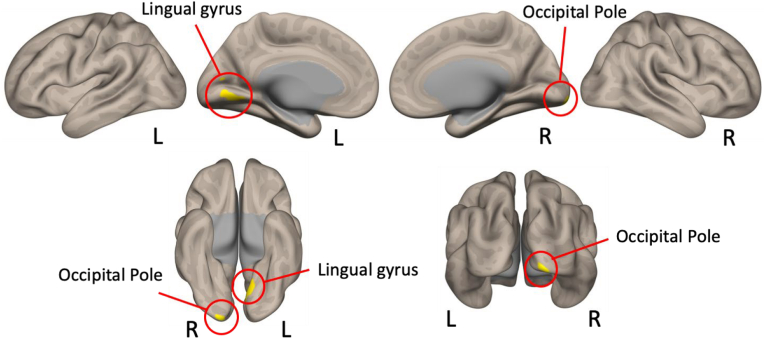 Figure 1
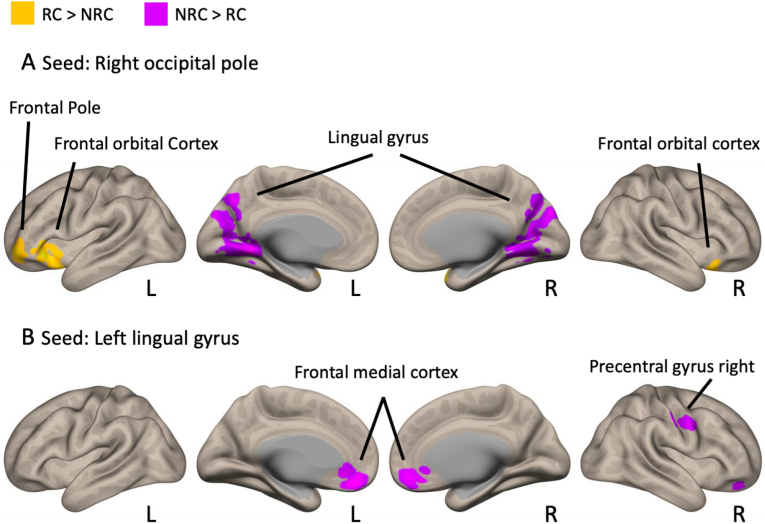 Figure 2
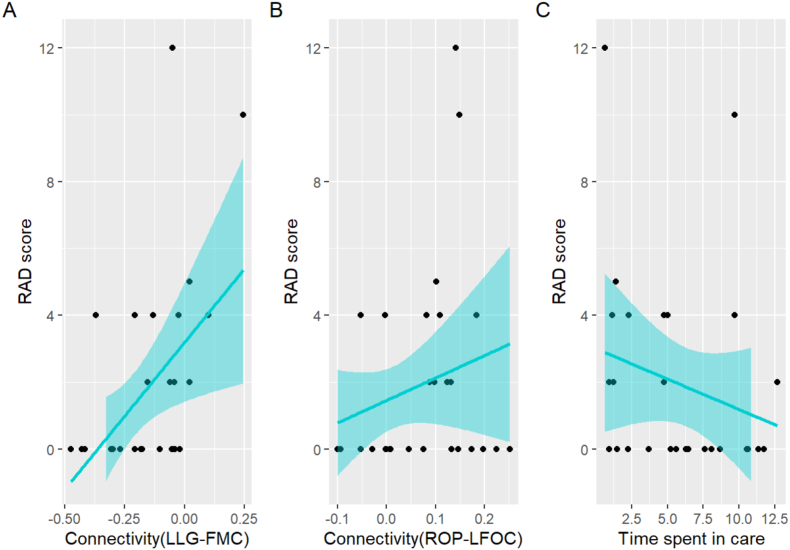 Figure 3
Peer Reviews
No public reviews on file for this paper yet. If you reviewed it on a platform where reviews are public (OpenReview, ICLR, NeurIPS, ICML), you can paste yours below so the community can read it here.
Videos
No videos yet. Explain this paper in a talk, walkthrough, or lecture? Add one.
Taxonomy
TopicsFunctional Brain Connectivity Studies · Attention Deficit Hyperactivity Disorder · Child Welfare and Adoption