pH‐Responsive Isoprenoid‐Antitumoral Polymer Conjugates for Superior Drug Loading via Self‐Assembly and Endosomal‐Targeted Anticancer Activity
Camilla Passi, Tobias Neu, Nicole Schneider‐Daum, Claus‐Michael Lehr, Marc Schneider, Sangeun Lee

TL;DR
A new pH-sensitive polymer-drug conjugate delivers anticancer drugs more effectively while reducing toxicity to healthy cells.
Contribution
A novel polymer-drug conjugate combining farnesal and poly-L-lysine with pH-responsive drug release and self-assembly into nanoparticles.
Findings
The Far-PL conjugate showed enhanced cytotoxicity against A549 lung cancer cells.
Far-PL self-assembled into nanoparticles with 100% drug content and a positive surface charge.
The conjugate released drugs under acidic tumor and endosomal conditions but remained stable at physiological pH.
Abstract
Polymer‐drug conjugates (PDCs) are a promising strategy to enhance the delivery of poorly soluble drugs, particularly in cancer therapy. By improving solubility and enabling site‐specific accumulation, PDCs minimize systemic toxicity while maximizing therapeutic efficacy. PDCs often employ stimuli‐responsive linkers, such as Schiff's bases, to achieve controlled drug release in tumor microenvironments or acidic intracellular compartments. In this study, we designed a novel PDC by conjugating the anticancer agent farnesal (Far) to ∈‐Poly‐L‐Lysine (PL) via an imine bond, without using additional linkers. PL is a natural, biodegradable, water‐soluble polymer with inherent anticancer properties, while Far is a hydrophobic isoprenoid with potent antitumor activity. The conjugate (Far‐PL) displayed pH‐responsive behavior, remaining stable at physiological pH but releasing drugs under acidic…
Genes, proteins, chemicals, diseases, species, mutations and cell lines named across the full text — each resolved to its canonical identifier and authoritative record.
Click any figure to enlarge with its caption.
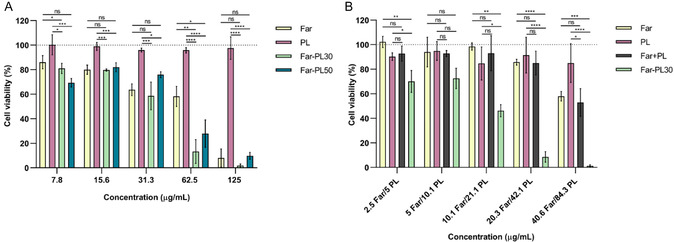 Figure 1
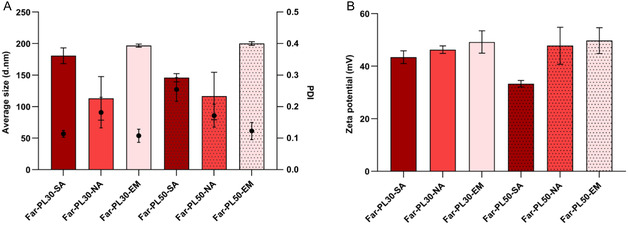 Figure 2
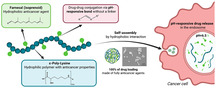 Figure 3
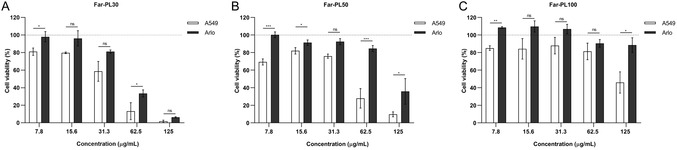 Figure 4
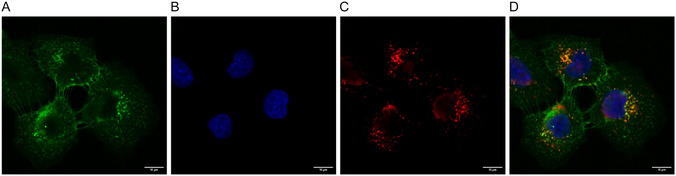 Figure 5
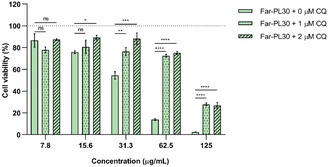 Figure 6
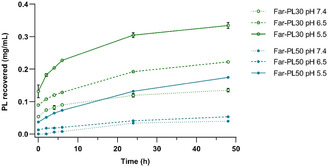 Figure 7
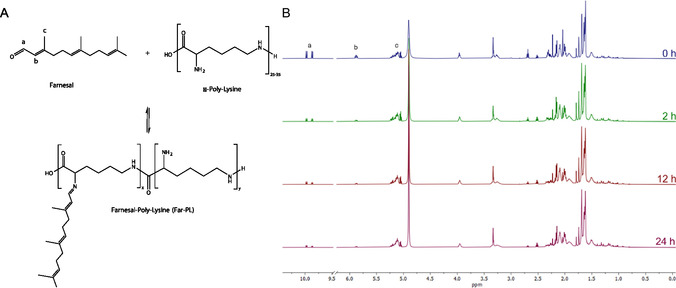 Figure 8
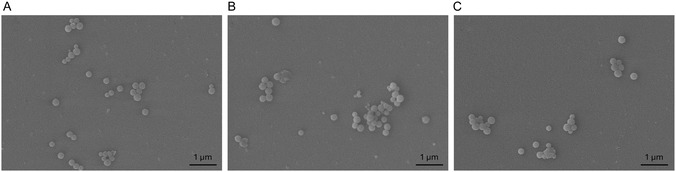 Figure 9
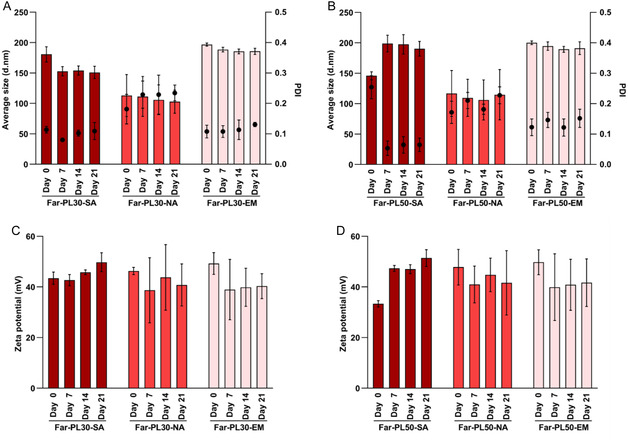 Figure 10
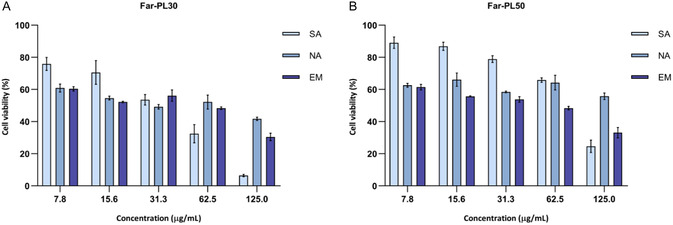 Figure 11
Peer Reviews
No public reviews on file for this paper yet. If you reviewed it on a platform where reviews are public (OpenReview, ICLR, NeurIPS, ICML), you can paste yours below so the community can read it here.
Videos
No videos yet. Explain this paper in a talk, walkthrough, or lecture? Add one.
Taxonomy
TopicsNanoparticle-Based Drug Delivery · Advanced Polymer Synthesis and Characterization · Nanoplatforms for cancer theranostics