Allelopathy as a Strategy for Biological Invasion: Calotropis procera and Its Impact on Plant Succession
Bruno Melo de Alcântara, Paulo Henrique Calixto Santana, Felipe Rufino dos Santos, José Weverton Almeida‐Bezerra, José Galberto Martins da Costa, Delmira da Costa Silva, Cláudia Maria Furlan, Maria Arlene Pessoa da Silva

TL;DR
This study shows how the invasive plant Calotropis procera harms the growth of another plant species through allelopathy in semiarid environments.
Contribution
The study identifies specific allelopathic compounds in Calotropis procera and their impact on plant succession in the Caatinga region.
Findings
Decomposed Calotropis procera litter reduced seedling germination by up to 80%.
Phytochemical analysis identified 18 compounds, including α-amyrin and O-acetyl-β-amyrin.
The plant litter caused significant morphological changes in the recipient species' tissues.
Abstract
This article reports on the allelopathic potential of Calotropis procera (Aiton) W.T. Aiton foliage on Handroanthus impetiginosus (Mart. ex DC.) Mattos. Predominant species in semiarid environments, especially in the Caatinga of the Northeast, where it acts as an invasive species. The leaves of C. procera were mixed with soil from the Caatinga and left to decompose for 90 days. The control group consisted only of soil from the Caatinga, Northeast, Brazil. The germination test was conducted in quadruplicate (30 seeds/treatment). For growth, 30 replicates per treatment were used, each with one seedling of the recipient species. The identification of the chemical constituents of C. procera was assessed by GC–MS. The data was submitted to the one‐way ANOVA test. Residues from the decomposition of C. procera litter negatively affected seedling germination, with a reduction of up to 80% in…
Genes, proteins, chemicals, diseases, species, mutations and cell lines named across the full text — each resolved to its canonical identifier and authoritative record.
Click any figure to enlarge with its caption.
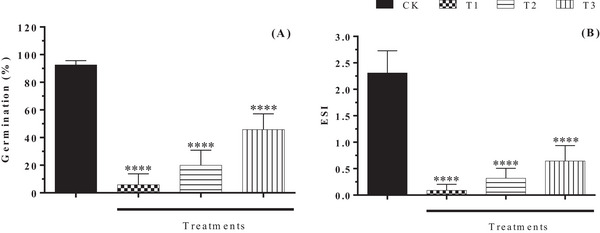 Figure 1
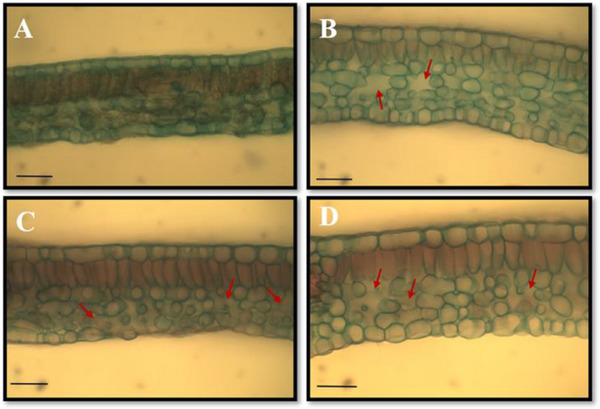 Figure 2
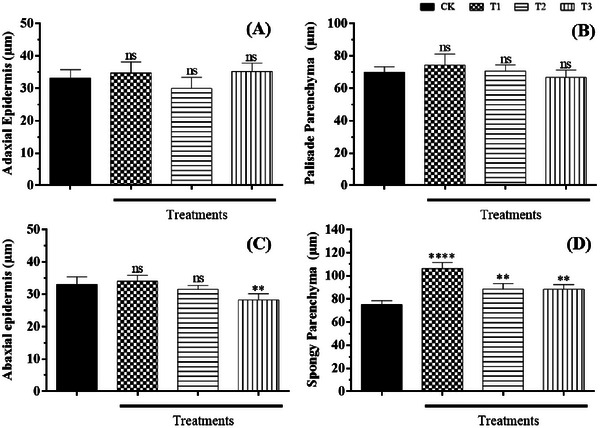 Figure 3
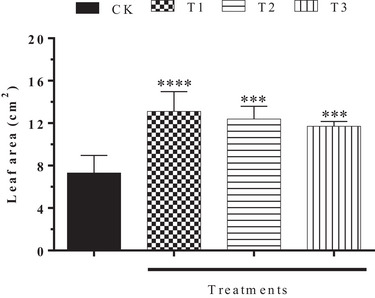 Figure 4
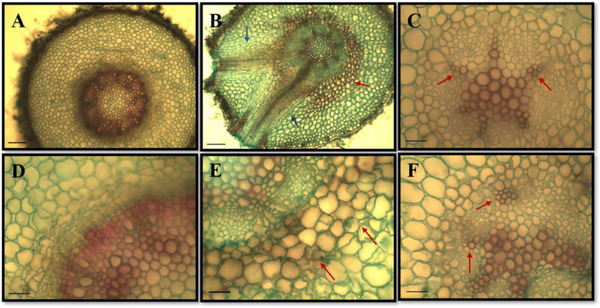 Figure 5
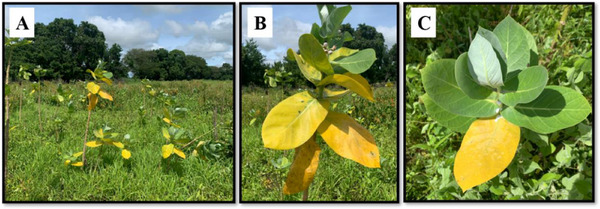 Figure 6
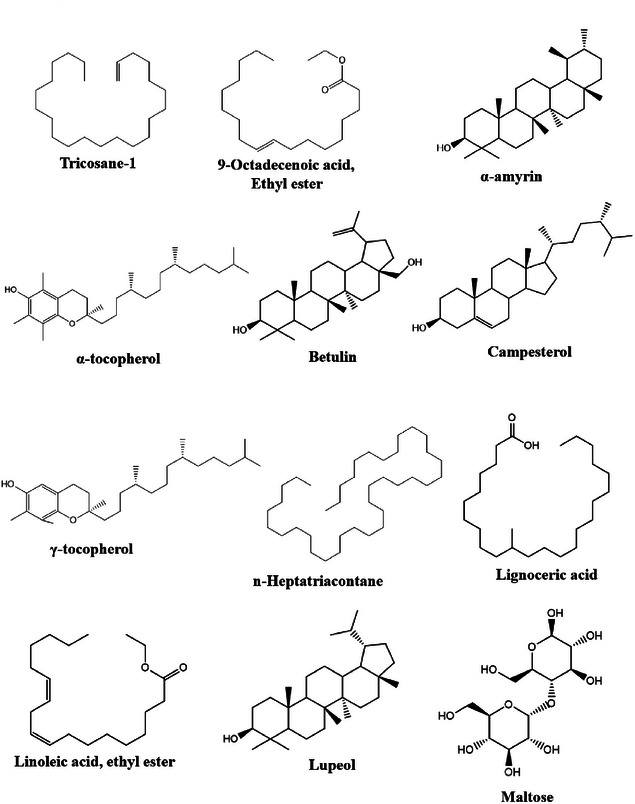 Figure 7
 Figure 8
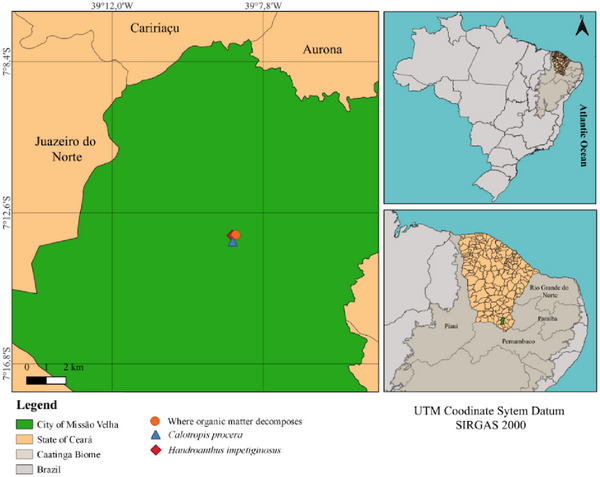 Figure 9
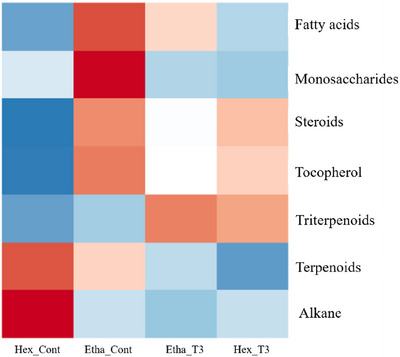 Figure 10
Peer Reviews
No public reviews on file for this paper yet. If you reviewed it on a platform where reviews are public (OpenReview, ICLR, NeurIPS, ICML), you can paste yours below so the community can read it here.
Videos
No videos yet. Explain this paper in a talk, walkthrough, or lecture? Add one.
Taxonomy
TopicsPhytochemistry and Bioactive Compounds · Allelopathy and phytotoxic interactions · Seed Germination and Physiology