Biochemical Responses of Anopheles spp. Larvae to a Novel Brazilian BR101 Bacillus thuringiensis var. israelensis Formulation: Oxidative Stress, Detoxification Enzymes, and Safety for Nontarget Notonectidae and Gerridae Aquatic Insects
Izabel Cristina de Oliveira Bentes, Dayane Dantas Abensour, Maria Luiza Lima da Costa, Raquel Telles de Moreira Sampaio, Leticia Bernadete da Silva, Francisco Augusto da Silva Ferreira, Cláudia Patrícia da Silva Tavares, Hergen Vieira de Souza, Francisco de Assis Marque

TL;DR
A new Brazilian formulation of Bti effectively kills malaria-carrying mosquito larvae without harming other aquatic insects.
Contribution
The study introduces a novel Brazilian Bti strain (BR101) with proven larvicidal efficacy and safety for non-target species.
Findings
Bti BR101 caused significant mortality in Anopheles larvae with an LC50 of 3.13 µg/mL.
Bti BR101 induced oxidative stress and activated detoxification enzymes in larvae.
Bti BR101 showed no lethal effects on non-target aquatic predators like Notonectidae and Gerridae.
Abstract
Despite its proven efficacy, Bacillus thuringiensis israelensis (Bti) has not yet been incorporated into Brazilian Ministry of Health programs targeting Anopheles spp., the primary malaria vectors. This study evaluated the larvicidal potential of the Brazilian strain BR101. The strain displayed significant activity, with mortality rates ranging from 11% ± 2% to 91% ± 5% (LC50 = 3.13 µg/mL), accompanied by increased reactive oxygen species (54.67 ± 3 µmol H2O2), lipid peroxidation (57.33 ± 4.5 ηmol), and oxidative protein damage (16.67 ± 2.1 nM reactive carbonyls/mg). Biochemical responses included elevated activities of superoxide dismutase (29.00 ± 3 mU/mg protein), catalase (17.00 ± 1 µmol H2O2), glutathione peroxidase (29.00 ± 3 mmol NADPH/min/mL), mixed‐function oxidases (11.00 ± 3 nmol cytochrome/mg protein), and esterases (α: 20.67 ± 2; β: 25.67 ± 1 µmol/min/mg).…
Genes, proteins, chemicals, diseases, species, mutations and cell lines named across the full text — each resolved to its canonical identifier and authoritative record.
Click any figure to enlarge with its caption.
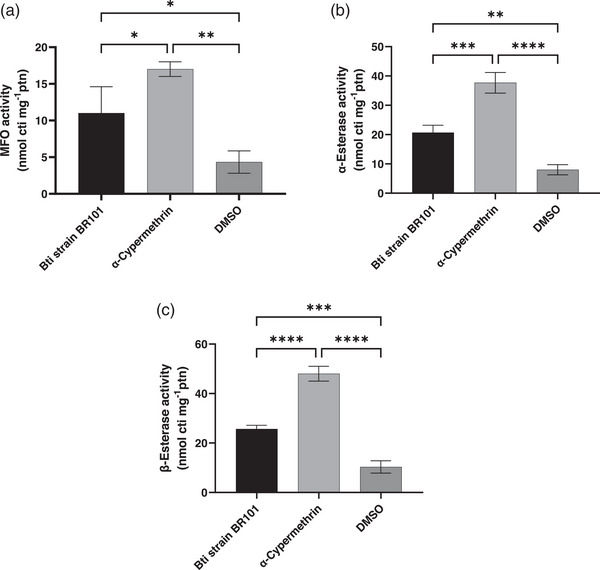 Figure 1
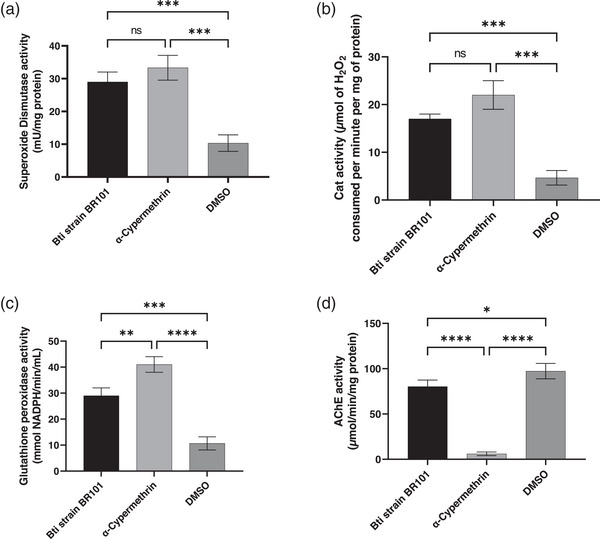 Figure 2
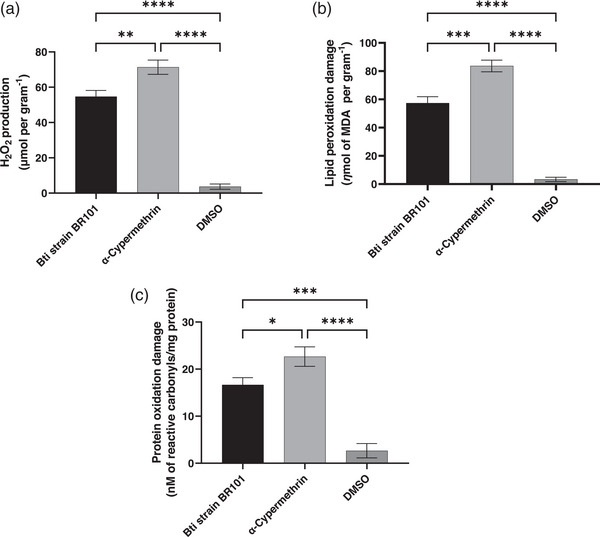 Figure 3
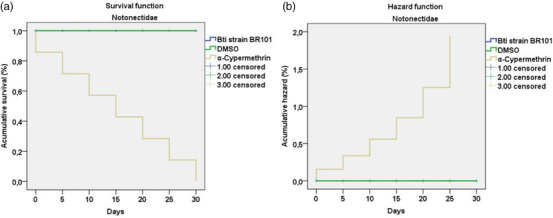 Figure 4
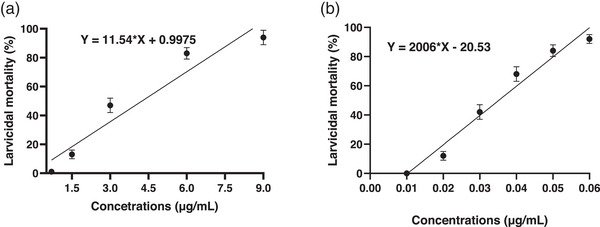 Figure 5
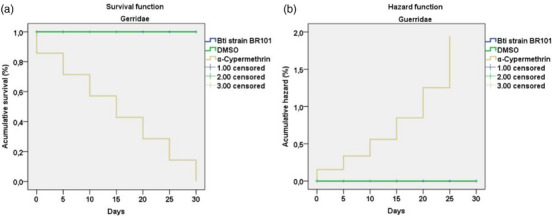 Figure 6
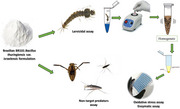 Figure 7
Peer Reviews
No public reviews on file for this paper yet. If you reviewed it on a platform where reviews are public (OpenReview, ICLR, NeurIPS, ICML), you can paste yours below so the community can read it here.
Videos
No videos yet. Explain this paper in a talk, walkthrough, or lecture? Add one.
Taxonomy
TopicsInsect Resistance and Genetics · Malaria Research and Control · Invertebrate Immune Response Mechanisms