Identification of Antioxidant, Antimicrobial, and Cytotoxic Compounds From Hymenocardia acida Tul. Using Ultra‐High‐Performance Liquid Chromatography‐Quadrupole Exactive‐Orbitrap‐Mass Spectrometry and Molecular Networking Approach
Ntsoaki Joyce Malebo, Idah Tichaidza Manduna, Monizi Mawunu, Ramakwala Christinah Chokwe, Bafedile Tlhapi

TL;DR
This study identifies antioxidant, antimicrobial, and cytotoxic compounds in Hymenocardia acida, a medicinal plant, using advanced analytical methods.
Contribution
The study provides the first detailed phytochemical annotation of Hymenocardia acida's plant parts using molecular networking and advanced mass spectrometry.
Findings
Thirty-two natural compounds were annotated in Hymenocardia acida, including flavonoids, fatty acids, and terpenoids.
Leaf extracts showed antimicrobial activity against multiple pathogens, while stem bark and root extracts showed strong antioxidant activity.
Methanol leaf extracts were cytotoxic to Vero cells at higher concentrations.
Abstract
Hymenocardia acida Tul. is a medicinal plant used in Angola to treat microbial diseases. It is a well‐known plant among local populations; however, few studies have focused on the assessment of phytochemicals associated with their biological activities. Hence, there is a need to evaluate the metabolomic profile of compounds that contribute to the antimicrobial, antioxidant activities, and cytotoxic effects of H. acida. This study investigated the chemical profile, antimicrobial and antioxidant activities, and cytotoxic effects of compounds derived from different plant organs of H. acida. The compounds were analyzed using ultra‐high‐performance liquid chromatography‐quadrupole‐electrostatic field orbitrap mass spectrometry, and the resulting data were further analyzed using a molecular networking approach. Thirty‐two natural compounds were annotated, including flavonoids, fatty acids,…
Genes, proteins, chemicals, diseases, species, mutations and cell lines named across the full text — each resolved to its canonical identifier and authoritative record.
Click any figure to enlarge with its caption.
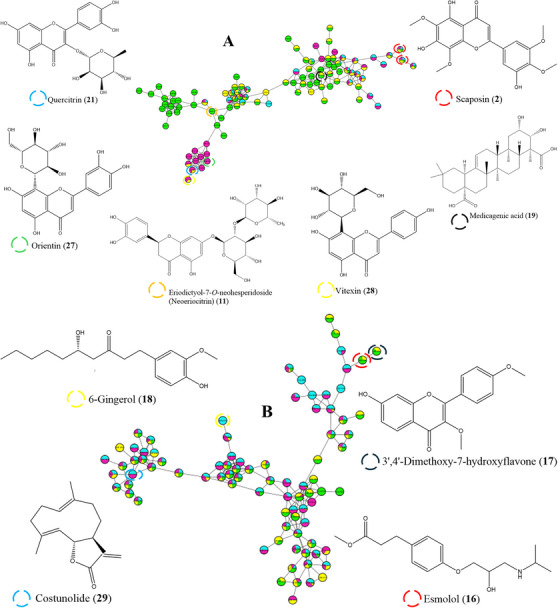 Figure 1
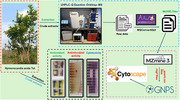 Figure 2
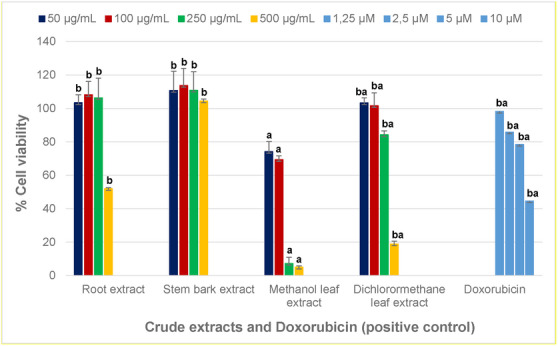 Figure 3
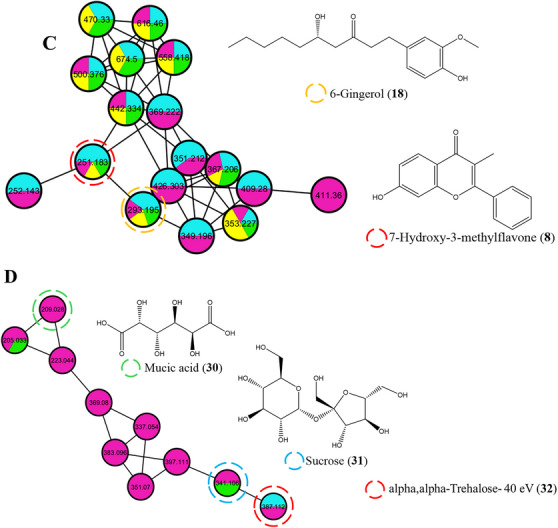 Figure 4
Peer Reviews
No public reviews on file for this paper yet. If you reviewed it on a platform where reviews are public (OpenReview, ICLR, NeurIPS, ICML), you can paste yours below so the community can read it here.
Videos
No videos yet. Explain this paper in a talk, walkthrough, or lecture? Add one.
Taxonomy
TopicsGinkgo biloba and Cashew Applications · Ginger and Zingiberaceae research · Phytochemicals and Antioxidant Activities