Action of Betulinic Acid in the Inhibition of Efflux Pump NorA in Staphylococcus aureus Strains: In Vitro and In Silico Approaches
Camila Aparecida Pereira da Silva, Nara juliana Santos Araujo, Cícera Datiane Morais Oliveira‐Tintino, José Maria Barbosa Filho, Gabriel Gonçalves Alencar, José Bezerra de Araújo‐Neto, Josefa Sayonara dos Santos, Juliete Bezerra Soares, Carolina Bandeira Domiciano

TL;DR
This study shows that betulinic acid can inhibit the NorA efflux pump in Staphylococcus aureus, potentially improving antibiotic effectiveness.
Contribution
The novel finding is that betulinic acid acts as an efflux pump inhibitor in S. aureus, despite lacking direct antibacterial activity.
Findings
Betulinic acid reduced the minimum inhibitory concentration of norfloxacin and ethidium bromide in S. aureus strains.
The compound increased membrane permeability and fluorescence emission, indicating efflux pump inhibition.
In silico and in vitro approaches confirmed betulinic acid's potential as an efflux pump inhibitor.
Abstract
Antibiotic resistance poses a serious challenge to public health, particularly in the case of Staphylococcus aureus, a Gram‐positive bacterium that employs multiple resistance mechanisms, including efflux pumps such as NorA, which extrude antimicrobial compounds from the cell and reduce antibiotic efficacy. Therefore, the search for substances capable of inhibiting these mechanisms represents a promising strategy to combat bacterial resistance. Betulinic acid (BA), a pentacyclic triterpene of the lupane type, commonly found in different parts of plants, has demonstrated various pharmacological activities, including antibacterial effects. This study investigated, through in vitro and in silico analyses, the inhibitory action of BA on the NorA efflux pump in S. aureus strains SA‐1199 and SA‐1199B. The minimum inhibitory concentrations (MICs) were determined using the broth microdilution…
Genes, proteins, chemicals, diseases, species, mutations and cell lines named across the full text — each resolved to its canonical identifier and authoritative record.
Click any figure to enlarge with its caption.
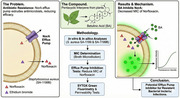 Figure 1
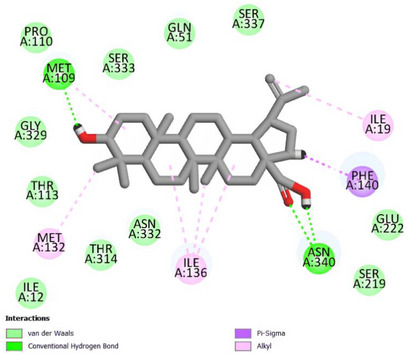 Figure 2
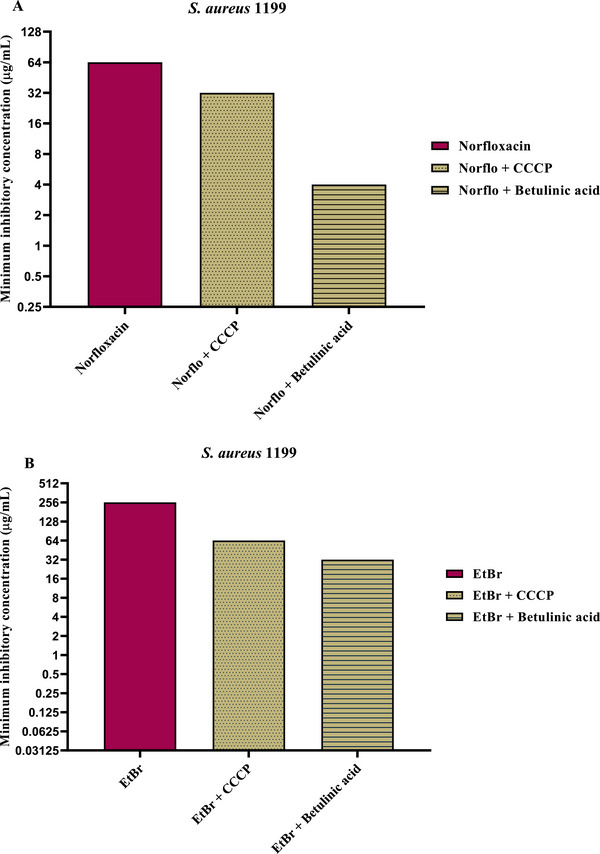 Figure 3
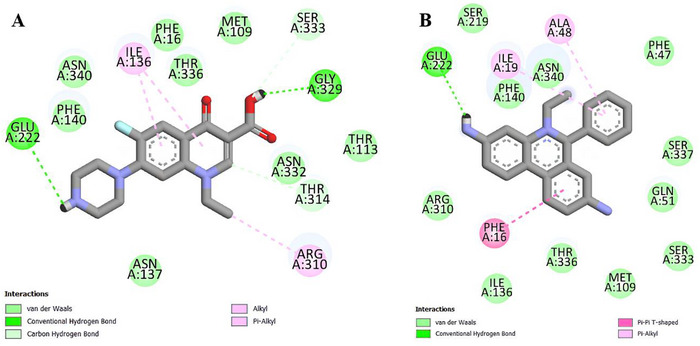 Figure 4
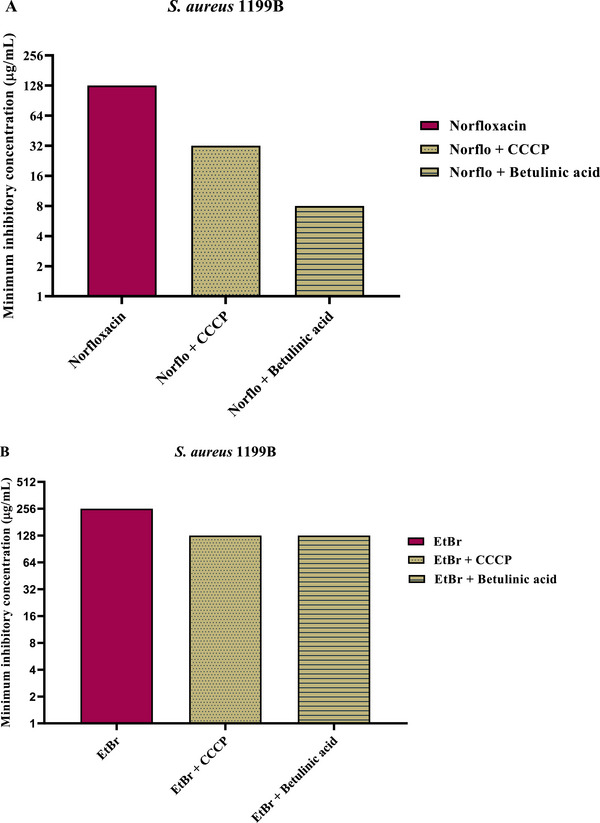 Figure 5
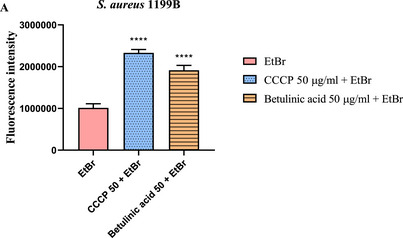 Figure 6
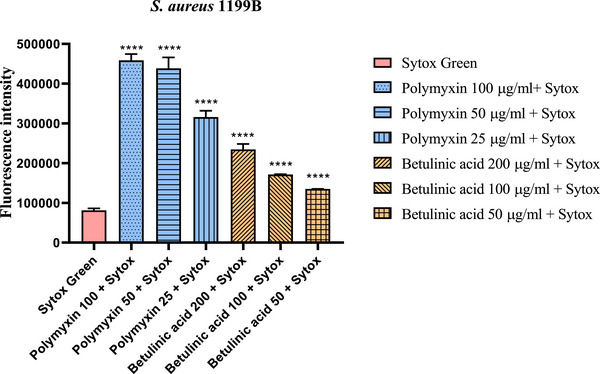 Figure 7
Peer Reviews
No public reviews on file for this paper yet. If you reviewed it on a platform where reviews are public (OpenReview, ICLR, NeurIPS, ICML), you can paste yours below so the community can read it here.
Videos
No videos yet. Explain this paper in a talk, walkthrough, or lecture? Add one.
Taxonomy
TopicsNatural product bioactivities and synthesis · Toxin Mechanisms and Immunotoxins · Medicinal plant effects and applications