Activity Against Pythium insidiosum and Isolated Constituents of Cordia insignis Roots
Rennan Carlos de Oliveira, Kheytiany Hellen da Silva Lopes, Mariele Rondon Santos Gonçalves, Mario Geraldo de Carvalho, Yasmin Sena de Amorin Dias da Silva, Leonardo Gomes de Vasconcelos, Paulo Teixeira de Sousa Júnior, Ivana Maria Póvoa Violante

TL;DR
This study explores the roots of Cordia insignis for compounds that may help treat pythiosis, a challenging disease caused by Pythium insidiosum.
Contribution
The study reports the first isolation of a fatty acid and glycoside from the genus Cordia and identifies potent anti-oomycete activity in its root extracts.
Findings
Seven compounds were isolated from Cordia insignis roots, including β-sitosterol, stigmasterol, and scoparone.
The hexane fraction showed the strongest anti-oomycete activity with a MIC/MOC of 15.625 µg/mL.
This is the first report of a fatty acid and glycoside in the genus Cordia.
Abstract
Pythiosis, caused by the oomycete Pythium insidiosum, is a worrying disease with its challenging treatment due to the phylogeny of the pathogen. Natural products are a promising alternative in the treatment of diseases. Cordia insignis (Boraginaceae) is a poorly studied species, but Cordia species exhibit broad bioactivity. This study investigated phytochemically the roots of the species and evaluated the anti‐oomycete activity of the crude extract (CE) and fractions against P. insidiosum. Seven compounds were isolated and identified, including β‐sitosterol, stigmasterol, campesterol, β‐sitosterol‐3‐O‐β‐d‐glucopyranosyl, tridecanoic acid, scoparone, and gracicleistanthoside. The steroids, saponin and coumarin, were reported of leaves and branches of C. insignis; the fatty acid and glycoside are being first reported for the genus. The oomyceticidal assays revealed promising potential,…
Genes, proteins, chemicals, diseases, species, mutations and cell lines named across the full text — each resolved to its canonical identifier and authoritative record.
Click any figure to enlarge with its caption.
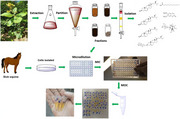 Figure 1
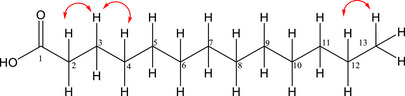 Figure 2
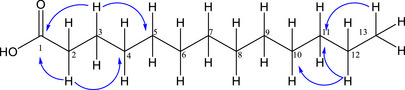 Figure 3
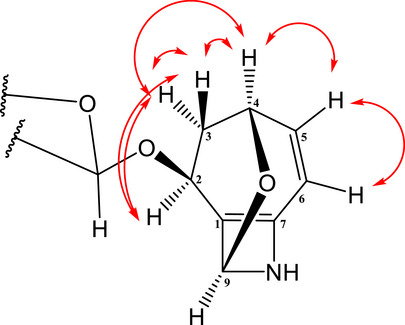 Figure 4
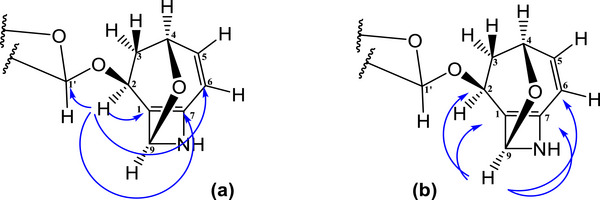 Figure 5
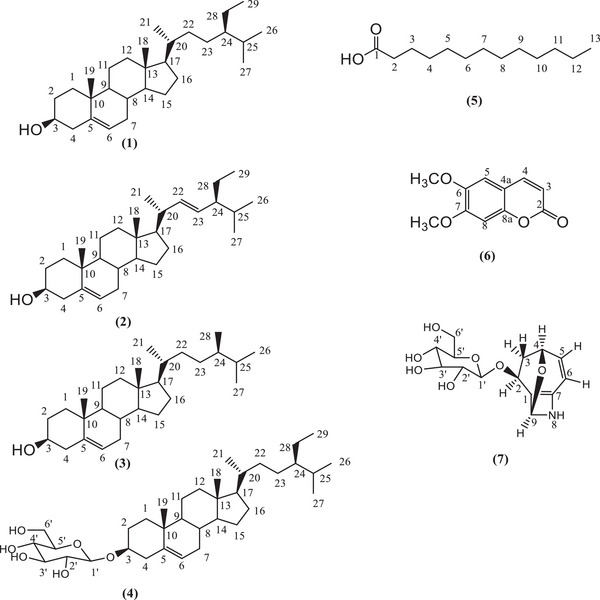 Figure 6
Peer Reviews
No public reviews on file for this paper yet. If you reviewed it on a platform where reviews are public (OpenReview, ICLR, NeurIPS, ICML), you can paste yours below so the community can read it here.
Videos
No videos yet. Explain this paper in a talk, walkthrough, or lecture? Add one.
Taxonomy
TopicsInfectious Diseases and Mycology · Marine Sponges and Natural Products · Phytochemistry and Bioactive Compounds