Sulphur Analogues of Homoisoflavonoids as Potential Treatments for Neovascular Eye Diseases
Jacob D. Hiles, Ola Deri, Kamakshi Sishtla, Joseph C. Bear, Jeremy K. Cockcroft, Elizabeth I. Opara, Ali A. Al‐Kinani, Raid G. Alany, Timothy W. Corson, Sianne L. Schwikkard

TL;DR
Scientists developed new sulfur-based compounds that may help treat eye diseases by reducing harmful blood vessel growth and inflammation.
Contribution
The paper introduces new sulfur analogues of homoisoflavonoids with antiangiogenic and anti-inflammatory properties for potential use in treating neovascular eye diseases.
Findings
Compound 10 showed strong anti-proliferation against retinal endothelial cells with minimal toxicity to retinal pigment epithelial cells.
Compound 10 significantly reduced angiogenesis in a Matrigel tube formation assay at low concentrations.
Compound 7 exhibited the highest COX-II inhibition among the tested analogues.
Abstract
Treatment of neovascular eye diseases like age‐related macular degeneration require a compound that is not toxic to ocular cells, that can reduce inflammation and inhibit angiogenesis. Homoisoflavonoids, naturally occurring compounds isolated primarily from the Hyacinthaceae sub‐family of plants, have shown promise as anti‐inflammatories and inhibitors of angiogenesis. A series of sulphur analogues, (3‐benzylidene thiochroman‐4‐ones), were synthesised via a three‐step procedure. These compounds were evaluated for selectivity towards endothelial cells over non‐endothelial cells and their ability to inhibit COX‐II over COX‐I.Their potential anti‐angiogenic activity was assessed using the Matrigel tube formation assay. (3Z)‐3‐[(3‐bromophenyl)methylidene]‐6‐methoxy‐2,3‐dihydro‐4H‐1‐benzothiopyran‐4‐one (10) was most active with respect to anti‐proliferation against human retinal endothelial…
Genes, proteins, chemicals, diseases, species, mutations and cell lines named across the full text — each resolved to its canonical identifier and authoritative record.
Click any figure to enlarge with its caption.
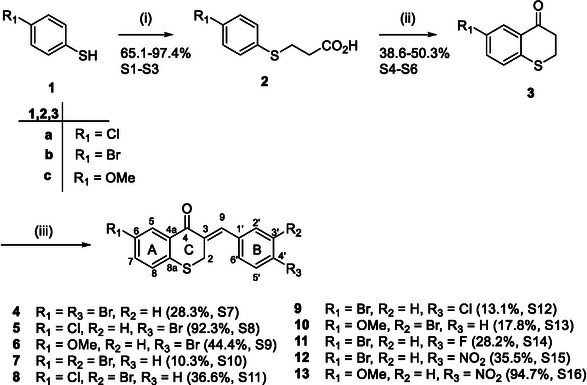 Figure 1
 Figure 2
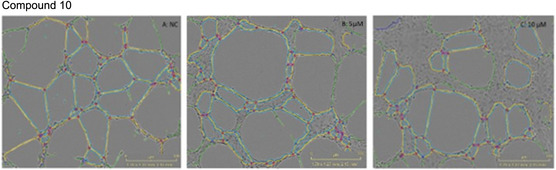 Figure 3
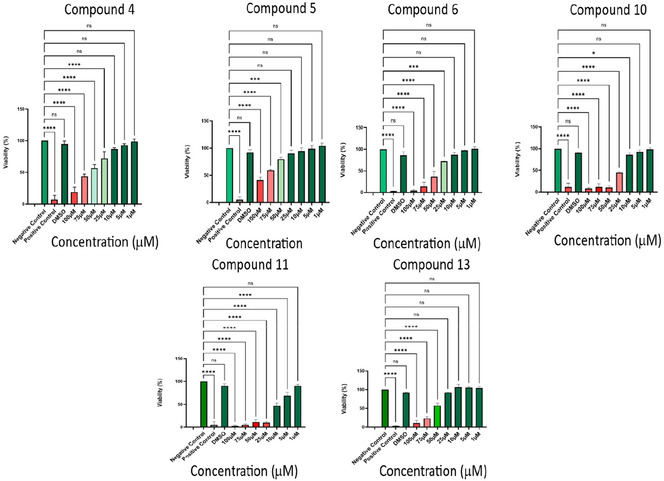 Figure 4
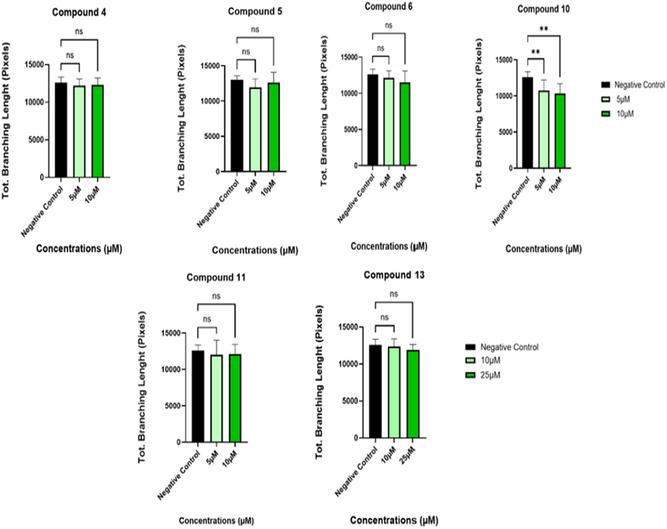 Figure 5
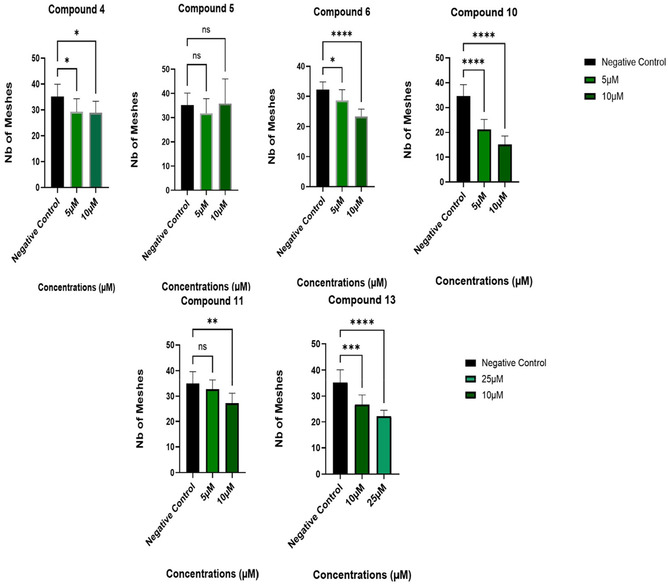 Figure 6
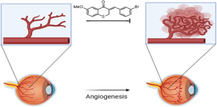 Figure 7
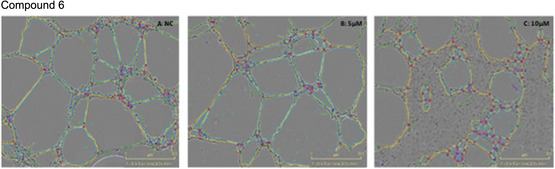 Figure 8
Peer Reviews
No public reviews on file for this paper yet. If you reviewed it on a platform where reviews are public (OpenReview, ICLR, NeurIPS, ICML), you can paste yours below so the community can read it here.
Videos
No videos yet. Explain this paper in a talk, walkthrough, or lecture? Add one.
Taxonomy
TopicsPhytochemical Studies and Bioactivities · Bioactive Compounds in Plants · Natural product bioactivities and synthesis