Phytochemical Screening of 45‐Million‐Year‐Old Colored Angiosperm Leaves Reveals Distinctive Chlorophyll‐Derived and Polyphenolic Pigments
Klaus Wolkenstein, Christa E. Müller, Marianne Engeser, Holm Frauendorf, Victoria E. McCoy, Carole T. Gee

TL;DR
Scientists found preserved plant pigments in 45-million-year-old leaves, revealing insights into ancient plant chemistry and fossilization.
Contribution
Discovery of specific chlorophyll derivatives and polyphenolic pigments in ancient leaves using sensitive chemical analysis.
Findings
Chlorophyll derivatives and polyphenolic pigments were preserved in 45-million-year-old angiosperm leaves.
Dihydro-132,173-cyclopheophorbide a-enol was identified, a compound previously only known in modern microorganisms.
Flavonoids apigenin and luteolin were detected, indicating stable preservation of polyphenolic compounds.
Abstract
Present‐day angiosperm plants produce a plethora of metabolites including pigments that serve for important functions such as photosynthesis, protection against light, attraction of pollinators, and defense against microbes and herbivores. However, little is known about phytochemical constituents of ancient angiosperms, their distribution in the fossil record, their stability in deep time, and diagenesis. Outstanding preservation of ancient angiosperms, including exceptional color preservation, has been reported, but chemical analyses of such valuable specimens are limited by the rarity of the fossil material and the small amounts of potentially preserved metabolites. Here we use highly sensitive targeted liquid chromatography–tandem mass spectrometry in multiple reaction monitoring mode to screen for nanogram quantities of intact ancient phytochemical metabolites and their products in…
Genes, proteins, chemicals, diseases, species, mutations and cell lines named across the full text — each resolved to its canonical identifier and authoritative record.
Click any figure to enlarge with its caption.
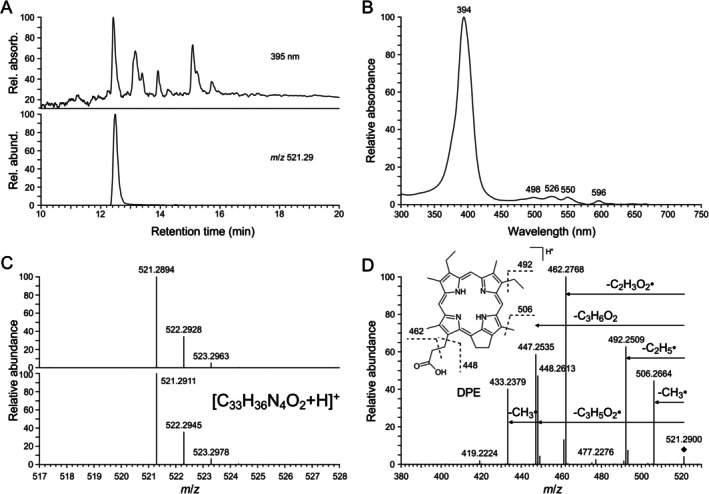 Figure 1
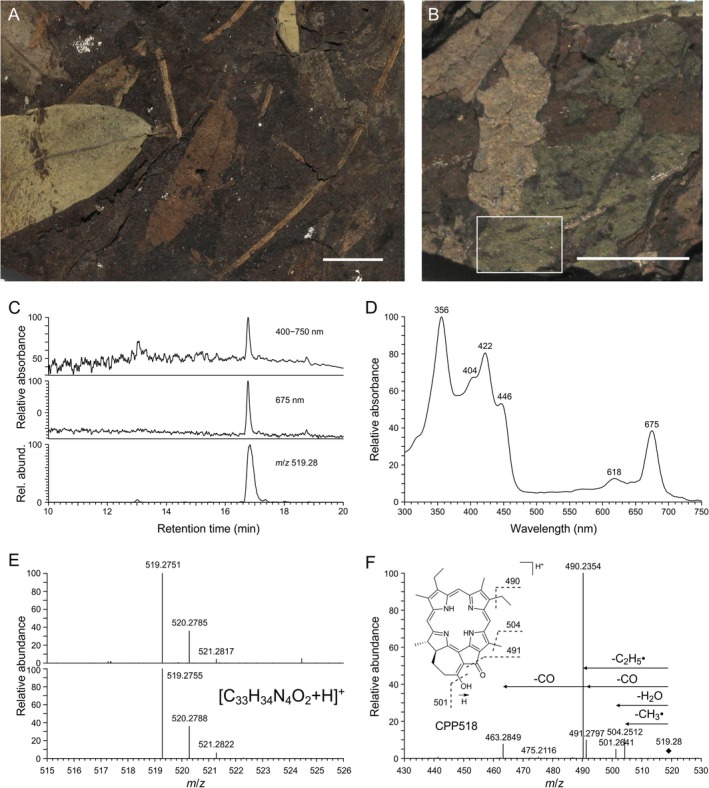 Figure 2
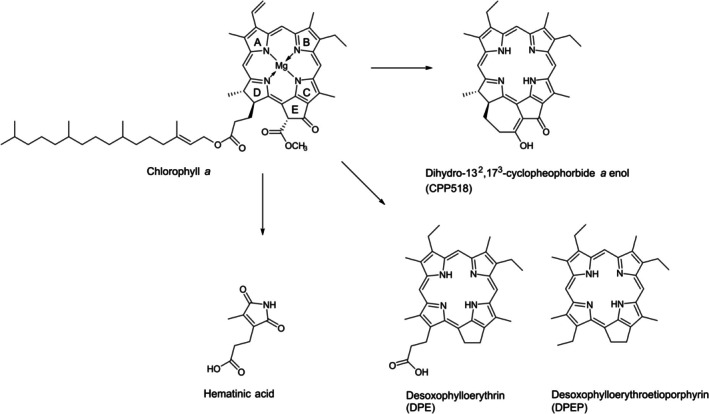 Figure 3
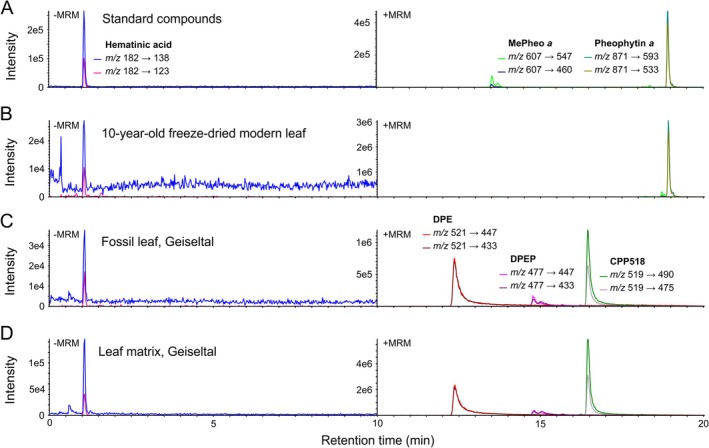 Figure 4
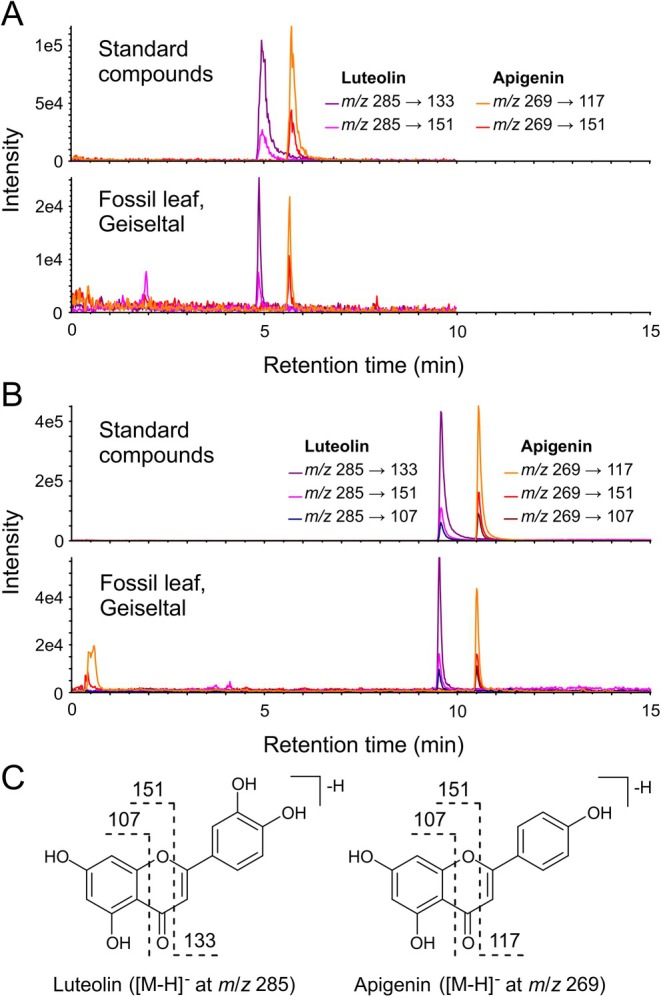 Figure 5
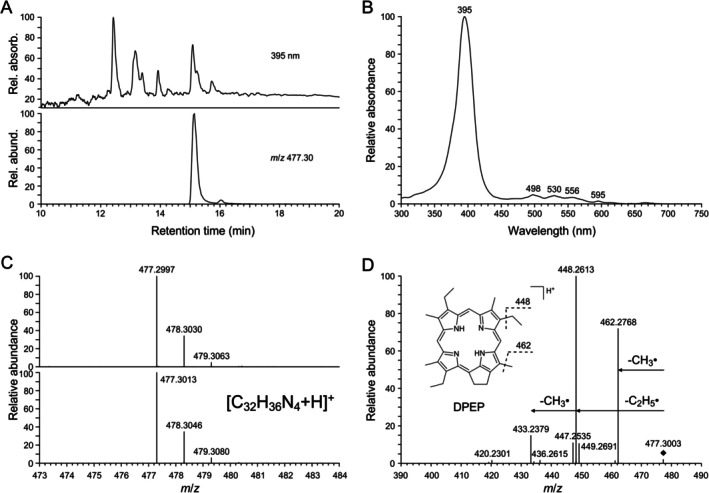 Figure 6
Peer Reviews
No public reviews on file for this paper yet. If you reviewed it on a platform where reviews are public (OpenReview, ICLR, NeurIPS, ICML), you can paste yours below so the community can read it here.
Videos
No videos yet. Explain this paper in a talk, walkthrough, or lecture? Add one.
Taxonomy
TopicsPlant Diversity and Evolution · Paleontology and Stratigraphy of Fossils · Plant Gene Expression Analysis