Comparative Accuracy of Dental Age Estimation Methods in Adolescents and Young Adults: A Systematic Review With Cameriere’s Method as the Reference Standard
Azhar A Khan, Sumit Bhateja

TL;DR
This paper reviews dental age estimation methods and finds Cameriere’s I3M to be the most reliable for adolescents and young adults.
Contribution
The study systematically evaluates and compares dental age estimation methods using Cameriere’s I3M as the reference standard.
Findings
Cameriere’s I3M is more reliable than the London Atlas for age estimation in 14-22 year olds.
I3M remains the most dependable method for dental age estimation in adolescents and young adults.
Root pulp visibility assessments show slightly higher accuracy in the 15-22 age group.
Abstract
Dental age estimation is a crucial tool in forensic science, particularly for legal purposes where age verification is essential. This process helps distinguish minors from adults, influencing decisions in criminal, immigration, and civil matters. The Cameriere’s Third Molar Maturity Index (I3M) is one of the reliable techniques for the assessment of age. After being retrieved from databases such as PubMed, Scopus, the Cochrane Library, and EBSCOhost, publications from 2013 to 2025 were screened against our inclusion criteria. As a result, five articles were included in the systematic review. The Newcastle-Ottawa scale (NOS) is used for the assessment of risk of bias of included studies, and meta-analysis was not possible due to the heterogeneity of selected studies in terms of methods of analysis. Results from the studies reviewed indicate that Cameriere’s I3M is the most dependable…
Click any figure to enlarge with its caption.
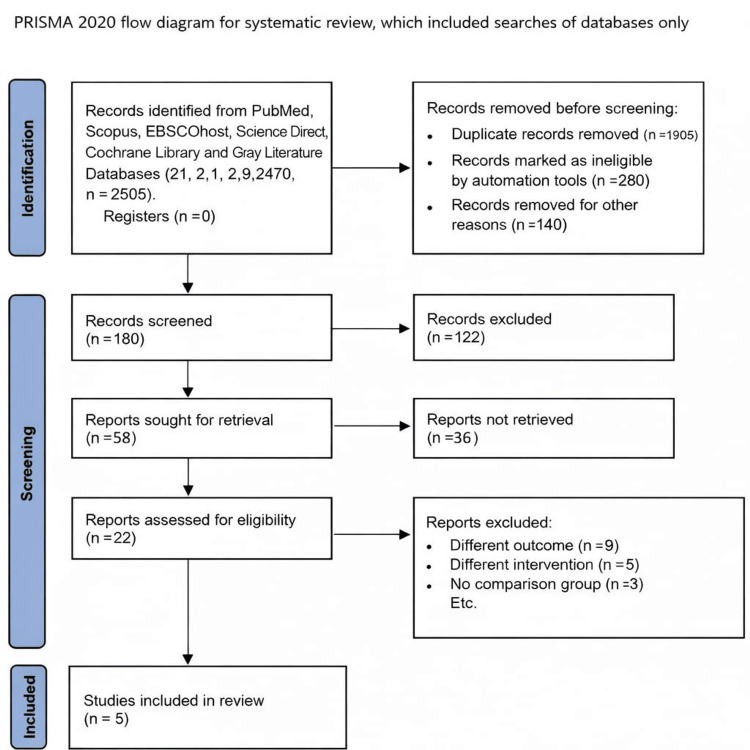 Figure 1
Peer Reviews
No public reviews on file for this paper yet. If you reviewed it on a platform where reviews are public (OpenReview, ICLR, NeurIPS, ICML), you can paste yours below so the community can read it here.
Videos
No videos yet. Explain this paper in a talk, walkthrough, or lecture? Add one.
Taxonomy
TopicsForensic Anthropology and Bioarchaeology Studies · Dental Health and Care Utilization · Dental Radiography and Imaging