Selection and optimization strategy for Rap1-targeting single-domain antibodies as platelet activation markers
Marie-Christine Alessi, Maxime Moulard, Daniele Boulay-Moine, Cyril Pons, Marielle Margier, Cléa Vessière, Marjorie Poggi, Theo Pigaglio, Francoise Dignat-George, Alain Roussel, Stéphane Burtey, Laurent Bonello, Patrick Chames, Remi Bonjean, Franck Peiretti

TL;DR
This paper describes the development of specialized antibodies that can detect active Rap1 in platelets, offering new tools for studying platelet activation and its role in health and disease.
Contribution
The study introduces optimized single-domain antibodies (VHH-Fc) that specifically detect active Rap1 in platelets and a reliable ELISA assay for quantifying active Rap1.
Findings
Two optimized VHH-Fc clones (B89 and B14) effectively capture active Rap1 in platelets.
An ELISA setup using VHH-Fc B14 and a commercial antibody accurately quantifies endogenous active Rap1.
The developed tools can detect active Rap1 in platelet lysates and HeLa cells overexpressing active Rap1B.
Abstract
Rap1 is critical for platelet activation, functioning as a key node of the platelet activation pathways. This study aimed to develop VHH-Fc (minibodies) against Rap1 for the purpose to quantify active Rap1 levels in platelets. We have produced the first generation of VHHs against active Rap1 through a series of negative and positive screenings of a synthetic phage display library, utilizing both inactive and active Rap1B. We performed random mutagenesis, followed by yeast 2-hybrid screening to optimize variants. Among 122 VHH clones, 2 with the highest redundancy were subcloned as VHH-Fc. Both selectively detected active Rap1B G12V in HeLa cells but failed to recognize the inactive Rap1B S17N isoform. They successfully captured Rap1 from platelet lysates incubated with GTPγS and from thrombin receptor activator peptide 6–stimulated platelets. Further optimization yielded 2…
Genes, proteins, chemicals, diseases, species, mutations and cell lines named across the full text — each resolved to its canonical identifier and authoritative record.
Click any figure to enlarge with its caption.
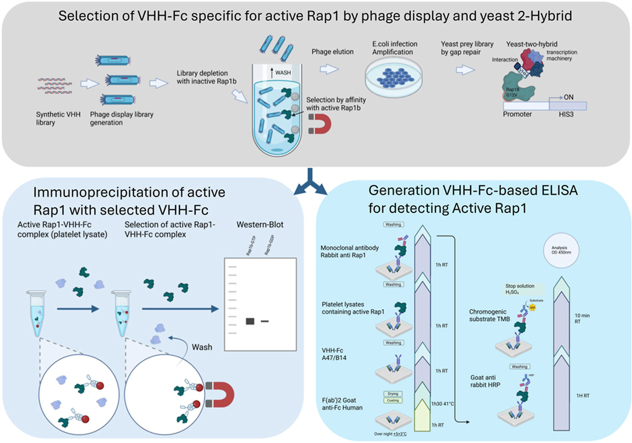 Figure 1
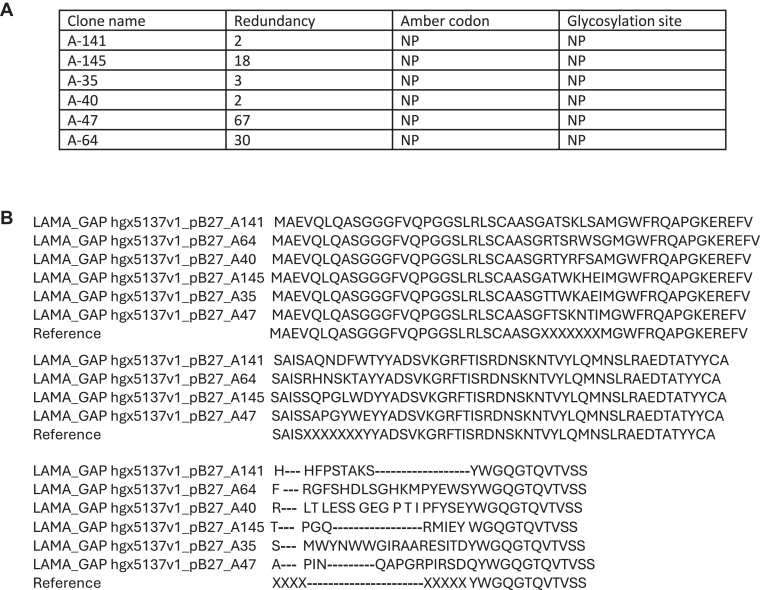 Figure 2
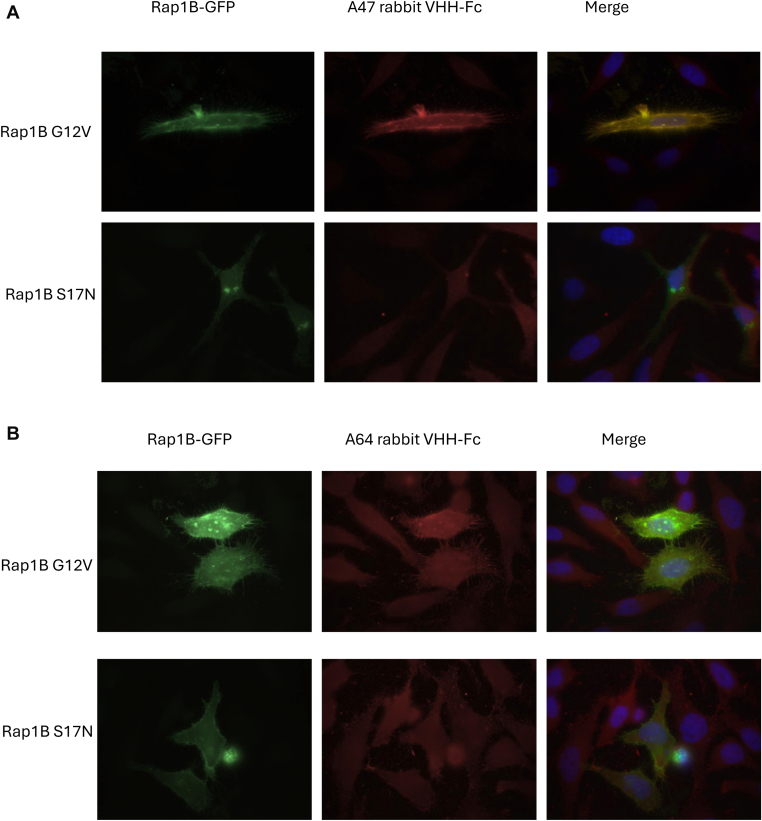 Figure 3
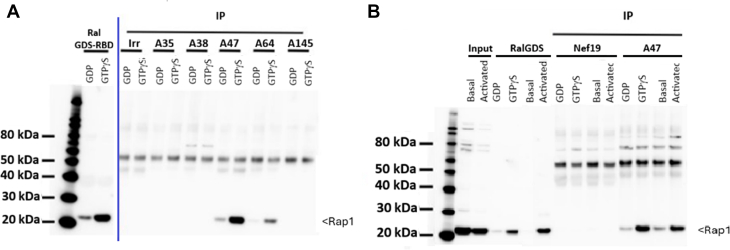 Figure 4
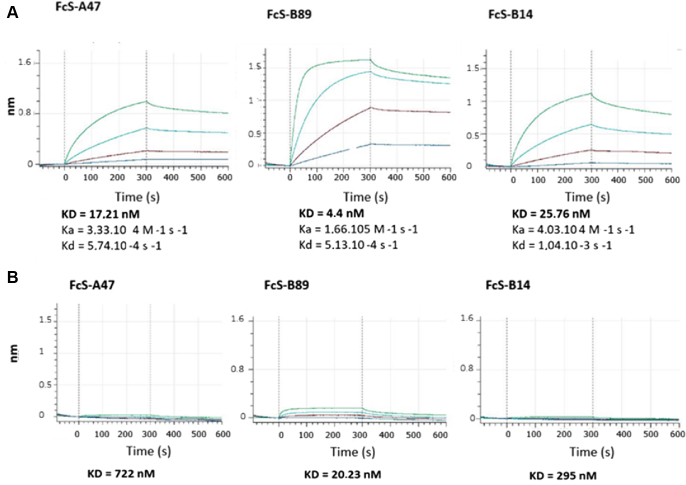 Figure 5
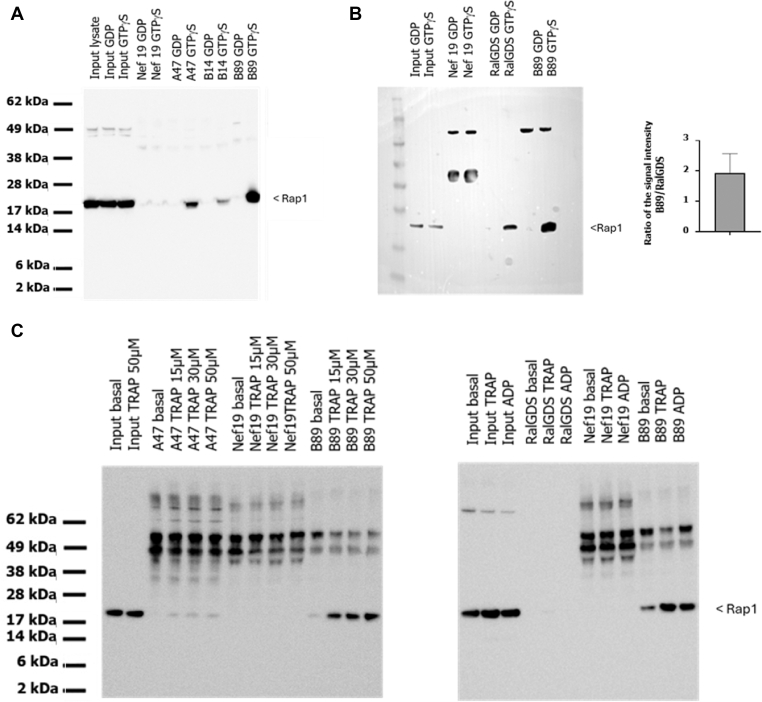 Figure 6
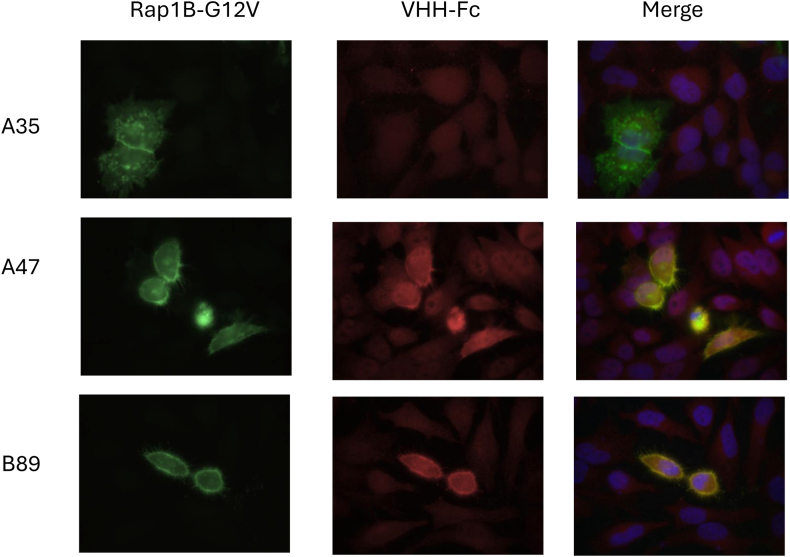 Figure 7
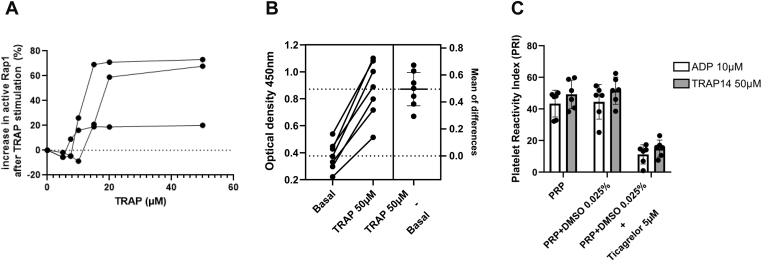 Figure 8
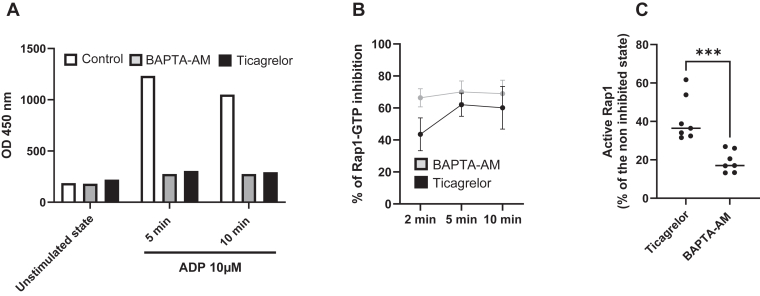 Figure 9
Peer Reviews
No public reviews on file for this paper yet. If you reviewed it on a platform where reviews are public (OpenReview, ICLR, NeurIPS, ICML), you can paste yours below so the community can read it here.
Videos
No videos yet. Explain this paper in a talk, walkthrough, or lecture? Add one.
Taxonomy
TopicsPlatelet Disorders and Treatments · Protein Kinase Regulation and GTPase Signaling · Biochemical and Structural Characterization