Processing technology as aroma architect: OAV fingerprints decode differentiation and compatibility of key odorants in Fuding Dabai tea via GC×GC-TOF-MS and sensomics
Panpan Liu, Jia Chen, Lin Feng, Shiwei Gao, Shengpeng Wang, Jinjin Xue, Xueping Wang, Fei Ye, Anhui Gui, Zhi Yu, Pengcheng Zheng

TL;DR
This study shows how tea processing techniques influence aroma profiles in Fuding Dabai tea, using advanced analytical methods to identify key odorants and their relationships with processing steps.
Contribution
The study introduces a novel integration of sensomics and GC×GC-TOF-MS to decode aroma differentiation and compatibility in tea processing.
Findings
Fermentation degree is the primary factor driving aroma divergence in tea processing.
Sweet aroma correlates strongly with benzeneacetaldehyde and (E)-2-hexenal, while aged aroma correlates with (E,E)-2,4-heptadienal.
Processing techniques reconfigure aroma profiles through enzymatic inhibition, oxidative conversion, and microbial fermentation.
Abstract
This study systematically investigates the regulatory role of processing technology in the aroma differentiation of Fuding Dabai tea (Camellia sinensis). Using an integrated sensomics approach combining quantitative descriptive analysis and GC × GC–TOF–MS, we deciphered aroma formation in green (GT), white (WT), black (BT), and dark (DT) teas. Among 187 volatiles detected, WT exhibited the highest VOC content (2349.42 μg/L) and the most key odorants (30 of 36). Multivariate statistical modeling identified fermentation degree as the primary factor driving aroma divergence, clearly discriminating fermented (BT/DT) from non/light-fermented (GT/WT) teas. OPLS-DA selected 12 marker compounds (VIP > 1), predominantly alcohols and aldehydes. Sweet aroma exhibited strong correlations with benzeneacetaldehyde (r = 0.91) and (E)-2-hexenal (r = 0.92), while aged aroma correlated strongly with…
Genes, proteins, chemicals, diseases, species, mutations and cell lines named across the full text — each resolved to its canonical identifier and authoritative record.
Click any figure to enlarge with its caption.
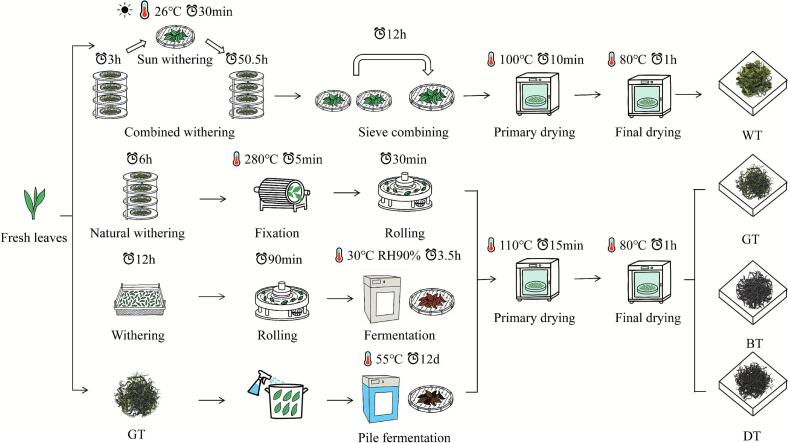 Figure 1
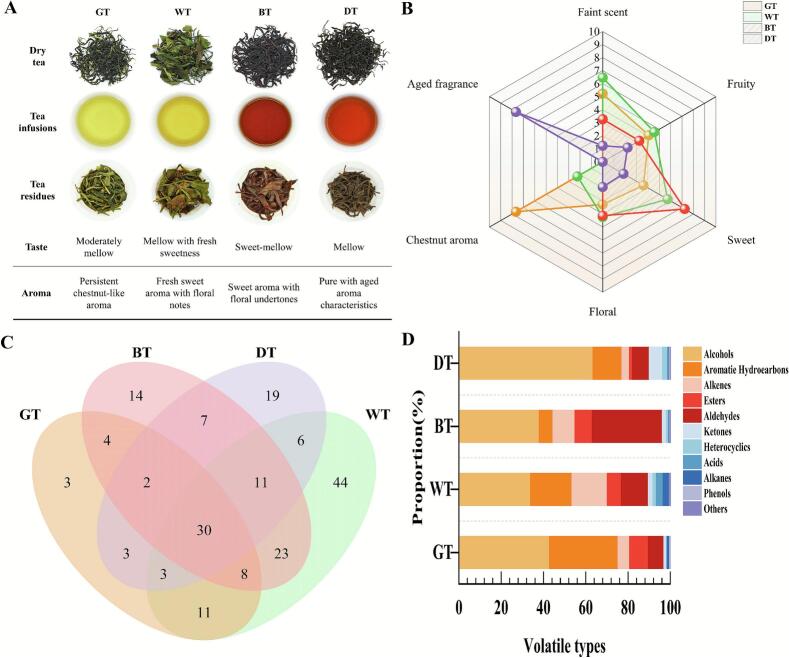 Figure 2
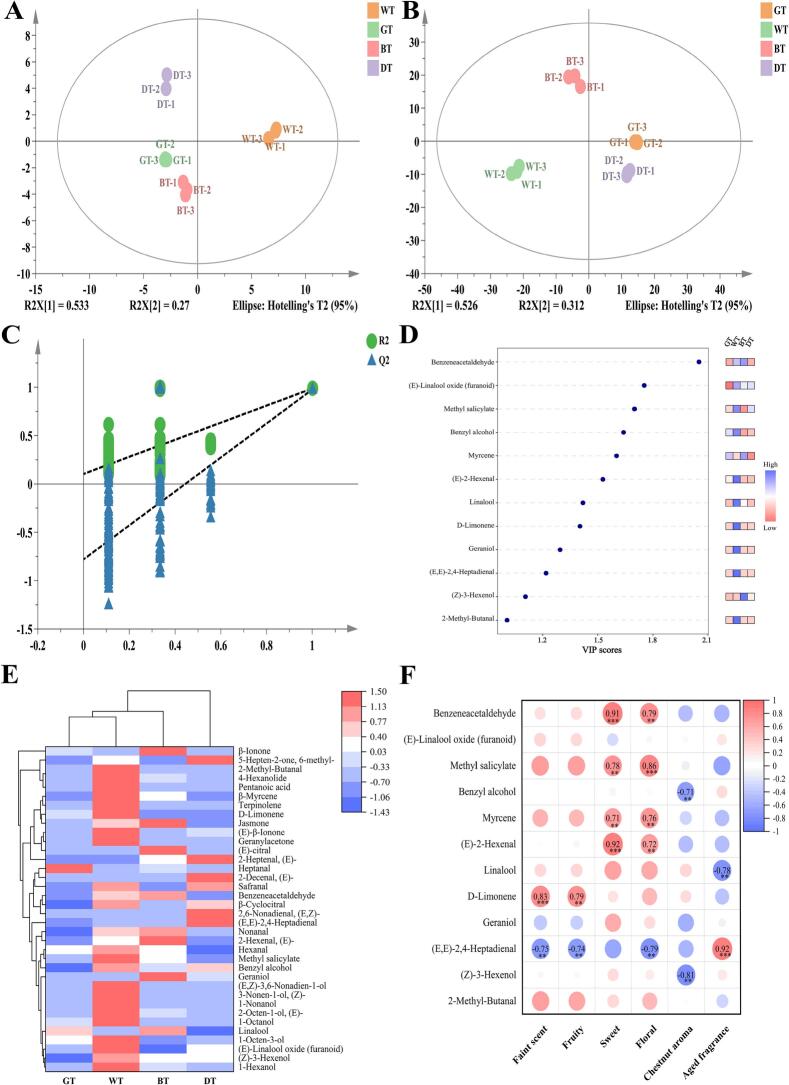 Figure 3
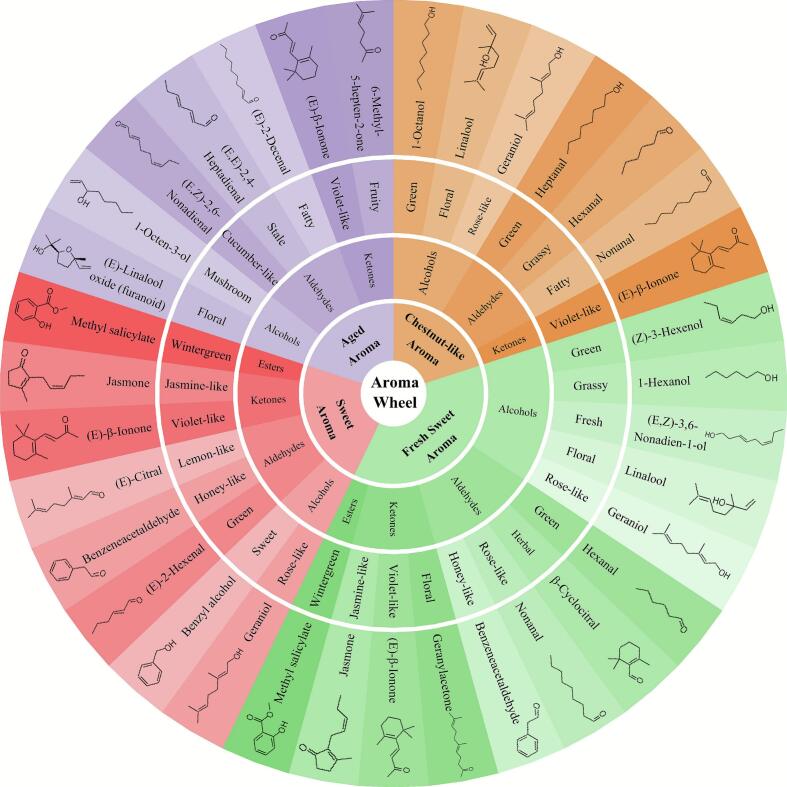 Figure 4
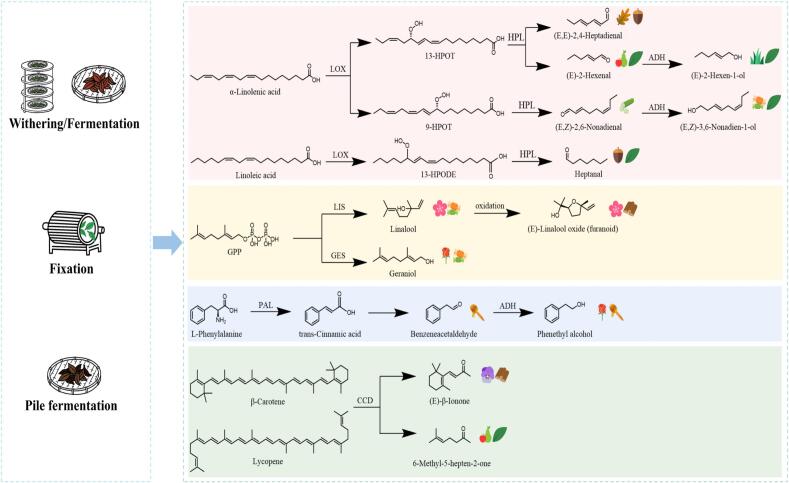 Figure 5
Peer Reviews
No public reviews on file for this paper yet. If you reviewed it on a platform where reviews are public (OpenReview, ICLR, NeurIPS, ICML), you can paste yours below so the community can read it here.
Videos
No videos yet. Explain this paper in a talk, walkthrough, or lecture? Add one.
Taxonomy
TopicsTea Polyphenols and Effects · Fermentation and Sensory Analysis · Sirtuins and Resveratrol in Medicine