A standardized approach to test missense PNPLA1 rare genetic variants of uncertain significance in epidermal differentiation disorders
Nuria Pell, Pauline Bernard, Séverine Courrech, Lukas Opalka, Aina Millán-Sánchez, Elise Levy, Séverine Garnier, Cyrielle Clément, Pauline Le Faouder, Katerina Vávrová, Olga López, Justine Bertrand-Michel, Corinne Leprince, Isabelle Fourquaux, José-Enrique Mejia

TL;DR
The paper introduces a standardized method to test rare genetic variants in PNPLA1 linked to skin disorders, helping determine if these variants cause disease.
Contribution
A novel functional testing approach for classifying missense variants of uncertain significance in PNPLA1 using human epidermal equivalents.
Findings
PNPLA1-knockout cells showed disrupted synthesis of ω-O-acylceramide and abnormal epidermal structures.
VUS-encoded PNPLA1 produced similar defects, indicating impaired function.
The method can be extended to other genes involved in epidermal differentiation disorders.
Abstract
Congenital ichthyoses, now renamed epidermal differentiation disorders (EDDs) (syndromic EDD or nonsyndromic EDD), are rare, disabling conditions caused by sequence variations in epidermal barrier genes. However, 5–10% of variants, called “variants of uncertain significance” (VUS), remain uncharacterized, and their pathogenicity is not demonstrated. We developed an approach for classifying VUS in nonsyndromic EDD associated with variant in PNPLA1. We generated PNPLA1-knockout human keratinocytes. PNPLA1, encoded by a missense VUS or by the reference coding sequence, was expressed after lentiviral transduction in the PNPLA1-knockout cells. Transduced cells were used to produce human epidermal equivalents, and the functionality of the normal or VUS-encoded proteins was evaluated. Compared with PNPLA1-knockout human epidermal equivalents re-expressing normal PNPLA1, PNPLA1-knockout human…
Genes, proteins, chemicals, diseases, species, mutations and cell lines named across the full text — each resolved to its canonical identifier and authoritative record.
Click any figure to enlarge with its caption.
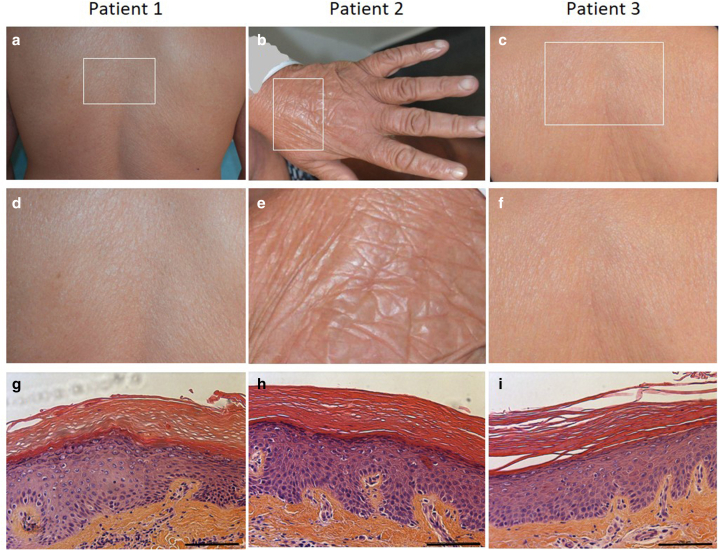 Figure 1
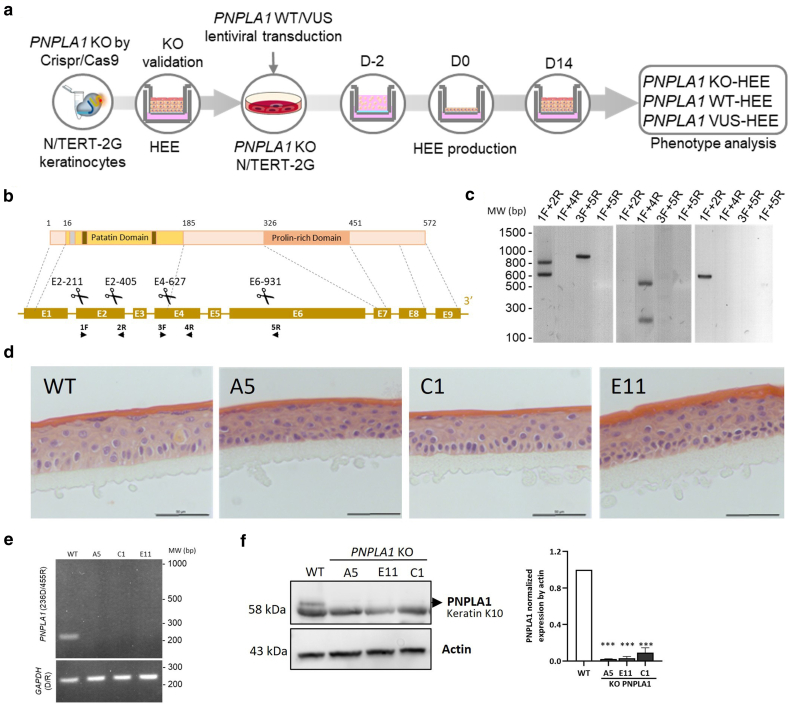 Figure 2
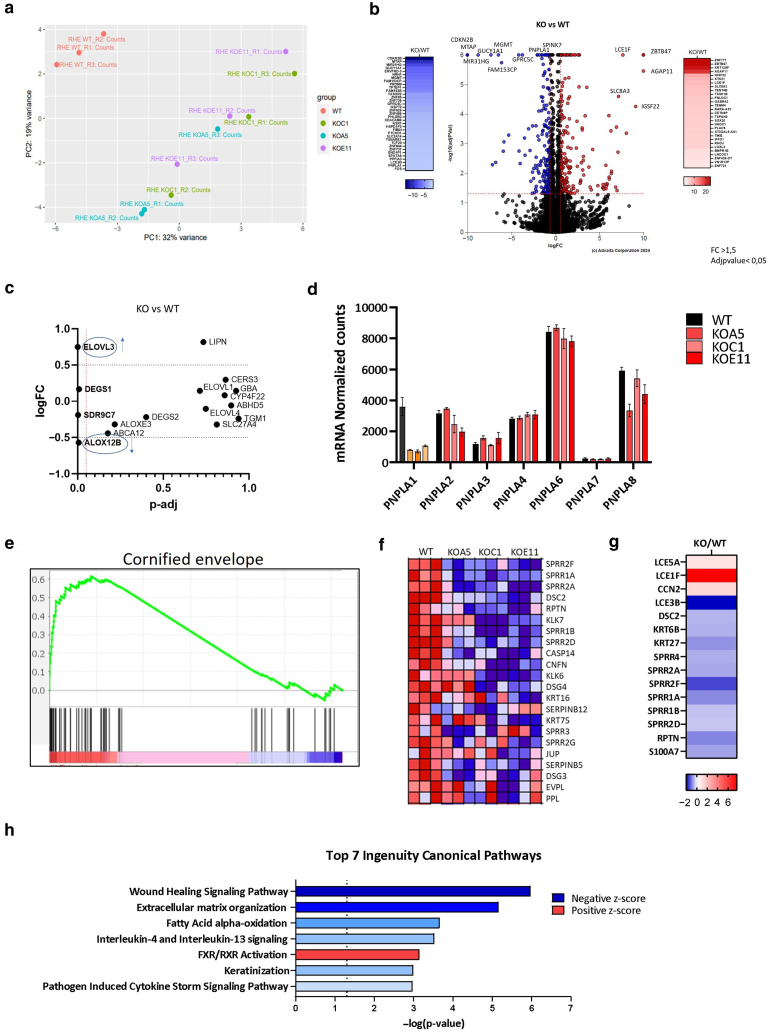 Figure 3
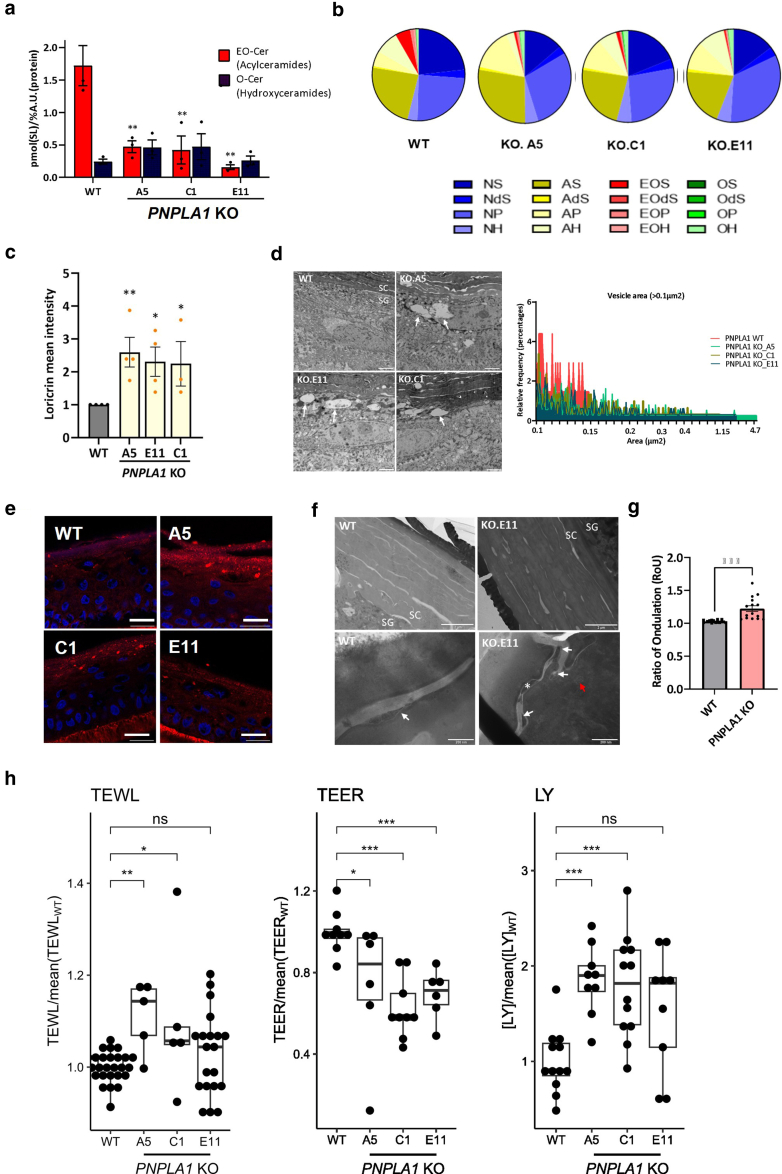 Figure 4
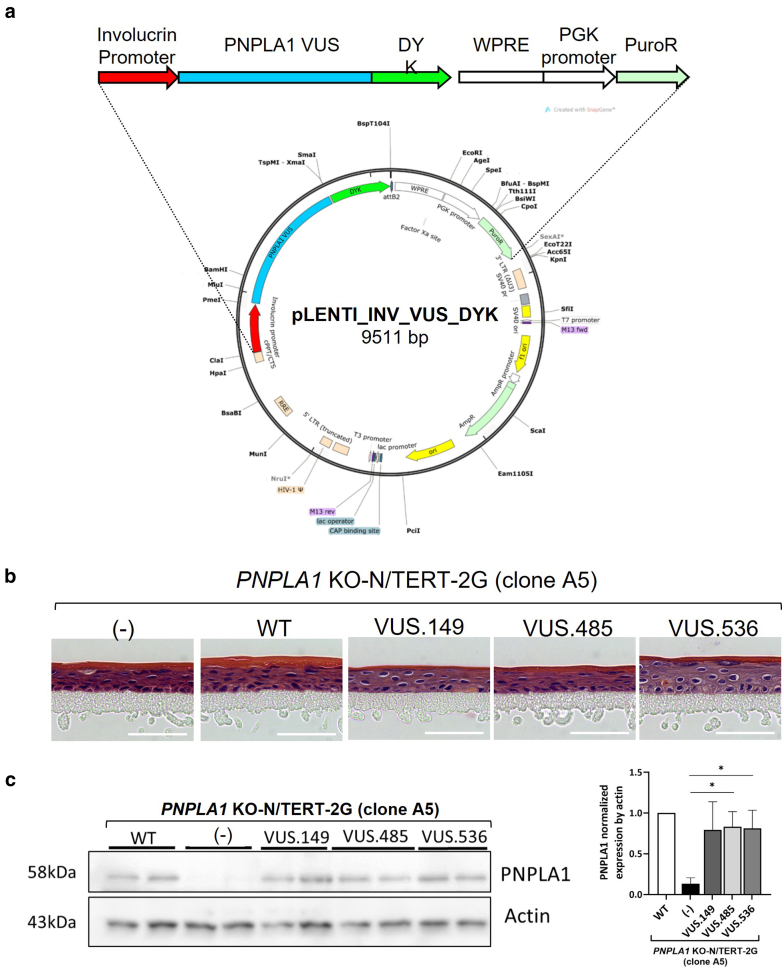 Figure 5
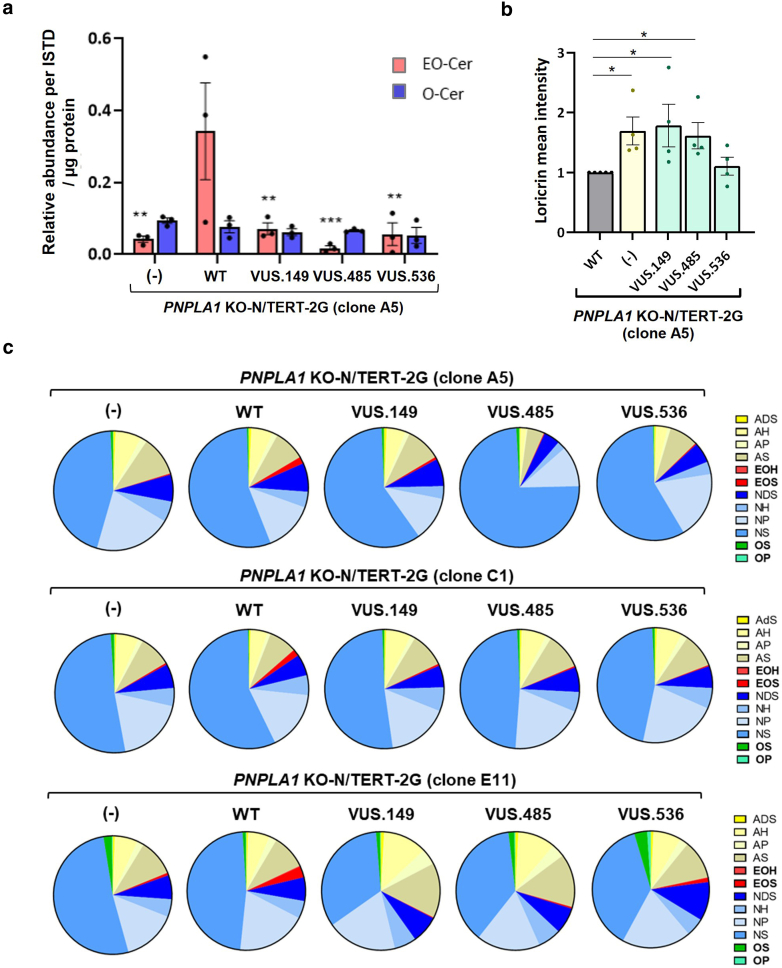 Figure 6
Peer Reviews
No public reviews on file for this paper yet. If you reviewed it on a platform where reviews are public (OpenReview, ICLR, NeurIPS, ICML), you can paste yours below so the community can read it here.
Videos
No videos yet. Explain this paper in a talk, walkthrough, or lecture? Add one.
Taxonomy
TopicsSkin and Cellular Biology Research · Genetic and rare skin diseases. · Dermatological and Skeletal Disorders