Designing an ecofriendly catalyst for a sustainable use of water resources
Dehui Qiu, Xiaobo Zhang, Fan Tian, Yuan Liu, Fangni He, Xinrong Yan, Shijiong Wei, Jean-Louis Mergny, David Monchaud, Shujuan Zhang, Huangxian Ju, Jun Zhou

TL;DR
A new eco-friendly catalyst is developed to help reduce pollution and water waste in the textile industry.
Contribution
A novel bifunctional chimeric peptide DNAzyme (bi-CPDzyme) is developed with superior catalytic performance for sustainable water treatment.
Findings
The bi-CPDzyme prototype outperforms natural enzymes in catalase and peroxidase activities.
The catalyst efficiently decomposes hydrogen peroxide and degrades dyes in real textile industry samples.
The design incorporates histidine and arginine residues to enhance catalytic efficiency.
Abstract
The printing and dyeing industry is one of the most polluting (∼20% of global clean water pollution), water-consuming and energy-wasting sectors in the manufacturing field, highlighting the need to find green catalysts to improve its sustainability. Herein, a novel artificial green catalyst was developed, known as a bifunctional chimeric peptide DNAzyme (bi-CPDzyme), comprising peptide, DNA and hemin moieties. This catalyst displays both catalase (CAT) and peroxidase (POD) activities. The turnover number (kcat) of the optimized bi-CPDzyme prototype (G-quadruplex-Hemin-HRRHKHRRH) surpasses the natural CAT/POD bifunctional enzyme KatG, and competes with individual CAT and POD enzymes. This remarkable performance is attributed to the strategic combination and incorporation of histidine (H) and arginine (R) residues, which effectively trap hydrogen peroxide (H2O2) near the catalytic center…
Genes, proteins, chemicals, diseases, species, mutations and cell lines named across the full text — each resolved to its canonical identifier and authoritative record.
Click any figure to enlarge with its caption.
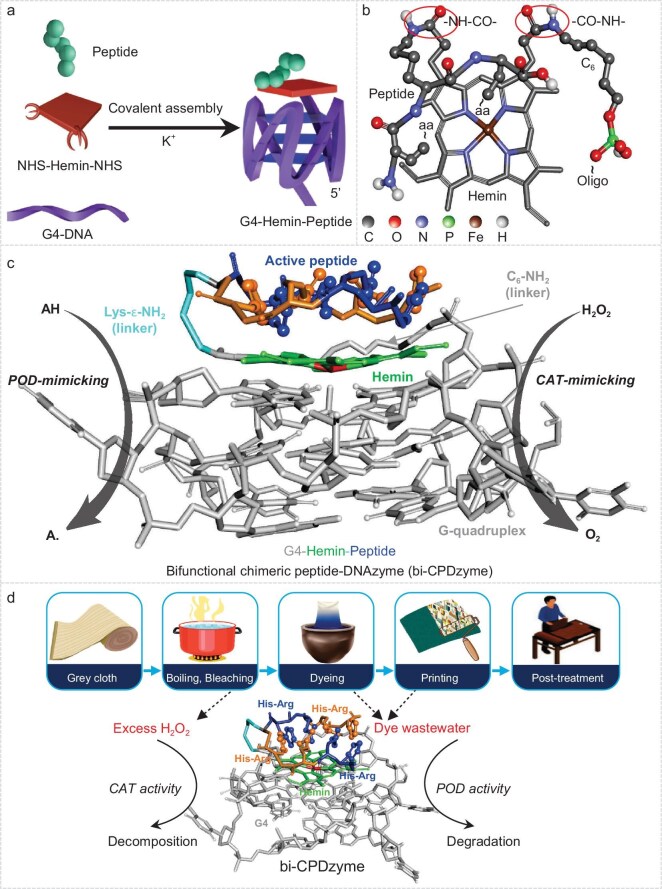 Figure 1
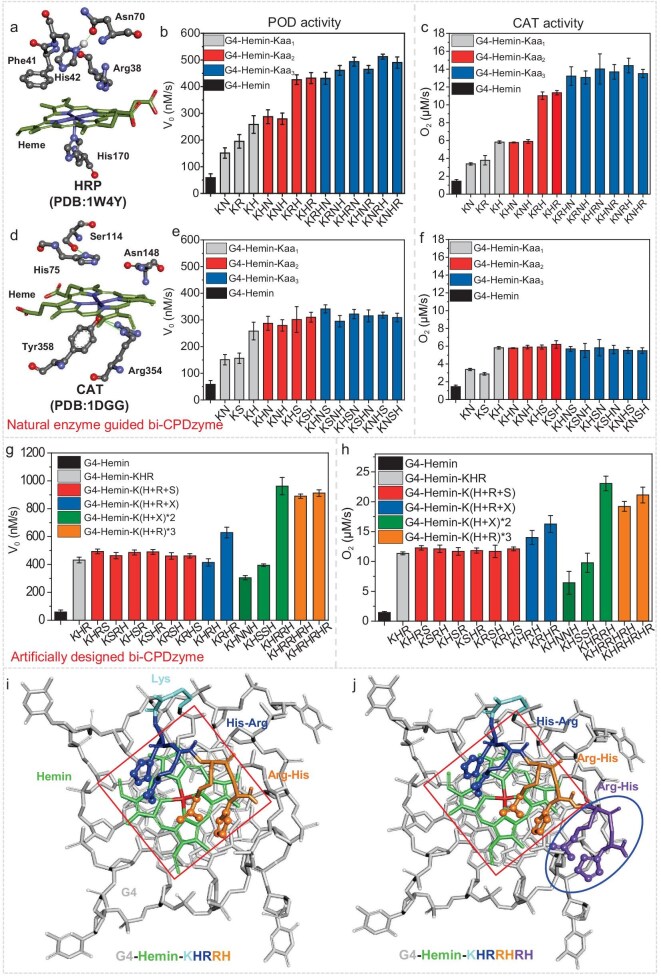 Figure 2
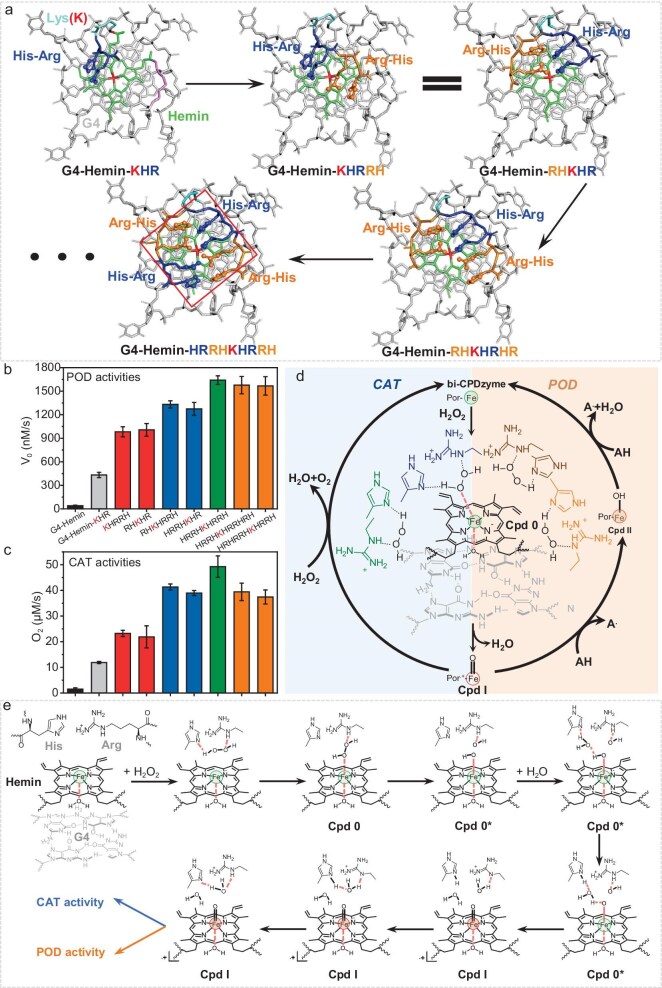 Figure 3
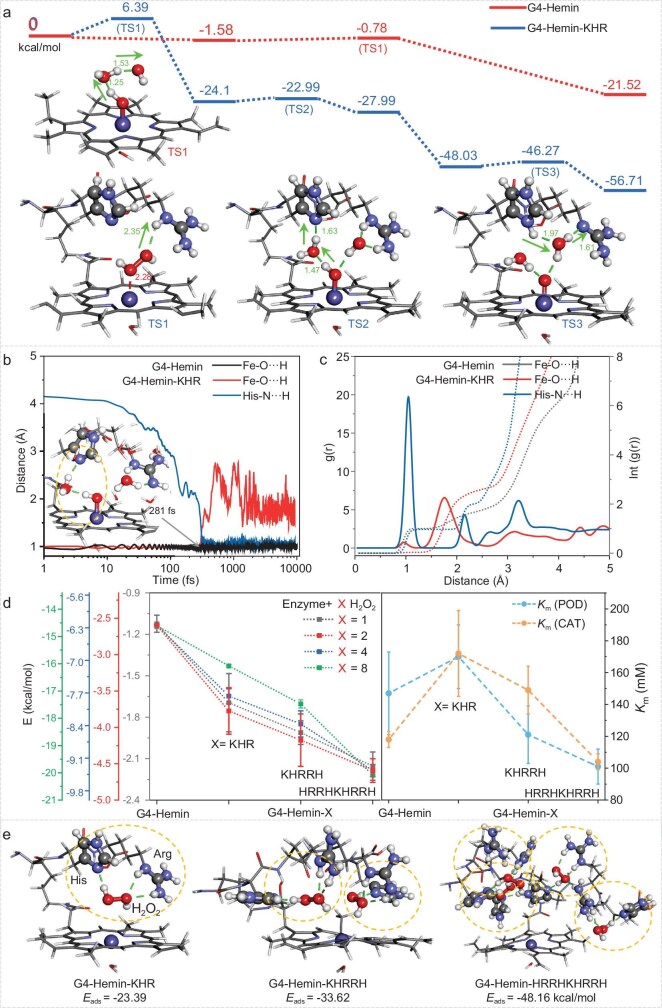 Figure 4
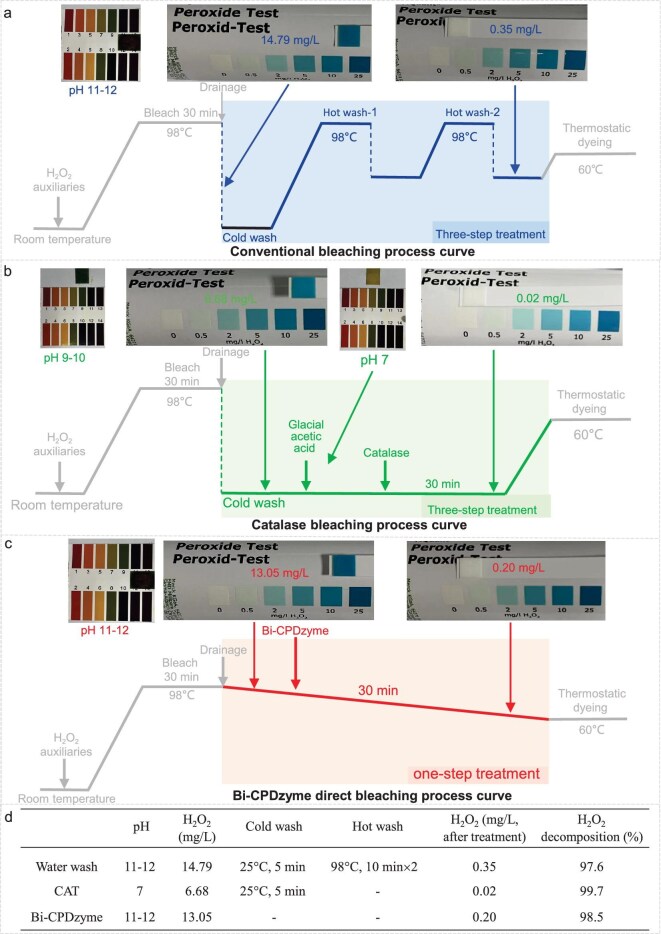 Figure 5
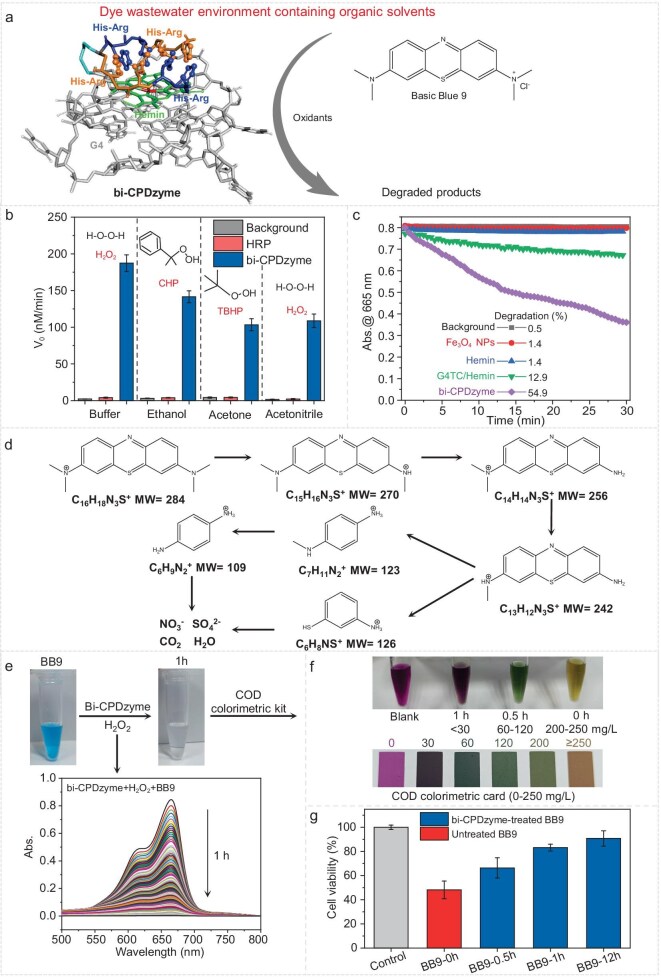 Figure 6
Peer Reviews
No public reviews on file for this paper yet. If you reviewed it on a platform where reviews are public (OpenReview, ICLR, NeurIPS, ICML), you can paste yours below so the community can read it here.
Videos
No videos yet. Explain this paper in a talk, walkthrough, or lecture? Add one.
Taxonomy
TopicsAdvanced biosensing and bioanalysis techniques · Chemical Synthesis and Analysis · Click Chemistry and Applications