Pericytes in Notch3 knockout and diabetic mice form engorged connections with vascular endothelial cells
Timothy E. Vanderleest, Harper B. Gordon, Michael O’Hare, Philip Seifert, Joseph F. Arboleda-Velasquez

TL;DR
This study uses electron microscopy to show that pericytes in mice lacking the Notch3 receptor or with diabetes form larger connections with blood vessel cells, possibly to compensate for disrupted signaling.
Contribution
The study reveals a novel ultrastructural adaptation in pericyte-endothelial cell interactions under Notch3 deficiency and diabetes.
Findings
Notch3 knockout vessels showed deeper pegs and increased pericyte-endothelial connectivity.
Both Notch3 knockout and diabetic conditions exhibited enlarged pericyte pegs.
The findings suggest pericytes and endothelial cells increase contact surface to compensate for Notch3 signaling loss.
Abstract
Pericytes, cells crucially important to maintain a healthy microvasculature, make direct connections with vascular endothelial cells, yet the functional significance of these contacts remains largely unexplored. This study aims to investigate the ultrastructural morphological changes that occur in the interactions between pericytes and endothelial cells in mice lacking the Notch3 receptor and in diabetic retinopathy. Serial section transmission electron microscopy (ssTEM) was used to image mouse retinal ganglion cell layer capillaries in wild type (WT; 19 vessels), Notch3 knockout (KO; 16 vessels), conditional Notch3 KO (23 vessels), and diabetic mice (18 vessels). Over 2,000 images were manually segmented to trace the boundaries of the basement membrane, endothelial cells, mural cells, and peg-and-socket connections. Automated image analysis was used to measure contact lengths between…
Genes, proteins, chemicals, diseases, species, mutations and cell lines named across the full text — each resolved to its canonical identifier and authoritative record.
Click any figure to enlarge with its caption.
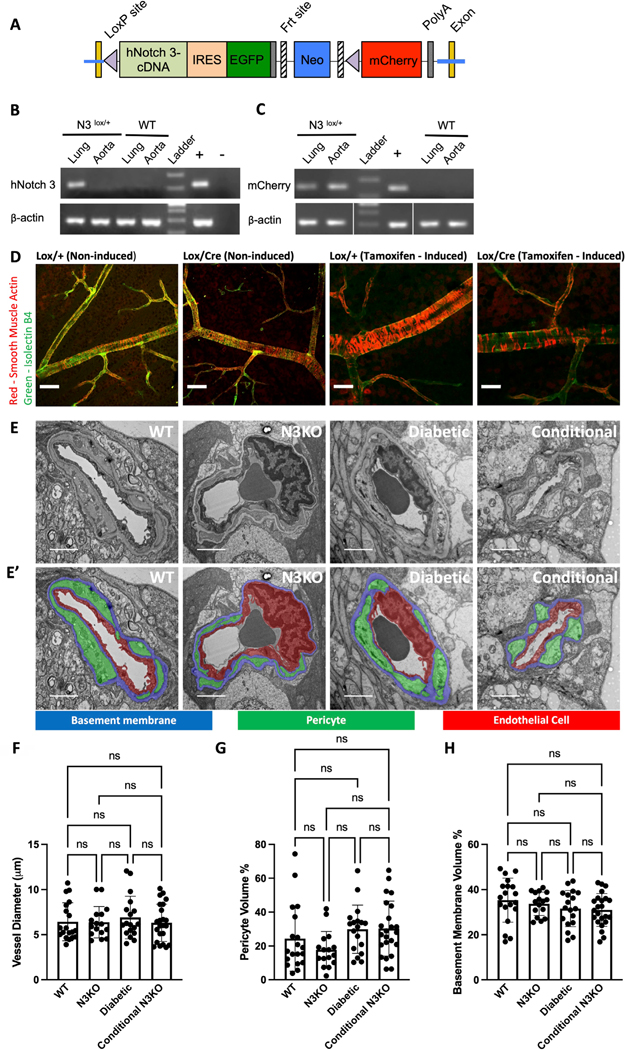 Figure 1
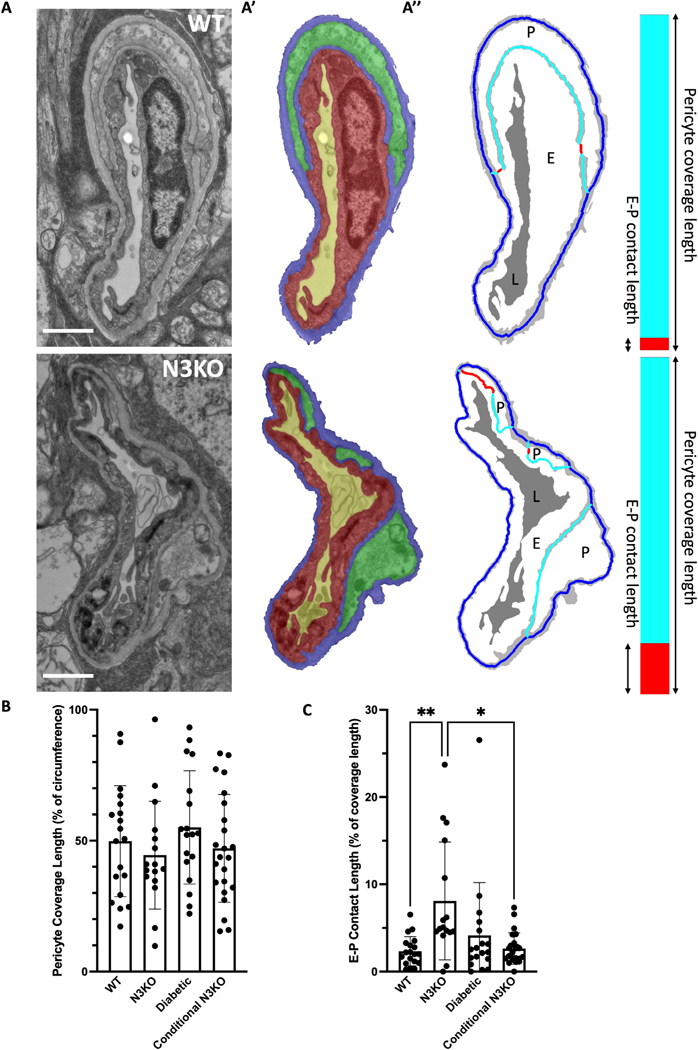 Figure 2
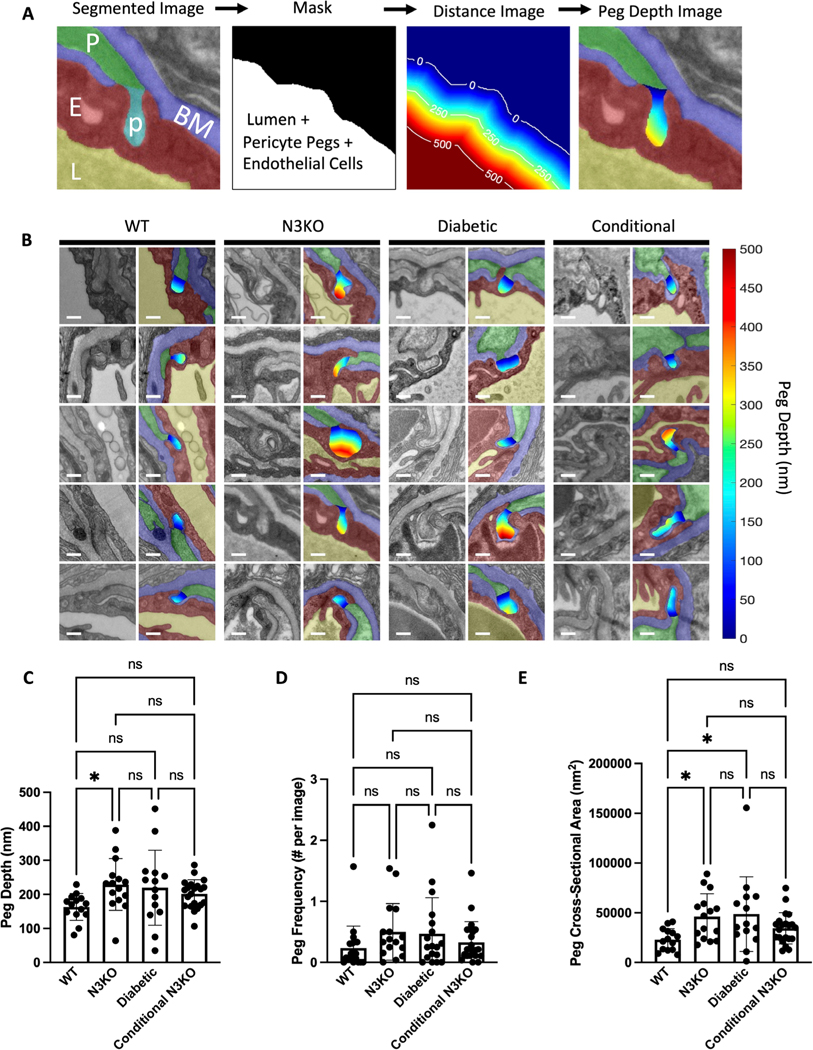 Figure 3
Peer Reviews
No public reviews on file for this paper yet. If you reviewed it on a platform where reviews are public (OpenReview, ICLR, NeurIPS, ICML), you can paste yours below so the community can read it here.
Videos
No videos yet. Explain this paper in a talk, walkthrough, or lecture? Add one.
Taxonomy
TopicsKruppel-like factors research · Developmental Biology and Gene Regulation · Cancer-related molecular mechanisms research