Machine learning prediction models for visual impairment in Chinese adults aged ≥ 45 years with cardiovascular metabolic diseases: a population-based study using CHARLS
Yuhao Liu, Riyan Zhang, Duoduo Xie, Min Liu, Guanshun Yu, Zhong Lin, Jia Qu, Ronghan Wu

TL;DR
This study uses machine learning to predict vision impairment in older Chinese adults with cardiovascular metabolic diseases, identifying key risk factors and developing a model for early detection.
Contribution
A novel logistic regression-based prediction model for vision impairment in CMD patients with interpretable results and stable performance.
Findings
Eleven significant predictors of vision impairment were identified, including hearing impairment, depressive symptoms, and glaucoma history.
Logistic regression showed the most stable performance across training and validation sets with AUCs between 0.693 and 0.705.
A nomogram was developed for individualized risk estimation, aiding clinical decision-making in resource-limited settings.
Abstract
There has been a growing prevalence of cardiovascular metabolic diseases (CMD) in adults aged ≥ 45 years, and vision impairment (VI) is highly prevalent in this population. The objective of this study was to explore the critical determinants of VI in individuals affected by CMD and to develop risk prediction models. We analyzed data collected in 2011 (n = 1,926) and 2015 (n = 3,033) within the China Health and Retirement Longitudinal Study (CHARLS). Risk factors were selected using the least absolute shrinkage and selection operator (LASSO) regression followed by multivariable logistic regression analysis. Eight machine learning (ML) algorithms were applied: LR, GBM, XGBoost, LightGBM, CatBoost, AdaBoost, NN, and SVM. The evaluation of model performance incorporated ROC curves, calibration assessments, and decision curve analysis. Eleven predictors demonstrated significant links to VI…
Genes, proteins, chemicals, diseases, species, mutations and cell lines named across the full text — each resolved to its canonical identifier and authoritative record.
Click any figure to enlarge with its caption.
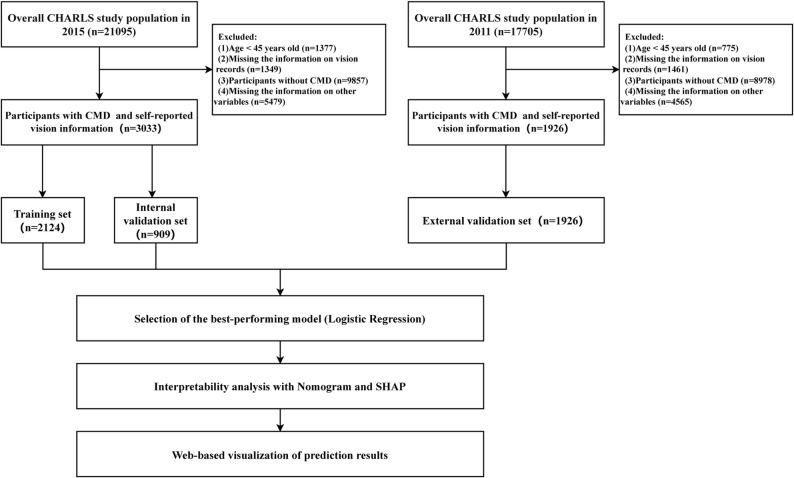 Figure 1
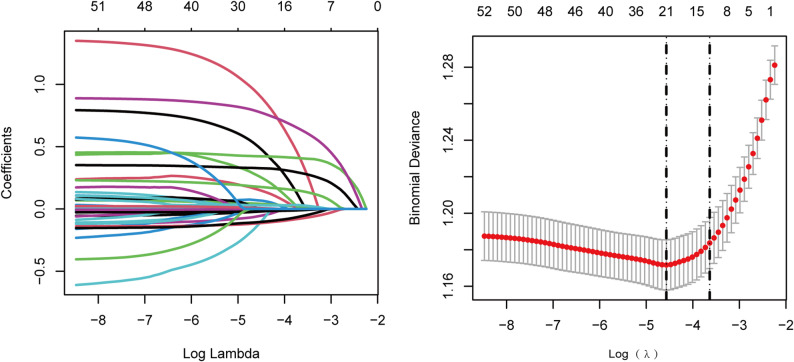 Figure 2
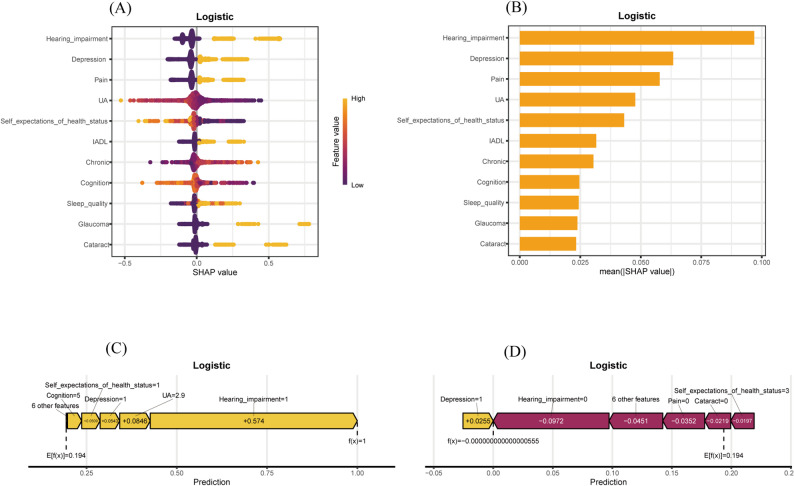 Figure 3
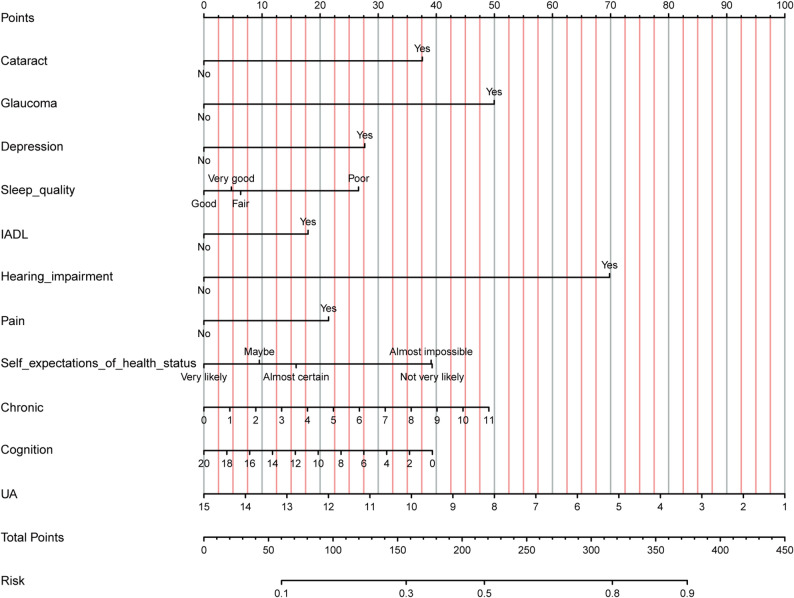 Figure 4
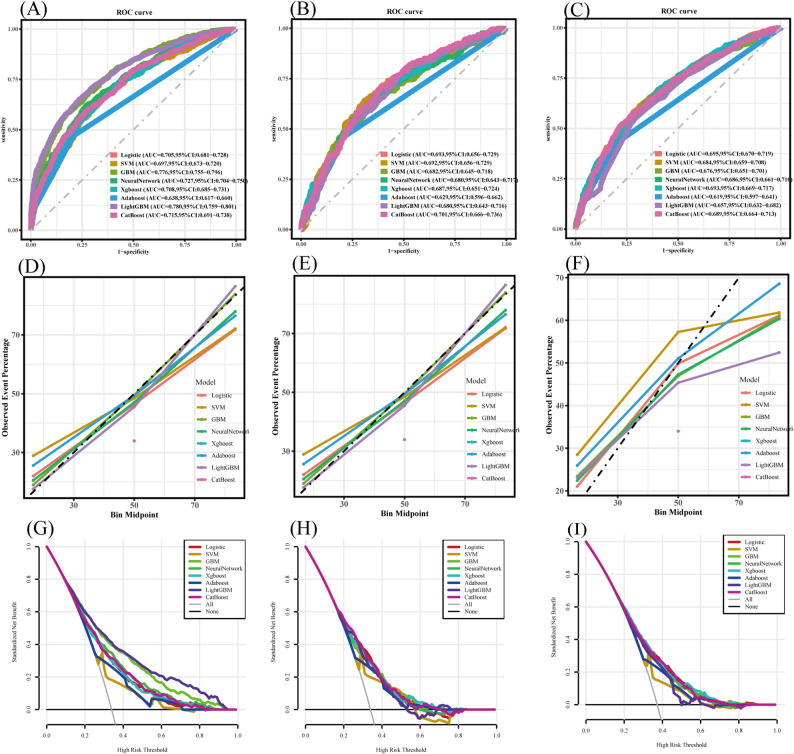 Figure 5
Peer Reviews
No public reviews on file for this paper yet. If you reviewed it on a platform where reviews are public (OpenReview, ICLR, NeurIPS, ICML), you can paste yours below so the community can read it here.
Videos
No videos yet. Explain this paper in a talk, walkthrough, or lecture? Add one.
Taxonomy
TopicsOphthalmology and Visual Impairment Studies · Retinal Diseases and Treatments · Connexins and lens biology