Sex differences in cardiac risk and kidney function: serum creatinine versus cystatin C
Nicole L. De La Mata, James A. Hedley, Angela C. Webster, Michael K. Sullivan, Brenda M. Rosales, Patrick B. Mark, Jennifer S. Lees

TL;DR
Cystatin C better predicts heart risk in women compared to serum creatinine, suggesting it could improve early detection of kidney-related heart issues in females.
Contribution
This study reveals that cystatin C-based kidney function estimates are more effective than serum creatinine in assessing cardiac risk, especially in women.
Findings
Cystatin C-based eGFR showed stronger associations with increased cardiovascular risk in females compared to serum creatinine-based eGFR.
Females with moderate cystatin C-based eGFR had elevated cardiac risk, an effect not observed with serum creatinine-based eGFR.
Cystatin C-based eGFR showed a linear association with cardiac risk, while serum creatinine-based eGFR showed a J-shaped pattern.
Abstract
Cystatin C may better assess cardiovascular risk than serum creatinine for kidney function, but its accuracy may vary by sex. We evaluated sex differences in cardiac risk using estimated kidney function from either biomarker. We included all adults from the UK Biobank without prior cardiac event who had kidney function and baseline data. We defined cardiac events and deaths using ICD-10 codes in hospital or death records. We fitted cause-specific Cox models to evaluate sex differences in cardiac outcomes using estimated glomerular filtration (mL/min/1.73m2) from serum creatinine (eGFRCr), cystatin C (eGFRCys) and both (eGFRCr-Cys). Among 394,920 adults (55% female), 19,689 (9%) females and 28,540 (16%) males had cardiac events. In adjusted models, eGFRCys and eGFRCr-Cys showed stronger associations with increased cardiovascular risk in females than when using eGFRCr (p < 0.001).…
Genes, proteins, chemicals, diseases, species, mutations and cell lines named across the full text — each resolved to its canonical identifier and authoritative record.
Click any figure to enlarge with its caption.
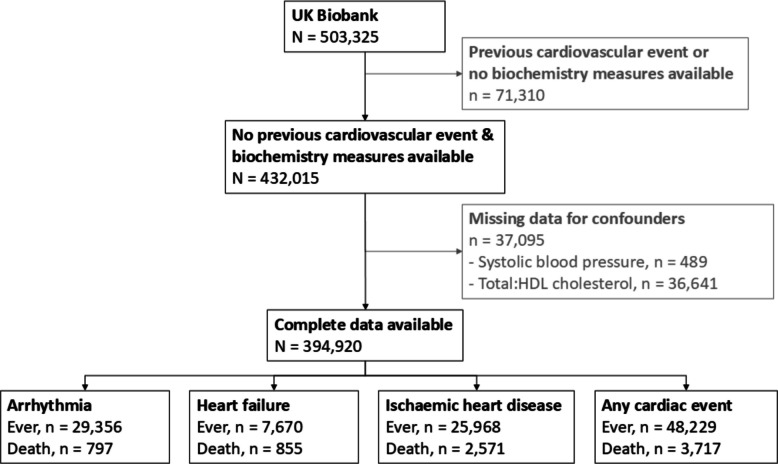 Figure 1
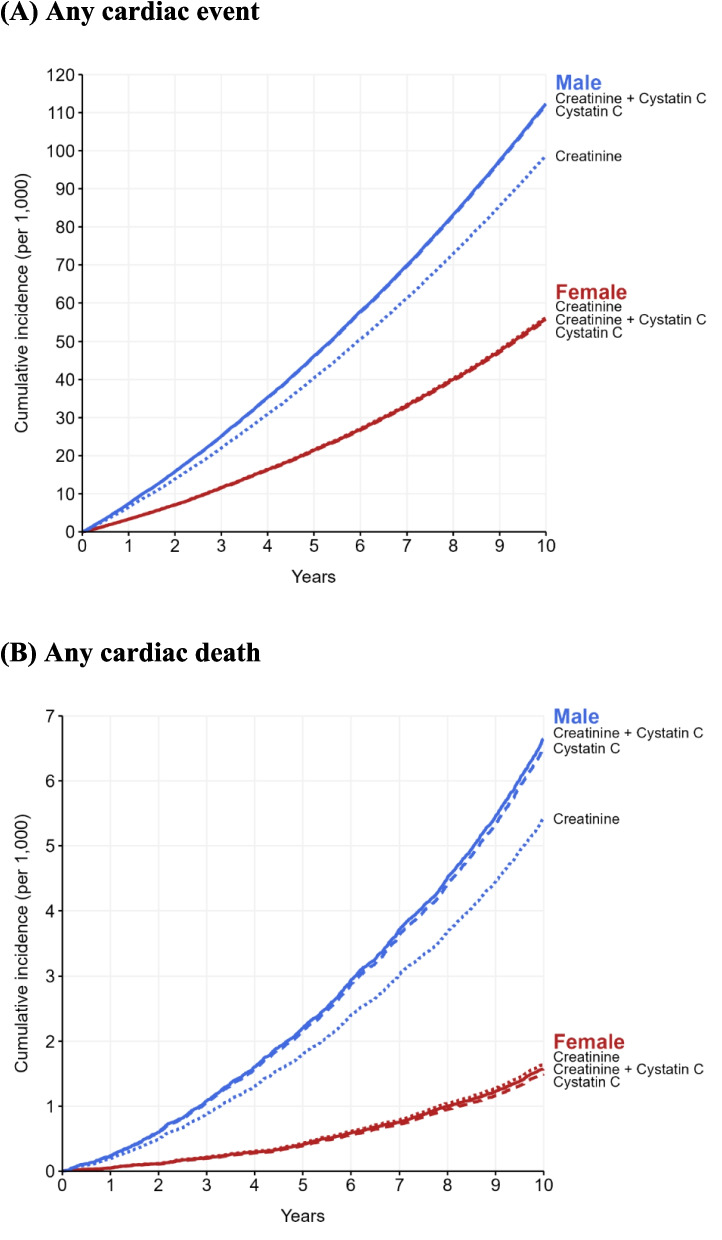 Figure 2
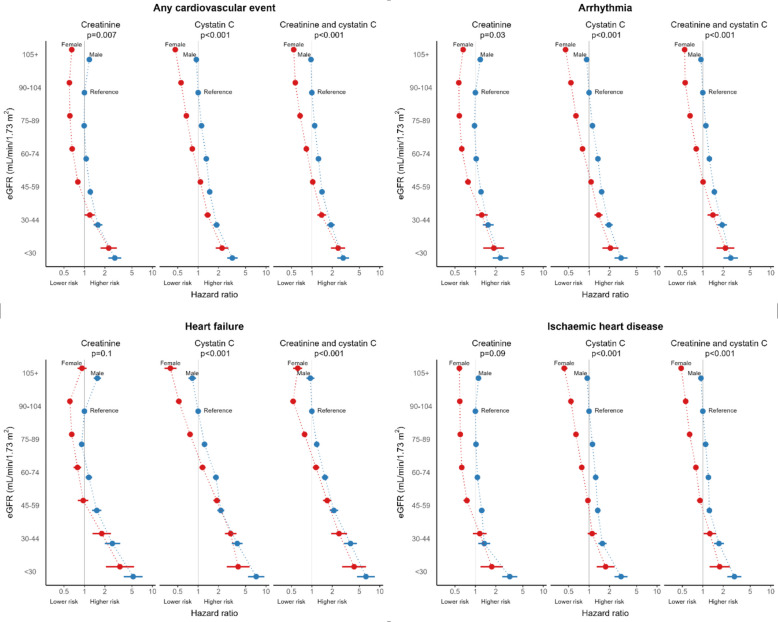 Figure 3
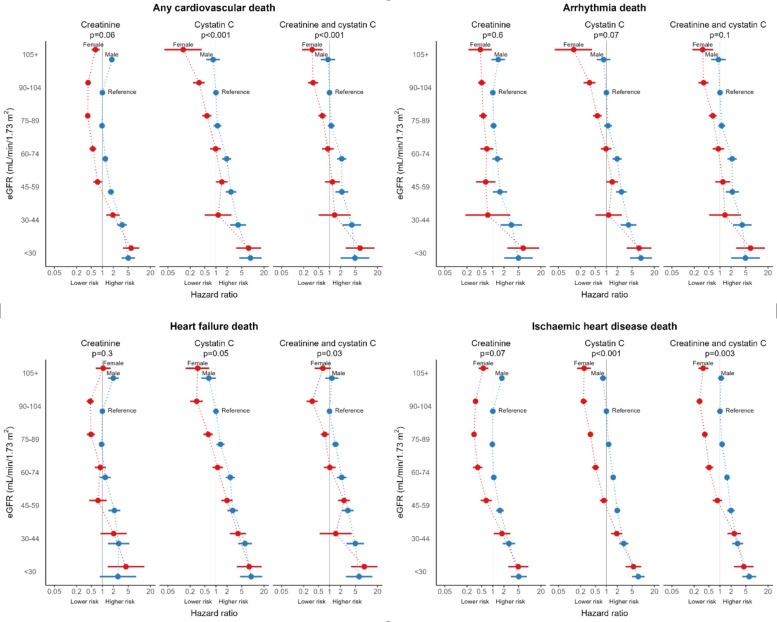 Figure 4
Peer Reviews
No public reviews on file for this paper yet. If you reviewed it on a platform where reviews are public (OpenReview, ICLR, NeurIPS, ICML), you can paste yours below so the community can read it here.
Videos
No videos yet. Explain this paper in a talk, walkthrough, or lecture? Add one.
Taxonomy
TopicsChronic Kidney Disease and Diabetes · Acute Kidney Injury Research · Dialysis and Renal Disease Management