Association between body roundness index trajectories and the incidence of diabetes mellitus: a perspective from the China health and retirement longitudinal study
Fucun Ma, Ruixue Zhang, Wenyao Geng, Zheng Gao, Chenhui Li, Jie Liu, Jie Zhang, Xuekai Liu, Meijing Feng, Mingjian Bai, Guowei Liang

TL;DR
This study finds that people with consistently high body roundness index (BRI) over time are at higher risk of developing diabetes, suggesting long-term monitoring of body shape could help identify diabetes risk early.
Contribution
The study introduces longitudinal body roundness index (BRI) trajectory modeling as a novel method for diabetes risk assessment.
Findings
Participants with high-stable BRI had a 2.63 times higher risk of developing diabetes compared to those with low-stable BRI.
Longitudinal BRI trajectories improved diabetes risk reclassification and discrimination beyond single-time-point measures.
BRI trajectories showed comparable predictive power to BMI and waist circumference for diabetes risk.
Abstract
To investigate the associations between longitudinal body roundness index (BRI) trajectories and the risk of incident diabetes mellitus (DM) using data from the China Health and Retirement Longitudinal Study (CHARLS). Group-based trajectory modeling (GBTM) identified distinct BRI trajectories (Waves 1–3, 2011–2016). Their associations with DM incidence (Wave 4, 2017–2018) were assessed using multivariate Cox models. The predictive performance of a single baseline BRI was compared with body mass index (BMI) and waist circumference (WC) via receiver operating characteristic (ROC) analysis. Net reclassification improvement (NRI) and integrated discrimination improvement (IDI) evaluated the incremental value of adding BRI trajectories to a conventional risk model. Subgroup and sensitivity analyses, including a landmark approach, assessed robustness. Among 4,150 participants, 103 developed…
Genes, proteins, chemicals, diseases, species, mutations and cell lines named across the full text — each resolved to its canonical identifier and authoritative record.
Click any figure to enlarge with its caption.
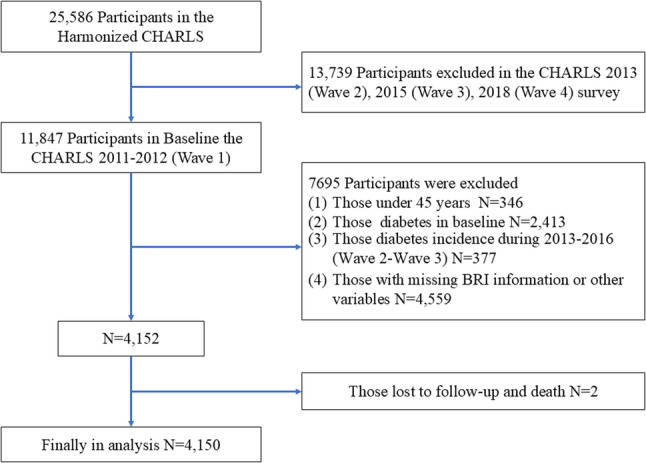 Figure 1
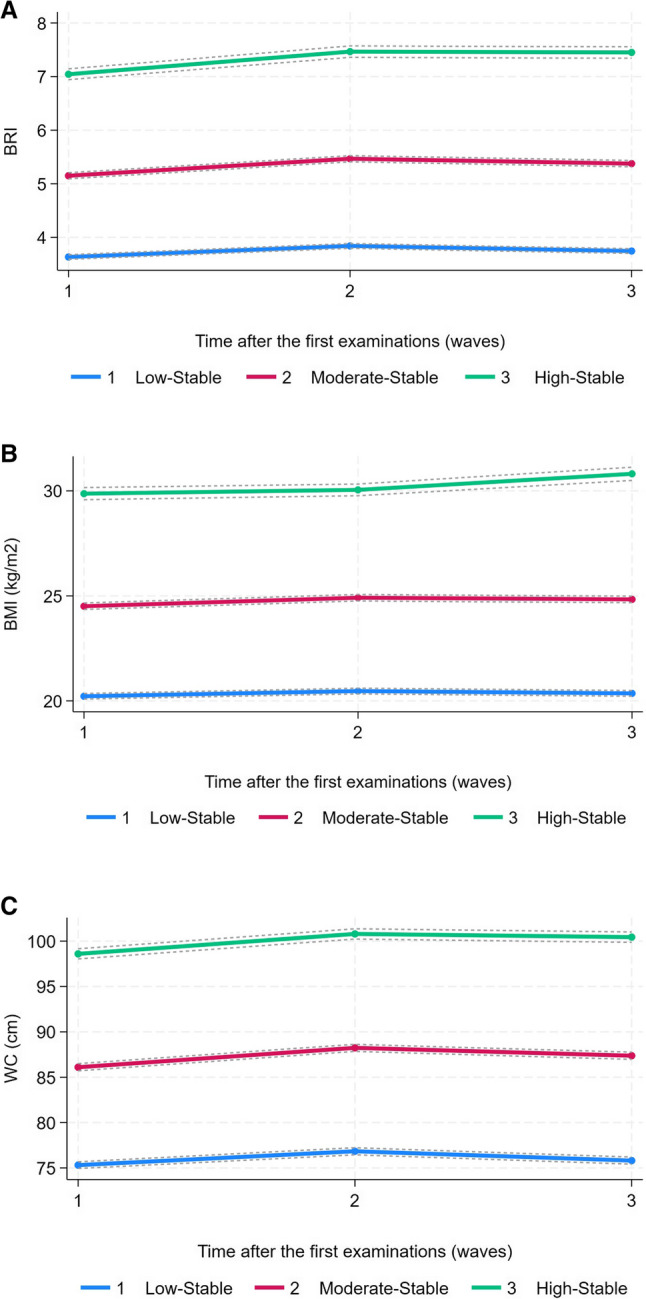 Figure 2
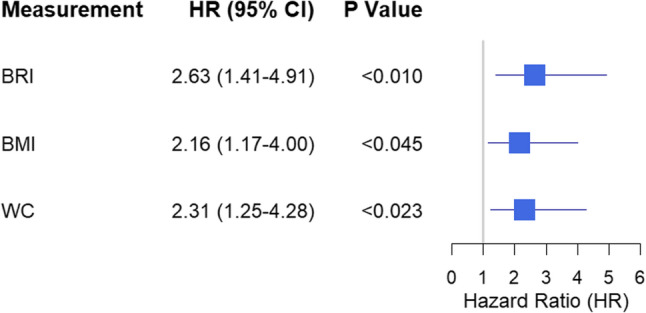 Figure 3
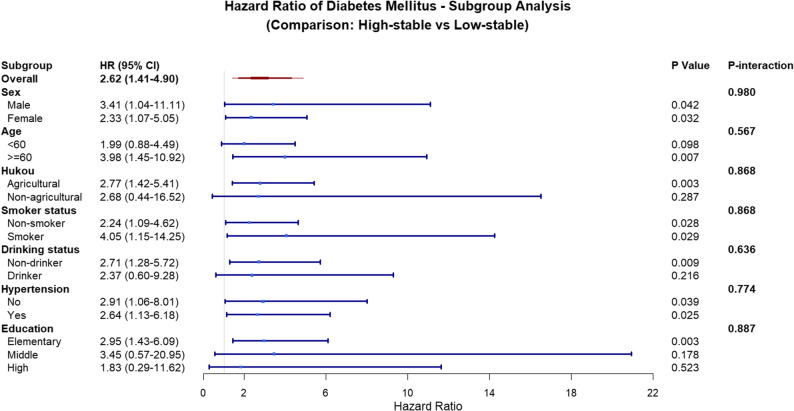 Figure 4
Peer Reviews
No public reviews on file for this paper yet. If you reviewed it on a platform where reviews are public (OpenReview, ICLR, NeurIPS, ICML), you can paste yours below so the community can read it here.
Videos
No videos yet. Explain this paper in a talk, walkthrough, or lecture? Add one.
Taxonomy
TopicsNutrition and Health in Aging · Bariatric Surgery and Outcomes · Body Composition Measurement Techniques