Explicit gender stereotypes and sexually polymorphic cognition by gender identity
Mina Guérin, Fanny Saulnier, Louis Cartier, Marco Hirnstein, Sébastien Hétu, Robert-Paul Juster

TL;DR
This study explores how gender stereotypes and identity affect cognitive performance in cis and transgender/nonbinary individuals.
Contribution
It is the first to examine SPC in a sample including transgender and nonbinary people and how stereotypes influence cognitive performance.
Findings
TNB people showed a distinct cognitive profile compared to cis men and women.
Explicit gender stereotypes had no direct impact on cognitive performance in this diverse sample.
Cognitive gender differences varied across experimental conditions, suggesting inconsistency in the literature.
Abstract
Sexually polymorphic cognition (SPC) is influenced by sex differences and gender diversity. These differences have long been studied from a biological approach, but more and more studies are pointing to the importance of considering socio-culturalzgender-related factors. Several studies have shown, for example, that explicit gender stereotypes can modulate performance on cognitive tasks that are sexually dimorphic. However, no study has examined the relationship between gender stereotypes and SPC in a population that includes transgender and nonbinary (TNB) people. We recruited 488 adults who completed eight cognitive tasks measuring a range of cognitive functions during a 150-minute session. The three groups were cis women (n = 160), cis men (n = 172), and TNB people (n = 156). Participants were randomly assigned to three experimental conditions: a control condition and two conditions…
Genes, proteins, chemicals, diseases, species, mutations and cell lines named across the full text — each resolved to its canonical identifier and authoritative record.
Click any figure to enlarge with its caption.
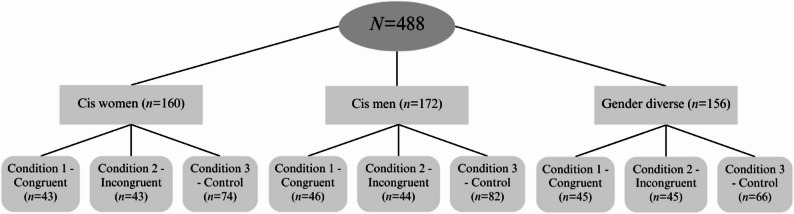 Figure 1
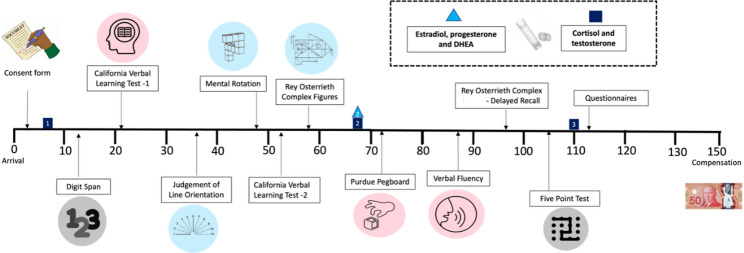 Figure 2
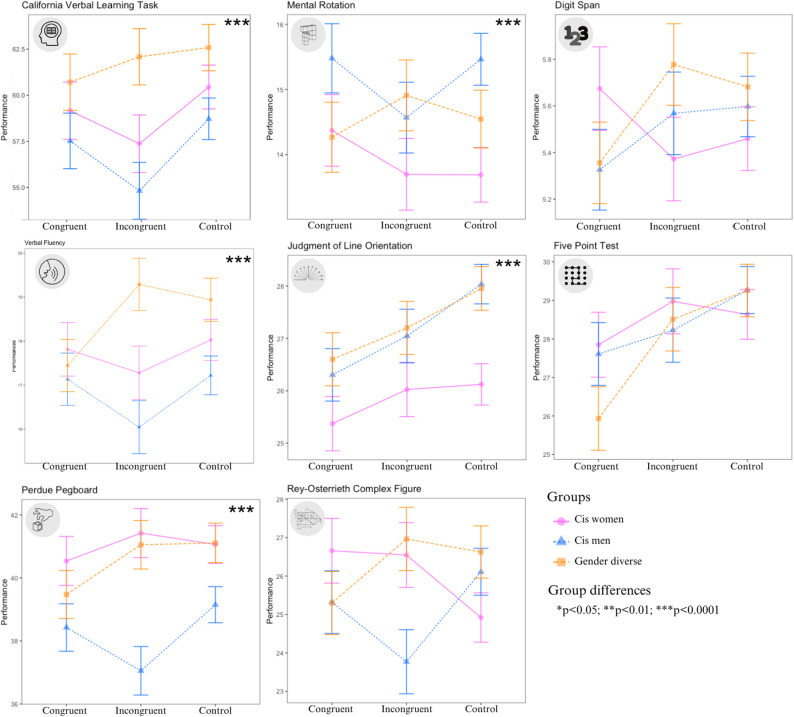 Figure 3
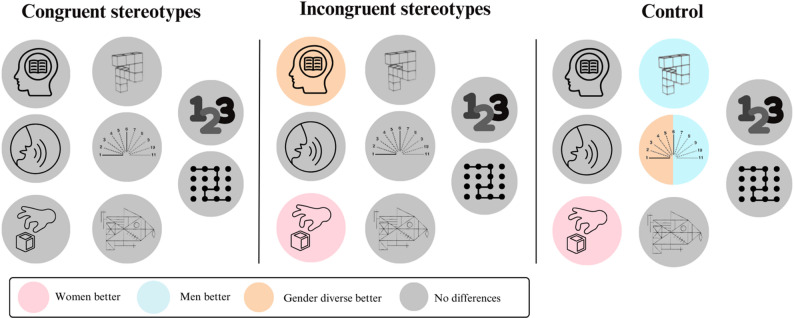 Figure 4
Peer Reviews
No public reviews on file for this paper yet. If you reviewed it on a platform where reviews are public (OpenReview, ICLR, NeurIPS, ICML), you can paste yours below so the community can read it here.
Videos
No videos yet. Explain this paper in a talk, walkthrough, or lecture? Add one.
Taxonomy
TopicsLGBTQ Health, Identity, and Policy · Social and Intergroup Psychology · Gender Studies in Language