Applying journey mapping and human-centered design to improve critical care delivery for patients with acute respiratory failure
Sara E. Golden, Patrick G. Lyons, Allison Young, Scott Warner, Anais Tuepker, Ian Ilea, Donald R. Sullivan, Christopher G. Slatore, Kelly C. Vranas

TL;DR
This paper describes using human-centered design to improve ICU care for patients with acute respiratory failure by identifying and addressing system-level barriers.
Contribution
The novel contribution is the development of a prototype system-level intervention to optimize ICU utilization through journey mapping and human-centered design.
Findings
Key barriers to high-value care include lack of ICU admission criteria and poor interdepartmental communication.
A four-component intervention was designed to address ICU overuse and improve care coordination.
The intervention includes explicit ICU admission criteria and re-engineered rapid-response teams.
Abstract
Acute respiratory failure is a common cause for hospitalization and intensive care unit (ICU) admission. Prior literature has found that factors unrelated to patients’ illness severity or clinical needs contribute to substantial variability in ICU admission rates across hospitals. Overuse of the ICU for patients unlikely to benefit from critical care is inefficient, contributes to rising costs, and reduces access to critical care for those who most need it. As part of efforts to improve the efficiency and value of critical care, we utilized human-centered design to create a prototype, system-level intervention designed to optimize ICU utilization for patients hospitalized with acute respiratory failure. We created a multidisciplinary taskforce and conducted four meetings over a 5-month period in 2022 at a VA medical center. We used journey mapping to depict the care continuum of acute…
Genes, proteins, chemicals, diseases, species, mutations and cell lines named across the full text — each resolved to its canonical identifier and authoritative record.
Click any figure to enlarge with its caption.
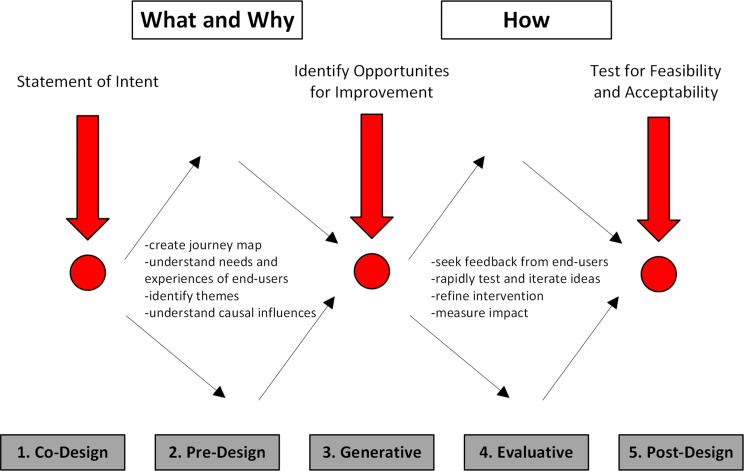 Figure 1
 Figure 2
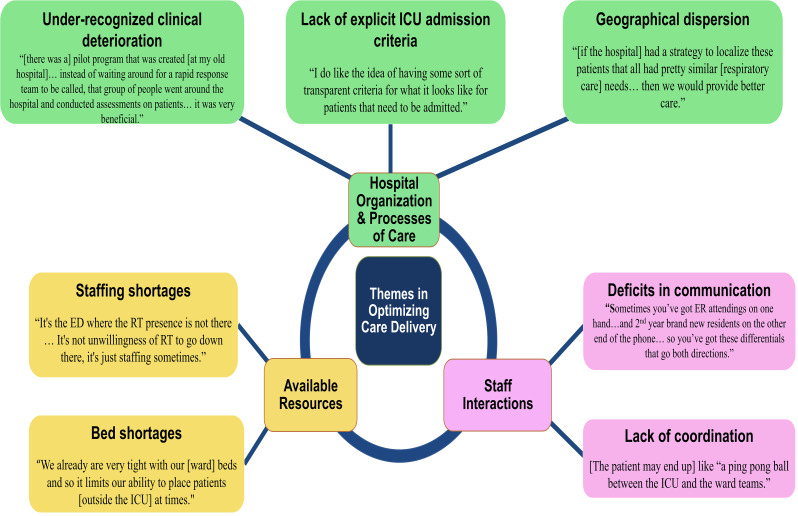 Figure 3
 Figure 4
Peer Reviews
No public reviews on file for this paper yet. If you reviewed it on a platform where reviews are public (OpenReview, ICLR, NeurIPS, ICML), you can paste yours below so the community can read it here.
Videos
No videos yet. Explain this paper in a talk, walkthrough, or lecture? Add one.
Taxonomy
TopicsHealthcare cost, quality, practices · Sepsis Diagnosis and Treatment · Intensive Care Unit Cognitive Disorders