GABAergic regulation of Locus coeruleus activity in necdin-deficient mice, an animal model of Prader-Willi syndrome
Li-Ping Tsai, Hao Chan, Wei-Chen Hung, Ming-Yuan Min, Sin-Jhong Cheng, Chen-En Yang, Chun-Hsien Yu, Shi-Bing Wong

TL;DR
This study explores how a genetic deficiency in necdin affects brain activity in mice linked to Prader-Willi syndrome, focusing on GABA signaling in the locus coeruleus.
Contribution
The study identifies GABAB receptor dysfunction and astrocytic dysregulation as novel mechanisms underlying LC hypoactivity in a PWS mouse model.
Findings
Necdin-deficient mice show impaired GABAB receptor-mediated tonic inhibition in locus coeruleus neurons.
Astrocytes from necdin-deficient mice exhibit increased proliferation and higher GABA secretion.
GABAA receptor function remains intact despite LC hypoactivity in the PWS model.
Abstract
Prader-Willi syndrome (PWS) is a neurodevelopmental disorder caused by loss of paternally expressed genes on chromosome 15q11–13, including NDN, which encodes necdin. Necdin deficiency has been linked to impaired visuospatial memory, social recognition, and stress regulation—features also seen in PWS. Previous work showed that necdin-deficient (Ndn + m/−p) mice exhibit reduced activity of noradrenergic neurons in the locus coeruleus (LC), a nucleus essential for arousal and stress responses. However, the mechanisms underlying LC hypoactivity remain unclear. Because GABAergic signaling is critical for LC excitability, this study examined the role of GABAA and GABAB receptor-mediated inhibition in Ndn + m/−p mice. Electrophysiological recordings from brainstem slices of wild-type (WT) and Ndn + m/−p mice were used to measure spontaneous firing rates (SFRs) of LC noradrenergic neurons.…
Genes, proteins, chemicals, diseases, species, mutations and cell lines named across the full text — each resolved to its canonical identifier and authoritative record.
Click any figure to enlarge with its caption.
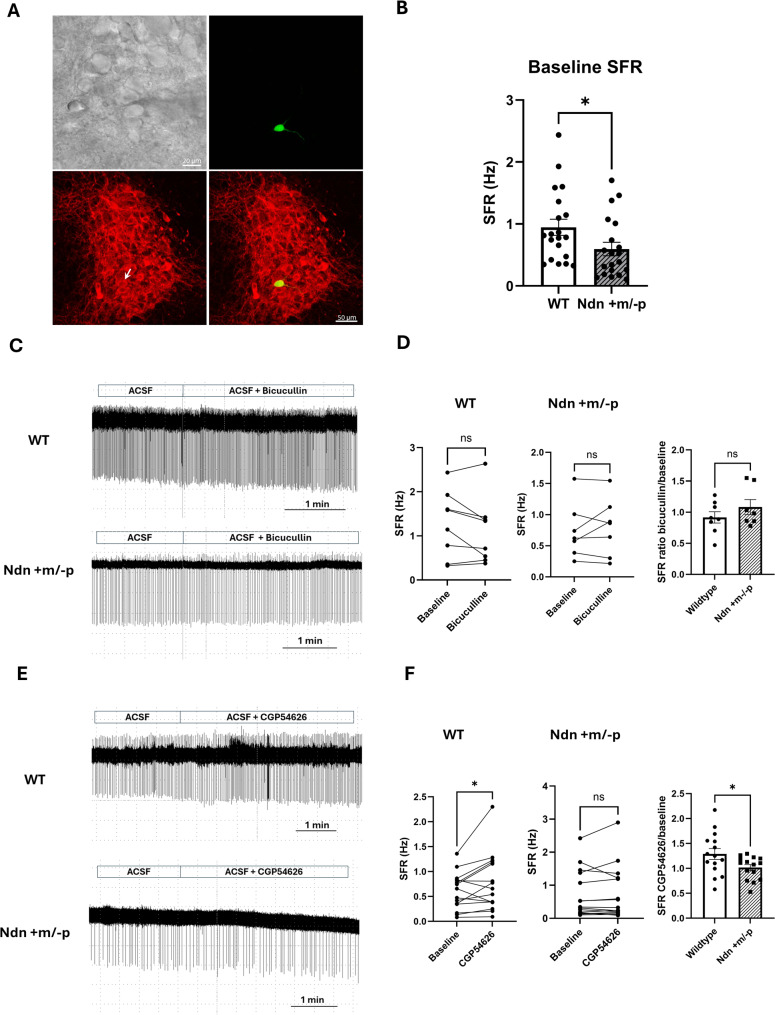 Figure 1
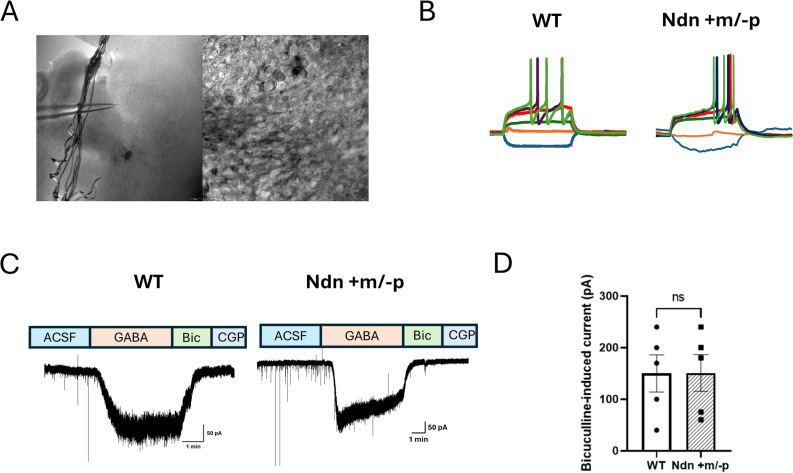 Figure 2
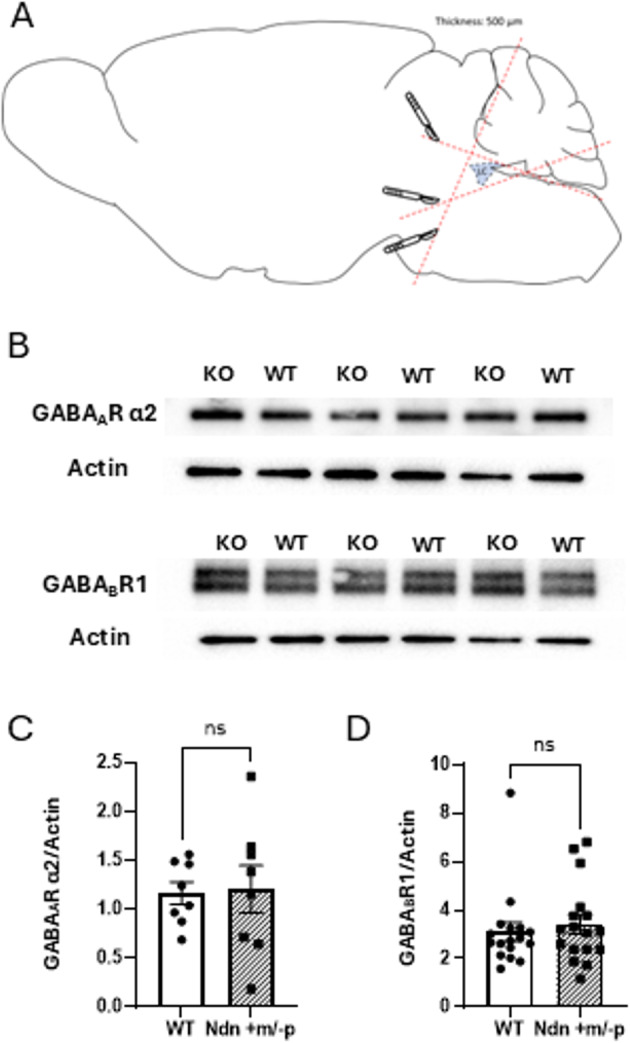 Figure 3
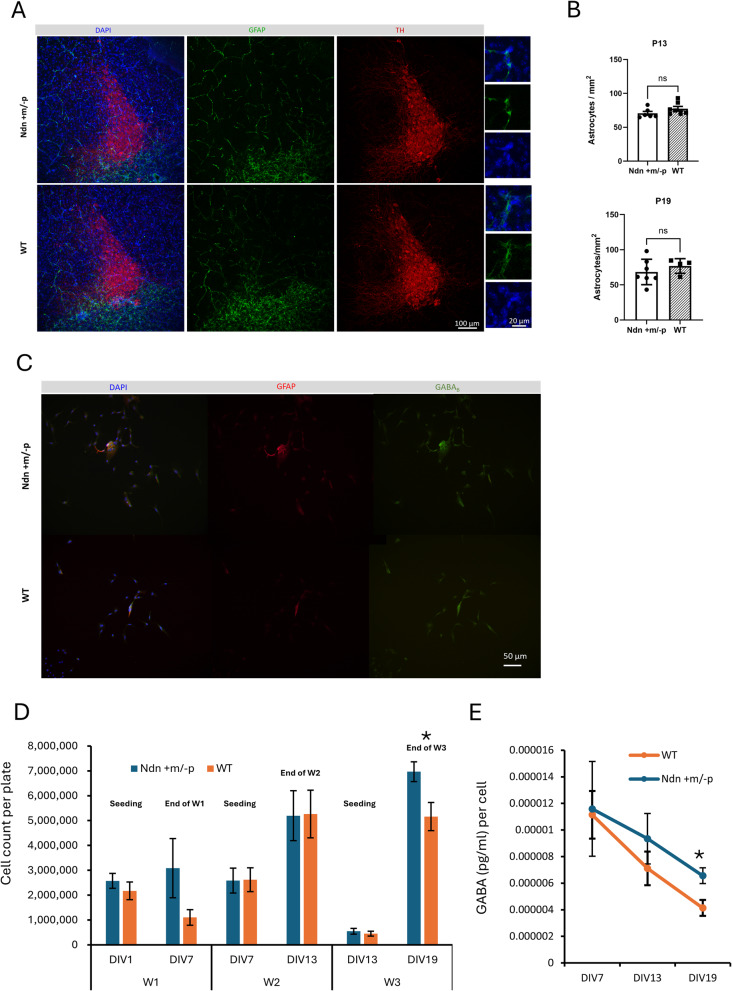 Figure 4
Peer Reviews
No public reviews on file for this paper yet. If you reviewed it on a platform where reviews are public (OpenReview, ICLR, NeurIPS, ICML), you can paste yours below so the community can read it here.
Videos
No videos yet. Explain this paper in a talk, walkthrough, or lecture? Add one.
Taxonomy
TopicsGenetic Syndromes and Imprinting · Neurogenesis and neuroplasticity mechanisms · Neuroendocrine regulation and behavior