The association of post-conization pregnancy with subsequent cervical lesions: evidence from a nationwide cohort in Sweden
Huan Yi, Jimiao Huang, Naiqi Zhang, Jan Sundquist, Kristina Sundquist, Xiangqin Zheng, Jianguang Ji

TL;DR
Women who become pregnant after cervical conization have a higher risk of developing cervical lesions, especially if the pregnancy occurs within 3 years of the procedure.
Contribution
This study is the first to show a link between post-conization pregnancies and increased cervical lesion risk using a large nationwide cohort.
Findings
Post-conization pregnancies were associated with a 32% higher risk of subsequent cervical lesions.
The increased risk was significant only for pregnancies occurring within 3 years after conization.
Women with pregnancies within 3 years had a 39% higher risk of cervical lesions compared to non-pregnant women.
Abstract
Women who have undergone cervical conization may still experience subsequent pregnancies and delivery. However, it remains unknown whether pregnancy, associated with immune tolerance, might increase the risk of subsequent cervical lesions. This study aims to address this knowledge gap by utilizing the nationwide Swedish registers. A total of 60,895 women diagnosed with cervical intraepithelial neoplasia in Sweden between January 1997 and December 2017 and treated with conization were identified through the Swedish National Patient Register and followed for subsequent cervical lesions. Time-dependent Cox regression was used to examine the association of post-conization pregnancies with subsequent cervical lesions. Among the 60,895 women who underwent conization in Sweden, 15,200 (25%) had post-conization pregnancies and showed a higher incidence of subsequent cervical lesions (hazard…
Genes, proteins, chemicals, diseases, species, mutations and cell lines named across the full text — each resolved to its canonical identifier and authoritative record.
Click any figure to enlarge with its caption.
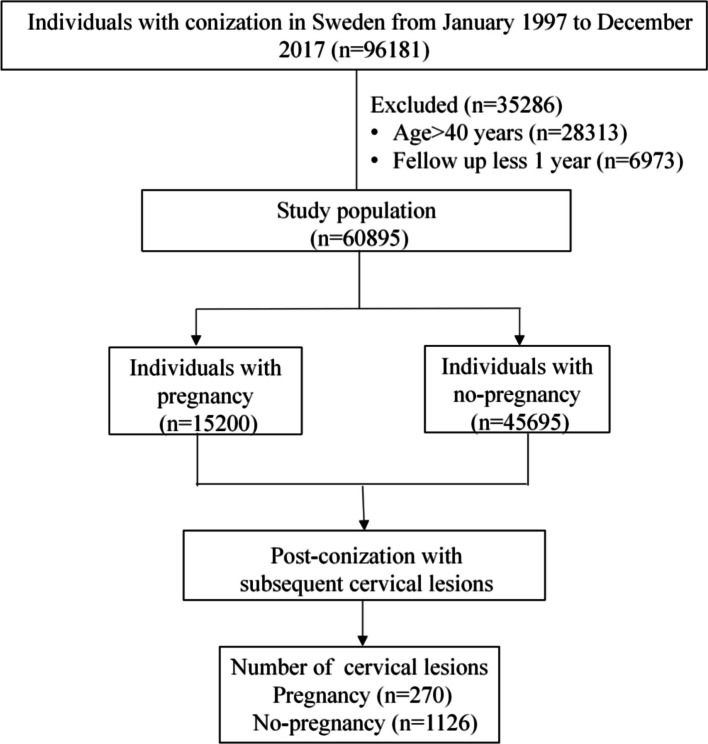 Figure 1
Peer Reviews
No public reviews on file for this paper yet. If you reviewed it on a platform where reviews are public (OpenReview, ICLR, NeurIPS, ICML), you can paste yours below so the community can read it here.
Videos
No videos yet. Explain this paper in a talk, walkthrough, or lecture? Add one.
Taxonomy
TopicsCervical Cancer and HPV Research · Reproductive tract infections research · Endometrial and Cervical Cancer Treatments