Alpha-band echoes evoked by contrast and luminance changes emerge in and travel out from early visual cortex
Audrey Morrow, Elise Turkovich, Soorya Sankaran, April Pilipenko, Jason Samaha

TL;DR
The study shows that changes in contrast and brightness create lasting brain signals in the alpha band, which may originate in the visual cortex and spread outward.
Contribution
The study identifies contrast-induced alpha-band echoes in addition to luminance echoes and suggests their origin in the primary visual cortex.
Findings
Luminance changes produce alpha-band echoes lasting about 1 second.
Contrast changes produce shorter alpha-band echoes lasting about 300 milliseconds.
TRFs from upper and lower visual fields are initially counter-phased but become in phase after 100 ms.
Abstract
How stimulus properties are processed in the human brain over time is critical to how we engage in dynamic everyday environments. To understand how changes in basic stimulus properties relate to changes in human electrical brain activity over time, previous work has estimated the brain's temporal response function (TRF) by cross-correlating random luminance sequences with electroencephalogram (EEG) signals at various lags to approximate the brain's response to temporal changes in luminance. Using this technique, it was found that luminance changes produce long-lasting “echoes” in the alpha frequency range. However, the neural origin of these echoes and the precise stimulus features that induce them have not been extensively studied. We measured TRFs in response to luminance and contrast changes. Additionally, the fact that EEG responses generated in the primary visual cortex (V1) have a…
Genes, proteins, chemicals, diseases, species, mutations and cell lines named across the full text — each resolved to its canonical identifier and authoritative record.
Click any figure to enlarge with its caption.
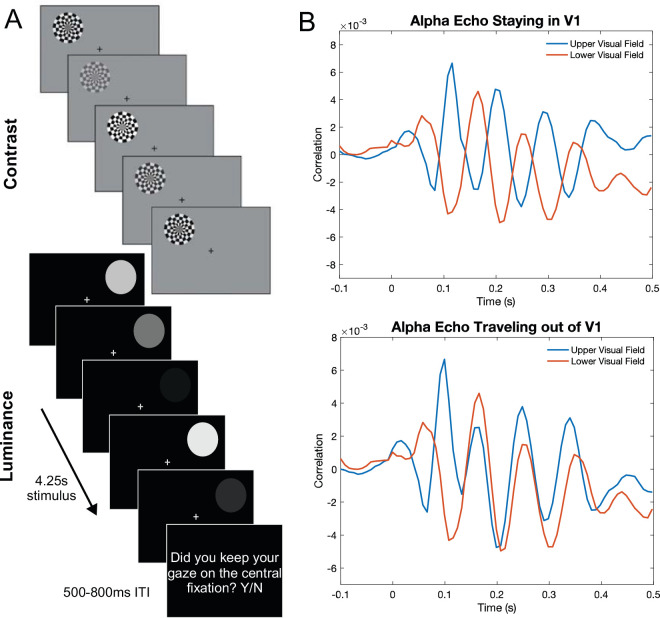 Figure 1
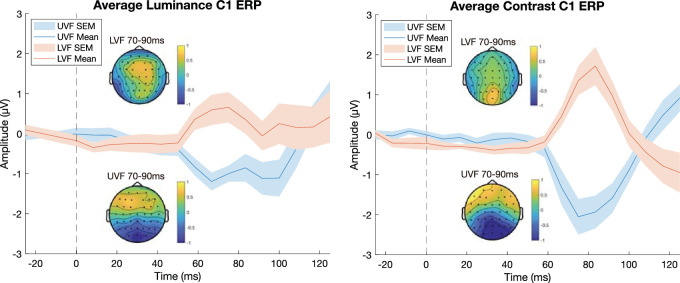 Figure 2
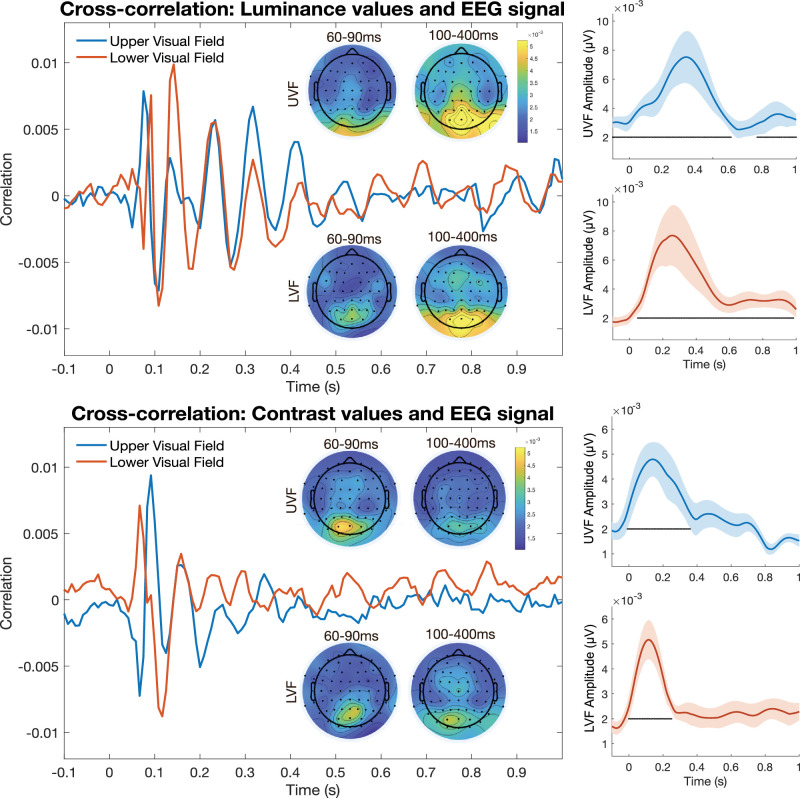 Figure 3
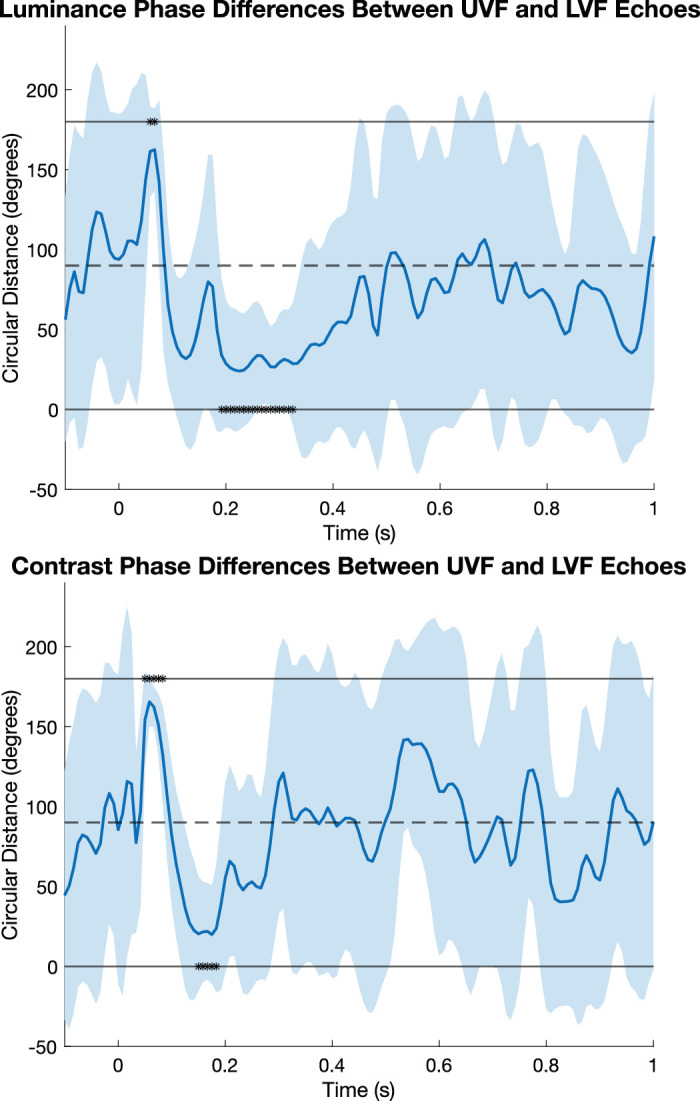 Figure 4
Peer Reviews
No public reviews on file for this paper yet. If you reviewed it on a platform where reviews are public (OpenReview, ICLR, NeurIPS, ICML), you can paste yours below so the community can read it here.
Videos
No videos yet. Explain this paper in a talk, walkthrough, or lecture? Add one.
Taxonomy
TopicsNeural dynamics and brain function · Visual perception and processing mechanisms · Multisensory perception and integration